
The Report · 4000词 Book 1 Unit 3 阅读精读
4000词精读Book 1 · Unit 3 · Reading Companion 网站首页
4000 ESSENTIAL ENGLISH WORDS · BOOK 1 · UNIT 3

The Report
报告

Lee 在图书馆为小组项目发愁:同学们都完成了自己的部分,只有他还不知道怎么做行星模型。读一读这个「上网找照片、动手做模型」的小故事,顺便把 Unit 3 的 20 个单词全部拿下!

适合 初中 蓝思值 约 480L 欧标 A2 单词量 约 220 词 20 个目标词 英译英 猜单词 点词查词典 · 听朗读 全文 词性标注
男孩在图书馆书堆里想着行星模型作业的插画

图书馆里的难题:翻了几本书也看不懂图表,Lee 把脑袋埋在桌子上(图片来源:AI 生成插画)

读一读READ & EXPLORE

精读原文 · 全文词性标注 · 点词查词典

猜一猜WORD LAB

英译英词卡 · 看英文释义猜单词

练一练EXERCISES

选词填空 · 反义词 · 阅读理解

01

读前热身Before You Read

先别急着读课文!看着标题 The Report(报告)和插图,想一想下面三个问题——带着问题去读,理解会更深。

  • Q1Who is Lee? What is his problem? 李是谁?他的难题是什么?
  • Q2What does Lee have to do for his group project? 他要为小组项目做什么?
  • Q3How does he solve his problem in the end? 最后他怎么解决了难题?
  • 小提示:这是一篇叙事文(story),讲一个人遇到困难、想办法、最后成功。读的时候留意:人物是谁、困难是什么、办法是什么、结果怎么样。
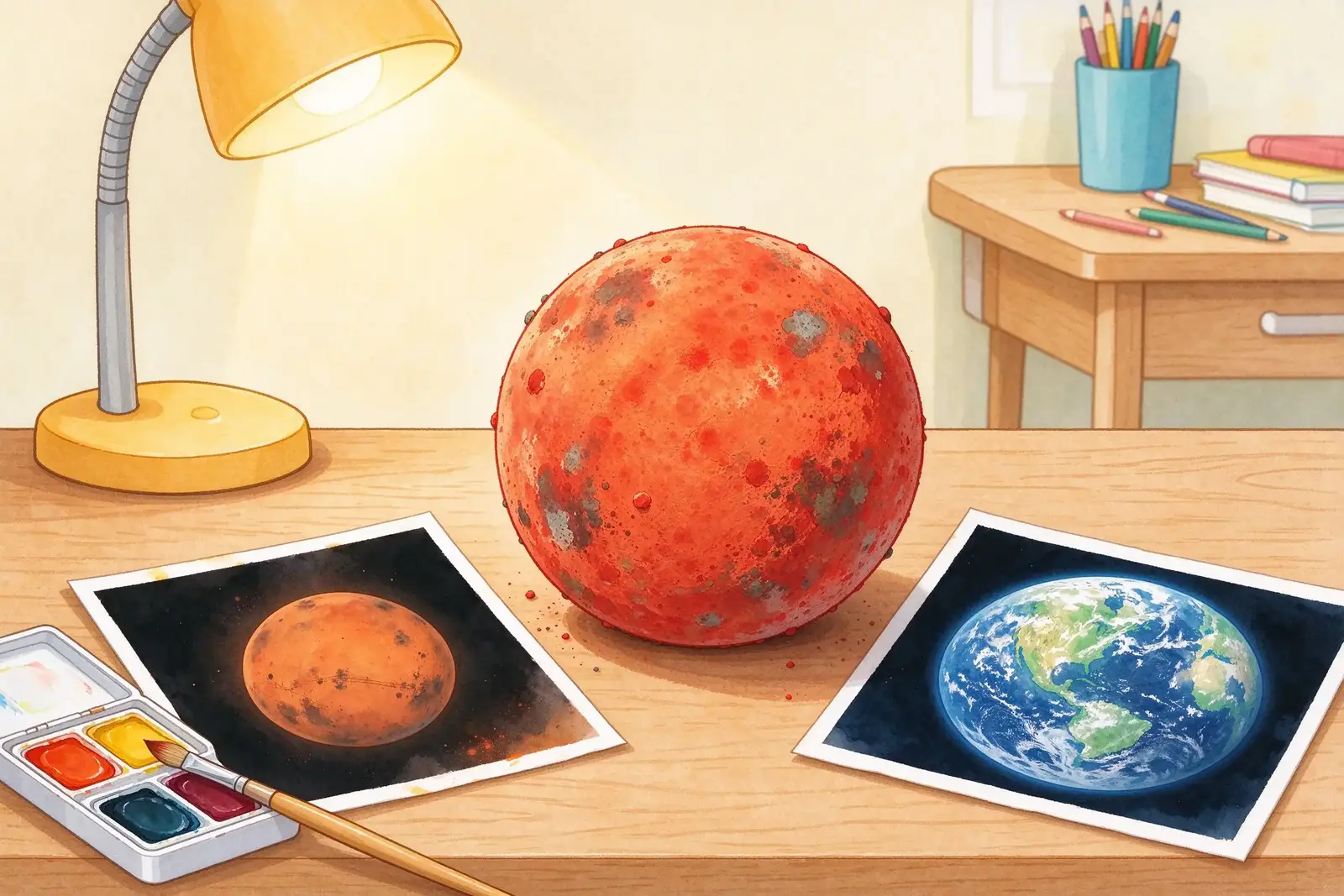
    桌上一颗用小球做成的红色火星模型,旁边放着行星照片

    一个小小的球,涂上颜色,就成了火星模型——做模型其实没那么难。

    02

    原文精读Read & Explore

    跟着原文读一遍。带颜色的单词是按词性标注的——先别急着查词典,结合上下文猜意思!点击任意英文单词会弹出词典卡片;点击▶听朗读(可调速)。

    动词·谓语 不定式to do 动名词 现在/过去分词 形容词 副词 介词 连词 that/who/which从句 when/where/why从句
    The Report -课文朗读
    00:00
    00:00

    The Report

    Reading Practice · Track 3-2 · 朗读顺序:先慢读两遍,再尝试不看文字跟读

    Lee sat among the books at the library and thought about his group project. They had to turn it in soon, but he hadn't even started his part! Jack and Claire were in his group. They had worked hard. They were also very smart, and Lee didn't want them to get a bad grade.

    段落大意:李坐在图书馆的书堆里,想着他的小组项目。很快就要交了,可他的部分还没开始!杰克和克莱尔都很努力、也很聪明,李不想因为自己拖累他们得低分。

    Jack did the report. He wrote a lot of very good sentences and described things clearly and carefully. Claire drew a nice map of the stars. Now, Lee needed to do his part of the project.

    段落大意:杰克负责写报告,写了很多好句子,把内容描述得清楚又仔细。克莱尔画了一张漂亮的星图。现在,轮到李做他那部分了。

    "Well, I suppose I need to start my model," Lee thought. Making a model of a planet was really hard. Lee tried to read several books, but he couldn't understand any of the charts. "We're going to fail because of me!" Lee said. He put his head down on the table and said, "I wish I could see a planet and an alien, instead of having to read about it!"

    段落大意:"好吧,我想我得开始做模型了。"李想。做行星模型真的很难。他试了好几本书,却看不懂任何图表。"我们会因为我而失败的!"李说。他把头埋在桌子上,说:"我真希望能亲眼看看行星和外星人,而不是只能读关于它们的书!"

    Suddenly, he had a great idea that would help him to solve his problem. Why not go on the web and look for photographs of the Earth and other planets taken from space. They would give him a really good view of the planets they had to talk about in their report. Instead of a bad grade, his group would have the best project ever. The photos of Earth showed lots of clouds, but you could still see the shapes of land and seas on Earth. He also looked at photos of Mars.

    段落大意:突然,他有了一个帮自己解决难题的好主意:为什么不上网找找从太空拍摄的地球和其他行星的照片呢?这些照片能让他清楚地看到报告里要讲的行星。这样不仅不会得低分,小组还会有史上最好的项目。地球照片上云层很多,但仍能看到陆地和海洋的形状。他还看了火星的照片。

    Lee now had plenty of ideas for making a model of the planet Mars. All he had to do was to turn his ideas into a model. He used a small ball to help him to make the shape he wanted and then painted it to look like the photos of Mars that he had seen. Sometimes seeing is much more helpful than just reading!
    段落大意:李现在有满满一脑子做火星模型的主意。他只需要把想法变成模型:用一个小球做出想要的形状,再照着看到的火星照片涂上颜色。有时候,亲眼看见比光读书有用得多!
    朗读提示:这是一篇叙事文,讲 Lee 从发愁到想出办法的过程。第一遍慢读,体会他的心情变化:发愁 → 沮丧 → 灵光一现 → 高兴;第二遍大声朗读,读到 “We're going to fail because of me!” 时带出难过,读到 “Why not go on the web…” 时语气上扬、读出兴奋。
    03

    文章结构分析How the Text Is Organized

    这是一篇「遇到困难 → 尝试 → 找到办法 → 成功」的叙事文,按事情发展的顺序推进。把握这条线,就能快速抓住故事的骨架:

    开头 · 人物与困难

    项目快交了,还没开始

    Lee 在图书馆发愁:同学们都完成了,他连图表都看不懂。

    →
    经过 · 尝试与失败

    读书看不懂,越想越糟

    试了好几本书都看不懂图表,他觉得自己会拖累小组。

    →
    转折 · 灵光一现

    上网找太空照片

    突然想到:为什么不看从太空拍的行星照片?

    →
    结果 · 成功与感悟

    做出火星模型

    用小球做模型、照着照片涂色——眼见为实!

    小发现:叙事文讲故事用一般过去时(sat / thought / wrote / had);用 had to 表示「不得不做」;用 “Why not…?” 表示「为什么不……?」的建议;结尾一句话(Sometimes seeing is much more helpful than just reading!)点明道理——这是叙事文的常见结尾。
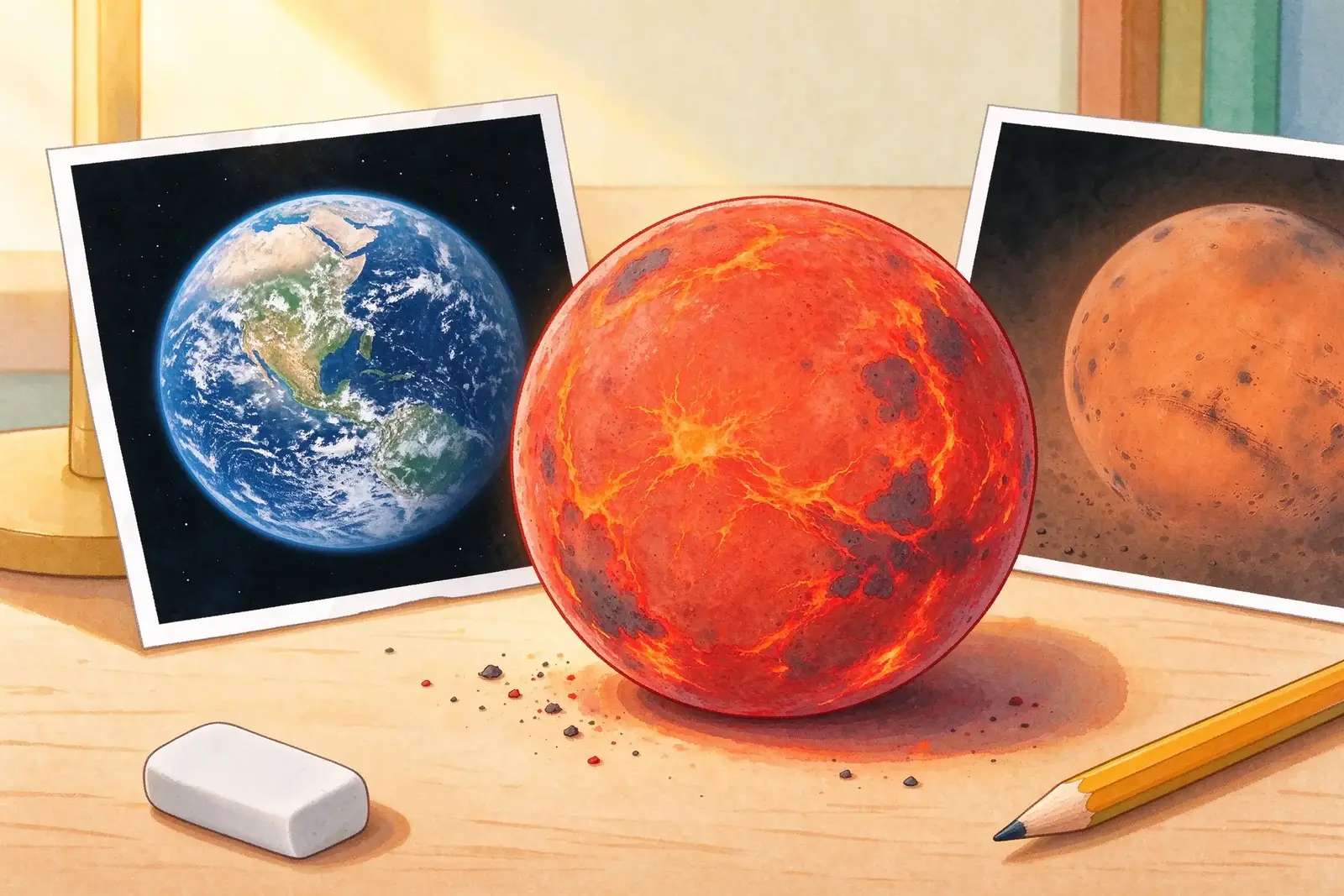
    红色火星模型特写,放在桌上一张行星照片旁

    照着照片涂出来的火星模型——看图片比读文字来得直观。

    04

    词汇实验室 · 英译英猜词Word Lab — Guess the Word

    4000词教材的秘密武器:英译英

    这套教材最大的亮点,就是用英语解释英语——每个单词都用一句简单的英文释义讲清楚,不依赖中文翻译。这样记单词,能慢慢养成「英语思维」,比死记硬背牢固得多!

    • 看释义正面只有英文释义,不看单词
    • 猜单词心里默念:这个词是什么?
    • 翻面验证点击卡片翻面,看看猜对了吗

    Unit 3 共 20 个目标词 · 先猜 Part A,再挑战 Part B

    PART A · 1–10
    PART B · 11–20
    05

    语法聚焦Grammar in the Passage

    ① 不定式 to do
    表目的 / 搭配 want, need, try

    to + 动词原形

    课文里「to + 动词原形」出现在两种地方:① 表目的(to help him to make… 帮他把…做出来、to look like… 让它看起来像…);② 跟在 want / need / try / had 后面(want to get…、had to turn… 不得不交)。
    "to turn it in soon" · "needed to do his part"
    "tried to read several books" · "used a small ball to help him"
    小任务:I have a lot of homework ___ (do) tonight.(to do)
    ② 一般过去时
    讲故事的基本时态

    动词过去式:sat / thought / wrote / had

    叙事文用一般过去时讲已经发生的事。规则动词加 -ed(worked / painted / looked),不规则动词要记(sit→sat、think→thought、write→wrote、draw→drew、say→said)。
    "Lee sat among the books…" · "He wrote a lot of very good sentences…"
    "Claire drew a nice map…" · "He put his head down…"
    小任务:Yesterday I ___ (go) to the library and ___ (read) a book.(went / read)
    ③ had to + 动词原形
    情态:不得不 / 必须

    had to to do = 过去必须做

    had to + 动词原形,表示「(过去)不得不做某事」。课文里:They had to turn it in soon(他们很快就得交了)、All he had to do was…(他只需要…)。
    "They had to turn it in soon."
    "the planets they had to talk about"
    小任务:I ___ (have to) finish my homework before dinner.(had to)
    ④ 介词短语
    课文里的介词

    among / in / on / of / for / into / about

    介词后面跟名词或代词,表示位置、方向、用途等。among the books(在书堆里)、in his group(在他的小组里)、on the table(在桌上)、a model of a planet(行星模型)、look for photographs(找照片)、into a model(变成模型)、read about it(读关于它的书)。
    "among the books" · "in his group"
    "into a model" · "look for photographs"
    小任务:She sat ___ (between/among) her friends.(among) / The key is ___ the desk.(on/in)
    ⑤ Why not…? 建议句
    提出建议的口语句型

    Why not + 动词原形…?

    Why not + 动词原形,表示「为什么不……呢?」,用来提出建议,语气轻松。课文里 Lee 用这句话给自己出主意:Why not go on the web and look for photographs…?(为什么不上网找找照片呢?)。
    "Why not go on the web and look for photographs…?"
    小任务:___ not ___ (ask) the teacher for help?(Why / ask)
    ⑥ that 引导的从句
    定语从句 / 宾语从句

    that 指代前文的名词

    that 在课文中出现两种用法:① 定语从句,修饰前面的名词——a great idea that would help him(一个能帮他的好主意)、the photos that he had seen(他看过的照片);② 口语中 I suppose (that)… 的 that 常省略。
    "a great idea that would help him solve his problem"
    "the photos of Mars that he had seen"
    小任务:The book ___ (that/who) I read yesterday is about space.(that)
    ⑦ 短语动词:turn it in / turn in sth.
    代词宾语夹中间;名词宾语可中可后

    turn it in / turn in + 名词

    turn in(交上)是「动词 + 副词」组成的短语动词,宾语放哪里要看词性:
    ① 宾语是代词(it / them / her…)时,必须放在中间——turn it in ✓,不能说 turn in it ✗;
    ② 宾语是名词(the report…)时,放中间或后面都行——turn in the report = turn the report in。
    课文里 They had to turn it in soon 正是「代词放中间」的用法。
    "They had to turn it in soon."(代词 it 必须夹在中间)
    "turn in the report" = "turn the report in"(名词两种都对)
    小任务:① Please ___ ___ the form.(turn in) ② Please ___ ___.(用 it 代替 the form → turn it in)
    ⑧ would 的用法
    设想 / 想象中的结果

    would + 动词原形

    would + 动词原形,表示「设想中会发生的事」。课文里 Lee 在心里盘算:如果上网找到太空照片,小组 would have the best project ever(就会有史上最好的项目)——这件事还没发生,是他想象中的好结果。对比:will 表示「确定会」,would 则表示「(假如这样)就会」,常用于想象或假设的语境。
    另外 would 还常见于礼貌请求:Would you help me?(你能帮我一下吗?)语气比 Will you…? 更客气。
    "his group would have the best project ever"(想象中的结果)
    "Would you please pass me the book?"(礼貌请求)
    小任务:If I studied harder, I ___ (will/would) get a better grade.(would)
    06

    练习测验Exercises

    Unit 3 练习

    先自己做一遍,再点击核对答案;理解题可点选项即时判对错。
    EXERCISE AWrite the word that best fits each sentence. 选词填空
    从词库中选出合适的词填进句子(点击空格显示答案)。
    EXERCISE BCircle the two words in each group that are opposites. 反义词
    每组中选出两个互为反义词的词(点选两个后判定)。
    EXERCISE CReading Comprehension · 阅读理解
    读文章选答案,点选项即时判定。
    07

    文章金句及仿写Golden Sentences & Imitation

    把课文里的好句子拆成「句型框架」,换词就能写自己的作文。下面用我的科学作业来仿写——练完《The Report》的句型,你也能写一篇「遇到困难、想办法、最后成功」的小故事。灰色字 = 可替换词 · 换词即用

    句 1Lee sat among the books at the library and thought about his group project.

    ____ sat among ____ and thought about ____.

    仿写我的科学作业:I sat among my books at home and thought about my science homework. 我坐在家里的一堆书中间,想着我的科学作业。

    适用:故事开头交代人物、地点和心里在想的事。

    句 2"Well, I suppose I need to start my model," Lee thought.

    "Well, I suppose I need to ____," ____ thought.

    仿写我的科学作业:"Well, I suppose I need to make the model," I thought. "好吧,我想我得做模型了。"我心想。

    适用:写人物的内心独白——用 I suppose 表示「我猜、我想」。

    句 3Suddenly, he had a great idea that would help him solve his problem.

    Suddenly, ____ had a great idea that would help ____ ____.

    仿写我的科学作业:Suddenly, I had a great idea that would help me finish my homework. 突然,我有了一个能帮我完成作业的好主意。

    适用:故事转折点——用 Suddenly 把剧情推向高潮。

    句 4Sometimes seeing is much more helpful than just reading!

    Sometimes ____ is much more helpful than just ____!

    仿写我的科学作业:Sometimes doing is much more helpful than just thinking! 有时候动手做比光想有用得多!

    适用:结尾点明道理,用比较句式收束全文。

    整篇仿写My Science Homework · 我的科学作业(约 200 词,套用课文句型)
    开篇 · 人物与困难

    Last week, I sat at my desk and thought about my science homework. We had to make a model of a planet, and I didn't know how to start! My classmate Wang Lin was in my group. He wrote the report and described the planets clearly and carefully. My sister drew a nice chart of the stars for us. Now, I needed to do my part of the project.

    主体 · 尝试与失败

    "Well, I suppose I need to make the model," I thought. Making a model of a planet was really hard. I tried to read several books, but I couldn't understand any of the charts. "We're going to fail because of me!" I said. I put my head down on the desk and said, "I wish I could see a planet, instead of having to read about it!"

    转折 · 灵光一现

    Suddenly, I had a great idea that would help me solve my problem. Why not go on the web and look for photographs of Mars taken from space? They would give me a really good view of the planet.

    结尾 · 成功与感悟

    Instead of a bad grade, my group would have the best project ever. I used a small ball to make the shape I wanted and then painted it to look like the photos of Mars that I had seen. Sometimes seeing is much more helpful than just reading!

    08

    学习指南Learning Notes

    学习提示与答案 ▾
    学习目标 · Learning Goals
    • 词汇:Unit 3 的 20 个目标词(Part A + Part B),能看懂英文释义并猜出单词。
    • 阅读:读懂 The Report 的叙事结构(困难—尝试—转折—成功)。
    • 语法:不定式 to do、一般过去时、had to、介词短语、Why not…?、that 从句。
    • 能力:掌握叙事文的阅读方法与词性标注识读,会用 I suppose / Why not 表达想法和建议。
    阅读策略 · Reading Tips
    • 第一遍:只看课文,圈出 20 个目标词,猜它们在句中的意思。
    • 第二遍:结合右侧词汇面板,核对重点词汇和词组的音标与释义。
    • 第三遍:用「听写」功能逐句听写,练听力和书写;用「中译英」检验是否真正理解。
    • 把不熟的词点进「加入生词本」,本单元的生词只存在本页,随时回来复习。
    答案 · Answer Key
    • EXERCISE A 选词填空:1 ever · 2 describe · 3 chart · 4 photograph · 5 planet · 6 shape · 7 solve · 8 fail · 9 Several · 10 view
    • EXERCISE B 反义词:fail ↔ succeed · suddenly ↔ slowly · forget ↔ remember · worse ↔ better · start ↔ finish
    • EXERCISE C 阅读理解:1 b · 2 d · 3 d · 4 b · 5 Earth and Mars(课文中 Lee 找的是从太空拍摄的地球和其他行星的照片,还看了火星的照片)
    听写课文原文第 1 / 20 句
    准备听写…
    中译英课文原文第 1 / 20 句
    看中文,把它翻译成英文: