IELTS 3.0 初学者 · 红岭期中 2025-2026 · 文章精读
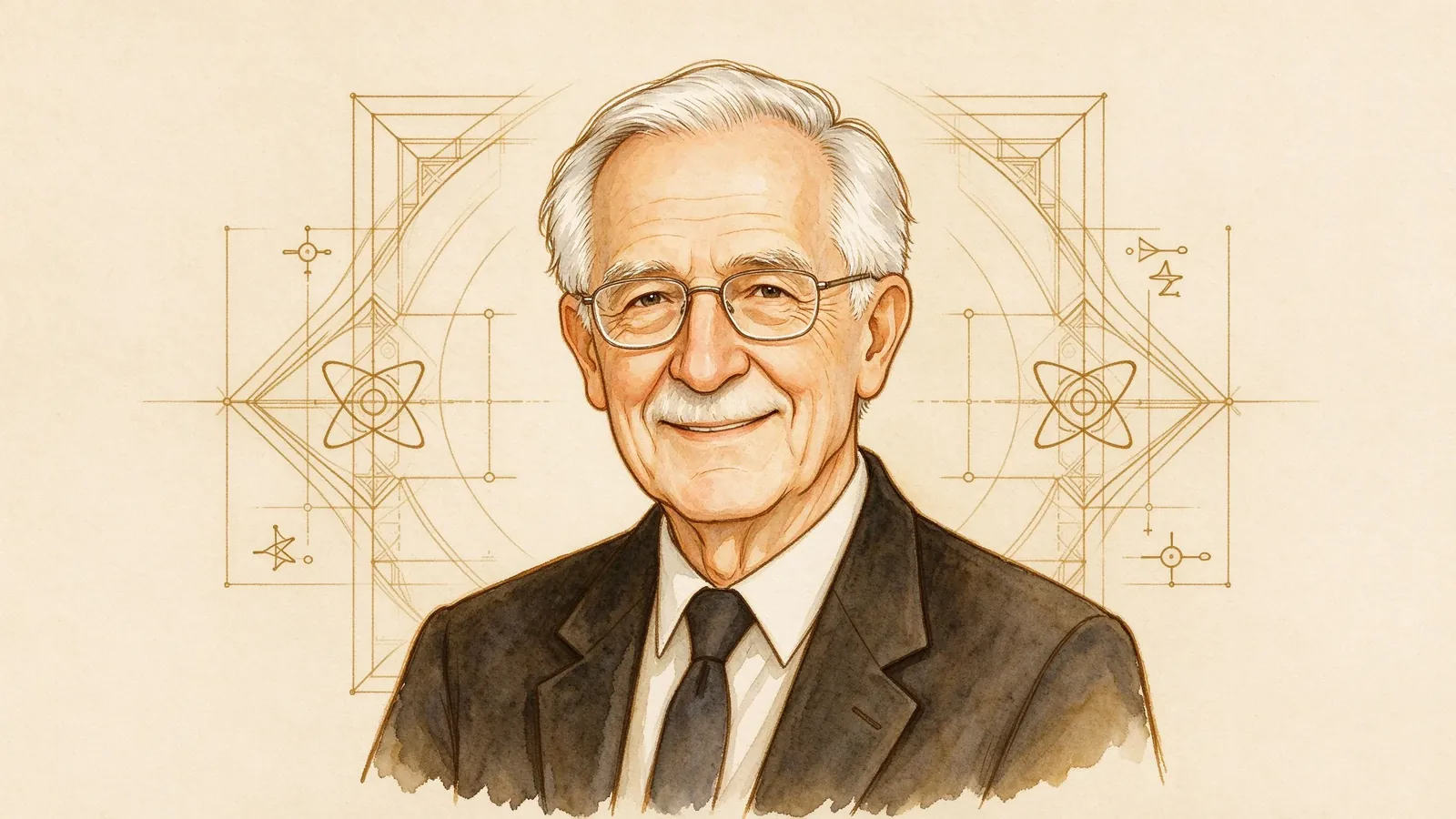
Yang Chen-Ning 杨振宁
阅读理解 C(7.5分 · 5题) · 原文精读 · 词汇词组 · 语法和从句分析
名词/冠词/代词/数字
动词
不定式
动名词
现在分词
形容词
副词
介词
连词
引导词 that
引导词 when/从句
一、原文精读
1Yang Chen-Ning was a world-famous physicist and China's first Nobel Prize winner.
杨振宁是世界著名物理学家,也是中国第一位诺贝尔奖得主。
2He passed away in Beijing at the age of 103.
他于北京逝世,享年 103 岁。
3Born in 1922 in Hefei, Anhui, Yang began his studies at Tsinghua University.
杨振宁 1922 年生于安徽合肥,早年就读于清华大学。
4Later, he went to the University of Chicago, where he earned his PhD.
后来他前往芝加哥大学,并在那里获得博士学位。
5His great contributions to physics left a deep mark on world science and on China's development.
他对物理学的巨大贡献,在世界科学和中国发展史上留下了深刻印记。
6Yang's most famous work was done with Tsung-Dao Lee.
杨振宁最著名的研究是与李政道合作完成的。
7Together they won the 1957 Nobel Prize in Physics for parity non-conservation in weak interactions—an idea that changed modern physics.
他们共同因“弱相互作用中的宇称不守恒”获得 1957 年诺贝尔物理学奖——这一理论改变了现代物理学。
8He also worked with Robert Mills on the Yang-Mills theory, which became a foundation of the Standard Model of particle physics.
他还与罗伯特·米尔斯共同研究了杨-米尔斯理论,它成为粒子物理学标准模型的基础。
9Many scientists say this theory is almost as important as Einstein's general relativity.
许多科学家认为,这一理论几乎与爱因斯坦的广义相对论同等重要。
10Yang also cared deeply about his homeland.
杨振宁也深爱着自己的祖国。
11In 1971, he became one of the first overseas Chinese scholars to visit China, opening the door to more exchanges between China and the United States.
1971 年,他成为首批访华的海外中国学者之一,打开了中美之间更多交流的大门。
12He worked to restore basic scientific research, raised funds to support Chinese students studying abroad, and advised on national science policies.
他致力于恢复基础科学研究,筹集资金资助中国学生出国留学,并为国家科学政策提供咨询。
13After returning to Tsinghua, he helped build the Institute for Advanced Study, which influenced higher education and the training of young scientists.
回到清华后,他协助创办了高等研究院,影响了高等教育和对年轻科学家的培养。
14Yang Chen-Ning's long life was not only a legend of science; it also built a bridge between East and West.
杨振宁漫长的一生不仅是科学史上的传奇,也在东西方之间架起了一座桥梁。
课文提示:本篇为阅读理解 C(共 5 题,每题 1.5 分,满分 7.5 分),选自红岭教育集团 2025-2026 学年七年级期中试卷。人物背景:杨振宁(1922–2025)是世界著名物理学家、中国首位诺贝尔奖得主,2025 年于北京逝世,享年 103 岁。文中括号中文注释(physicist 物理学家、foundation 基础、particle physics 粒子物理学、general relativity 广义相对论、scholars 学者、exchanges 交流、restore 恢复、funds 筹款)已按规范从正文移除,关键词义见侧栏与词典。高频考点:定语从句(where / which)、被动语态(was done with)、as ... as 同级比较、not only ... but also。
词汇
world-famous adj.世界著名的
physicist n.物理学家
winner n.获胜者;得主
contribution n.贡献
physics n.物理学
development n.发展
foundation n.基础
theory n.理论
scientist n.科学家
homeland n.祖国
overseas adj.海外的
scholar n.学者
exchange n.交流
restore v.恢复
research n.研究
fund n.资金(raise funds 筹款)
support v.资助;支持
policy n.政策
influence v.影响
education n.教育
legend n.传奇
bridge n.桥梁
词组
pass away去世;逝世
at the age of在……岁时
begin one's studies开始求学
earn one's PhD获得博士学位
leave a deep mark on在……留下深刻印记
be done with由……完成;与……合作
win the Nobel Prize获得诺贝尔奖
care about关心;在乎
one of the first……中最早的一批之一
open the door to打开……的大门
raise funds筹集资金
study abroad出国留学
advise on就……提供咨询
not only ... but also不仅……而且
介词短语
in Beijing在北京
at the age of 103在 103 岁时
at Tsinghua University在清华大学
to the University of Chicago到芝加哥大学
on world science and China's development在世界科学与中国发展上
with Tsung-Dao Lee与李政道(合作)
in Physics在物理学方面
for parity non-conservation因宇称不守恒
about his homeland关于他的祖国
between China and the United States在中美之间
on national science policies关于国家科学政策
after returning to Tsinghua回到清华后
of young scientists对年轻科学家的培养
二、语法和从句分析
1. 定语从句(where / which 引导):he went to the University of Chicago, where he earned his PhD. 中 where 引导定语从句修饰 Chicago;the Yang-Mills theory, which became a foundation of the Standard Model 中 which 引导定语从句修饰 theory。where / which 在从句中分别作地点状语和主语。
2. 被动语态(was done with):Yang's most famous work was done with Tsung-Dao Lee. 是一般过去时的被动语态(was/were + 过去分词 done),表示“研究是被(与人合作)完成的”,with 引出合作对象。
3. 同级比较 as ... as(与……一样):this theory is almost as important as Einstein's general relativity. 中 as + 原级 + as 表示“与……一样……”,almost 修饰“几乎”。
4. not only ... but also(不仅……而且):Yang's long life was not only a legend of science; it also built a bridge between East and West. 中 not only ... but (also) 连接两个并列分句,强调“不仅……而且”。
5. 同位语 / 头衔:China's first Nobel Prize winner、the Yang-Mills theory 中名词短语直接修饰前面的名词;a world-famous physicist and China's first Nobel Prize winner 作 Yang Chen-Ning 的同位语,补充说明身份。
6. 一般过去时叙事:全文按生平叙述用过去时:Yang began his studies… he went… they won… he became… he helped…,动词 begin→began、go→went、win→won 均为不规则过去式。
7. 过去分词作状语(Born in 1922...):Born in 1922 in Hefei, Anhui, Yang began his studies… 中过去分词短语 Born in... 作状语,相当于 As he was born...,表示背景。
8. 现在分词作伴随状语(opening the door...):…to visit China, opening the door to more exchanges… 中现在分词短语作伴随状语,表示访华同时“打开了交流大门”。
9. 不定式作定语 / 目的状语:one of the first overseas Chinese scholars to visit China 中不定式 to visit 作后置定语修饰 scholars;He worked to restore basic research, raised funds to support students 中不定式作目的状语。
10. 宾语从句(say (that)...):Many scientists say (that) this theory is almost as important as... 中 say 后省略了引导词 that,其后是宾语从句。
IELTS 3.0 初学者 · 红岭期中 2025-2026 · 文章精读 · Yang Chen-Ning