READING C · 阅读理解 C · 5 题

阅读理解 C 精练 · 重阳节 The Double Ninth Festival

沪教牛津版八年级上册 9 月学情自测卷(深圳专用)· The Double Ninth Festival · 定位原文 + 逐题解析 + 词性套色精读 + 作文金句

21-25 共 5 题同色高亮定位词义猜测(22 题)结构图题(25 题)文章精读作文金句
图例 LEGEND 21 题定位(蓝) 22 题定位(绿) 23 题定位(橙) 24 题定位(紫) 25 题结构提示句(青) 同义替换处 题干词与原文依据同色高亮;波浪线 = 该题答案依据句;黄色高亮 = 同义替换处;红色删除线 = 干扰项张冠李戴时抓取的原文词。25 题为结构图题,青色标出“总—分—总”的结构提示句。点击生词可查词典。

一、文章

PASSAGE · The Double Ninth Festival(21-25)

P1 The Double Ninth Festival falls on the ninth day of the ninth lunar month. It’s also called the Chongyang Festival. In Chinese culture, nine is regarded as the number of yang. The 9th day of the 9th lunar month is the day that has two yang numbers, and chong in Chinese means double, which is how the name Chongyang was created.
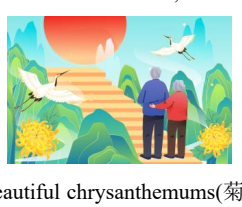
重阳节登高赏菊插画

P2 Climbing mountains and admiring beautiful chrysanthemums(菊花) are interesting activities to celebrate the Chongyang Festival. It is said that by climbing a high mountain, diseases could be prevented. As chrysanthemums blossom during the festival, chrysanthemum shows are held in big parks that draw visitors.

P3 During the festival, eating Chongyang cake and drinking chrysanthemum wine are traditional customs. Chongyang cake is a kind of cake having two layers with nuts(坚果) between them. Since cake in Chinese is pronounced gao meaning high, people consider climbing a high mountain to be the same as eating cake. Also personal progress is thought to be made in the following days after eating the cake, for “high” means that one makes improvements moving to a higher level.
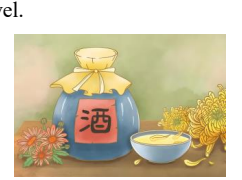
菊花酒插画

P4 Drinking chrysanthemum wine is an important part of the festival. Chrysanthemums are regarded as a kind of flower that can drive the evil(邪恶) away. People often think that by drinking chrysanthemum wine, all kinds of diseases and disasters can be cured and prevented.

P5 As nine is pronounced jiu meaning “long” in Chinese, so people endow(赋予) the word jiu with the meaning of longevity(长寿). In the year of 1989, the Double Ninth Festival was named as Seniors’ Day—a day to let the elderly enjoy themselves.

二、题目精析

QUESTIONS 21-25 · 定位 + 同义转换 + 选项病因
21
What is the first paragraph mainly about?
第 1 段主要讲什么?
段落主旨 · 首段概括
定位题干关键词 the first paragraph mainly about(第 1 段主要讲什么,段落主旨题)。依据在 P1:nine is regarded as the number of yang(九被视为阳数)→ The 9th day of the 9th lunar month is the day that has two yang numbers(九月初九是两个阳数相重之日)→ chong in Chinese means double(chong 意为“双”)→ 末句 “which is how the name Chongyang was created”(重阳这个名字就是这样来的)收束全段。
同义转换How the name Chongyang appeared(重阳这个名字是怎么出现的)≈ 原文 which is how the name Chongyang was created;appear(出现)↔ be created(被创造、产生)。
解析段落主旨题的答案看“首句+末句的落点”。本段是一条完整的因果链:九=阳数 → 九月初九=两阳相重 → chong=double → 得名 Chongyang,落脚点始终是名字的由来。A 项“九这个词是什么意思”以偏概全,它只是解释名称链条上的一环;B 项“在中国哪个数字幸运”无中生有,原文只说 nine 是 yang number,从未提 lucky;C 项“为什么会有重阳节”偷换概念,原文解释的是“名字”的由来,不是“节日为什么存在”。
答案D.How the name Chongyang appeared.
A.What the word nine means.“九”这个词是什么意思✗ 以偏概全——“九是阳数”只是名称由来链条中的一环,不能概括全段主旨。
B.Which number is lucky in China.在中国哪个数字是幸运的✗ 无中生有——原文只说 nine is regarded as the number of yang(九被视为阳数),从没说哪个数字“幸运”。
C.Why there is the Chongyang Festival.为什么会有重阳节✗ 偷换概念——本段解释的是“Chongyang 这个名字”的由来,而不是“重阳节为什么存在”,话题被换掉了。
D.How the name Chongyang appeared.重阳这个名字是怎么出现的 ✓✓ 正确——整段围绕 name 的由来展开(九=阳数 → 两阳相重 → chong=double → 得名),与原文“which is how the name Chongyang was created”完全对应。
22
What does the underlined word “blossom” mean in Paragraph 2?
第 2 段中画线单词 “blossom” 是什么意思?
词义猜测 · 语境推断
定位画线词 blossom 在 P2 最后一句:“As chrysanthemums blossom during the festival, chrysanthemum shows are held in big parks that draw visitors.”(由于菊花在节日期间 blossom,各大公园举办吸引游客的菊花展。)
同义转换blossom(动词,开花)↔ Produce flowers(开花、长出花)。语境依据:chrysanthemum shows are held(举办菊花展)— 有花可赏,说明菊花正在“开花”。
解析词义猜测三步走:① 定词性——blossom 前有主语 chrysanthemums、后面没有宾语,是动词;② 看主语——chrysanthemums(菊花,植物);③ 看语境——during the festival(重阳在深秋)+ 公园办菊花展吸引游客。植物 + 秋天 + 花展 ⇒ “开花”,故选 C。A 项 water flowers(浇水)、D 项 pick up flowers(摘花)在文中找不到任何依据;B 项 enjoy flowers(赏花)对应的其实是原文另一处的 admiring(Climbing mountains and admiring beautiful chrysanthemums),拿另一个词的意思来冒充 blossom,属张冠李戴。
答案C.Produce flowers.
A.Water flowers.给花浇水✗ 无中生有——原文没有浇水、浇灌之类的动作,water 与语境无关。
B.Enjoy flowers.赏花✗ 张冠李戴——“赏花”对应的是原文另一处的 admiring(赏菊),不是被提问的 blossom。
C.Produce flowers.开花 ✓✓ 正确——blossom 在此作动词,指“开花、开花期”;正因为菊花在节日期间开花,公园才办得起菊花展。
D.Pick up flowers.摘花✗ 无中生有——文中既没有 pick,也没有任何“采摘”的信息,属凭空编造。
23
Why do people eat Chongyang cake?
人们为什么要吃重阳糕?
细节理解 · 因果
定位题干关键词 Why … eat Chongyang cake(问原因)。依据在 P3:“Since cake in Chinese is pronounced gao meaning high, people consider climbing a high mountain to be the same as eating cake.”(因为“糕”在中文里读作 gāo、意为“高”,所以人们把登高和吃糕看作同一回事。)
同义转换Because it is pronounced gao in Chinese ≈ 原文 Since cake in Chinese is pronounced gao meaning high;Since(因为)= because,正是原因状语从句的信号词,答案就在它引导的从句里。
解析问原因要先找 because / since / for 等信号词。原文逻辑是:糕(gāo)与“高”同音 → 吃糕=登高(the same as eating cake)→ 寓意步步高升(personal progress … improvements moving to a higher level)。B 项“里面有坚果”只是 P3 对重阳糕外形的描述,张冠李戴——是外观细节,不是吃糕的原因;A 项 delicious(好吃)、C 项 good for health(对健康有益)无中生有,原文都没这样评价过重阳糕。
答案D.Because it is pronounced gao in Chinese.
A.Because it is delicious.因为它好吃✗ 无中生有——原文从未说重阳糕 delicious(好吃)。
B.Because it has nuts in it.因为它里面有坚果✗ 张冠李戴——nuts 只是描述重阳糕“两层夹坚果”的外形细节,不是人们吃它的原因。
C.Because it is good for health.因为它有益健康✗ 无中生有——原文把“防病”给了登高和菊花酒,从未说重阳糕有利健康。
D.Because it is pronounced gao in Chinese.因为它在中文里读作 gao ✓✓ 正确——糕(gāo)与“高”同音,吃糕=登高,寓意步步高升,与原文 Since cake … is pronounced gao meaning high 完全对应。
24
What can we learn from the last paragraph?
从最后一段我们可以了解到什么?
推理判断 · 段落推断
定位末段 P5 第二句:“In the year of 1989, the Double Ninth Festival was named as Seniors’ Day—a day to let the elderly enjoy themselves.”(1989 年,重阳节被定名为“敬老节”——一个让老年人尽情享受生活的日子。)
同义转换The elderly in China are fully respected(中国的老年人受到充分尊重)≈ was named as Seniors’ Day—a day to let the elderly enjoy themselves(国家专门为老人设节、让他们尽情享受)。“专为老人设节”→ 全社会敬老、尊老。
解析推理判断题要“有原文依据再往前走一步”。原文两层信息:① nine=jiu=“long”→ longevity(长寿);② 1989 年命名为 Seniors’ Day(敬老节)。由“国家专门设一个节日让老年人享受”可以合理推出“老年人受到尊重与关爱”,故选 B。A 项“中国老人很多”无中生有,文中没有人口数量信息;C 项“有许多敬老节日”绝对化,原文只提到 Seniors’ Day 一个节日;D 项“中国旅游业会火”无中生有,与末段内容毫无关系。
答案B.The elderly in China are fully respected.
A.There are many old people in China.中国有很多老年人✗ 无中生有——末段没有提到老年人口的数量或比例。
B.The elderly in China are fully respected.中国的老年人受到充分尊重 ✓✓ 正确——为老人专设 Seniors’ Day(敬老节),正是社会尊重、关爱老年人的体现,是末段的合理推断。
C.There are many festivals for the elderly.有许多为老年人设立的节日✗ 绝对化——原文只写了 Seniors’ Day 一个节日,many 是被夸大的说法。
D.China’s travel industry will be hot.中国的旅游业会火热✗ 无中生有——末段完全没有涉及旅游、出行等话题,属凭空联想。
25
Which of the following can show the structure of the passage?
下面哪一项能表示这篇文章的结构?(①=第 1 段 ②=第 2 段,……)
篇章结构 · 总—分—总
选项结构图(箭头 → 表示层次顺承,括号( )表示同一层并列)
A.① →(②③④⑤ 并列)① 之后 ②③④⑤ 全部并列✗ 分割不当——把总结段 ⑤ 也当成并列的习俗之一,忽视了 ⑤ 的收束与升华作用。
B.① → ② →(③④⑤ 并列)② 单列,其后 ③④⑤ 并列✗ 分割不当——② 与 ③④⑤ 本是同一层级的并列习俗,把 ② 单独提出来没有依据。
C.① →(②③④ 并列)→ ⑤① 总起 →(②③④ 并列)→ ⑤ 总结 ✓✓ 正确——总—分—总:① 总起(重阳节的名称由来)→ ②③④ 三项习俗并列(登高赏菊/吃重阳糕/饮菊花酒)→ ⑤ 总结(九=久=长寿,1989 年定为敬老节)。
D.① → ② →(③④ 并列)→ ⑤② 单列,③④ 并列,再到 ⑤✗ 分割不当——③④ 与 ② 同属并列习俗,把 ② 单列、把 ③④ 合成一组都找不到依据。
定位结构图题要看全文各段的分工:P1 交代名称由来(nine is regarded as the number of yang / chong means double / how the name Chongyang was created);P2 登高赏菊;P3 吃重阳糕;P4 饮菊花酒;P5 九=jiu=“long”→ longevity,1989 年定为 Seniors’ Day(敬老节)。
同义转换选项 C 的结构图 ① →(②③④ 并列)→ ⑤ 就是文章的“总—分—总”:②③④ 是三项并列习俗(每段都以习俗作主语开头,句式平行、篇幅相当);⑤ 用 In the year of 1989 收尾,是总结与升华,不与习俗并列。
解析① 是总起——解释“重阳”这个名字怎么来的;②③④ 是并列的三项习俗——登高赏菊、吃重阳糕、饮菊花酒,地位平等、可以互换位置;⑤ 是总结——由“九=久”引出长寿,再落到 1989 年的敬老节。A 把 ⑤ 也算作并列习俗,忽视了收束作用;B 把 ② 单列、③④⑤ 并列,分割不当;D 把 ③④ 并成一组、② 单列,同样分割不当。只有 C 与“总—分—总”的脉络严丝合缝。
答案C.① →(②③④ 并列)→ ⑤

三、文章精读

INTENSIVE READING · 词性套色 + 从句划线 + 逐句翻译

精读说明:按《词性标注配色规则》套色——绿=谓语动词,绿底=不定式,墨绿+灰底=动名词,玫红=形容词/形容词性物主代词,玫红+粉底=分词,蓝=副词,紫=介词,橙=连词,橙底=that 类引导词,蓝底=wh- 类引导词,红=疑问词,深灰=冠词/代词/名词;句子下的橙色下划线=that 类从句,蓝色下划线=wh- 类从句。每句末尾的小喇叭可单独朗读该句,点击生词可查词典。

配色速查 谓语动词 不定式 动名词 形容词/物主代词 分词 副词 介词 连词 that 类引导词 wh- 类引导词 疑问词 冠词/代词/名词
P1 · 名称由来

S1The Double Ninth Festival falls on the ninth day of the ninth lunar month.重阳节在农历九月初九。

S2It’s also called the Chongyang Festival.它也被称为重阳节(Chongyang Festival)。

S3In Chinese culture, nine is regarded as the number of yang.在中国文化里,九被视为“阳”之数。

S4The 9th day of the 9th lunar month is the day that has two yang numbers, and chong in Chinese means double, which is how the name Chongyang was created.农历九月初九是“两阳相重”的日子,而中文里 chong 意为“双”,重阳这个名字就是这样来的。

P2 · 登高赏菊

S1Climbing mountains and admiring beautiful chrysanthemums(菊花) are interesting activities to celebrate the Chongyang Festival.登高和欣赏美丽的菊花是庆祝重阳节有趣的活动。

S2It is said that by climbing a high mountain, diseases could be prevented.据说,登高山可以预防疾病。

S3As chrysanthemums blossom during the festival, chrysanthemum shows are held in big parks that draw visitors.由于菊花在重阳节期间开放,各大公园都会举办吸引游客的菊花展。

P3 · 重阳糕俗

S1During the festival, eating Chongyang cake and drinking chrysanthemum wine are traditional customs.节日期间,吃重阳糕和喝菊花酒是传统习俗。

S2Chongyang cake is a kind of cake having two layers with nuts(坚果) between them.重阳糕是一种中间夹着坚果、有两层的糕点。

S3Since cake in Chinese is pronounced gao meaning high, people consider climbing a high mountain to be the same as eating cake.因为“糕”在中文里读作 gāo、意为“高”,所以人们把登高和吃糕看作同一回事。

S4Also personal progress is thought to be made in the following days after eating the cake, for “high” means that one makes improvements moving to a higher level.而且,人们认为吃了重阳糕之后、接下来的日子里会取得进步,因为“高”意味着一个人不断改进、迈向更高的层次。

P4 · 菊花酒俗

S1Drinking chrysanthemum wine is an important part of the festival.喝菊花酒是这个节日重要的一部分。

S2Chrysanthemums are regarded as a kind of flower that can drive the evil(邪恶) away.菊花被认为是一种能驱邪的花。

S3People often think that by drinking chrysanthemum wine, all kinds of diseases and disasters can be cured and prevented.人们常认为,喝菊花酒可以治愈并预防各种疾病和灾难。

P5 · 敬老总结

S1As nine is pronounced jiu meaning “long” in Chinese, so people endow(赋予) the word jiu with the meaning of longevity(长寿).因为“九”在中文里读作 jiǔ、与“久”谐音,所以人们赋予“九”长寿的含义。

S2In the year of 1989, the Double Ninth Festival was named as Seniors’ Day—a day to let the elderly enjoy themselves.1989 年,重阳节被定名为“敬老节”——一个让老年人尽情享受生活的日子。

四、作文金句仿写

WRITING · 3 个可套用句型
金句 1 The Double Ninth Festival falls on the ninth day of the ninth lunar month.
The Double Ninth Festival / The Mid-Autumn Festival / The Dragon Boat Festival falls on the ninth day of the ninth lunar month / the 15th day of the 8th lunar month / the 5th day of the 5th lunar month.
仿写:The Mid-Autumn Festival falls on the 15th day of the 8th lunar month. 中秋节在农历八月十五。
适用:介绍传统节日的日期(fall on + 农历日期);农历月份要用序数词 + lunar month,序数词前加 the。
金句 2 It is said that by climbing a high mountain, diseases could be prevented.
It is said that by climbing a high mountain / doing exercise every day / reading more books, diseases could be prevented / we can keep healthy / we can learn a lot.
仿写:It is said that by doing exercise every day, we can keep healthy. 据说每天锻炼可以保持健康。
适用:介绍习俗、说法、传闻(It is said that + 主语从句,that 不能省略);by doing 表示“通过做某事”,diseases could be prevented 是被动语态。
金句 3 In the year of 1989, the Double Ninth Festival was named as Seniors’ Day—a day to let the elderly enjoy themselves.
In the year of 1989 / 1995, the Double Ninth Festival / World Book Day was named as Seniors’ Day / a reading festival—a day to let the elderly / young people enjoy themselves / enjoy reading.
仿写:In the year of 1995, World Book Day was named as a reading festival—a day to let young people enjoy reading. 1995 年,世界读书日被定名为一个阅读的节日——一个让年轻人享受阅读的日子。
适用:介绍节日的由来与意义(be named as + 破折号后的同位语 a day to let sb. do sth.);let sb. do sth. 中用动词原形,the elderly 表示“老年人”。

写作提示:这三个句型都来自本篇阅读原文,考场作文里直接替换 灰色方框 内的内容即可——介绍节日日期用金句 1,介绍习俗或说法用金句 2,写节日的由来与意义用金句 3。