IELTS 4.0 基础使用者 · Unit 2 · 文章精读
The amazing Fibonacci sequence of numbers 神奇的斐波那契数列
原文精读 · 词汇词组 · 语法和从句分析
名词/冠词/代词/数字
动词
不定式
动名词
现在分词
形容词
副词
介词
连词
引导词 that
引导词 when/原因
一、原文精读
1Fibonacci was a famous Italian mathematician born in the 12th century.
斐波那契是一位著名的意大利数学家,出生于 12 世纪。
2He created many maths problems.
他创造了许多数学难题。
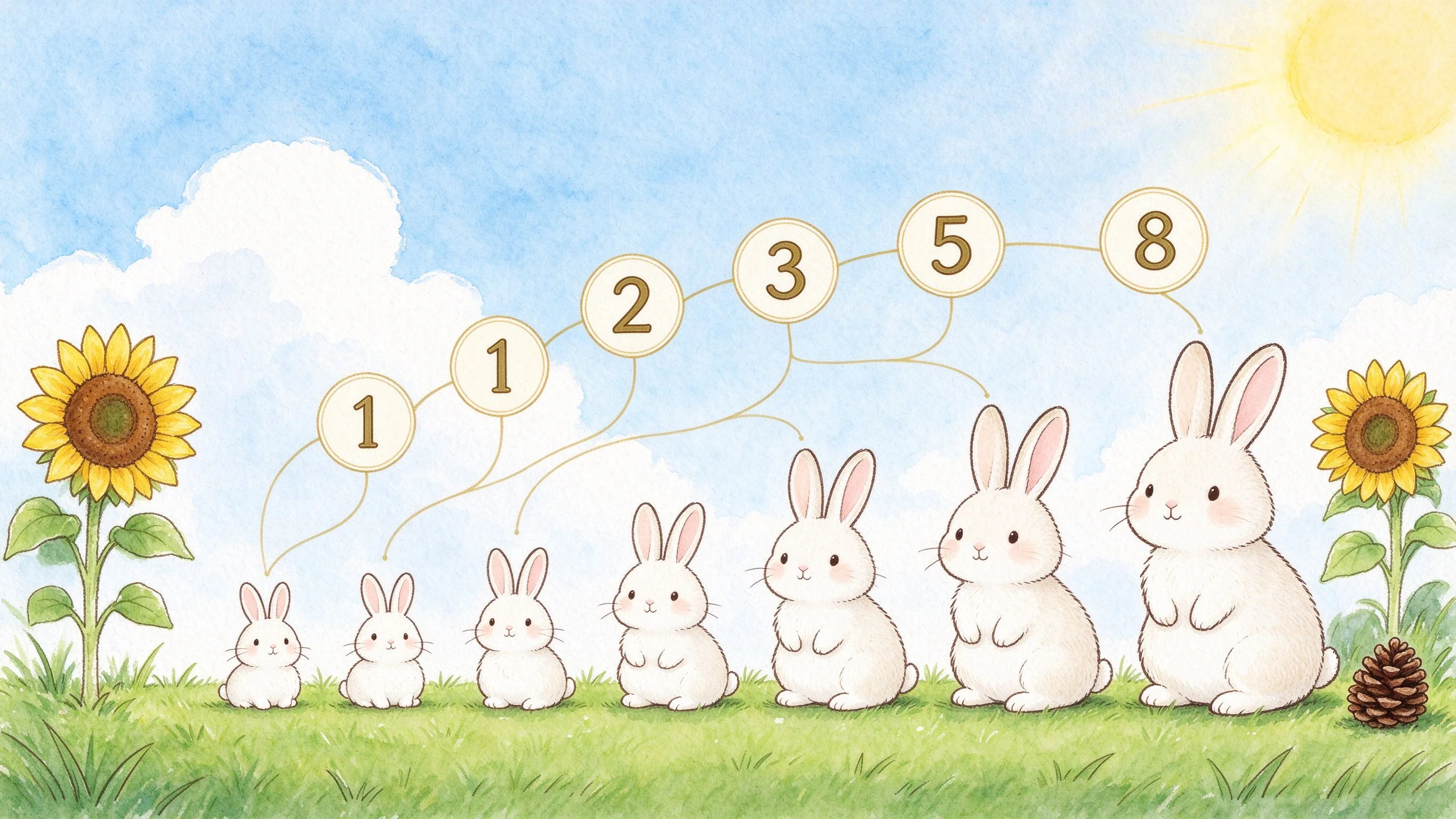
3The most famous one was about rabbits.
其中最著名的一个是关于兔子的。
4Imagine that a pair of rabbits can have two babies every month.
想象一下,一对兔子每个月能生两只兔宝宝。
5After two months, the new rabbits can have babies too.
两个月后,新的兔子也可以生兔宝宝了。
6What will happen if you have a pair of newborn rabbits on your farm?
如果你的农场里有一对新生的小兔子,会发生什么呢?
7How will the number of rabbits grow over time?
兔子的数量会随着时间如何增长呢?
8Let's look at the answers this way:
我们这样来看这些答案:
11235813213455…
9This is the beginning of the Fibonacci sequence.
这就是斐波那契数列的开端。
10Look at the numbers.
看看这些数字。
11Can you see any pattern?
你能看出什么规律吗?
12That's right—each number is the sum of the two previous ones.
没错——每一个数字都是它前两个数字之和。
13As we can see, the numbers in the Fibonacci sequence grow very quickly.
正如我们所见,斐波那契数列中的数字增长得非常快。
14What numbers come after 8 in the sequence?
数列中 8 之后的数字是什么呢?
15Fibonacci numbers are very special because they show up everywhere.
斐波那契数非常特别,因为它们无处不在。
16They appear in artworks and famous buildings, and also in living things.
它们出现在艺术品和著名建筑中,也出现在生物中。
17In fact, nature likes to follow the Fibonacci sequence.
事实上,大自然喜欢遵循斐波那契数列。
18Flower petals often come in Fibonacci numbers.
花瓣的数量往往是斐波那契数。
19The same thing happens with the spirals of pine cones and sunflower seeds.
松果和向日葵种子的螺旋同样如此。
20We do not know yet why these numbers are so common, but Fibonacci's discovery can help us understand the natural world.
我们还不知道为什么这些数字如此常见,但斐波那契的发现可以帮助我们理解自然界。
词汇
mathematician n.数学家
maths problem n.数学难题
pair n.一对
baby n.宝宝、幼崽
month n.月份
farm n.农场
pattern n.规律、模式
sum n.总和、和
sequence n.数列、序列
artwork n.艺术品
building n.建筑
nature n.大自然
petal n.花瓣
spiral n.螺旋
pine cone n.松果
sunflower n.向日葵
seed n.种子
discovery n.发现
newborn adj.新生的
previous adj.之前的
special adj.特别的
natural adj.自然的
follow v.遵循
appear v.出现
词组
be born in出生于
a pair of rabbits一对兔子
have babies生小兔子
newborn rabbits新生的小兔子
over time随着时间
look at看
the beginning of the sequence数列的开端
the sum of the two previous ones前两个数之和
show up出现
in fact事实上
help us understand帮助我们理解
the natural world自然界
介词短语
in the 12th century在 12 世纪
about rabbits关于兔子
of rabbits兔子的
After two months两个月后
of newborn rabbits on your farm农场里新生小兔子的
over time随着时间
at the answers看着这些答案
of the Fibonacci sequence斐波那契数列的
of the two previous ones前两个数之和
in the Fibonacci sequence在斐波那契数列中
after 8 in the sequence在数列中 8 之后
in artworks and famous buildings在艺术品和著名建筑中
with the spirals of pine cones and sunflower seeds与松果和向日葵种子的螺旋
二、语法和从句分析
1. that 引导宾语从句:“Imagine that a pair of rabbits can have two babies”中 that 引导宾语从句,作 Imagine 的宾语。
2. if 引导条件状语从句:“What will happen if you have a pair of newborn rabbits…”中 if 引导条件状语从句,表示“如果……”。
3. As 引导方式状语从句:“As we can see, the numbers…”中 As 表示“正如……”,引导方式状语从句。
4. because 引导原因状语从句:“very special because they show up everywhere”中 because 引导原因状语从句。
5. why 引导宾语从句:“We do not know why these numbers are so common”中 why 引导宾语从句,作 know 的宾语。
6. help + 宾语 + 动词原形:“can help us understand the natural world”中 help 后接宾语 us,再接省 to 的不定式 understand。
7. 过去分词 born 作后置定语:“a mathematician born in the 12th century”中 born 是过去分词,修饰 mathematician,表示“出生于……的”。
IELTS 4.0 基础使用者 · Unit 2 · 文章精读 · The amazing Fibonacci sequence of numbers