IELTS 4.0 基础使用者 · Unit 2 · 文章精读
The story of numbers 数字的故事
原文精读 · 词汇词组 · 语法和从句分析
名词/冠词/代词/数字
动词
不定式
动名词
现在分词
形容词
副词
介词
连词
引导词 that
引导词 when/原因
一、原文精读
1In ancient times, people developed different counting methods.
在远古时代,人们发明了不同的计数方法。
2One of the earliest was called “tally sticks”.
最早的计数方法之一叫做“刻痕计数棒”。
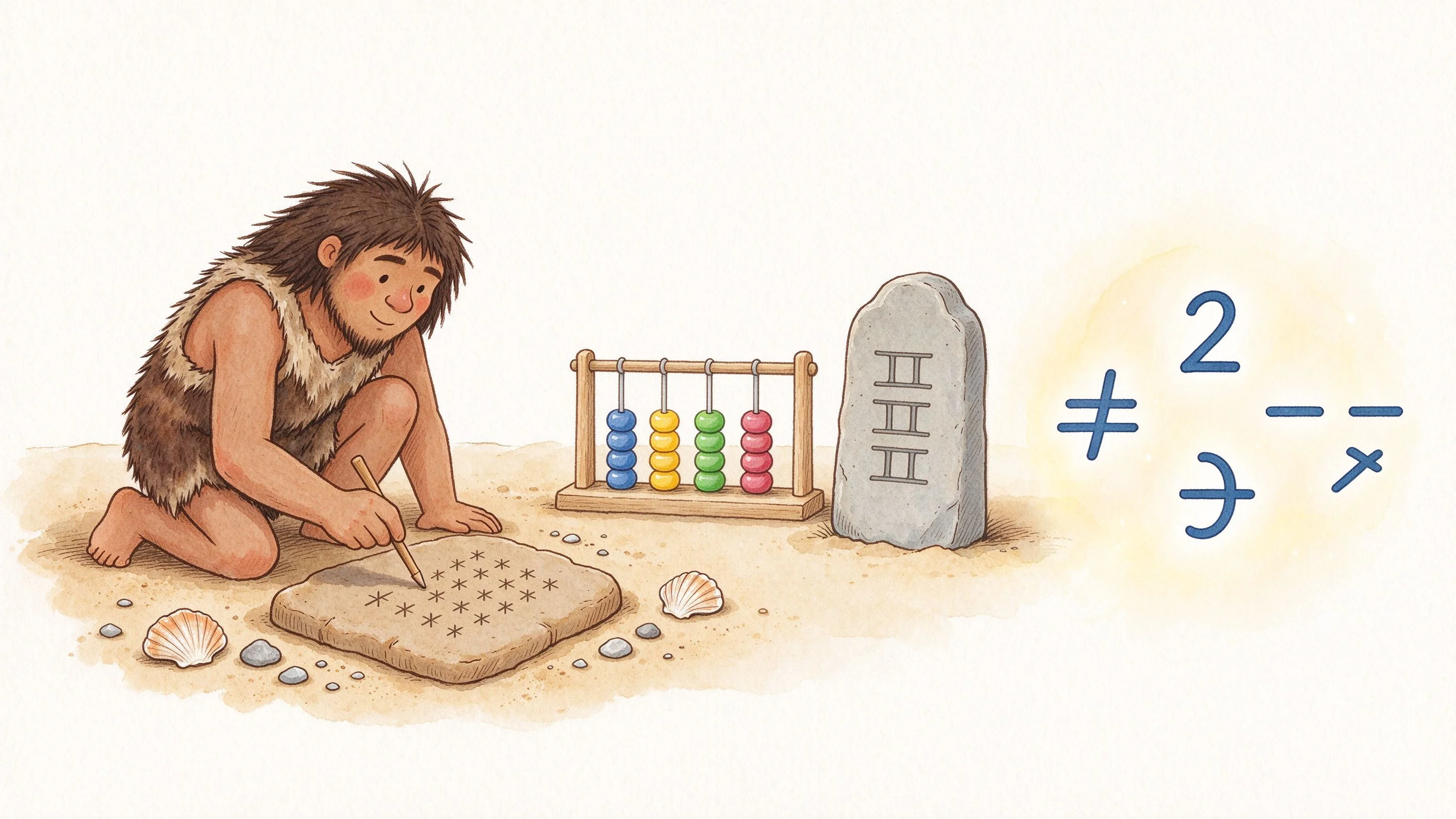
3Each “stick” (or pebble, or other counting tool) stands for a thing we want to count, such as an animal or a bag of rice.
每一根“刻痕棒”(或石子、或其它计数工具)都代表一件我们要计数的东西,比如一头动物或一袋米。
4For each animal we want to count, we draw one stick.
每数一头动物,我们就画一道刻痕。
5This is called a one-to-one correspondence.
这就叫做“一一对应”。
6Tally sticks are easy to understand, but it can take a long time to write down large numbers.
刻痕计数棒容易理解,但要写下大数却很费时。
7To write “1,000”, you have to draw a thousand tally sticks!
要写“1000”,你得画一千道刻痕!
8Later, people created faster ways of writing numbers.
后来,人们创造了更快的书写数字的方法。
9One such system developed in ancient India.
其中一套这样的体系在古代印度发展起来。
10Instead of using tally sticks, people began using different abstract symbols to represent different numbers.
人们不再用刻痕棒,而开始用不同的抽象符号来表示不同的数字。
11Researchers do not know exactly how this happened, but some believe that the sticks slowly turned into symbols over the centuries.
研究人员并不完全清楚这是怎么发生的,但有人认为,几个世纪以来,那些刻痕慢慢地变成了符号。
12These Indian numerals became popular, and people in the Arab world started using them too.
这些印度数字变得流行起来,阿拉伯世界的人们也开始使用它们。
13Thanks to the Arabs, this way of writing numbers spread to Europe and across the world.
多亏了阿拉伯人,这种书写数字的方式传播到了欧洲和世界各地。
14Nowadays, they are known as Arabic numerals.
如今,它们被称为阿拉伯数字。
15The ancient Romans wrote numbers in a different way.
古罗马人以不同的方式书写数字。
16They used letters from their alphabet.
他们使用字母表中的字母。
17For example, the number 12 is “XII” (10+1+1).
例如,数字 12 写作“XII”(10+1+1)。
18The Roman numerals used to be the most common way of writing numbers in Europe.
罗马数字曾是欧洲最常见的书写数字的方式。
19Today we still see them in many places, for example, on clock faces, on buildings or in books.
如今我们仍在许多地方看到它们,比如在钟面上、建筑物上或书里。
20But Roman numerals are not as common as Arabic numerals, maybe because they are too difficult to use!
但是罗马数字不如阿拉伯数字常用,也许是因为它们太难用了!
数字对照:不同文化的人们使用不同的数字符号。下面是数字 1 到 5 的三种写法。
中文数字:一、二、三、四、五 | 罗马数字:I, II, III, IV, V | 阿拉伯数字:1, 2, 3, 4, 5
中文数字:一、二、三、四、五 | 罗马数字:I, II, III, IV, V | 阿拉伯数字:1, 2, 3, 4, 5
词汇
ancient adj.古代的
develop v.发展、发明
method n.方法
tally stick n.刻痕计数棒
pebble n.小石子
tool n.工具
correspondence n.对应
represent v.代表、表示
symbol n.符号
system n.体系、系统
numeral n.数字(符号)
alphabet n.字母表
spread v.传播
create v.创造
abstract adj.抽象的
popular adj.流行的、受欢迎的
common adj.常见的
Arabic adj.阿拉伯的
Roman adj.罗马的
exactly adv.精确地
instead adv.代替、而不是
词组
in ancient times在远古时代
tally sticks刻痕计数棒
one-to-one correspondence一一对应
stand for代表
such as例如
write down写下
instead of代替、而不是
turn into变成
thanks to多亏、由于
be known as被称为
used to be曾经是
as common as和……一样常见
介词短语
In ancient times在远古时代
One of the earliest最早的(之一)
for each animal每一头动物
of writing numbers书写数字的
in ancient India在古代印度
Instead of using tally sticks不用刻痕棒
into symbols over the centuries几个世纪来变成符号
in the Arab world在阿拉伯世界
to Europe and across the world到欧洲和世界各地
in a different way以不同的方式
from their alphabet来自他们的字母表
on clock faces在钟面上
in Europe在欧洲
二、语法和从句分析
1. 被动语态 be + 过去分词:“was called “tally sticks” / is called a “one-to-one correspondence” / are known as Arabic numerals”都用“be + 过去分词”表示“被称作、被称为”。
2. of + 动名词作后置定语:“ways of writing numbers”中 of writing 修饰 ways,意思是“书写数字的方法”。
3. instead of + 动名词:“Instead of using tally sticks, people began…”中 instead of 后接动名词,表示“不是用……而是……”。
4. begin / start + 动名词:“began using … / started using them”中 begin / start 后接动名词,表示“开始做某事”。
5. that 引导宾语从句:“some believe that the sticks slowly turned into symbols”中 that 引导宾语从句,作 believe 的宾语。
6. because 引导原因状语从句:“maybe because they are too difficult to use”中 because 引导原因状语从句,解释罗马数字不常用的原因。
7. used to be:“The Roman numerals used to be the most common…”中 used to be 表示“过去曾经是”,强调与现在的对比。
8. 不定式作目的状语:“To write “1,000”, you have to draw a thousand tally sticks!”中 To write 作目的状语,表示“为了写……”。
IELTS 4.0 基础使用者 · Unit 2 · 文章精读 · The story of numbers