CHAPTER 2 · 全书共 18 章
Mr Fox 狐狸爸爸
第一章我们认识了三位「不好惹」的农场主;这一章,真正的主角登场——住在山丘树林树洞里的狐狸一家。每晚,狐狸爸爸都会趁着夜色下山「拿」晚餐……农场主们气得发狂,一场斗智斗勇要开始了!
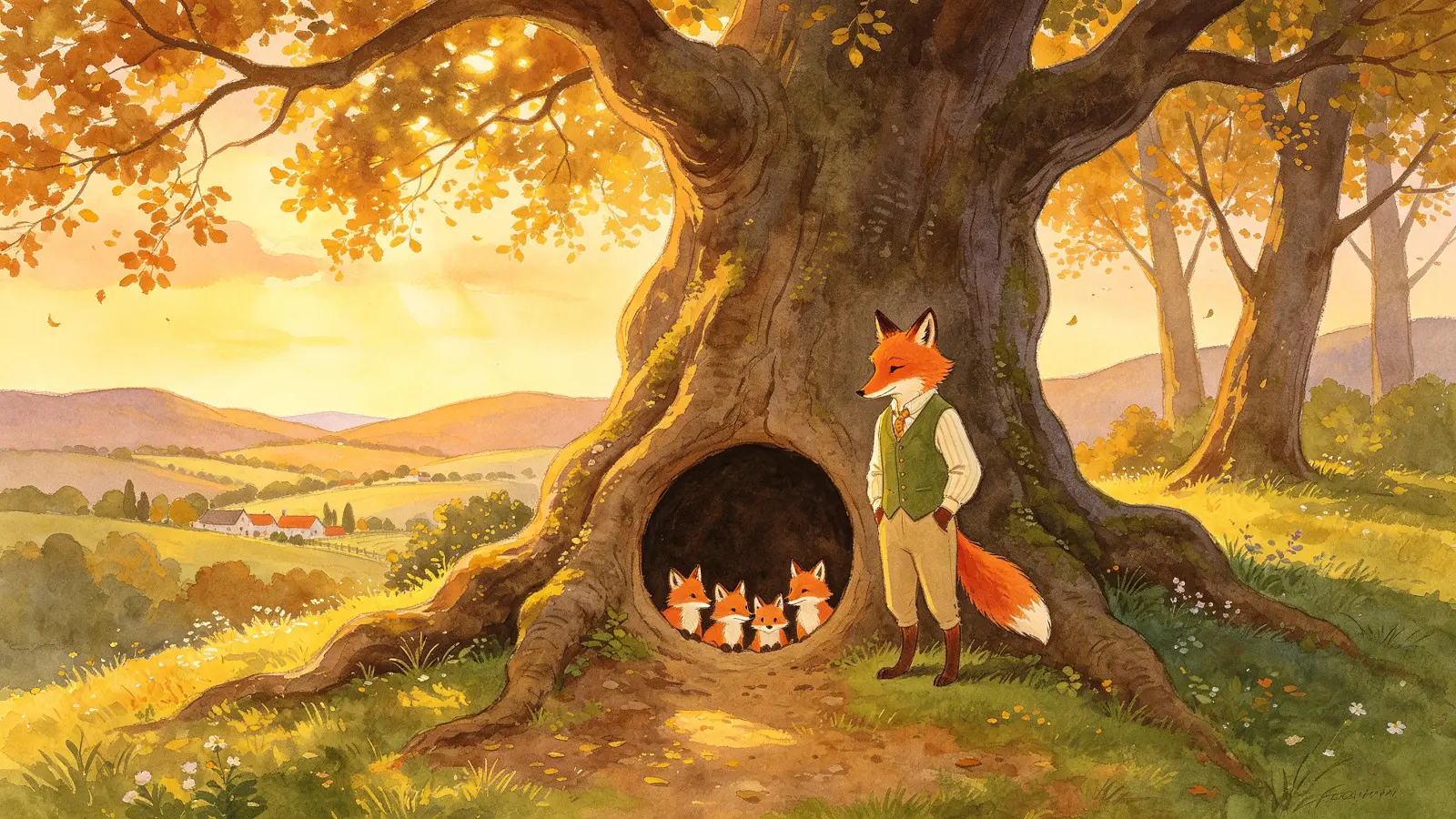
Mr Fox & his family —— 住在树洞里的狐狸一家
2Chapter 2
第一章我们认识了三位「不好惹」的农场主;这一章,真正的主角登场——住在山丘树林树洞里的狐狸一家。每晚,狐狸爸爸都会趁着夜色下山「拿」晚餐……农场主们气得发狂,一场斗智斗勇要开始了!
Meet the star of the story, then make your predictions. Reading with questions helps you understand more.先认识故事的主角,再大胆猜一猜,带着问题去读,理解会更深。
Roald Dahl’s Fantastic Mr Fox was published in 1970 and became a children’s classic. The story is full of his signature tricks: funny exaggerations, quick dialogue and a hero who is always one step ahead of the bad guys.《了不起的狐狸爸爸》出版于 1970 年,是罗尔德·达尔的经典之作。这本书里有他的招牌手法:夸张的幽默、节奏飞快的对话,还有一个永远比坏人快一步的主角。
Mr Fox lives with his wife and four children in a hole under a huge tree on the hill. Every night he sneaks down to the valley to take a plump chicken, duck or turkey from the three farmers. In Chapter 1 we met the furious farmers; now meet the clever fox himself!狐狸先生和太太、四个孩子住在山上大树下的洞里。每晚他都会溜下山谷,从三位农场主那里「拿」一只肥鸡、肥鸭或火鸡。第一章我们认识了暴跳如雷的农场主;这一章,轮到聪明的狐狸爸爸登场!
Before you read: Mr Fox is about to take tonight’s dinner. What do you think happens?还没读之前,猜猜看:狐狸爸爸今晚去「拿」晚餐,会发生什么?
Pick one to remember your prediction — come back after reading to check!
点一个选项记住你的预测,读完全章后回来揭晓答案。
Two more questions after reading · 还有两个小问题:
1. How does Mr Fox know there is danger before he even sees it?
狐狸爸爸还没看到危险,是怎么提前察觉的?
2. The farmers make a plan at the end — what is it?
结尾农场主们想出了一个计划——是什么计划?
跟着原文读一遍。橙色单词先别查——根据上下文猜一猜。点击任意单词弹出词典卡片(中英释义 · 发音 · 例句);点段落开头的 ▶ 听朗读(英式男声)。
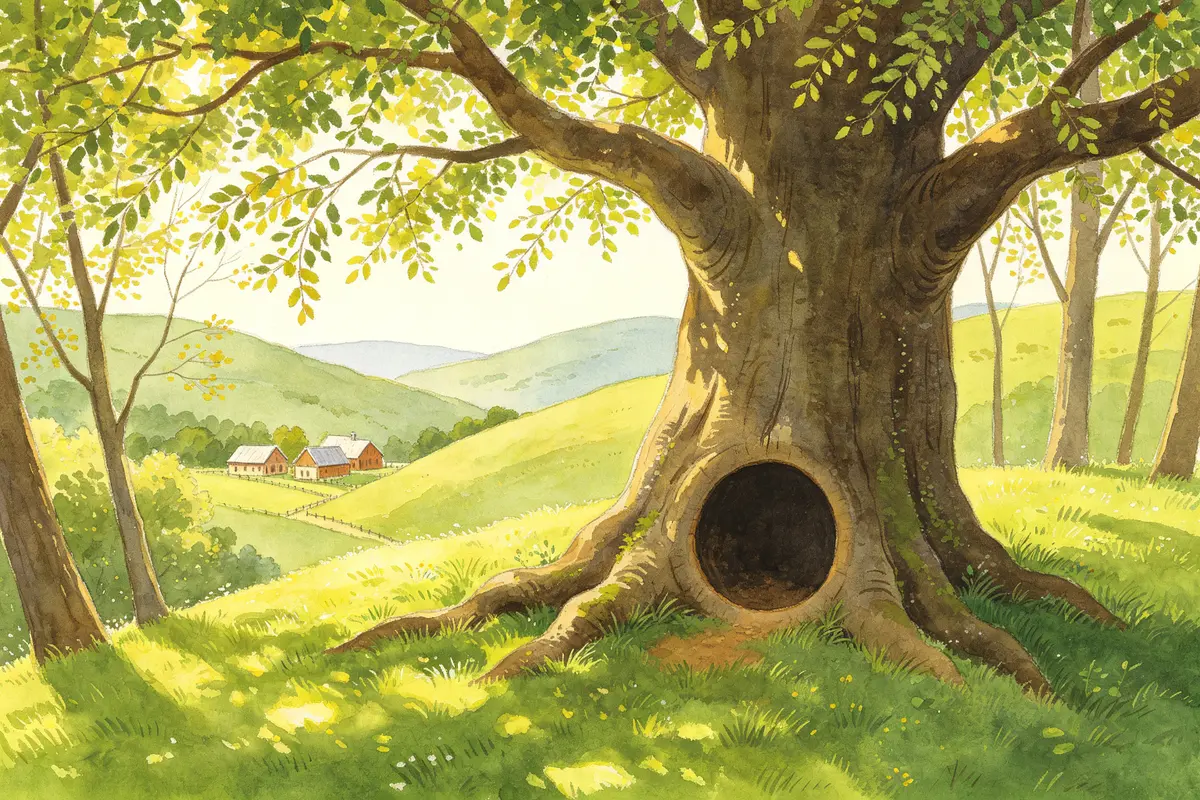
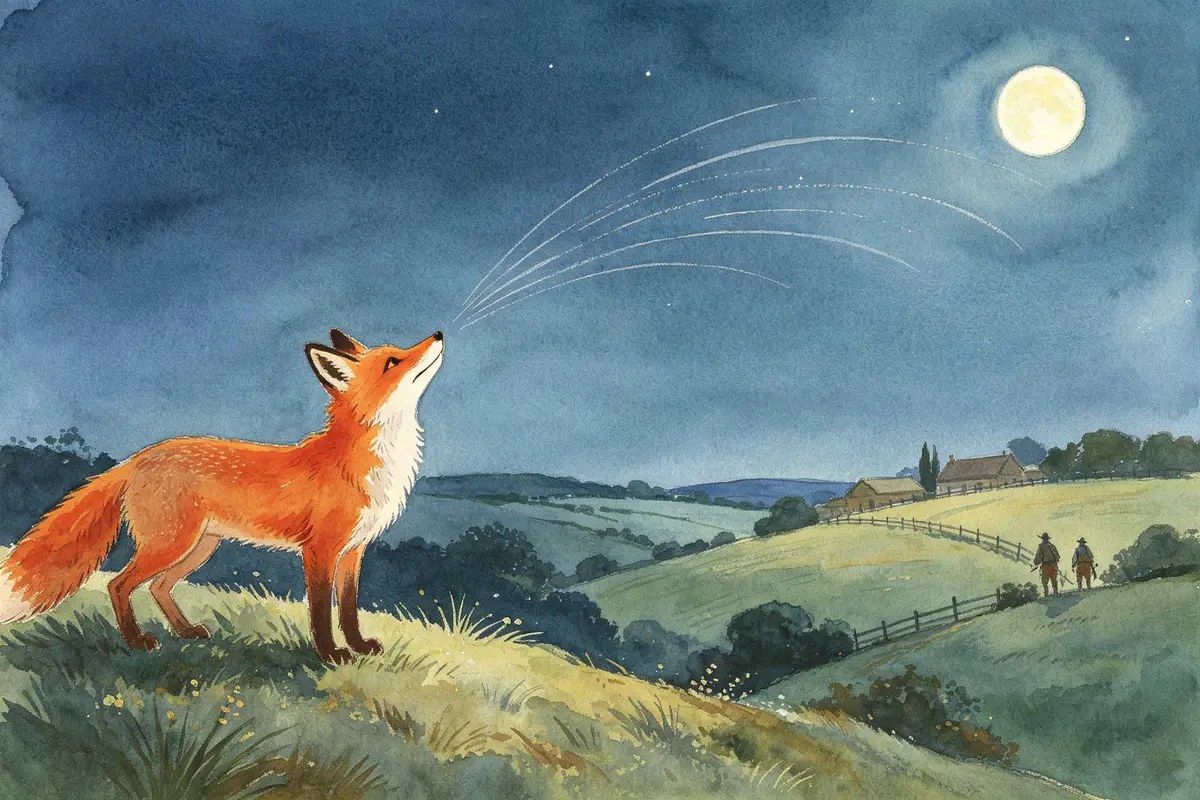
On a hill above the valley there was a wood. In the wood there was a huge tree. Under the tree there was a hole. In the hole lived Mr Fox and Mrs Fox and their four Small Foxes.
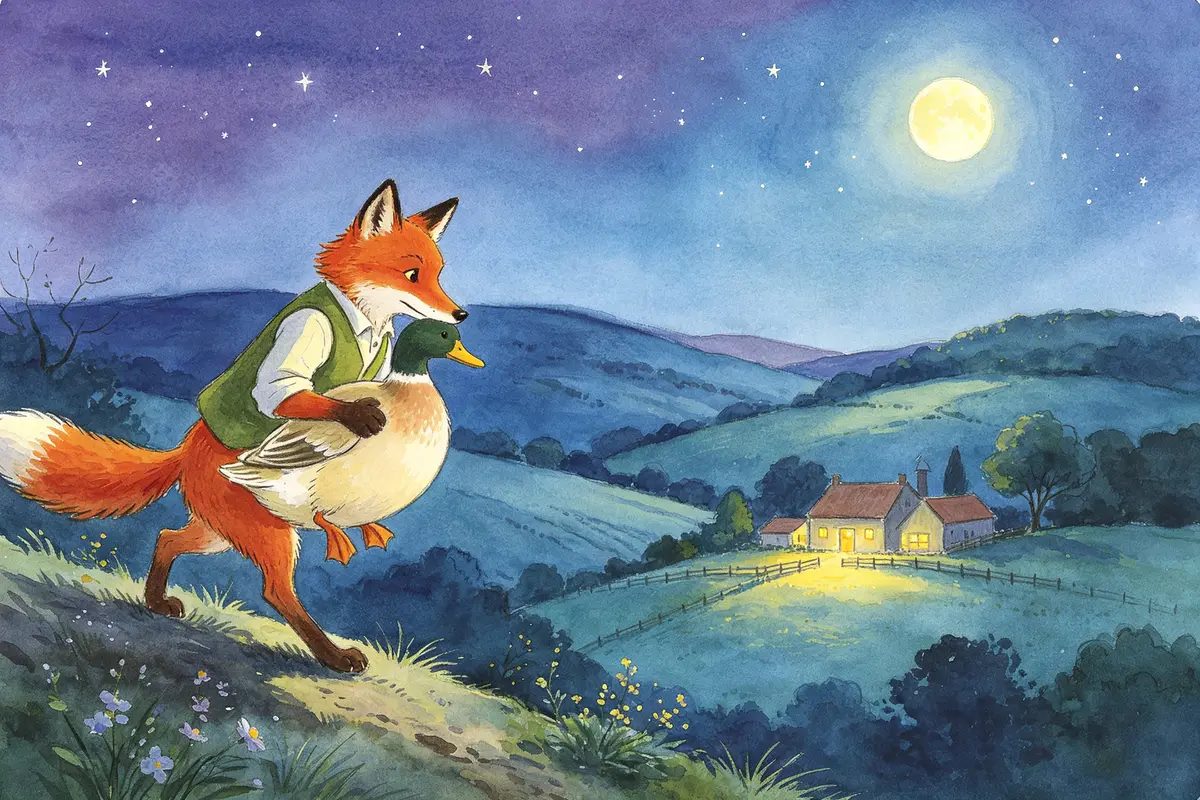
Every evening as soon as it got dark, Mr Fox would say to Mrs Fox, “Well, my darling, what shall it be this time? A plump chicken from Boggis? A duck or a goose from Bunce? Or a nice turkey from Bean?” And when Mrs Fox had told him what she wanted, Mr Fox would creep down into the valley in the darkness of the night and help himself.
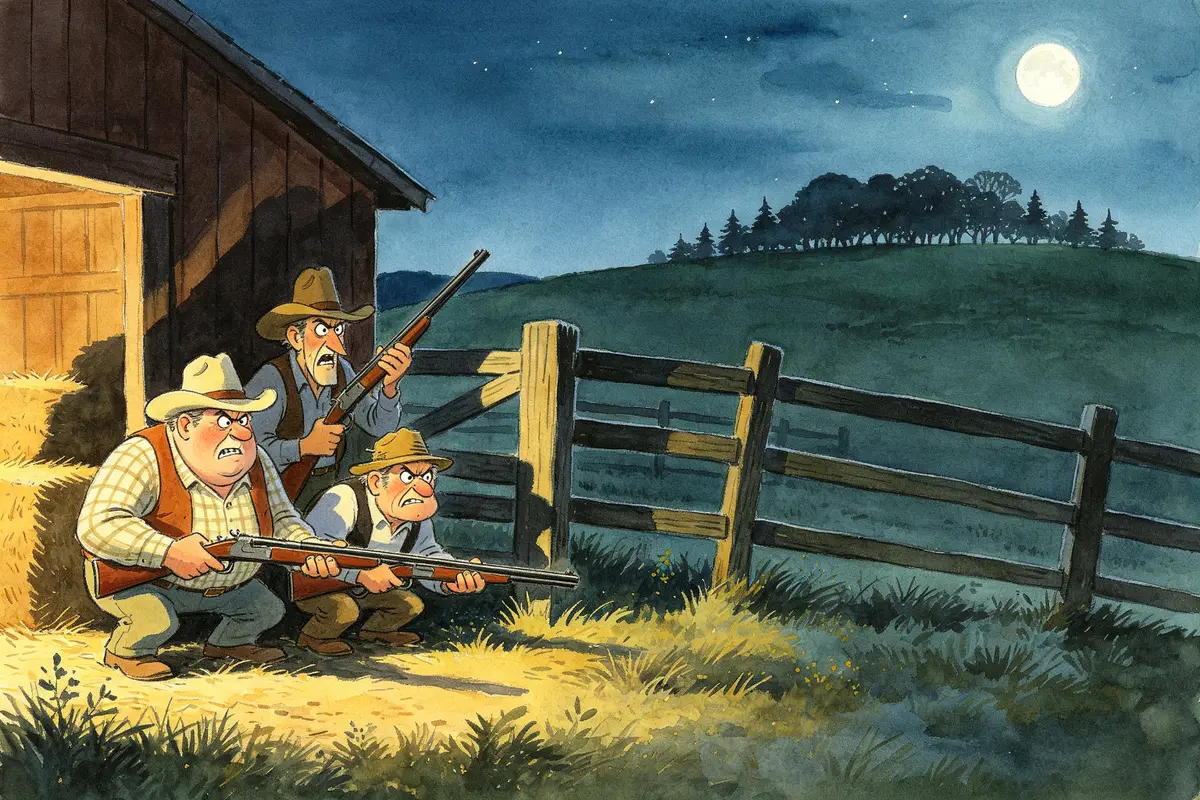
Boggis and Bunce and Bean knew very well what was going on, and it made them wild with rage. They were not men who liked to give anything away. Less still did they like anything to be stolen from them. So every night each of them would take his shotgun and hide in a dark place somewhere on his own farm, hoping to catch the robber.
But Mr Fox was too clever for them. He always approached a farm with the wind blowing in his face, and this meant that if any man were lurking in the shadows ahead, the wind would carry the smell of that man to Mr Fox’s nose from far away. Thus, if Mr Boggis was hiding behind his Chicken House Number One, Mr Fox would smell him out from fifty yards off and quickly change direction, heading for Chicken House Number Four at the other end of the farm.
“Dang and blast lousy beast!” cried Boggis. “I’d like to rip his guts out!” said Bunce. “He must be killed!” cried Bean. “But how?” said Boggis. “How on earth can we catch the blighter?” Bean picked his nose delicately with a long finger. “I have a plan,” he said. “You’ve never had a decent plan yet,” said Bunce. “Shut up and listen,” said Bean. “Tomorrow night we will all hide just outside the hole where the fox lives. We will wait there until he comes out. Then . . . Bang! Bang-bang-bang.” “Very clever,” said Bunce. “But first we shall have to find the hole.” “My dear Bunce, I’ve already found it,” said the crafty Bean. “It’s up in the wood on the hill. It’s under a huge tree . . .”
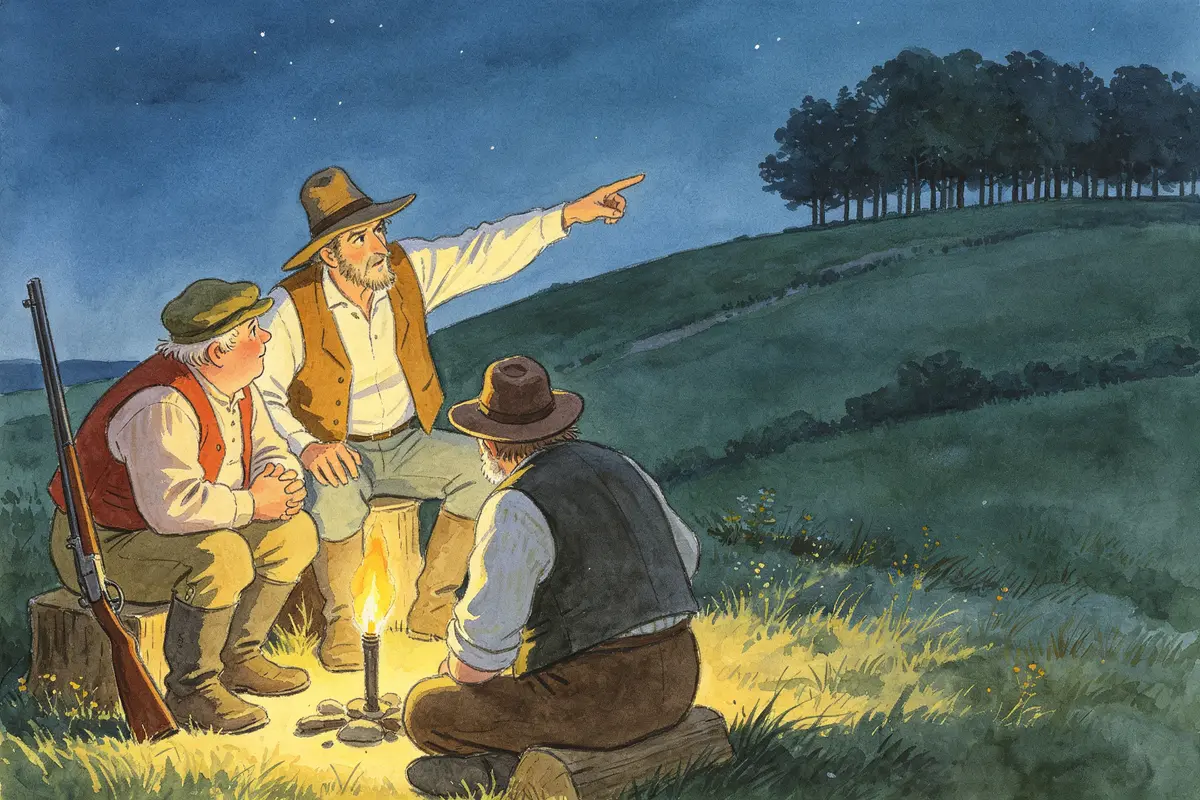
这一章的主角是狐狸一家,还有追捕他们的三位农场主。一边聪明谨慎,一边气得发狂。
这一章写狐狸先生的机警:夜里出动、迎着风走、闻出危险。记叙文写人物,除了外貌,还可以用「他怎么做」来写。
But Mr Fox was too clever for them. He always approached a farm with the wind blowing in his face.
Instead of looks, Dahl gives us intelligence and habit: clever, wind in his face, always ready. Character can be built from a way of doing things, not just a face.
不写长相,而写聪明和习惯:迎着风走、永远警觉。人物的性格不光靠脸,也可以靠「做事的方式」来立住。
"Well, my darling, what shall it be this time? A plump chicken from Boggis? A duck or a goose from Bunce? Or a nice turkey from Bean?"
Mr Fox's question is full of rhyme and rhythm — Boggis, Bunce, Bean — and a gentle, loving tone. Even a question shows how he cares for his family every night.
狐狸先生的问话有节奏、押韵——Boggis、Bunce、Bean——语气温柔体贴。一句问话就写出了他每晚为家人操心的形象。
Mr Fox would smell him out from fifty yards off and quickly change direction, heading for Chicken House Number Four at the other end of the farm.
The action is quick and clever: smell first, change direction, head elsewhere. One sentence shows the fox's skill and makes the farmers look slow.
动作快而机灵:先闻到气味,马上转向,直奔另一头。一句话写出狐狸的本事,也衬出农场主的笨拙。
It made them wild with rage. They were not men who liked to give anything away.
The farmers' rage comes from selfishness: they hate giving anything away. Their inner anger gives readers a reason to enjoy the fox's tricks.
农场主的暴怒来自小气:他们什么都舍不得给。这份内心的怒火,也让读者更爱看狐狸的小把戏。
On a hill above the valley there was a wood. In the wood there was a huge tree. Under the tree there was a hole. In the hole lived Mr Fox and Mrs Fox and their four Small Foxes.
The camera zooms in step by step: valley, hill, wood, tree, hole, fox family. Each sentence repeats the last noun, tightening the focus until we land on the heroes.
镜头一层层推进:山谷→山坡→树林→大树→树洞→狐狸一家。每句话咬住上一个名词往下走,视野越收越小,最后落到主角身上。
这一章按「时间 + 地点」双线推进:从黄昏的树洞(家)开始,讲到每晚的偷猎、每晚的埋伏,最后落到「明晚的计谋」。看懂顺序,复述就有了时间轴。
On a hill above the valley there was a wood. In the wood there was a huge tree. Under the tree there was a hole. In the hole lived Mr Fox and Mrs Fox and their four Small Foxes.
山丘 → 树林 → 大树 → 树洞 → 狐狸一家。
How it expands · 怎么展开:围绕「家在哪儿」展开——每一句咬住上一个名词(wood → tree → hole),镜头由远及近,最后落在主角身上。这就是镜头式的开头。
Every evening as soon as it got dark, Mr Fox would say to Mrs Fox, "Well, my darling, what shall it be this time?" ... Mr Fox would creep down into the valley in the darkness of the night and help himself.
每晚天一黑,狐狸先生问太太想吃什么,然后溜下山「自己拿」。
How it expands · 怎么展开:围绕关键词 every evening / would 展开——用 would 反复写「习惯性动作」:问话、下山、拿食物。三个排比问句列出农场主,点明「向谁拿」。
Boggis and Bunce and Bean knew very well what was going on, and it made them wild with rage. ... So every night each of them would take his shotgun and hide in a dark place ... hoping to catch the robber.
农场主知道被偷,气得发狂,每晚持枪埋伏。
How it expands · 怎么展开:中心句先给情绪(knew → wild with rage),再给原因(舍不得给 / 更讨厌被偷),最后给行动(每晚拿枪躲起来)。情绪 → 原因 → 行动,一步步递进。
But Mr Fox was too clever for them. He always approached a farm with the wind blowing in his face ... the wind would carry the smell ... Mr Fox would smell him out from fifty yards off and quickly change direction.
但狐狸先生太聪明——迎风闻味,提前转向。
How it expands · 怎么展开:用 But 转折引出狐狸的优势,围绕关键词 clever / wind / smell 展开:方法(迎风走)→ 原理(风送气味)→ 结果(五十码外转向)。一环扣一环,证明「抓不到他」。
"Dang and blast that lousy beast!" cried Boggis. ... Bean picked his nose delicately with a long finger. "I have a plan," he said. "Tomorrow night we will all hide just outside the hole..."
三人的怒骂之后,比恩说出计划:明晚洞口守候。
How it expands · 怎么展开:用对话收尾——三句怒骂(三种脾气)→ 比恩的「我有计划」。时间词 Tomorrow night 把冲突推向下一章,留下悬念。
这是时间顺序结构,所以复述也按时间轴:开场 → 每晚 → 埋伏 → 脱身 → 计谋。
小提示:与「思维导图」搭配用——把导图的枝条按 开场 → 每晚 → 埋伏 → 脱身 → 计谋 排好,先看导图复述一遍,再合上导图凭记忆复述一遍。
示意图:一边用鼻子思考,一边用猎枪说话——你猜谁会赢?
把第二章的信息装进这张「思维导图」,再沿着复述支架讲一遍——你也能当小老师!
示意图 —— 狐狸一家住在山上的树洞里,每晚下山偷食;农场主们在山谷里设伏
把句子补充完整,就完成了第二章的复述。
复述加分:用 First / Then / Also / Finally 把六句话串起来;先讲给同桌听,再闭上眼睛自己讲一遍。
5 张图卡按情节顺序排好。看着图片,用英文把第二章讲出来——点击图片可以放大,每张图点开都有一句「提示句」帮你起头。
提示:图卡可左右滑动查看全部 5 张;点「看看提示句」展开英文句子;点图片放大全屏。
小挑战:先看着图讲一遍,再合上图卡,只凭记忆讲一遍——能做到,第二章就真正属于你了!
这一章,Dahl 只用几句话就把狐狸爸爸的「聪明」和农场主们的「暴怒」写得活灵活现。他的秘密武器是这五招:
小山 → 树林 → 大树 → 树洞 → 狐狸一家:每一句都缩小一点范围,像电影镜头慢慢推近,最后才揭晓主角——悬念感拉满。
wood → wood,tree → tree,hole → hole:前句的结尾词就是后句的开头词,首尾相连叫「顶真」;四句又都是 there was 开头,还兼有「排比」。中文名句:归来见天子,天子坐明堂。
would + 动词原形表示「过去常常」。三句连起来看:would say → would creep → would take,三个 would 排在一起,把狐狸爸爸的夜生活写成固定流程——也让读者知道:今晚他还会再去。
would say ... would creep ... and help himself:三个 would 结构相同、节奏整齐,把「每晚如此」写成固定流程。
不用旁白解释「他们很生气」,一句句狠话 + 感叹号就把怒气直接甩到读者脸上。台词越短越有力。
三句狠话句式相似、句句带感叹号——中文修辞里是「排比式短句」,怒气直接甩到读者脸上。
比恩刚说出洞口位置,句子就断了——省略号像钩子,勾着读者必须翻到第三章:接下来会发生什么?
话说到一半故意停住——言有尽而意无穷,比把话说完更有悬念。
Bang 是拟声词(模仿枪声)。连续三个 Bang,节奏像真的枪响一样急促,让读者「听见」了埋伏。
用声音词直接模拟枪响,让读者「听见」画面——中文修辞里叫「摹声」或「拟声」。
三个短句一层层收紧:地点 → 等待 → 开枪。计划越具体,悬念越强——把这段抄进你的「好句本」吧。
地点、等待、开枪,一步比一步紧张——层层推进,把情绪顶到最高点。
中西对照小发现:英文 anadiplosis 就是中文「顶真」,parallelism 就是「排比」,ellipsis 就是「留白」,onomatopoeia 就是「摹声」。给小朋友讲的时候,中英文术语可以互相借用,哪边熟讲哪边。
三个难度层级:先找细节,再推原因,最后谈看法。点「提示」给一点帮助,点「答案」对照想法。
1. Where do the foxes live? 狐狸一家住在哪儿?
2. What does Mr Fox ask Mrs Fox every evening? 每晚狐狸先生问太太什么?
3. What do the three farmers do every night? 三个农场主每晚做什么?
4. Why does Mr Fox walk into the wind? 狐狸先生为什么总是迎着风走?
5. How do you know the farmers are “wild with rage”? 从哪里看出他们气疯了?
6. What makes Mr Fox “too clever for them”? 狐狸先生聪明在哪里?
7. Is it right for Mr Fox to take food from the farmers? Why? 狐狸先生「拿」食物对吗?为什么?
8. Will the farmers’ plan work? Why or why not? 农场主的计划会成功吗?
9. The next chapter is called “The Shooting”. What do you think happens? 下一章叫《枪击》,你猜会发生什么?
Chapter 2 brings the clever Mr Fox and the furious farmers face to face — a zoom-in opening, the nightly rhythm of “would” and blazing dialogue set the stage. One side lives by wit to feed his family; the other by greed and rage. The real game is just beginning.
第二章用「镜头式地点推进 + would 的习惯节奏 + 喷火的对话」,让聪明的狐狸爸爸和暴怒的农场主正式对阵——一边是养家糊口的机智,一边是贪心刻薄的暴怒。好戏,才刚刚开场。
每张词卡正面是原文句子——先根据上下文猜意思,再点击翻面验证。学完 12 个核心词,别忘了下面的「拓展好词」。
“On a hill above the valley there was a wood.”
猜一猜:树林 / 河流 / 山谷?
“In the wood there was a huge tree.”
猜一猜:巨大的 / 矮小的 / 细长的?
“Under the tree there was a hole.”
猜一猜:洞 / 桥 / 房子?
“A plump chicken from Boggis?”
猜一猜:瘦的 / 肥美的 / 生病的?
“Mr Fox would creep down into the valley.”
猜一猜:飞奔 / 悄悄溜 / 游泳?
“in the darkness of the night”
猜一猜:黑暗 / 黎明 / 正午?
“it made them wild with rage”
猜一猜:快乐 / 狂怒 / 担心?
“hoping to catch the robber”
猜一猜:小偷 / 警察 / 邮差?
“if any man were lurking in the shadows”
猜一猜:潜伏 / 唱歌 / 跑步?
“the wind would carry the smell of that man”
猜一猜:气味 / 声音 / 颜色?
“You’ve never had a decent plan yet.”
猜一猜:像样的 / 可怕的 / 古怪的?
“said the crafty Bean”
猜一猜:老实的 / 狡猾的 / 懒惰的?
| Word | Meaning 释义 | From the text 原文 |
|---|---|---|
| beast | n. 畜生;野兽 | “Dang and blast that lousy beast!” |
| shotgun | n. 猎枪 | “would take his shotgun” |
| guts | n. 内脏;胆量 | “I’d like to rip his guts out!” |
| blighter | n.(口语)家伙;讨厌鬼 | “catch the blighter” |
| delicately | adv. 小心翼翼地 | “picked his nose delicately” |
| approach | v. 接近;靠近 | “approached a farm” |
本章的 5 个语法点都藏在课文句子里:每个点按「规则 → 原文例句 → 即时练习」三步走,最后做 8 道综合小测检验。先划时态标志词和连接词,再判断时态与句型。
规则:there be 表示“某处有某物”,be 动词由后面的名词决定:单数用 is/was,复数用 are/were。描述过去用 there was / there were。地点状语可以放在句首:In the wood there was a huge tree.
P1On a hill there was a wood. In the wood there was a huge tree. Under the tree there was a hole.
三个 there was 连续出现,地点从大到小——镜头式地点链由此而来。
1In the wood there ___ (be) a huge tree.
2On the hill there ___ (be) three farms.
3There ___ (be) a fox and four small foxes in the hole. A. was B. were C. is
1. was——a huge tree 是单数,故事用过去时,用 there was。
2. were——three farms 是复数,用 there were。
3. A / C 均可,参考答案 is——就近原则:离 be 最近的是 a fox(单数),用 is;故事里也可用 was。
规则:would + 动词原形表示过去常常做的事(现在可能不做了)。时间标志:every evening / every night / when I was little。它让「每晚如此」的节奏感很强。
P2Every evening ... Mr Fox would say to Mrs Fox ... Mr Fox would creep down ... and help himself.
三个 would 排比,把狐狸爸爸的「夜班工作」写得像固定流程。
1Every morning my grandpa would ___ (take) a walk in the park.
2When I was little, I would ___ (play) with my dog in the garden.
3The farmers would ___ (hide) in dark places every night.
1. take——would 后面永远用动词原形。
2. play——would + play 原形,表示小时候的习惯。
3. hide——would + hide 原形,表示农场主每晚的固定动作。
规则:as soon as(一……就)、until(直到……才)引导时间状语从句,说明主句动作发生的时间。从句位置可前可后,放前面时加逗号。
P2As soon as it got dark, Mr Fox would say to Mrs Fox... P5We will wait there until he comes out.
天一黑就出发;一直等到他出来——时间关系清清楚楚。
1___ ___ ___ it got dark, Mr Fox left the hole. A. As soon as B. Until C. Because
2We waited ___ the rain stopped. A. as soon as B. until C. if
3用 as soon as 把两个句子连起来:I got home. I did my homework.
1. A(As soon as)——「天一黑,就……」表示紧接着发生。
2. B(until)——「一直等到雨停」用 until。
3. As soon as I got home, I did my homework.——一回家就写作业。
规则:if 引导条件状语从句,说明「如果……就会……」。与将来可能有关时:if 从句用一般现在时,主句用 will/would + 动词原形。这里还藏着虚拟语气:if any man were lurking(其实没有人在埋伏)用 were 表示假设。
P4If any man were lurking in the shadows, the wind would carry the smell ... P4If Mr Boggis was hiding ..., Mr Fox would smell him out.
假设一成立,结果就跟着来——这是狐狸爸爸的「雷达系统」。
1If it ___ (rain) tomorrow, we will stay at home.
2If the wind ___ (blow) the smell, Mr Fox will smell danger.
3If I were a fox, I ___ (be) as clever as Mr Fox! A. will B. would C. am
1. rains——if 从句用一般现在时,主语 it 用 rains。
2. blows——the wind 是第三人称单数,用 blows。
3. B(would)——If I were ... 是虚拟假设,主句用 would。
规则:引语后面常用 said / cried / asked + 主语。主语是名词时常常倒装:cried Boggis(= Boggis cried);主语是人称代词时不倒装:he said。
P5“Dang and blast that lousy beast!” cried Boggis. “I have a plan,” he said.
cried / said 放在说话人后面,句子更紧凑,语气也更「像小说」。
1“Help!” ___ the boy. A. cried B. said C. asked
2“I’m hungry,” ___ my little sister.
3把 “Let’s go!” said she. 改成正常语序:she ___。
1. A(cried)——呼救用 cried 更有画面感。
2. said——主语 my little sister 是名词,可写成 said my little sister 或 my little sister said。
3. said——she said。记住:代词主语不倒装。
5 道选择题 + 1 个配对游戏。先做选择题,再做配对,看看你能得几分!
1狐狸一家住在哪里?
2“A plump chicken” — what does plump mean? plump 是什么意思?
3狐狸先生怎样提前发现危险?
4“He must be killed!” — who cried this? 谁喊的这句话?
5Bean 的计划是什么?
先点左边的农场主,再点右边他说的话。
还有 3 对要配对。
这一页是你的自学地图:学习目标、学习步骤和全部答案都在这里,跟着走就能通关第二章。