CHAPTER 3 · 全书共 18 章
The Shooting 枪击
第二章结尾,比恩想出了一个计划:明晚守在狐狸洞口,等他出来就开枪!这一章——枪真的响了。可狐狸爸爸早就不是第一次遇到枪了……他还能再赢一次吗?
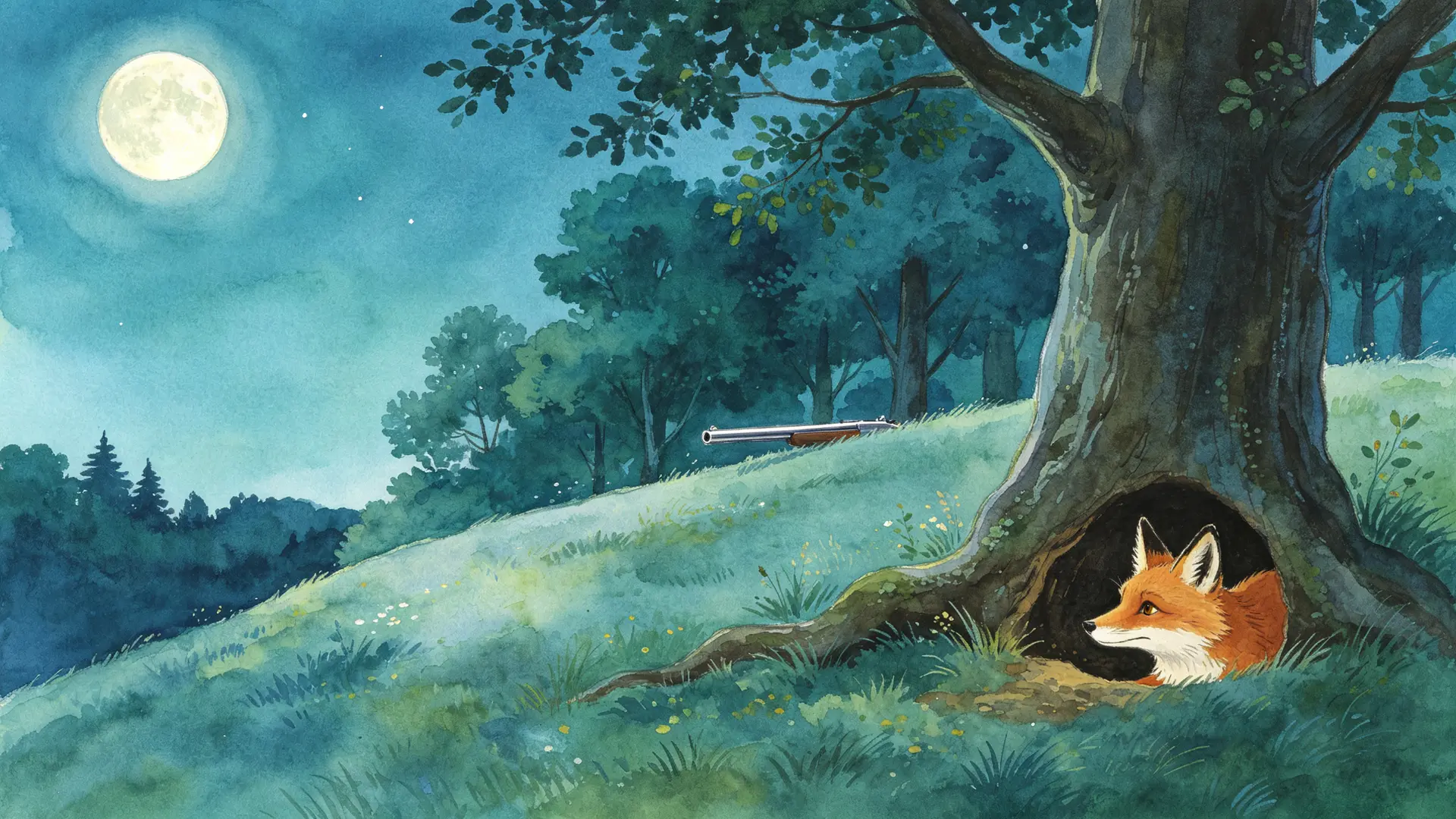
The night of the ambush —— 月夜下的埋伏
3Chapter 3
第二章结尾,比恩想出了一个计划:明晚守在狐狸洞口,等他出来就开枪!这一章——枪真的响了。可狐狸爸爸早就不是第一次遇到枪了……他还能再赢一次吗?
Last chapter ended with a plan. Now read the chapter called “The Shooting” and find out what happens under the moonlight.上一章结尾留下一个计划。现在来读这章《枪击》,看看月光下到底发生了什么。
Roald Dahl’s Fantastic Mr Fox (1970) is famous for its dramatic irony: the reader often knows more than the hero does. In this chapter, Mr Fox is sure he can smell danger — but the wind is blowing the wrong way!《了不起的狐狸爸爸》(1970)以「戏剧性反讽」著称:读者常常比主角知道得更多。这一章里,狐狸爸爸自信能闻出危险——可风向偏偏反了!
The three farmers are furious because Mr Fox steals from them every night. Bean’s plan: tomorrow night, hide just outside the fox’s hole, wait until he comes out — and Bang! Now the trap is set. But is Mr Fox really walking into it?狐狸先生每晚偷吃,三位农场主气疯了。比恩的计划:明晚守在狐狸洞口,等他出来就开枪!陷阱已布下——狐狸爸爸真的会走进来吗?
Before you read: the farmers are waiting with their guns. What do you think will happen to Mr Fox?还没读之前,猜猜看:农场主们正端着枪等着,狐狸爸爸会怎样?
Pick one to remember your prediction — come back after reading to check!
点一个选项记住你的预测,读完全章后回来揭晓答案。
Two more questions after reading · 还有两个小问题:
1. Why doesn’t Mr Fox smell the farmers this time?
这次狐狸爸爸为什么没闻到农场主?
2. What does Bean decide to do at the end of the chapter?
这一章结尾,比恩决定做什么?
跟着原文读一遍。橙色单词先别查——根据上下文猜一猜。点击任意单词弹出词典卡片(中英释义 · 发音 · 例句);点段落开头的 ▶ 听朗读(英式男声)。
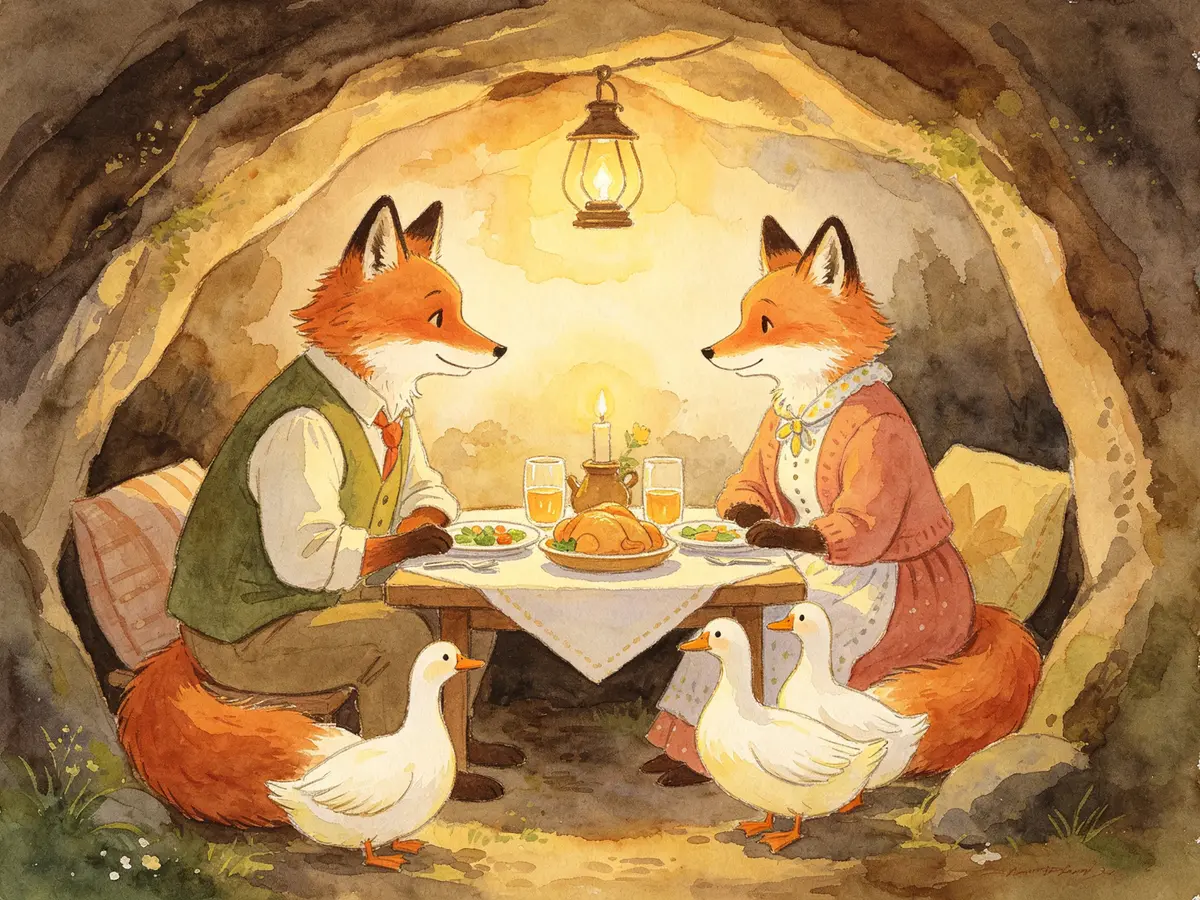
“Well, my darling,” said Mr Fox. “What shall it be tonight?” “I think we’ll have duck tonight,” said Mrs Fox. “Bring us two fat ducks, if you please. One for you and me, and one for the children.” “Ducks it shall be!” said Mr Fox. “Bunce’s best!” “Now do be careful,” said Mrs Fox. “My darling,” said Mr Fox, “I can smell those goons a mile away. I can even smell one from the other. Boggis gives off a filthy stink of rotten chicken-skins. Bunce reeks of goose-livers, and as for Bean, the fumes of apple cider hang around him like poisonous gases.” “Yes, but just don’t get careless,” said Mrs Fox. “You know they’ll be waiting for you, all three of them.” “Don’t you worry about me,” said Mr Fox. “I’ll see you later.”
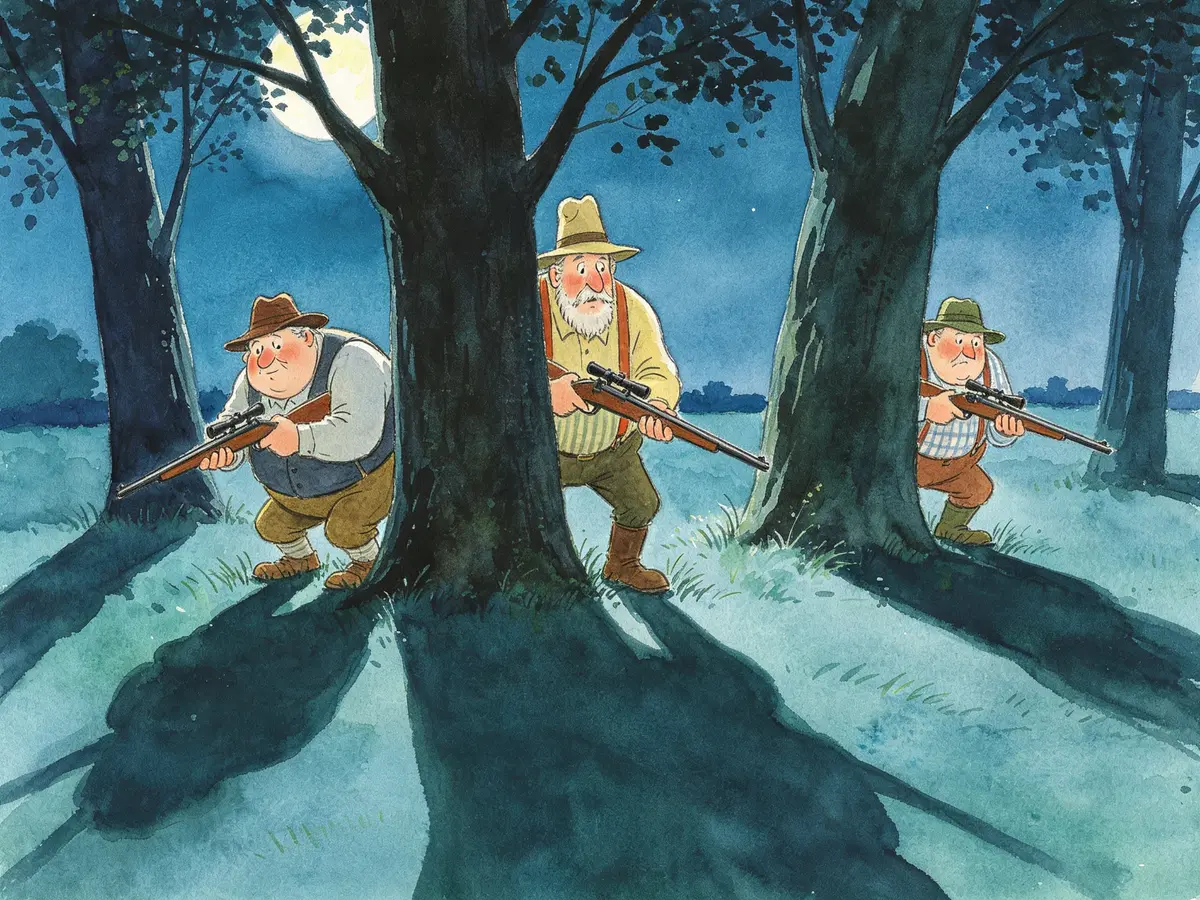
But Mr Fox would not have been quite so cocky had he known exactly where the three farmers were waiting at that moment. They were just outside the entrance to the hole, each one crouching behind a tree with his gun loaded. And what is more, they had chosen their positions very carefully, making sure that the wind was not blowing from them towards the fox’s hole. In fact, it was blowing in the opposite direction. There was no chance of them being ‘smelled out’.
Mr Fox crept up the dark tunnel to the mouth of his hole. He poked his long handsome face out into the night air and sniffed once. He moved an inch or two forward and stopped. He sniffed again. He was always especially careful when coming out from his hole. He inched forward a little more. The front half of his body was now in the open.
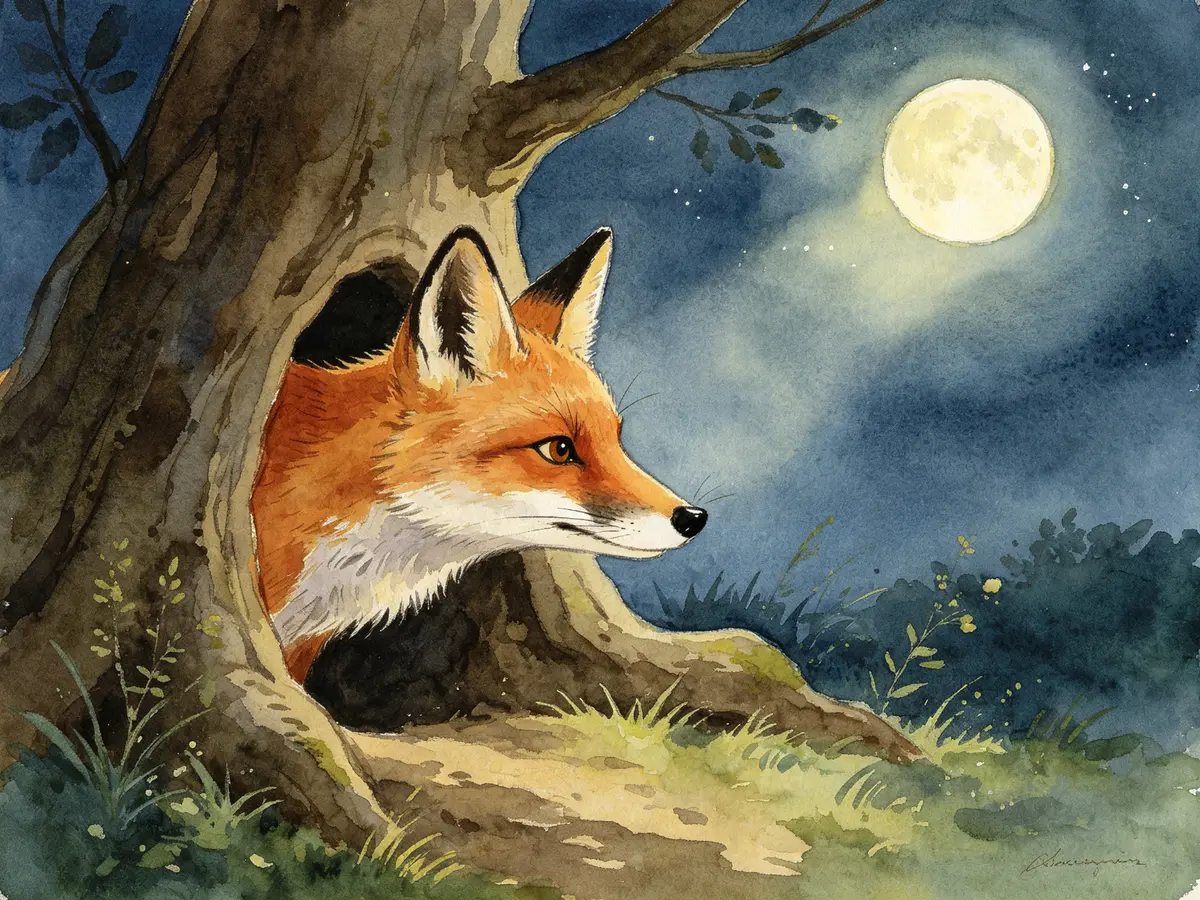
His black nose twitched from side to side, sniffing and sniffing for the scent of danger. He found none, and he was just about to go trotting forward into the wood when he heard or thought he heard a tiny noise, a soft rustling sound, as though someone had moved a foot ever so gently through a patch of dry leaves. Mr Fox flattened his body against the ground and lay very still, his ears pricked. He waited a long time, but he heard nothing more. “It must have been a field-mouse,” he told himself, “or some other small animal.” He crept a little further out of the hole . . . then further still. He was almost right out in the open now. He took a last careful look around. The wood was murky and very still. Somewhere in the sky the moon was shining. Just then, his sharp night-eyes caught a glint of something bright behind a tree not far away. It was a small silver speck of moonlight shining on a polished surface. Mr Fox lay still, watching it. What on earth was it? Now it was moving. It was coming up and up . . . Great heavens! It was the barrel of a gun! Quick as a whip, Mr Fox jumped back into his hole and at that same instant the entire wood seemed to explode around him. Bang-bang! Bang-bang! Bang-bang!
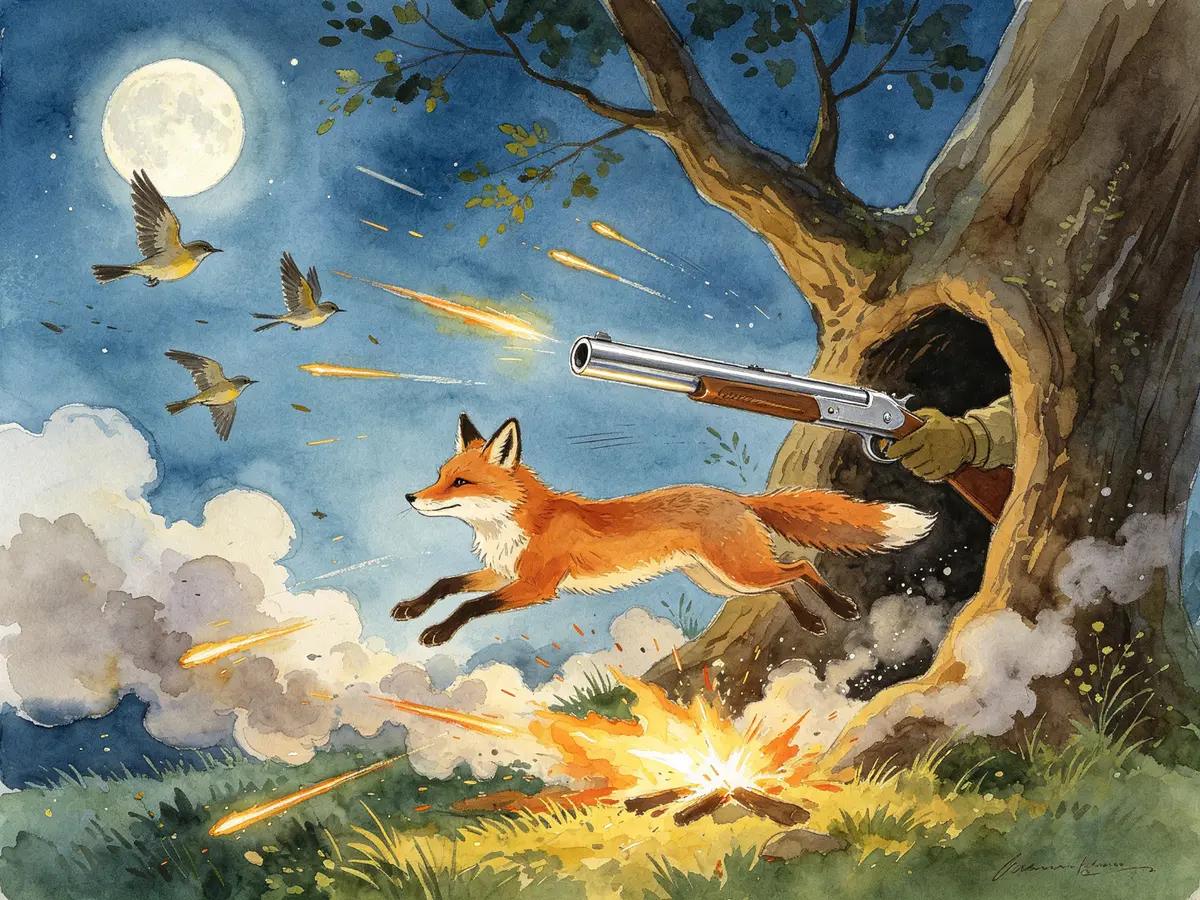
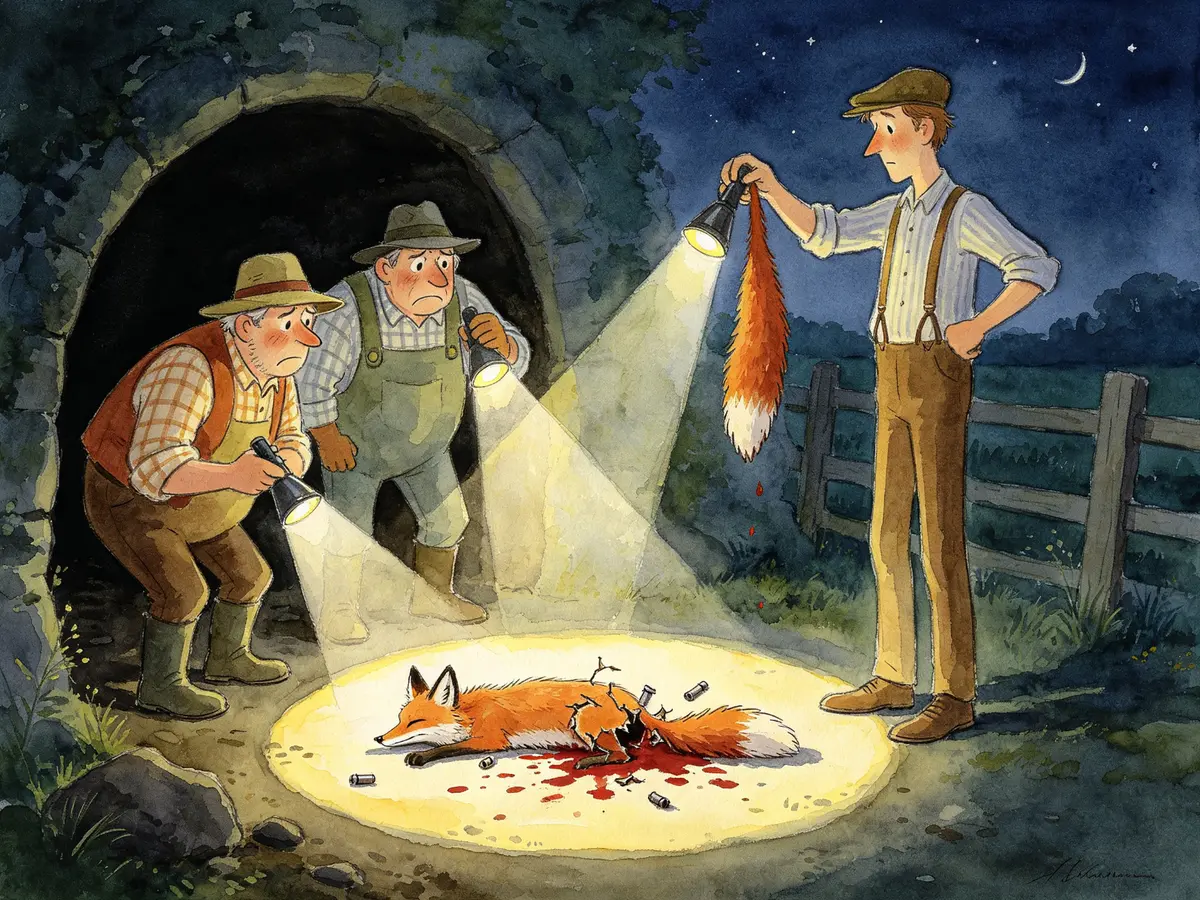
The smoke from the three guns floated upward in the night air. Boggis and Bunce and Bean came out from behind their trees and walked towards the hole. “Did we get him?” said Bean. One of them shone a flashlight on the hole, and there on the ground, in the circle of light, half in and half out of the hole, lay the poor tattered bloodstained remains of . . . a fox’s tail. Bean picked it up. “We got the tail but we missed the fox,” he said, tossing the thing away. “Dang and blast!” said Boggis. “We shot too late. We should have let fly the moment he poked his head out.” “He won’t be poking it out again in a hurry,” Bunce said. Bean pulled a flask from his pocket and took a swig of cider. Then he said, “It’ll take three days at least before he gets hungry enough to come out again. I’m not sitting around here waiting for that. Let’s dig him out.” “Ah,” said Boggis. “Now you’re talking sense. We can dig him out in a couple of hours. We know he’s there.” “I reckon there’s a whole family of them down that hole,” Bunce said. “Then we’ll have the lot,” said Bean. “Get the shovels!”
这一章:一边是自信的狐狸爸爸,一边是蹲在树后持枪的农场主。谁更沉得住气?
这一章写狐狸先生出洞前的每个细节——闻一闻、挪一寸、再闻一闻。记叙文用一连串小动作,能把紧张的气氛拉得又细又长。
He poked his long handsome face out into the night air and sniffed once.
"Long handsome face" paints the fox with two small words. The narrator likes him, and readers can feel it through the tone.
「长长的俊脸」两个词就画出了狐狸的样子。叙述者喜欢他,读者从语气里就能感觉到。
"I can smell those goons a mile away. I can even smell one from the other. Boggis gives off a filthy stink of rotten chicken-skins."
Mr Fox brags with a funny list: each farmer has his own smell. Playful speech makes the hero likable and warns us what is coming.
狐狸先生夸口,还按人排了气味清单:每个农场主各有各的臭。风趣的台词让主角讨喜,也为后文埋伏笔。
He inched forward a little more. The front half of his body was now in the open. ... Mr Fox flattened his body against the ground and lay very still, his ears pricked.
Slow motion in words: inch, sniff, flatten, lie still, ears pricked. Every tiny movement builds suspense until the bang.
文字版的慢镜头:挪一寸、闻、贴地、不动、竖起耳朵。每个微小动作都让悬念越来越紧,直到枪响。
Mr Fox would not have been quite so cocky had he known exactly where the three farmers were waiting at that moment.
The narrator tells us what Mr Fox does NOT know. This secret knowledge makes us anxious for him and creates dramatic tension.
叙述者偏偏让我们知道狐狸不知道的事:三个农场主就守在那里。这种「上帝视角」的提醒,让读者替他捏一把汗。
The wood was murky and very still. Somewhere in the sky the moon was shining.
Two quiet lines paint a dangerous night: the wood is "murky and very still", the moon glows far away. A silent setting holds its breath — and we know the farmers are hiding in it.
两句安静的描写画出危险的夜:树林昏暗而死寂,月亮挂在远处。寂静的环境屏住呼吸——而我们明知农场主就藏在这片黑暗里。
这一章按「时间 + 悬念」双线推进:晚饭约定(狐狸不知情)→ 洞口埋伏(读者知、狐狸不知)→ 出洞慢动作 → 枪响高潮 → 尾巴与挖洞计划。悬念像一根越拉越紧的弦。
“I think we’ll have duck tonight,” said Mrs Fox. “Ducks it shall be!” said Mr Fox. “Bunce’s best!”
狐狸夫妇商量晚餐:太太要两只肥鸭,先生自信出发。
How it expands · 怎么展开:对话开场——用几句家常话交代「今晚行动 + 目标农场」。先生的自信(能闻出农场主气味)为后文埋下伏笔。
They were just outside the entrance to the hole, each one crouching behind a tree with his gun loaded. ... they had chosen their positions very carefully, making sure that the wind was not blowing from them towards the fox’s hole.
三个农场主蹲在洞口树后持枪埋伏,风向正对他们有利。
How it expands · 怎么展开:围绕关键词 carefully / wind 展开——先写「在哪埋伏」,再写「为什么狐狸闻不到」(风向反了)。用环境细节把狐狸的安全感悄悄抽走。
Mr Fox crept up the dark tunnel ... He poked his long handsome face out ... and sniffed once. He moved an inch or two forward and stopped. He sniffed again.
狐狸先生一寸一寸挪出洞口,嗅了又嗅,格外小心。
How it expands · 怎么展开:用一连串慢动作展开「谨慎」——crept, poked, sniffed, moved, stopped。动作越细,读者越着急:危险就在旁边。
He heard ... a soft rustling sound ... he caught a glint of something bright behind a tree ... It was the barrel of a gun! Quick as a whip ... Bang-bang! Bang-bang! Bang-bang!
沙沙声、银光、枪管——狐狸跳回洞里,树林炸响。
How it expands · 怎么展开:高潮段用「线索链」展开:声音 → 银光 → 枪管,一步一惊;再用拟声词 Bang-bang 收在顶点,戛然而止。
“We got the tail but we missed the fox,” ... “Let’s dig him out.” ... “Get the shovels!”
农场主只打中一条尾巴,气得决定:把他挖出来。
How it expands · 怎么展开:用对话收尾——一句玩笑(打中尾巴错过狐狸)+ 一句命令(拿铁锹来)。结局不松手,把悬念递到下一章。
这是时间顺序结构,所以复述也按时间轴:约定 → 埋伏 → 出洞 → 枪响 → 计划。
小提示:与「思维导图」搭配用——把导图的枝条按 约定 → 埋伏 → 出洞 → 枪响 → 计划 排好,先看导图复述一遍,再合上导图凭记忆复述一遍。
示意图:一边用鼻子思考,一边用猎枪说话——今晚谁会赢?
把第三章的信息装进这张「思维导图」,再沿着复述支架讲一遍——你也能当小老师!
把句子补充完整,就完成了第三章的复述。
复述加分:用 First / Then / Next / Also / Finally 把六句话串起来;讲的时候故意放慢第三、四步,制造悬念感。
5 张图卡按情节顺序排好。看着图片,用英文把第三章讲出来——点击图片可以放大,每张图点开都有一句「提示句」帮你起头。
提示:图卡可左右滑动查看全部 5 张;点「看看提示句」展开英文句子;点图片放大全屏。
小挑战:先看着图讲一遍,再合上图卡,只凭记忆讲一遍——能做到,第三章就真正属于你了!
这一章是 Dahl 的「悬念教科书」:自信的主角、反着来的风向、越写越短的句子——他只用文字就让读者屏住呼吸。秘密武器是这六招:
没有背景介绍,第一句就是对话:吃什么?点菜!三两句就把「狐狸家的温馨夜生活」演了出来,比旁白介绍更生动。
未见其人,先闻其声:故事用对话直接「开演」,一开口就抓住读者——中文里叫「先声夺人」。
狐狸爸爸夸口「老远就能闻到他们」,读者却知道:风向反了,他根本闻不到。这就是戏剧性反讽——读者比主角知道得多,心都替他揪起来了。
作者故意让读者先看见埋伏,再看主角自信满满——中文叫「反衬」或「悬念」,一明一暗,紧张感翻倍。
一寸、停住、再嗅、再挪……作者把「出洞」拆成十几个慢动作。每一小步,读者的心就紧一分——悬念就是这么「拖」出来的。
把几秒的事拉成十几步,步步收紧——中文里叫「蓄势」,为高潮攒劲,越慢越紧张。
悬念高潮处,句子越来越短:疑问、短句、惊叹——像心跳一点点加快,把紧张顶到顶点。
一字一顿:句子越短节奏越快——中文叫「短句急促」,读起来像心跳怦怦响。
枪响没有一句描写,Bang-bang 连响六次,声音本身就讲完了「开枪」这件事——读者像亲耳听见。
以声写景:用枪声代替「枪响了」三个字——中文叫「摹声」,让读者「听见」画面。
一句话总结战果:got the tail but missed the fox——轻描淡写里全是讽刺;结尾「Get the shovels!」三个词,立刻开启新战局。把这两句抄进你的「好句本」吧。
got 对 missed,一得一失对照鲜明——中文叫「对举」;结尾三词短句戛然而止,悬念留到下一章。
中西对照小发现:英文 dramatic irony 就是中文「反讽 / 悬念」,onomatopoeia 就是「摹声」,short sentences 就是「短句急促」,contrast 就是「对举」。给小朋友讲的时候,中英文术语可以互相借用,哪边熟讲哪边。
三个难度层级:先找细节,再推原因,最后谈看法。点「提示」给一点帮助,点「答案」对照想法。
1. What did Mrs Fox want for dinner? 狐狸太太晚餐想吃什么?
2. Where did the three farmers hide? 三个农场主躲在哪里?
3. What did the farmers shoot off? 他们打掉了什么?
4. Why didn’t Mr Fox smell the farmers this time? 这次他为什么没闻到?
5. Why did Mr Fox creep out so slowly? 狐狸先生为什么爬得这么慢?
6. Why did Bean say it would take three days? 比恩为什么说要等三天?
7. Was Mr Fox too cocky? Why or why not? 狐狸先生是不是太自负了?
8. Is it right for the farmers to wait with guns? 农场主持枪埋伏对吗?
9. The next chapter is called “The Terrible Shovels”. What do you think happens? 下一章《可怕的铁锹》,你猜会发生什么?
Chapter 3 stretches one night into a tight suspense: the confident Mr Fox, the hidden guns, the slow sniffing — and a tail lost in the nick of time. The farmers win a trophy but miss the fox, so the hunt only grows hotter.
第三章把一夜写成紧绷的悬念:自信的狐狸爸爸、暗处的猎枪、一寸一寸的嗅探——最后只丢下一条尾巴侥幸脱身。农场主赢了纪念品却输了正主,猎杀只会更猛烈。
每张词卡正面是原文句子——先根据上下文猜意思,再点击翻面验证。学完 12 个核心词,别忘了下面的「拓展好词」。
“would not have been quite so cocky had he known”
猜一猜:谦虚的 / 自负的 / 害怕的?
“I can smell those goons a mile away.”
猜一猜:聪明人 / 蠢货笨蛋 / 农夫?
“Boggis gives off a filthy stink”
猜一猜:干净的 / 恶臭的 / 芳香的?
“Bunce reeks of goose-livers.”
猜一猜:散发香气 / 散发恶臭 / 闪闪发光?
“a soft rustling sound”
猜一猜:沙沙声 / 鸟叫声 / 风声?
“caught a glint of something bright”
猜一猜:闪光 / 黑影 / 声音?
“It was the barrel of a gun!”
猜一猜:枪管 / 子弹 / 扳机?
“the poor tattered bloodstained remains”
猜一猜:崭新的 / 破破烂烂的 / 闪亮的?
“tattered bloodstained remains”
猜一猜:雪白的 / 血迹斑斑的 / 金灿灿的?
“the poor tattered bloodstained remains of ...”
猜一猜:礼物 / 残余残骸 / 武器?
“Bean pulled a flask from his pocket”
猜一猜:手机 / 小酒壶 / 钥匙?
“took a swig of cider”
猜一猜:一小口 / 一大口 / 一口饭?
| Word | Meaning 释义 | From the text 原文 |
|---|---|---|
| entrance | n. 入口;洞口 | “outside the entrance to the hole” |
| crouching | v. 蹲伏(crouch 的现在分词) | “each one crouching behind a tree” |
| poked | v. 探出;戳(poke 的过去式) | “He poked his long handsome face out” |
| murky | adj. 昏暗的;朦胧的 | “The wood was murky and very still.” |
| twitched | v. 抽动(twitch 的过去式) | “His black nose twitched from side to side” |
| reckon | v.(口语)认为;估计 | “I reckon there’s a whole family of them” |
本章的 4 个语法点都藏在课文句子里:每个点按「规则 → 原文例句 → 即时练习」三步走,最后做 5 道综合小测检验。先划时态标志词和连接词,再判断时态与句型。
规则:引语后面常用 said / cried / asked + 主语。主语是名词时常常倒装:said Mr Fox(= Mr Fox said);主语是人称代词时不倒装:he said。
P1“Well, my darling,” said Mr Fox. “I think we’ll have duck tonight,” said Mrs Fox. “Now do be careful,” she said.
这一章几乎全是对话——said + 名词主语倒装出现了 10 多次,是读起来最「像小说」的节奏。
1“Get the shovels!” ___ Bean. A. said B. says C. is saying
2“Ducks it shall be!” ___ Mr Fox.(用 say 的过去式)
3把 “I’m hungry,” my little sister said. 改成倒装:___ my little sister。
1. A(said)——引语倒装,主语 Bean 是名词,用 said。
2. said——said Mr Fox = Mr Fox said,名词主语可倒装。
3. said——said my little sister。记住:名词主语可倒装,代词主语不倒装。
规则:as though / as if 引导方式状语从句,表示「仿佛、好像」。描述与事实相反或不真实的情况时,从句常用虚拟语气(had done / were)。
P3a soft rustling sound, as though someone had moved a foot ever so gently through a patch of dry leaves.
其实没人动脚(那是农场主)——用 had moved 表示「好像发生过」的假设。
1He spoke as though he ___ (know) everything.
2She looked at me as though I ___ (be) a stranger.
3用 as though 完成:The leaves moved ___ ___ ___ the wind had blown.(好像风吹过)
1. knew——as though + 过去时表示「好像(其实不确定)」;也可用 had known 表示更强的假设。
2. were——as though I were 是虚拟语气(be 用 were)。
3. as though——as though the wind had blown,过去完成时表示「仿佛发生过」。
规则:be about to + 动词原形表示正要做某事(即将发生);后面接 when + 一般过去时,表示「就在这个时候(突然)发生了另一件事」——这是制造意外的经典句型。
P3he was just about to go trotting forward into the wood when he heard or thought he heard a tiny noise.
「正要出发」的瞬间被一个声音打断——意外就此降临。
1I was about to ___ (leave) when the phone rang.
2She was about to fall asleep when she ___ (hear) a knock.
3用 about to ... when 完成:We ___ ___ ___ go out when it started to rain.
1. leave——be about to 后面接动词原形。
2. heard——when 从句用一般过去时,表示「这时突然」。
3. were about to——We were about to go out when it started to rain.(正要出门,突然下起雨来。)
规则:表示与过去事实相反的假设:if + 主语 + had done, 主语 + would have done。书面语中可省略 if,把 had 提到句首:Had he known ... = If he had known ...
P2Mr Fox would not have been quite so cocky had he known exactly where the three farmers were waiting.
= If he had known ... , he would not have been so cocky.(他要是知道……就不会这么自负了——但他不知道。)
1Had I ___ (see) the traffic light, I would have stopped.
2___ she known the truth, she would not have been so angry. A. If B. Had C. Has
3把 If the fox had smelled them, he would have stayed in the hole. 改成倒装:___ the fox ___ them, he would have stayed in the hole.
1. seen——Had I seen = If I had seen,用过去分词。
2. B(Had)——Had she known = If she had known。
3. Had / smelled——Had the fox smelled them, he would have stayed in the hole.(狐狸要是闻到他们,就会待在洞里了。)
5 道选择题 + 1 个配对游戏。先做选择题,再做配对,看看你能得几分!
1狐狸太太晚餐想吃什么?
2“quite so cocky” — what does cocky mean? cocky 是什么意思?
3这次狐狸先生为什么没闻到农场主?
4六声枪响打掉了什么?
5Bean 最后决定怎么做?
先点左边的角色,再点右边他说的话。
还有 3 对要配对。
这一页是你的自学地图:学习目标、学习步骤和全部答案都在这里,跟着走就能通关第三章。