CHAPTER 4 · 全书共 18 章

The Terrible Shovels 可怕的铁锹

第三章结尾,比恩说:“拿铁锹来!”这一章,铁锹真的来了——三把铁锹在狐狸一家头顶挖洞,越挖越近。可狐狸爸爸在惊吓中想到了一个绝妙的办法……全家能逃过这一劫吗?
作者 Roald Dahl 体裁 章节书 · 小说 重点 拟声 · 反复 · 声音阶梯 适合 词汇量 3000+ 的阅读者 · Lexile 600L
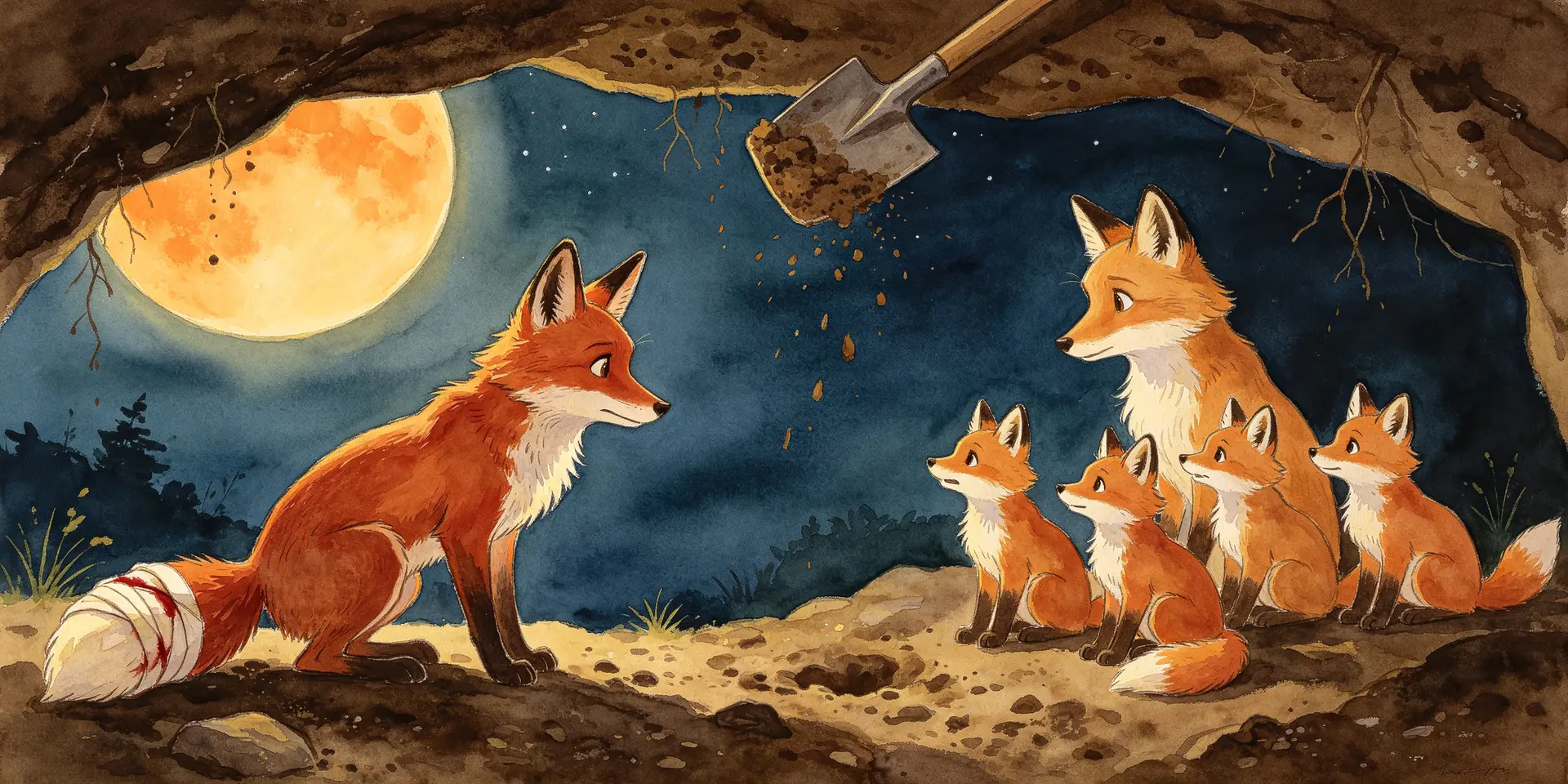
月夜狐狸洞里,一把铁锹穿透洞顶,泥土洒落,狐狸一家抬头看着铁锹
The shovel breaks through —— 铁锹捅破了洞顶
4Chapter 4
01 · BEFORE YOU READ

读前热身Before You Read

The farmers shouted “Get the shovels!” at the end of Chapter 3. Now read “The Terrible Shovels” and listen to the sounds coming closer and closer.第三章结尾农场主们大喊“拿铁锹来!”现在来读《可怕的铁锹》,听一听那越来越近的声音。

About the Author · 关于作者

Roald Dahl is a master of sound. In this chapter he does not tell us the danger is coming — he lets us hear it: scrape-scrape-scraping, Scrunch, scrunch, scrunch, an especially loud crunch. Writers call words that imitate sounds onomatopoeia.罗尔德·达尔是「声音」的大师。这一章他不直接告诉你危险来了——而是让你「听见」它:刮擦声、嘎吱声、特别响的咔嚓声。模仿声音的词,英文叫 onomatopoeia,中文叫「拟声词」。

What Happened Before · 上一章回顾

Mr Fox escaped the farmers’ guns — but he lost his beautiful tail. Boggis, Bunce and Bean decide they will not wait for him to get hungry. Bean says: “Get the shovels! We can dig him out in a couple of hours!”狐狸先生躲过了农场主的枪——却丢了那条漂亮的尾巴。三位农场主决定不干等他自己饿出来,比恩说:“拿铁锹来!用不了几个小时我们就能把他挖出来!”

Reading Tip · 阅读小贴士:Follow the comparisons: the tunnel grows longer and longer, it goes deeper and deeper, and the shovels become fainter and fainter. Three “-er and -er” phrases show a race underground — feel the rhythm of digging!注意文中的比较级:隧道越来越长 longer and longer、越挖越深 deeper and deeper、铁锹声越来越远 fainter and fainter。三个「越来越……」写的就是一场地下竞赛——感受挖掘的节奏!

Predict · 猜一猜

The farmers are digging down with shovels. What do you think will happen to the fox family?农场主们正拿着铁锹往下挖,你猜狐狸一家会怎样?

Pick one to remember your prediction — come back after reading to check!
点一个选项记住你的预测,读完全章后回来揭晓答案。

The Answer Is A!The whole family digs for dear life, deeper and deeper, until the shovels grow fainter and fainter. They escape! And Mrs Fox says the most beautiful line in the book.全家拼命向下挖,越挖越深,直到铁锹声越来越远。他们逃出来了!而狐狸太太说出了全书最美的一句赞美。

Two more questions after reading · 还有两个小问题:

1. What does Mr Fox shout when the shovel comes through the ceiling?
铁锹穿透天花板时,狐狸先生喊了什么?
2. What does Mrs Fox say to her children at the end?
结尾狐狸太太对孩子们说了什么?

02 · READ & EXPLORE

原文精读Read & Explore

跟着原文读一遍。橙色单词先别查——根据上下文猜一猜。点击任意单词弹出词典卡片(中英释义 · 发音 · 例句);点段落开头的 ▶ 听朗读(英式男声)。

Chapter 4 · The Terrible Shovels

Down the hole, Mrs Fox was tenderly licking the stump of Mr Fox’s tail to stop the bleeding. ‘It was the finest tail for miles around,’ she said between licks. ‘It hurts,’ said Mr Fox. ‘I know it does, sweetheart. But it’ll soon get better.’ ‘And it will soon grow again, Dad,’ said one of the Small Foxes. ‘It will never grow again,’ said Mr Fox. ‘I shall be tailless for the rest of my life.’ He looked very glum.
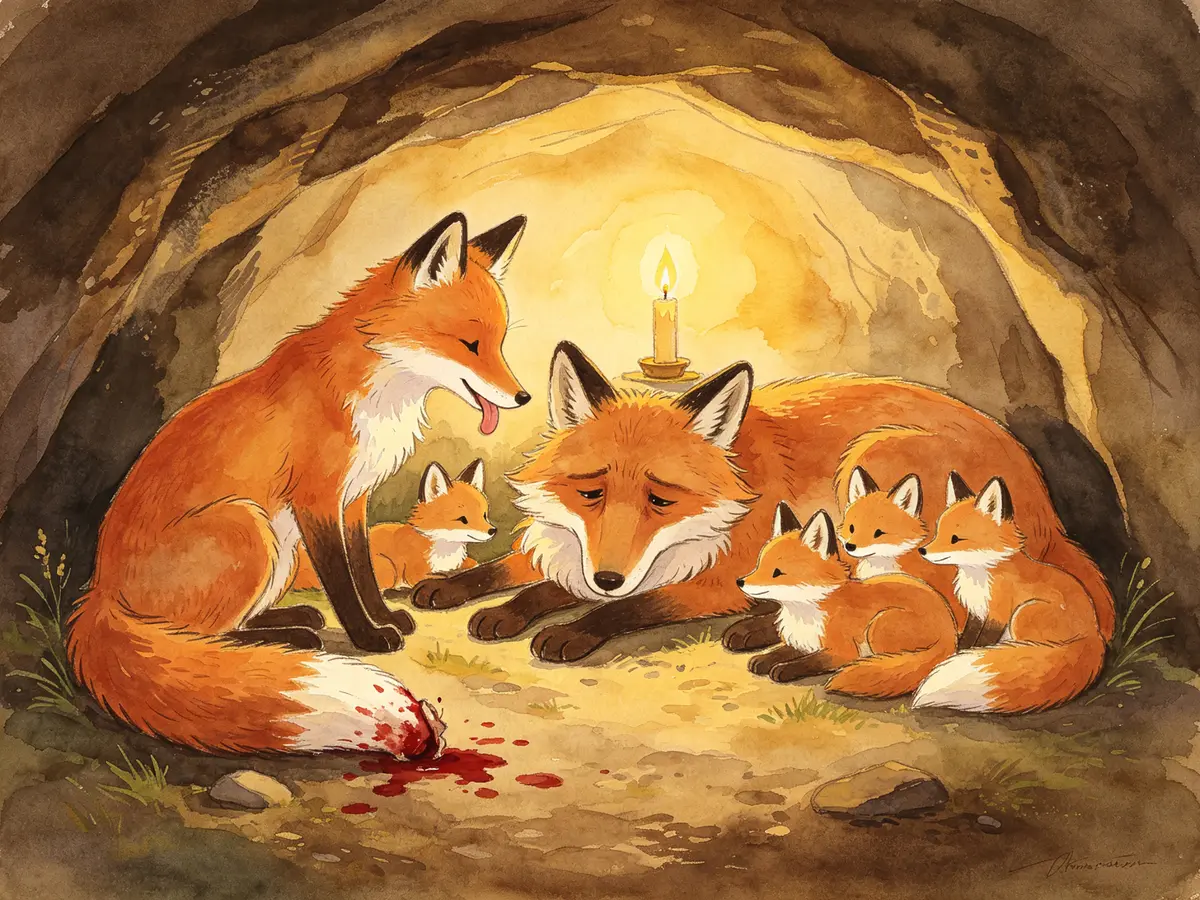
段落大意:洞里,狐狸太太温柔地舔着丈夫尾巴的伤口止血,说这是方圆几里最漂亮的尾巴。可狐狸先生知道它再也不会长出来了——他这辈子都要做一只没有尾巴的狐狸了。他非常沮丧。
狐狸太太舔舐丈夫尾巴的伤口
P1 · 伤口 —— 温柔的舔舐The Wound — A Gentle Tongue
表达方式 · 动作描写Expression · Action
Mrs Fox licked his wound tenderly to stop it bleeding ... she said it was the finest tail in the whole of the wood.
One small action — licking the wound — carries the family’s love without a single “I love you.” Tender details say what words cannot.一个细微动作——舔伤口止血——不用一句「我爱你」就把家人的爱写透。温情的细节胜过千言万语。
表达方式 · 心理描写Expression · Mind
He knew it would never grow again. He would be a tailless fox for the rest of his life. He felt very sad.
Plain sentences carry a heavy heart: never, tailless, very sad. The quiet disappointment makes the danger ahead feel real.平淡的句子托起沉重的心:再也不会长、没尾巴、非常难过。这份安静的沮丧,让后面的危机显得更真实。

There was no food for the foxes that night, and soon the children dozed off. Then Mrs Fox dozed off. But Mr Fox couldn’t sleep because of the pain in the stump of his tail. ‘Well,’ he thought, ‘I suppose I’m lucky to be alive at all. And now they’ve found our hole, we’re going to have to move out as soon as possible. We’ll never get any peace if we . . . What was that?’ He turned his head sharply and listened. The noise he heard now was the most frightening noise a fox can ever hear – the scrape-scrape-scraping of shovels digging into the soil. ‘Wake up!’ he shouted. ‘They’re digging us out!’ Mrs Fox was wide awake in one second. She sat up, quivering all over. ‘Are you sure that’s it?’ she whispered. ‘I’m positive! Listen!’ ‘They’ll kill my children!’ cried Mrs Fox. ‘Never!’ said Mr Fox. ‘But darling, they will!’ sobbed Mrs Fox. ‘You know they will!’
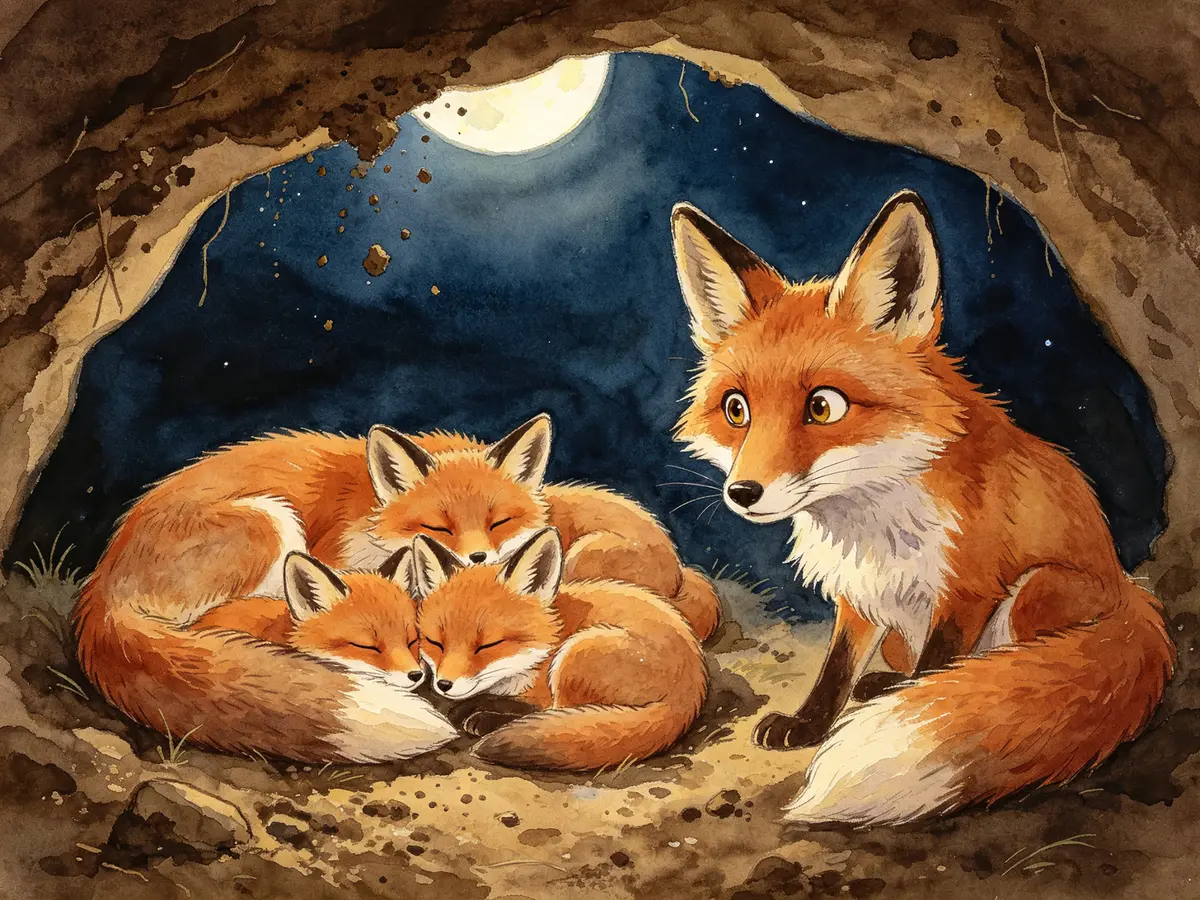
段落大意:那天夜里没有吃的,孩子们和太太都睡着了,可狐狸先生疼得睡不着。他正想着得搬家,忽然听见这世上狐狸最怕的声音——铁锹挖土的刮擦声!他叫醒全家:“他们要把我们挖出去!”太太吓得浑身发抖,哭喊:“他们会杀了我的孩子!”“绝不会!”狐狸先生坚定地回答。
深夜狐狸先生听见铁锹挖土声
P2 · 铁锹声 —— 最怕的声音The Scraping — The Sound Foxes Fear Most
修辞手法 · 拟声Rhetoric · Onomatopoeia
He heard ... the scraping noise of shovels digging into the earth — the sound every fox in the world is afraid of.
The scraping itself is a character: one sound, and the whole night turns dangerous. Onomatopoeia paints the threat with sound alone.刮擦声自己就是主角:一个声音,整夜都变危险。拟声词单凭声音就把威胁画了出来。
表达方式 · 语言描写Expression · Dialogue
“They will kill my children!” she cried. “Never!” said Mr Fox.
Two voices crash together: her cry of fear, his one-word wall of courage. Short dialogue, huge emotion.两种声音撞在一起:太太的哭喊,先生一个词的钢铁承诺。对话越短,力量越大。

Scrunch, scrunch, scrunch went the shovels above their heads. Small stones and bits of earth began falling from the roof of the tunnel. ‘How will they kill us, Mummy?’ asked one of the Small Foxes. His round black eyes were huge with fright. ‘Will there be dogs?’ he said. Mrs Fox began to cry. She gathered her four children close to her and held them tight. Suddenly there was an especially loud crunch above their heads and the sharp end of a shovel came right through the ceiling. The sight of this awful thing seemed to have an electric effect upon Mr Fox. He jumped up and shouted, ‘I’ve got it! Come on! There’s not a moment to lose! Why didn’t I think of it before!’
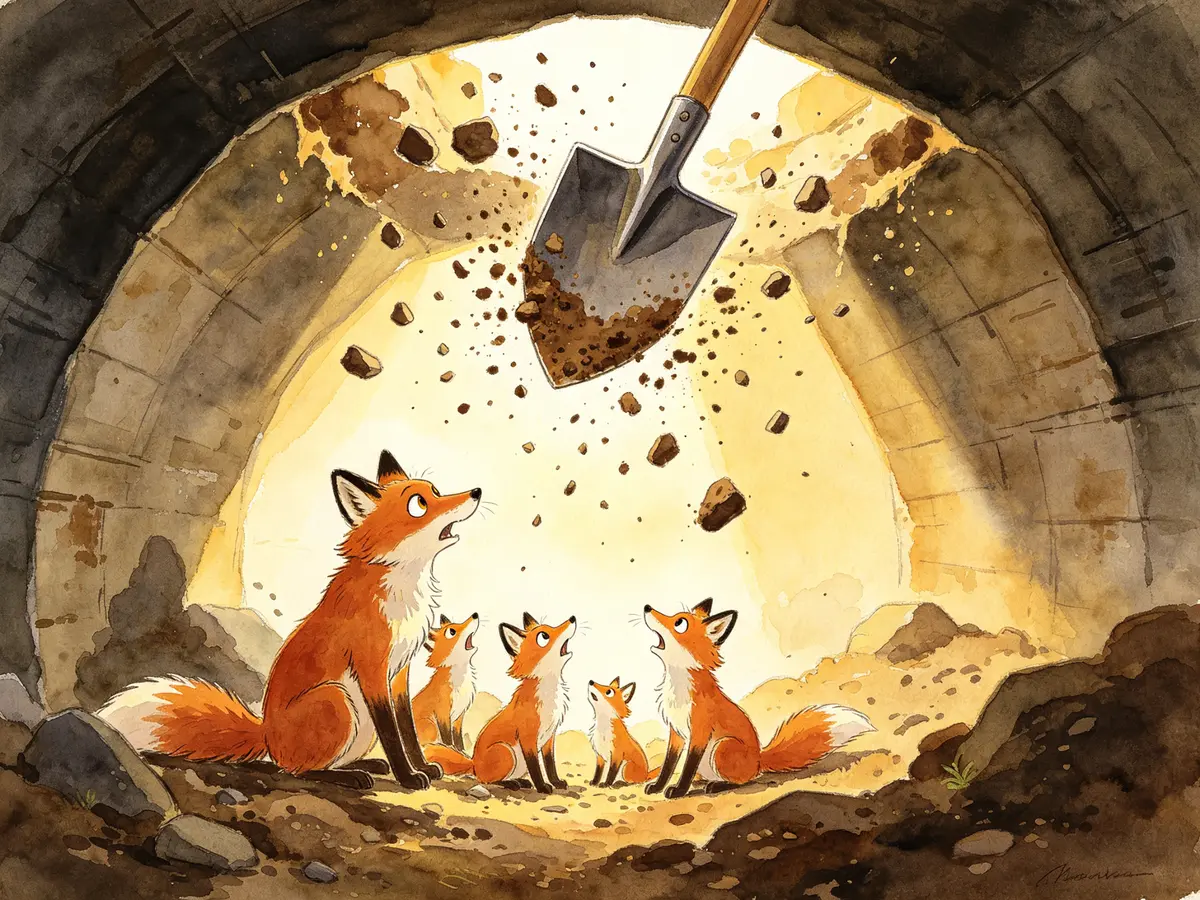
段落大意:头顶的铁锹嘎吱嘎吱响,小石块和泥土从洞顶往下掉。小狐狸问:“他们会怎么杀我们,妈妈?会有狗吗?”狐狸太太搂紧四个孩子。突然头顶传来特别响的一声——铁锹尖直接捅穿了天花板!这个可怕的景象却像电一样击醒了狐狸先生:“我想到了!快!一刻也不能耽误!”
铁锹尖捅穿洞顶天花板
P3 · 绝处逢生 —— 捅穿天花板的一刻Turning Point — The Shovel Breaks Through
表达方式 · 语言描写Expression · Dialogue
“How will they kill us, Mummy?” asked the smallest fox. “Will there be dogs?”
A child’s innocent question makes fear concrete and even sadder — the youngest one asks about the most terrible thing.孩子天真的提问把恐惧具体化,也更揪心——最小的孩子问起最可怕的事。
表现手法 · 转折Technique · Turn
The sharp end of a shovel came right through the ceiling ... “I’ve got it!” he cried. “Quick! ... Not a moment to lose!”
The worst moment is the turning point: the shovel breaking through wakes the fox’s idea. Danger becomes fuel.最糟的一刻正是转折点:铁锹捅穿天花板,反而击醒了狐狸的主意。危险成了燃料。

‘Think of what, Dad?’ ‘A fox can dig quicker than a man!’ shouted Mr Fox, beginning to dig. ‘Nobody in the world can dig as quick as a fox!’ The soil began to fly out furiously behind Mr Fox as he started to dig for dear life with his front feet. Mrs Fox ran forward to help him. So did the four children. ‘Go downwards!’ ordered Mr Fox. ‘We’ve got to go deep! As deep as we possibly can!’ The tunnel began to grow longer and longer. It sloped steeply downward. Deeper and deeper below the surface of the ground it went. The mother and the father and all four of the children were digging together. Their front legs were moving so fast you couldn’t see them. And gradually the scrunching and scraping of the shovels became fainter and fainter.
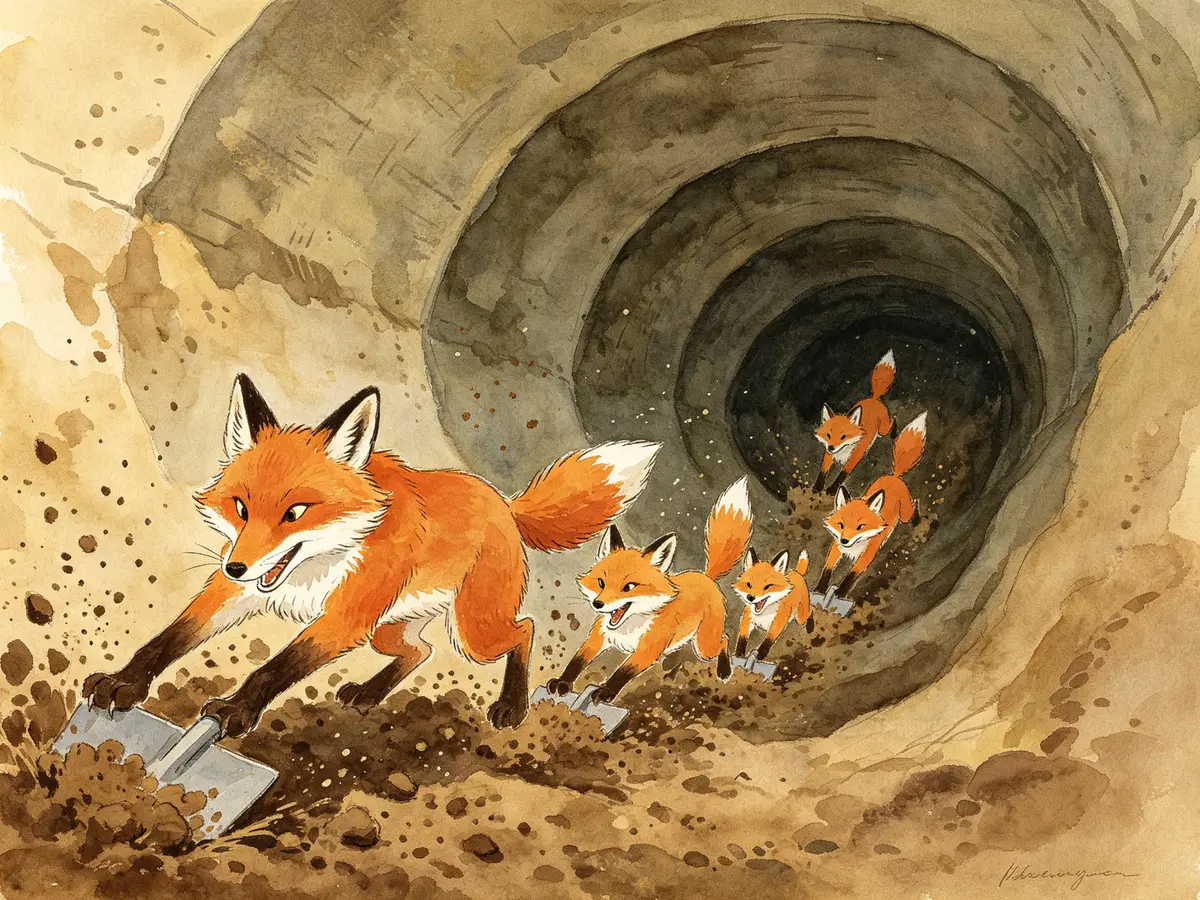
段落大意:“狐狸挖得比人快!”狐狸先生一边挖一边喊,“世界上没有人挖得像狐狸一样快!”泥土在他身后猛烈飞溅,全家一起拼命往下挖。隧道越来越长、越来越深,头顶的铁锹声越来越小、越来越远。
狐狸一家拼命向下挖洞
P4 · 挖洞赛跑 —— 狐狸挖得比人快The Digging Race — Foxes Dig Faster
修辞手法 · 反复与排比Rhetoric · Repetition
“A fox can dig faster than a man!” ... “No one in the world can dig as fast as a fox!”
The same proud claim rings twice — repetition turns a boast into a battle cry the whole family digs by.同一句豪言喊了两遍——反复把一句夸口变成全家一起挖土的冲锋号。
表达方式 · 动作描写Expression · Action
The earth flew over their shoulders ... The tunnel got longer and longer and deeper and deeper, and the sound of the shovels got fainter and fainter and fainter.
Flying earth, lengthening tunnel, fading shovels — three parallel “er and er” patterns make the escape feel like one long unstoppable push.飞溅的泥土、越来越长的隧道、越来越远的铁锹声——三组「越来越…越来越…」的节奏,让逃亡变成一场势不可挡的冲刺。

After about an hour, Mr Fox stopped digging. ‘Hold it!’ he said. They all stopped. They turned and looked back up the long tunnel they had just dug. All was quiet. ‘Phew!’ said Mr Fox. ‘I think we’ve done it! They’ll never get as deep as this. Well done, everyone!’ They all sat down, panting for breath. And Mrs Fox said to her children, ‘I should like you to know that if it wasn’t for your father we should all be dead by now. Your father is a fantastic fox.’ Mr Fox looked at his wife and she smiled. He loved her more than ever when she said things like that.
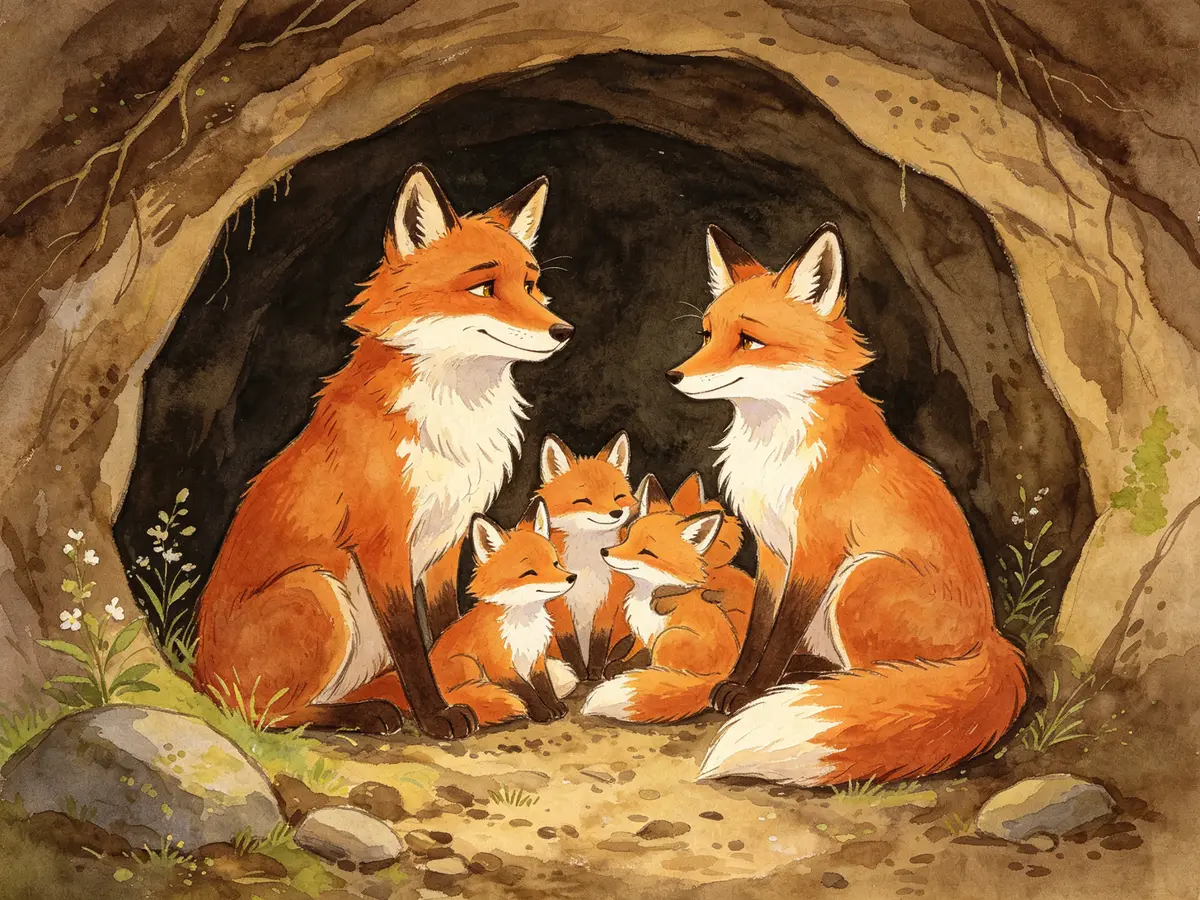
段落大意:一小时后,狐狸先生停下手:“停!”他们回头望向长长的隧道,四周一片安静。“呼!我们成功了!他们永远挖不到这么深!”全家坐下来直喘气。狐狸太太对孩子们说:“要知道,要不是你们的爸爸,我们现在都死了。你们的爸爸是只了不起的狐狸。”狐狸先生看着妻子,她笑了——他比任何时候都更爱她。
狐狸一家停下来喘气休息
P5 · 了不起 —— 书名在此点亮Fantastic — The Title Comes Alive
表达方式 · 语言描写Expression · Dialogue
“You know, if it weren’t for your father, we should all be dead by now. Your father is a fantastic fox.”
Mrs Fox’s praise quietly lands on the very words of the book title — the theme gets said aloud at the moment of safety.狐狸太太的称赞正好落在书名那几个词上——在脱险的一刻,主题被轻声说了出来。
表现手法 · 首尾呼应Technique · Echo
He looked at his wife, and she smiled at him, and he loved her more than ever before.
The chapter ends on warmth instead of danger: love returns to the centre just as the family escapes — a calm close after the storm.章末把镜头从危险拉回温情:一家人刚脱险,爱就回到中心——暴风雨后平静的收束。
03 · CHARACTER CARDS

人物档案Who Is on Stage Tonight

这一章:一边是受伤挨饿的狐狸一家,一边是头顶挖洞的农场主。谁先撑不住?

STAR OF THE STORY

Mr Fox

狐狸先生 · 受伤的队长
PAIN 伤痛the stump of his tail 尾巴残端疼得睡不着
IDEA 妙计dig for dear life 拼命往下挖——挖得比人快!
SECRET 秘密绝境反而点醒他:铁锹穿顶 = 灵光一现
MUM

Mrs Fox

狐狸太太 · 惊恐的母亲
FEAR 恐惧“They’ll kill my children!” 搂紧四个孩子
PRAISE 赞美“Your father is a fantastic fox.” 脱险后夸丈夫
CLUE 线索她害怕但信任丈夫——爱让一家人挖到底
THE DIGGERS

Boggis · Bunce · Bean

三位农场主 · 挖洞者
WEAPON 武器three terrible shovels 三把可怕的铁锹
SOUND 声音scrape → scrunch → crunch 挖土声越来越近
CLUE 线索他们能挖,可狐狸挖得更深更快

描写分析 · Descriptions That Move the Story

这一章里,狐狸一家在挖地道逃命。记叙文写紧张场面时,常把人物的话、动作和心里的念头穿插在一起写。

人物描写 · CHARACTER外貌 · 语言 · 动作 · 心理 · 神态
外貌描写 · APPEARANCE

His round black eyes were huge with fright.

Three details — round, black, huge with fright — describe a small fox's face in one line. Fear is written on the eyes, not told to us.

圆圆的黑眼睛里满是惊恐——一行字就写出了小狐狸的脸。恐惧写在眼睛里,而不是直接告诉你。

语言描写 · SPEECH

"Go downwards!" ordered Mr Fox. "We've got to go deep! As deep as we possibly can!"

Short, sharp orders, with "deep" repeated three times. In a crisis, Mr Fox speaks in commands — clear, urgent, and steady.

简短有力的命令,「深」字重复三次。危急关头狐狸先生只说指令——清楚、紧迫、镇定。

动作描写 · ACTION

Their front legs were moving so fast you couldn't see them.

One exaggeration — legs too fast to see — shows how desperately the whole family digs. Action here is the whole story.

一句夸张——前腿快得看不见——写出一家人挖洞有多拼命。在这里,动作本身就是故事。

心理描写 · PSYCHOLOGY

"Well," he thought, "I suppose I'm lucky to be alive at all."

In the middle of pain, Mr Fox counts himself lucky. A quiet inner thought shows his brave, grateful heart.

在疼痛中,狐狸先生还觉得自己活着就算幸运。一句安静的内心话,写出他勇敢又感恩的心。

神态描写 · EXPRESSION

He looked very glum.

One short line — "glum" — shows the whole mood on Mr Fox's face. The loss of his tail is written not in words but in his look.

短短一句——「一脸沮丧」——把情绪全写在狐狸先生脸上。丢了尾巴这件事,不用他说,看表情就知道。

环境描写 · ENVIRONMENT场景 · 景物 · 氛围
环境描写 · ENVIRONMENT

Scrunch, scrunch, scrunch went the shovels above their heads. Small stones and bits of earth began falling from the roof of the tunnel.

Onomatopoeia — "scrunch, scrunch, scrunch" — turns sound into setting. Earth falling from the roof shows the walls of the home literally closing in, danger made physical.

拟声词「咯吱、咯吱、咯吱」把声音变成环境。泥土从洞顶落下,家被一寸寸挖塌——危险变成了看得见的物理压迫。

文章结构 · Story Structure 时间顺序 · Time Order

这一章按「时间 + 危机升级」推进:伤口与沮丧(静止)→ 铁锹声(危险逼近)→ 捅穿天花板(最险一刻)→ 挖洞赛跑(行动)→ 脱险与称赞(收束)。危机一波比一波紧。

Para 1 · 开场 · 伤口与沮丧

Mrs Fox licked his wound tenderly to stop it bleeding. ... He would be a tailless fox for the rest of his life. He felt very sad.

狐狸太太为丈夫舔伤口止血;先生为失去尾巴非常沮丧。

How it expands · 怎么展开:从「最私人的痛」写起——围绕 tenderly / sad 展开:先写太太的温柔(爱),再写先生的心事(怕)。静止的悲伤,为接下来的危机做足铺垫。

推进 · Steps ×3危险 → 灵感 → 逃亡
Step 2 · 危险

He heard ... the scraping noise of shovels digging into the earth. ... “Never!” said Mr Fox.

铁锹刮擦声响了——狐狸先生叫醒全家,发誓绝不让他们得逞。

How it expands · 怎么展开:围绕核心词 scraping noise 展开:先写声音(用什么词形容),再写全家反应(太太哭、先生吼)。一个声音引出一整场家庭危机。

Step 3 · 灵感

The sharp end of a shovel came right through the ceiling ... “I’ve got it!” he cried.

铁锹捅穿天花板,狐狸先生灵光一现:我想到了!

How it expands · 怎么展开:转折点写法:先用孩子的问题(“会有狗吗?”)把恐惧拉到顶点,再让「最糟的一幕」(捅穿)触发灵感。绝处逢生,全靠这一下。

Step 4 · 逃亡

“A fox can dig faster than a man!” ... The tunnel got longer and longer and deeper and deeper, and the sound of the shovels got fainter and fainter and fainter.

全家拼命往下挖,铁锹声越来越远。

How it expands · 怎么展开:行动段用「节奏」展开:豪言壮语喊两遍(反复),再用三组「越来越…」写距离拉开。读者跟着隧道一起往下冲。

Step 5 · 收束 · 了不起

“Your father is a fantastic fox.” ... he loved her more than ever before.

全家脱险,狐狸太太说:你们的爸爸是只了不起的狐狸。

How it expands · 怎么展开:用「评价」收尾:太太一句话把这一夜的勇敢提炼成主题(fantastic fox),再落回夫妻相视一笑——爱与智慧,双线收束。

按结构复述 · Retell by Structure(时间顺序)

这是时间顺序结构,所以复述也按时间轴:伤口 → 铁锹声 → 捅穿 → 挖洞 → 脱险。

First · 伤口Mrs Fox licked Mr Fox’s wound, but he knew his tail would never grow back.太太舔伤口止血,可先生知道尾巴再也长不回来。
Then · 铁锹声That night he heard the scraping of shovels — the farmers were digging down to them.夜里传来铁锹挖土声——农场主挖下来了。
Next · 捅穿A shovel came through the ceiling, and suddenly Mr Fox had an idea.铁锹捅穿天花板,狐狸先生突然有了主意。
Then · 挖洞The whole family dug down as fast as they could, and the shovels grew fainter.全家拼命往下挖,铁锹声越来越远。
Finally · 脱险“We’ve done it!” said Mr Fox. “Your father is a fantastic fox,” said Mrs Fox.「我们成功了!」狐狸太太说:你们的爸爸是只了不起的狐狸。

小提示:与「思维导图」搭配用——把导图的枝条按 伤口 → 铁锹声 → 捅穿 → 挖洞 → 脱险 排好,先看导图复述一遍,再合上导图凭记忆复述一遍。

地下竞赛 · Foxes vs Shovels

Foxes ↓拼命向下挖 · 越来越深
Shovels ↓头顶逼近 · 越来越响

示意图:一个往下逃,一个往下追——比的是谁更快、更深。

04 · STORY MAP & RETELL

思维导图 · 复述文章Story Map & Retelling

把第四章的信息装进这张「思维导图」,再沿着复述支架讲一遍——你也能当小老师!

The Terrible Shovels
地点人物情节关键结果

复述支架 · Retell with the scaffold

把句子补充完整,就完成了第四章的复述。

1
Mrs Fox licked the ________ of Mr Fox’s tail to stop the bleeding.
2
That night Mr Fox heard the scrape-scrape-scraping of ________ digging into the soil.
3
The sharp end of a shovel came right through the ________.
4
“A fox can dig quicker than a ________!” shouted Mr Fox.
5
The tunnel grew longer and longer, deeper and ________.
6
Mrs Fox said, “Your father is a ________ fox.”

复述加分:用 First / Then / Next / Also / Finally 把六句话串起来;讲到铁锹声时,用越来越响、越来越快的语气,讲到挖洞时放慢,讲到最后一句时放轻、带一点自豪。

05 · PICTURE RETELL

看图复述Retell with Pictures

5 张图卡按情节顺序排好。看着图片,用英文把第四章讲出来——点击图片可以放大,每张图点开都有一句「提示句」帮你起头。

1狐狸洞里点着蜡烛,狐狸太太温柔地舔着狐狸爸爸受伤的尾巴残端止血,小狐狸们依偎在旁边
舔伤口
Say: “Mrs Fox licked the stump of Mr Fox’s tail tenderly. ‘It was the finest tail for miles around,’ she said.”
狐狸太太温柔地舔着狐狸先生尾巴的伤口:“这是方圆几里最漂亮的尾巴。”
2深夜的狐狸洞里,狐狸爸爸竖着耳朵警觉地倾听,身边幼狐们熟睡着,洞顶泥土微微掉落
夜里的声音
Say: “Mr Fox could not sleep. He heard the scrape-scrape-scraping of shovels digging into the soil!”
狐狸先生睡不着,他听见了铁锹挖土的刮擦声!
3一把铁锹的尖头猛地穿透隧道天花板,泥土碎石纷纷掉落,狐狸一家惊恐地仰头看
铁锹穿顶
Say: “Suddenly the sharp end of a shovel came right through the ceiling. Then Mr Fox shouted, ‘I’ve got it!’”
突然,铁锹尖直接穿透天花板!狐狸先生大喊:“我想到了!”
4狐狸一家五口在隧道里拼命挖掘,泥土向身后飞溅,隧道越挖越深
拼命向下挖
Say: “The whole family dug for dear life with their front feet. The tunnel grew deeper and deeper.”
全家用前爪拼命向下挖,隧道越来越深。
5深挖一小时后,狐狸一家靠坐在一起休息喘气,神情放松而安心
安全了
Say: “After an hour, all was quiet. ‘Phew! I think we’ve done it!’ said Mr Fox. ‘Your father is a fantastic fox,’ said Mrs Fox.”
一小时后一切安静下来。“呼!我想我们成功了!”狐狸太太说:“你们的爸爸是只了不起的狐狸。”

提示:图卡可左右滑动查看全部 5 张;点「看看提示句」展开英文句子;点图片放大全屏。

1 · First 舔伤口→ 2 · Then 夜里的声音→ 3 · Next 铁锹穿顶→ 4 · Also 拼命挖→ 5 · Finally 安全了

小挑战:先看着图讲一遍,再合上图卡,只凭记忆讲一遍——能做到,第四章就真正属于你了!

06 · WRITER’S CRAFT

写作亮点分析Why This Writing Works

这一章是 Dahl 的「声音教科书」:他不用描写说“危险来了”,而是用越来越响的声音让你亲耳听见。秘密武器是这六招:

Onomatopoeia · 拟声词
用声音代替画面
“Scrunch, scrunch, scrunch went the shovels above their heads. Small stones and bits of earth began falling from the roof of the tunnel.”

Scrunch 本身就是声音:铁锹扎进泥土的嘎吱声。没有写“危险逼近”,可读者耳朵里全是这个声音——像亲耳听见头顶的土在塌。

小任务:用拟声词写「雨点打在窗户上」或「踩碎枯叶」。
中文写作对照 · 摹声 onomatopoeia

以声写景:Scrunch 就是声音本身——中文叫「摹声」,用声音代替大段描写,画面自己就来了。

Dialogue Shows Fear & Courage · 对话见情
两句对话,两种心情
“They’ll kill my children!” cried Mrs Fox. “Never!” said Mr Fox. “But darling, they will!” sobbed Mrs Fox. “You know they will!”

太太用感叹号和哭腔(cried / sobbed)喊出恐惧,先生只用两个字 Never! 回应——短促、坚定。两句对话就把一个家庭在危险中的两种心情写透了。

小任务:用两句短对话写出「一个人害怕、另一个人安慰」。
中文写作对照 · 对比 + 短句抒情 contrast

哭腔对坚定,长句对短句——中文叫「对比」;Never! 一字一顿,是「短句抒情」,越短越有力。

Repetition · 反复与递进
越来越……越来越……
“The tunnel began to grow longer and longer. It sloped steeply downward. Deeper and deeper below the surface of the ground it went.”

longer and longer、Deeper and deeper、fainter and fainter——同一个结构反复出现,一步步加深:洞越来越深,铁锹声越来越远。重复就是强调。

小任务:用 “___er and ___er” 写「天色越来越暗」或「雨越来越大」。
中文写作对照 · 反复 + 层递 repetition

同一句式反复出现、程度层层加深——中文叫「反复」与「层递」,一唱三叹,越读越有力量。

Action Speaks · 以动写急
用动作代替“拼命”
“The soil began to fly out furiously behind Mr Fox as he started to dig for dear life with his front feet.”

不说 “he dug very hard”,而是写泥土“猛烈地向身后飞溅”(fly out furiously)——用看得见的画面,让读者自己读出“拼命”两个字。

小任务:写「他很着急」,但不许用急、慌、快——用动作来表现。
中文写作对照 · 侧面描写 indirect description

不直说心情,借泥土飞溅来写拼命——中文叫「侧面描写」,也叫「以动写情」,比直说更有画面。

Sound Ladder · 声音阶梯
声音由远及近,悬念升级
“the scrape-scrape-scraping of shovels digging into the soil” → “Scrunch, scrunch, scrunch went the shovels above their heads” → “Suddenly there was an especially loud crunch above their heads”

同一件危险,声音越来越大、越来越近:刮擦声 → 嘎吱声 → 特别响的 crunch。危险不用写,声音自己爬上来,读者的心越吊越高。

小任务:写「脚步声越来越近」,用三种越来越响的声音。
中文写作对照 · 由远及近 / 蓄势 escalation

三组声音由远及近、由弱到强——中文叫「由远及近」,配合「蓄势」,让高潮前的每一秒都绷紧。

Golden Line · 金句摘抄
结尾一句,点亮整章
“I should like you to know that if it wasn’t for your father we should all be dead by now. Your father is a fantastic fox.”

狐狸太太没有说“谢谢”或“你真棒”,而是把“我们现在还活着”归功于丈夫——fantastic 这个词在结尾轻轻落下,却是整章最重的一笔。把这两句抄进你的「好句本」吧。

挑战:用 “If it wasn’t for ___, we should ___” 造一个感谢句。
中文写作对照 · 卒章显志 theme at the end

结尾借狐狸太太之口点明主题——中文叫「卒章显志」:惊险之后一句温暖的话,让整章的勇气都有了意义。

句子银行 · Sentence Bank(仿写句型)

dig for dear life(拼命地挖)
He started to dig for dear life with his front feet.
仿写:The mouse ran ___ ___ ___ to escape the cat.(用 for dear life)
Nobody ... can ... as ... as ...(没有人能像……一样……)
Nobody in the world can dig as quick as a fox!
仿写:Nobody in my class can run as ___ (fast) as Tom.
比较级 and 比较级(越来越……)
The tunnel grew longer and longer. Deeper and deeper below the surface it went.
仿写:The rain fell ___ and ___ (heavy). 天色越来越暗:It grew ___ and ___ (dark).
If it wasn’t for ...(要不是……)
If it wasn’t for your father, we should all be dead by now.
仿写:If it wasn’t for your help, I ___ (not finish) on time. 试着自己造一句。

中西对照小发现:英文 onomatopoeia 就是中文「摹声」,repetition 就是「反复」,contrast 就是「对比」,escalation 就是「蓄势 / 层递」,theme at the end 就是「卒章显志」。给小朋友讲的时候,中英文术语可以互相借用,哪边熟讲哪边。

07 · THINK DEEPER

思考题Questions to Think About

三个难度层级:先找细节,再推原因,最后谈看法。点「提示」给一点帮助,点「答案」对照想法。

L1 · 细节 Detail

1. What was Mrs Fox doing at the start of the chapter? 这一章开头,狐狸太太在做什么?

第一句话 — “Down the hole, Mrs Fox was ...”
She was tenderly licking the stump of Mr Fox’s tail to stop the bleeding.她在温柔地舔狐狸先生尾巴的残端,帮他止血。

2. Why couldn’t Mr Fox sleep? 狐狸先生为什么睡不着?

找 “But Mr Fox couldn’t sleep because ...”
Because of the pain in the stump of his tail.因为尾巴残端疼。

3. What came right through the ceiling? 什么直接穿透了天花板?

找 “the sharp end of a ...”
The sharp end of a shovel came right through the ceiling.一把铁锹的尖端直接穿透了天花板。

L2 · 推断 Inference

4. What did Mr Fox mean by “A fox can dig quicker than a man!”? 他说这句话是什么意思?

他在对比自己和农场主:谁挖得更深更快,谁就赢。
He realised that digging down deeper and faster than the farmers was their only hope — foxes are born diggers, and the whole family could out-dig three men.他意识到,挖得更深、更快是他们唯一的希望——狐狸天生就是挖洞高手,全家一起挖,能挖赢三个大男人。

5. Why did the scrunching and scraping become fainter and fainter? 铁锹声为什么越来越小?

声音的远近和什么有关?
Because the foxes dug deeper and deeper below the surface, moving farther and farther away from the shovels above.因为狐狸们越挖越深,离上面的铁锹越来越远。

6. How did the sight of the shovel affect Mr Fox? 铁锹的出现对狐狸先生有什么影响?

找 “seemed to have an electric effect upon Mr Fox”。
It had an electric effect — it woke him up and gave him the sudden idea: “I’ve got it! A fox can dig quicker than a man!”铁锹的出现像触电一样——他一下子清醒过来,冒出了主意:“有了!狐狸挖得比人快!”

L3 · 评价与主题 Opinion & Theme

7. Was Mr Fox brave or just clever? Why? 狐狸先生是勇敢还是聪明?为什么?

想想:他受伤、害怕吗?在害怕的时候做了什么?
开放题。可以两者都选:他疼得睡不着,但听见危险立刻叫醒全家、带头挖洞——又聪明又勇敢。勇敢不是不害怕,而是害怕时还有办法。

8. What makes Mrs Fox say “Your father is a fantastic fox”? 狐狸太太为什么这样说?

她先说了什么前提?“if it wasn’t for your father ...”
开放题。她感谢丈夫救了全家:要不是他想到往下挖,大家早就没命了。fantastic 既是夸他聪明,也是夸他的爱和担当。

9. The next chapter is called “The Terrible Tractors”. What do you think happens? 下一章《可怕的拖拉机》,你猜会发生什么?

铁锹挖不动了,农场主会不会换更大的机器?
开放题。铁锹不够快,农场主可能开拖拉机来挖土——机器比铁锹可怕多了,狐狸一家怎么办?(读了才知道!)

中心思想 · What is this chapter really about?

Chapter 4 turns the worst night into the best proof of family: the fox’s lost tail, the scraping shovels, the shovel that breaks through — and a father who digs faster than any man to save his children. “Your father is a fantastic fox,” says Mrs Fox, and now we know why.

第四章把最糟的一夜变成家庭最好的证明:失去的尾巴、逼近的铁锹、捅穿天花板的铲尖——和一个比任何人都挖得快的爸爸。狐狸太太说「你们的爸爸是只了不起的狐狸」,我们终于知道为什么了。

family 家庭courage 勇气wits 机智unity 团结
08 · WORD LAB

词汇 · 在上下文里猜词Guess from Context

每张词卡正面是原文句子——先根据上下文猜意思,再点击翻面验证。学完 12 个核心词,别忘了下面的「拓展好词」。

stumpn. 名词

“licking the stump of Mr Fox’s tail”
猜一猜:整条尾巴 / 断剩下的残端 / 尾巴尖?

点击翻面看看 ▸
stump/stʌmp/n. 残端;断口(被砍断后剩下的一截)The dog wagged the stump of its tail.近义:remaining part 残余部分
tenderlyadv. 副词

“was tenderly licking the stump”
猜一猜:粗暴地 / 温柔地 / 飞快地?

点击翻面看看 ▸
tenderly/ˈtendəli/adv. 温柔地;体贴地She kissed the little fox tenderly.近义:gently 轻柔地 · 反义:roughly
taillessadj. 形容词

“I shall be tailless for the rest of my life.”
猜一猜:尾巴很长的 / 没有尾巴的 / 尾巴漂亮的?

点击翻面看看 ▸
tailless/ˈteɪlləs/adj. 无尾的;没有尾巴的The tailless cat still runs very fast.构词:tail(尾巴)+ -less(没有)= tailless
glumadj. 形容词

“He looked very glum.”
猜一猜:高兴的 / 闷闷不乐的 / 惊讶的?

点击翻面看看 ▸
glum/ɡlʌm/adj. 忧郁的;闷闷不乐的Why does he look so glum today?近义:sad, gloomy · 反义:cheerful
dozedv. 动词

“soon the children dozed off”
猜一猜:精神抖擞 / 打盹入睡 / 大哭大闹?

点击翻面看看 ▸
dozed/dəʊzd/v. 打盹;小睡(doze 的过去式)Grandpa dozed off in front of the TV.搭配:doze off 打瞌睡 · 近义:napped
scrapen. 名词

“the scrape-scrape-scraping of shovels”
猜一猜:鸟叫声 / 刮擦声 / 流水声?

点击翻面看看 ▸
scrape/skreɪp/n./v. 刮擦(声);刮,擦I heard the scrape of a chair on the floor.近义:scratch 刮擦声
scrunchn. 名词

“Scrunch, scrunch, scrunch went the shovels”
猜一猜:叮当声 / 嘎吱嘎吱声 / 嗡嗡声?

点击翻面看看 ▸
scrunch/skrʌntʃ/n. 嘎吱嘎吱的响声(拟声词)The scrunch of boots on snow.近义:crunch 咔嚓声 · 拟声词家族
quiveringadj. 形容词

“She sat up, quivering all over.”
猜一猜:兴高采烈 / 浑身发抖 / 昏昏欲睡?

点击翻面看看 ▸
quivering/ˈkwɪvərɪŋ/adj. 颤抖的;发抖的(quiver 的现在分词)Her voice was quivering with fear.近义:trembling, shaking 发抖
ceilingn. 名词

“came right through the ceiling”
猜一猜:地板 / 天花板 / 墙壁?

点击翻面看看 ▸
ceiling/ˈsiːlɪŋ/n. 天花板;顶部The tunnel ceiling began to fall in.反义:floor 地板 · 搭配:the ceiling of the tunnel
furiouslyadv. 副词

“fly out furiously behind Mr Fox”
猜一猜:缓慢地 / 猛烈地 / 整齐地?

点击翻面看看 ▸
furiously/ˈfjʊəriəsli/adv. 猛烈地;拼命地He dug furiously with his paws.近义:wildly 疯狂地 · 反义:slowly
slopedv. 动词

“It sloped steeply downward.”
猜一猜:水平向前 / 倾斜向下 / 突然转弯?

点击翻面看看 ▸
sloped/sləʊpt/v. 倾斜(slope 的过去式)The road sloped gently down to the river.近义:tilted, angled 倾斜
pantingadj. 形容词

“sitting down, panting for breath”
猜一猜:大声唱歌 / 喘着粗气 / 悄悄说话?

点击翻面看看 ▸
panting/ˈpæntɪŋ/adj. 气喘吁吁的(pant 的现在分词)The dog lay panting after the long run.搭配:pant for breath 直喘气

拓展好词 · More Words from This Chapter

WordMeaning 释义From the text 原文
bleedingn./v. 流血;出血“to stop the bleeding”
frightn. 惊吓;恐惧“His round black eyes were huge with fright.”
electricadj. 电击般的;令人震动的“an electric effect upon Mr Fox”
steeplyadv. 陡峭地;急剧地“It sloped steeply downward.”
fainteradj. 更微弱的(faint 的比较级)“became fainter and fainter”
fantasticadj. 极好的;了不起的“Your father is a fantastic fox.”
09 · GRAMMAR FOCUS

语法 · 从原文句子学语法Grammar from the Story

本章的 4 个语法点都藏在课文句子里:每个点按「规则 → 原文例句 → 即时练习」三步走,最后做 5 道综合小测检验。先划比较级标志词和连接词,再判断句型。

对话引语 · said / cried / sobbed + 主语

Speech verbs

规则:引语后面常用 said / cried / asked / sobbed + 主语。主语是名词时常常倒装:said Mr Fox(= Mr Fox said);主语是人称代词时不倒装:he said。不同的说话动词还能表达心情:cried(喊)、sobbed(哭诉)、whispered(低语)、shouted(大叫)。

P2“They’ll kill my children!” cried Mrs Fox. “Never!” said Mr Fox. “But darling, they will!” sobbed Mrs Fox.

同样是“说”,cried 是尖叫、sobbed 是哭诉——动词一换,情绪立刻不同。

即时练习

1“Go downwards!” ___ Mr Fox. A. said B. ordered C. whispered

2“Are you sure that’s it?” she ___.(用 say 的过去式)

3把 “I’m so scared,” my little brother said. 改成倒装:___ my little brother。

参考答案与解析

1. B(ordered)——狐狸先生在发号施令,用 ordered(命令)最贴切,且名词主语可倒装。
2. said——she said,代词主语不倒装。
3. said——said my little brother。名词主语可倒装,代词主语不倒装。

比较级 and 比较级 · 越来越……

-er and -er

规则:“比较级 and 比较级” 表示持续变化,意思是「越来越……」。单音节词用 -er:longer and longer(越来越长)、deeper and deeper(越来越深);fainter and fainter(越来越弱)。

P4The tunnel began to grow longer and longer. Deeper and deeper below the surface of the ground it went. And gradually the scrunching and scraping of the shovels became fainter and fainter.

三组「比较级 and 比较级」像下楼梯:洞越深,声越远——变化是连续的、越来越明显。

即时练习

1The rain fell ___ and ___ (hard). 雨越下越大。

2The night grew ___ and ___ (dark). 夜越来越黑。

3用 “-er and -er” 翻译:她跑得越来越快。

参考答案与解析

1. harder and harder——hard 的比较级是 harder,重复表示持续变强。
2. darker and darker——dark → darker,越来越黑。
3. She ran faster and faster.——fast → faster,重复强调变化。

as ... as · 和……一样……

as ... as

规则:as + 形容词/副词原级 + as 表示同级比较:“和……一样……”。否定时用 not as ... as(不如……);中间可插入名词短语,如 as deep as we possibly can(尽可能深)。

P3Nobody in the world can dig as quick as a fox! P4As deep as we possibly can!

狐狸先生用 as ... as 夸口:世界上没有谁挖得像狐狸一样快——最高级的骄傲,用最朴素的句型说出来。

即时练习

1My sister is as ___ (tall) as my mother.

2He can run as ___ (quick) as a horse.

3用 not as ... as 翻译:这本书没有那本有趣。

参考答案与解析

1. tall——as + 形容词原级 + as,同级比较不用比较级。
2. quick——as quick as,原级;注意不是 quicker。
3. This book is not as interesting as that one.——not as ... as 表示“不如”。

含蓄条件句 · if it wasn’t for ...(要不是……)

if it wasn’t for

规则:if it wasn’t for + 名词 意思是「要不是因为……(就不会……)」,是一个含蓄条件句:条件没有明说“如果”,而是借“某人/某事”表达。主句常用虚拟语气:we should all be dead(我们早就都没命了)。

P5if it wasn’t for your father, we should all be dead by now.

意思是:要是没有你们的爸爸,我们现在全都没命了——把感谢藏在假设里,格外动人。

即时练习

1If it wasn’t for the map, we ___ (get) lost. A. will B. would C. do

2If it wasn’t for your help, I ___ (not finish) the work on time.

3用 if it wasn’t for 翻译:要不是下雨,我们就去公园了。

参考答案与解析

1. B(would)——含蓄条件句的主句常用 would + 动词原形。
2. would not finish——要不是你的帮助,我就不能按时完成工作。
3. If it wasn’t for the rain, we would go to the park.——假设与现在事实相反。

语法四步策略:① 找比较级标志(-er and -er、as ... as、than → 判断比较还是同级);② 找说话动词(said / cried / sobbed / whispered → 判断倒装与情绪);③ 辨条件句(if it wasn’t for → 含蓄假设);④ 代入回读——把答案放回句子读一遍,通顺才算对。
10 · QUICK QUIZ

小测验Check What You’ve Got

5 道选择题 + 1 个配对游戏。先做选择题,再做配对,看看你能得几分!

1章首 Mrs Fox 在做什么?

2Mr Fox 为什么睡不着?

3“A fox can dig quicker than a ___!” 空格里是?

4铁锹声最后变得怎么样?

5Mrs Fox 最后怎么夸丈夫?

0 / 5
选择题得分
做完 5 道选择题,看看你的成绩!

配对游戏 · Match the Speaker to His Words

先点左边的角色,再点右边他说的话。

SPEAKER 说话人
WORDS 台词

还有 3 对要配对。

11 · STUDY GUIDE

学习指南Study Guide & Answer Key

这一页是你的自学地图:学习目标、学习步骤和全部答案都在这里,跟着走就能通关第四章。

学习目标 Learning Objectives
  • 阅读策略:用上下文猜生词(stump / glum / scrunch 等);听出「声音阶梯」如何制造紧张;识别拟声词、反复递进和对话见情的写法。
  • 语言知识:掌握 12 个核心词汇;认识对话引语倒装、比较级 and 比较级、as ... as 同级比较、含蓄条件句 if it wasn’t for。
  • 写作技巧:学习拟声词、反复递进、以动写急、声音阶梯四种手法,并完成仿写。
  • 思维表达:借助思维导图完整复述第四章;能区分「细节—推断—评价」三类问题。
学习步骤 Suggested Steps
  • 第 1 步 · 热身(课前 10 分钟):读前热身 → 回顾第三章结尾(“Get the shovels!”)→ 预测活动;用朗读功能听读或播放第一段对话。
  • 第 2 步 · 精读(课中 25 分钟):精读原文(重点朗读第二、三段,听声音阶梯)→ 人物档案 → 思维导图梳理 → 写作亮点讲解。
  • 第 3 步 · 巩固(课后 15 分钟):复述支架练习 → 思考题分层挑战 → 小测验 → 仿写练习。
  • 小提示:如果觉得难,先完成 L1 细节题和配对游戏;想挑战自己,试试 L3 评价题和「声音阶梯」仿写。
参考答案 Answer Key
  • 预测题:A — 狐狸们向下挖得更深,逃过一劫(狐狸挖得比人快)。
  • 复述支架:① stump ② shovels ③ ceiling ④ man ⑤ deeper ⑥ fantastic。
  • 思考题:见各题「答案」按钮;L3 开放题言之有理即可。
  • 选择题:1-A 2-B 3-B 4-B 5-C。
  • 配对:Mr Fox→A fox can dig quicker than a man!;Mrs Fox→They’ll kill my children!;A Small Fox→Will there be dogs?
更多精读玩法 More Ideas
  • 声音阶梯朗读:和同学分三组,一组读 scrape-scrape-scraping、一组读 Scrunch, scrunch, scrunch、一组读 an especially loud crunch,按顺序越读越响——听见危险逼近。
  • 比较级接力:每人用 “-er and -er” 说一个「越来越……」,如 darker and darker、faster and faster,接龙看谁说得最多。
  • 复述接龙:和家人或同学一起,一个说一句,下一位接下一句,用 First / Then / Next / Finally 串完第四章。
  • 读书日志 Reading Log:每章记录 3 个新词、1 句金句、1 个问题。
  • 金句仿写集:把 “Your father is a fantastic fox.” 这类金句摘进自己的金句本,慢慢攒成一堵「金句墙」。
  • 跨章对比:读完第 5 章 The Terrible Tractors 后,对比「铁锹 vs 拖拉机」,谁更可怕?