CHAPTER 5 · 全书共 18 章

The Terrible Tractors 可怕的拖拉机

第四章结尾,狐狸太太说:“你们的爸爸是只了不起的狐狸。”可第二天天一亮,三位农场主还在地面上挖。这一次,他们不开枪、不挖洞——他们开来了一辆可怕的机械铲拖拉机。山丘在崩塌,大树在倒下,狐狸一家能撑住吗?
作者 Roald Dahl 体裁 章节书 · 小说 重点 夸张 · 明喻 · 机器声浪 适合 词汇量 3000+ 的阅读者 · Lexile 600L
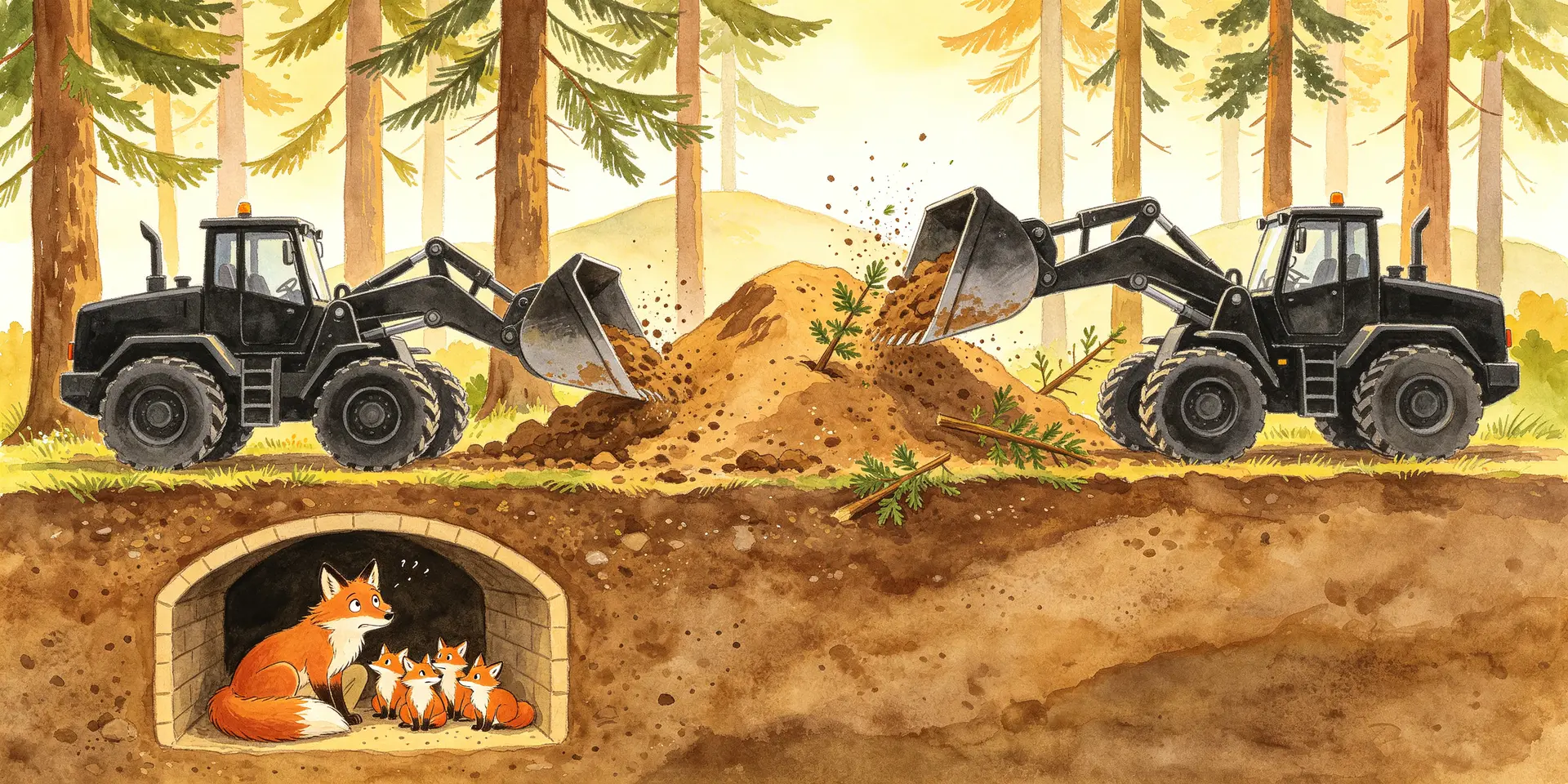
两辆黑色履带拖拉机刨开山丘,狐狸一家在地道里惊恐仰望
The terrible tractors —— 可怕的拖拉机来了
5Chapter 5
01 · BEFORE YOU READ

读前热身Before You Read

The farmers have dug all night with shovels — but they cannot reach the foxes. So Bean has a new, much more terrible idea: machines! Now read “The Terrible Tractors” and listen to the machines roar.农场主们用铁锹挖了一整夜——却怎么也挖不到狐狸。于是比恩有了一个更可怕的新主意:机器!现在来读《可怕的拖拉机》,听一听机器的轰鸣。

About the Author · 关于作者

Roald Dahl loves to make danger bigger and bigger. In Chapter 4 the shovels made a soft scrape. Now the machines go clanking, clanging and banging, until the noise is deafening. He also uses hyperbole (夸张) — the hole is so deep you could put a house into it — and simile (明喻): the big tree falls like a matchstick.罗尔德·达尔喜欢让危险「越来越大」。第四章的铁锹只是轻轻的刮擦声,现在机器叮叮当当、哐哐作响,直到震耳欲聋。他还用「夸张」——洞深得能装下一座房子;用「明喻」——大树像火柴棍一样被推倒。

What Happened Before · 上一章回顾

The fox family dug for dear life, deeper and deeper, and escaped the shovels. Mrs Fox said the golden line: “Your father is a fantastic fox.” But at sunrise the next morning, Boggis, Bunce and Bean are still digging — and they are not giving up.狐狸一家拼命向下挖,越挖越深,躲过了铁锹。狐狸太太说出金句:“你们的爸爸是只了不起的狐狸。”可第二天日出时,博吉斯、邦斯和比恩还在挖——而且他们绝不放弃。

Reading Tip · 阅读小贴士:Watch three things: ① the hyperbole — “a hole so deep you could have put a house into it”; ② the simile — the tree is “toppled like a matchstick”; ③ the short commands — “Dig for your lives! Dig, dig, dig!” Bigger danger, shorter sentences!注意三样东西:①夸张——“洞深得能装下一座房子”;②明喻——大树“像火柴棍一样被推倒”;③短命令——“拼命挖!挖挖挖!”危险越大,句子越短!

Predict · 猜一猜

The terrible tractors are coming to dig out the foxes. What do you think will happen?可怕的拖拉机来挖狐狸了,你猜会发生什么?

Pick one to remember your prediction — come back after reading to check!
点一个选项记住你的预测,读完全章后回来揭晓答案。

The Answer Is B!Mr Fox shouts “Dig for your lives!” and the whole family burrows deeper, leaving the roaring machines above. The danger is bigger — but so is their courage.狐狸先生大喊“拼命挖!”全家往更深处挖去,把轰鸣的机器甩在头顶。危险更大了——他们的勇气也更大了。

Two more questions after reading · 还有两个小问题:

1. What is Bean’s new idea?
比恩的新主意是什么?
2. What does Mr Fox shout when he sees the tractors?
狐狸先生看见拖拉机时喊了什么?

02 · READ & EXPLORE

原文精读Read & Explore

跟着原文读一遍。橙色单词先别查——根据上下文猜一猜。点击任意单词弹出词典卡片(中英释义 · 发音 · 例句);点段落开头的 ▶ 听朗读(英式男声)。

Chapter 5 · The Terrible Tractors

As the sun rose the next morning, Boggis and Bunce and Bean were still digging. They had dug a hole so deep you could have put a house into it. But they had not yet come to the end of the foxes’ tunnel. They were all very tired and cross. ‘Dang and blast!’ said Boggis. ‘Whose rotten idea was this?’ ‘Bean’s idea,’ said Bunce. Boggis and Bunce both stared at Bean. Bean took another swig of cider, then put the flask back into his pocket without offering it to the others. ‘Listen,’ he said angrily, ‘I want that fox! I’m going to get that fox! I’m not giving in till I’ve strung him up over my front porch, dead as a dumpling!’ ‘We can’t get him by digging, that’s for sure,’ said the fat Boggis. ‘I’ve had enough of digging.’
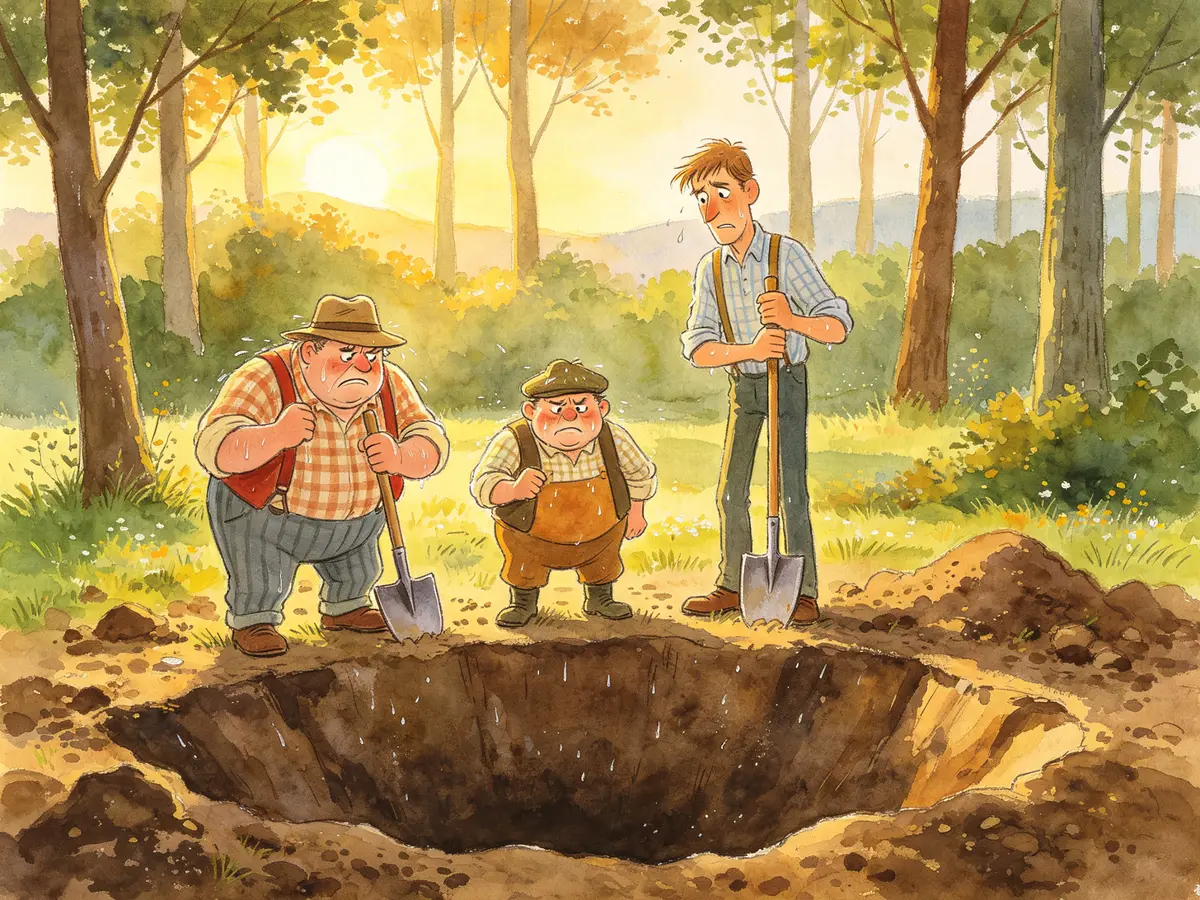
段落大意:第二天日出时,三位农场主还在挖。他们挖的坑深得能装下一座房子,却还是没挖到狐狸隧道的尽头。又累又气的他们开始互相埋怨——这馊主意是谁出的?比恩放下狠话:不把狐狸吊在门廊上决不罢休。可胖博吉斯说:光靠挖是挖不到他的。
农场主们挖出深坑却追不上狐狸
P1 · 挖不动 —— 又累又气的清晨Still Digging — A Tired, Angry Dawn
修辞手法 · 夸张Rhetoric · Exaggeration
The hole they dug was so deep it could have held a house, and still they had not reached the end of the fox’s tunnel.
A hole that could hold a house: one exaggeration shows how long the men have dug and how clever the fox has run — giant effort, tiny result.一个能装下房子的坑:一句夸张写出人挖了多久、狐狸跑得多巧——巨大的力气,细小的收获。
表达方式 · 语言描写Expression · Dialogue
“I’m not going home till we’ve got that fox,” said Bean. “He’s got to be hung up on the porch.”
A short oath — “hung up on the porch” — tells us exactly how far the farmers will go. One sentence sets the stake of the whole battle.一句短誓「要把他吊在门廊上」就把农场主的决心交代清楚——一句话定下整场战斗的筹码。

Bunce, the little pot-bellied dwarf, looked up at Bean and said, ‘Have you got any more stupid ideas, then?’ ‘What?’ said Bean. ‘I can’t hear you.’ Bean never took a bath. He never even washed. As a result, his earholes were clogged with all kinds of muck and wax and bits of chewing-gum and dead flies and stuff like that. This made him deaf. ‘Speak louder,’ he said to Bunce, and Bunce shouted back, ‘Got any more stupid ideas?’ Bean rubbed the back of his neck with a dirty finger. He had a boil coming there and it itched. ‘What we need on this job,’ he said, ‘is machines . . . mechanical shovels. We’ll have him out in five minutes with mechanical shovels.’
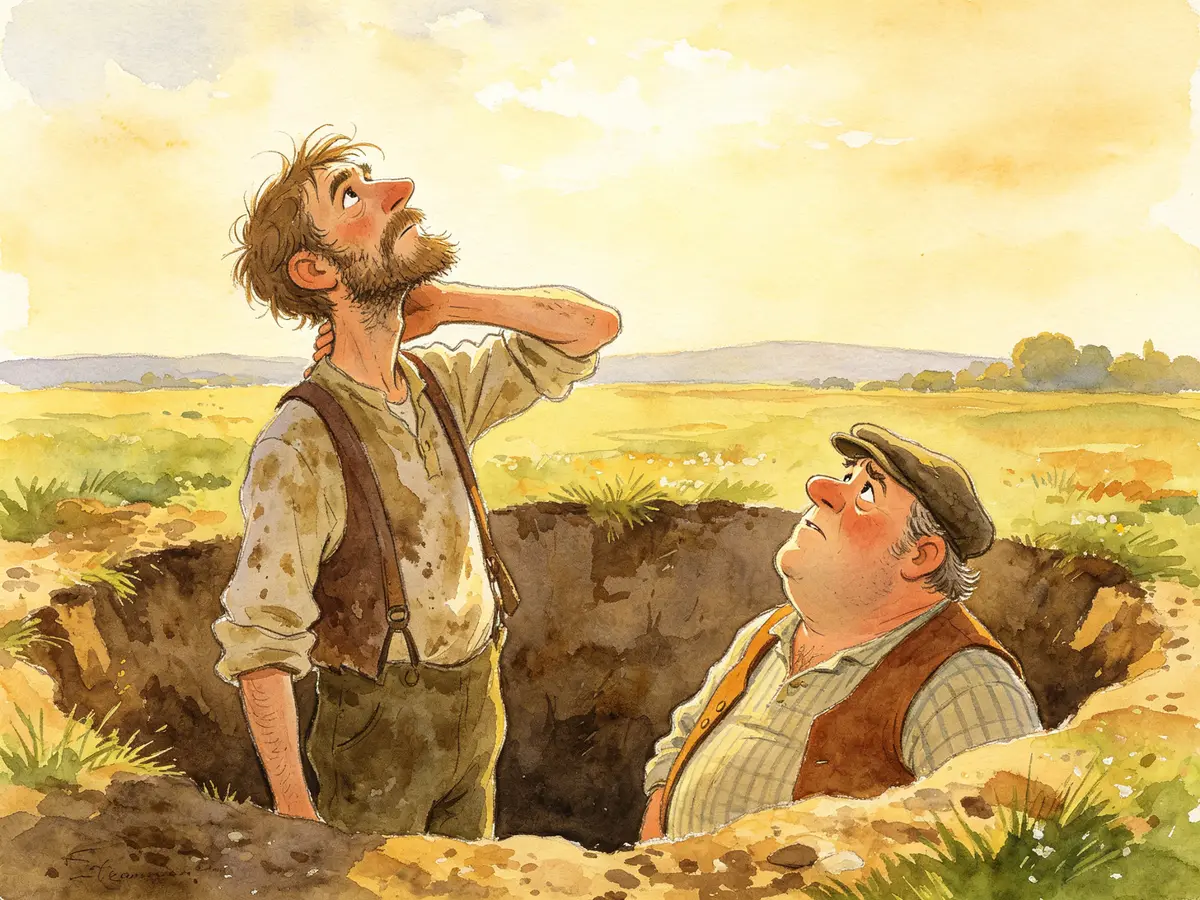
段落大意:邦斯讽刺比恩:你还有更蠢的主意吗?比恩耳洞里塞满污垢和耳屎,听不清别人说话,让人大声点。他挠着脖子后面正冒头的疖子,想出了新主意:用机器!机械铲五分钟就能把狐狸挖出来!
比恩挠着脖子想出新主意
P2 · 馊主意 —— 机器来了A New Idea — Machines!
表达方式 · 细节描写Expression · Detail
Bean’s ears were stopped up with dirt and wax ... he scratched the boil that was coming up on the back of his neck.
Dirty ears and a scratching boil: ugly comic details make Bean ridiculous even as he plans. Details do the character work here.堵满污垢的耳朵、挠着冒头的疖子:这些滑稽的小细节让比恩一边谋划一边可笑。细节在这里替人物说话。
结构手法 · 转折Structure · Turn
“We’ll dig the fox out with machines! ... those mechanical shovels will have him out in five minutes!”
When the shovels fail, the story raises the stakes: machines. Each failed method pushes the next, bigger weapon — the classic escalation of a chase.铁锹失败,故事立刻升级武器:机器。每失败一次,下一件武器就更狠——追捕的经典升级套路。

This was a pretty good idea and the other two had to admit it. ‘All right then,’ Bean said, taking charge. ‘Boggis, you stay here and see the fox doesn’t escape. Bunce and I will go and fetch our machinery. If he tries to get out, shoot him quick.’ The long, thin Bean walked away. The tiny Bunce trotted after him. The fat Boggis stayed where he was with his gun pointing at the fox-hole.
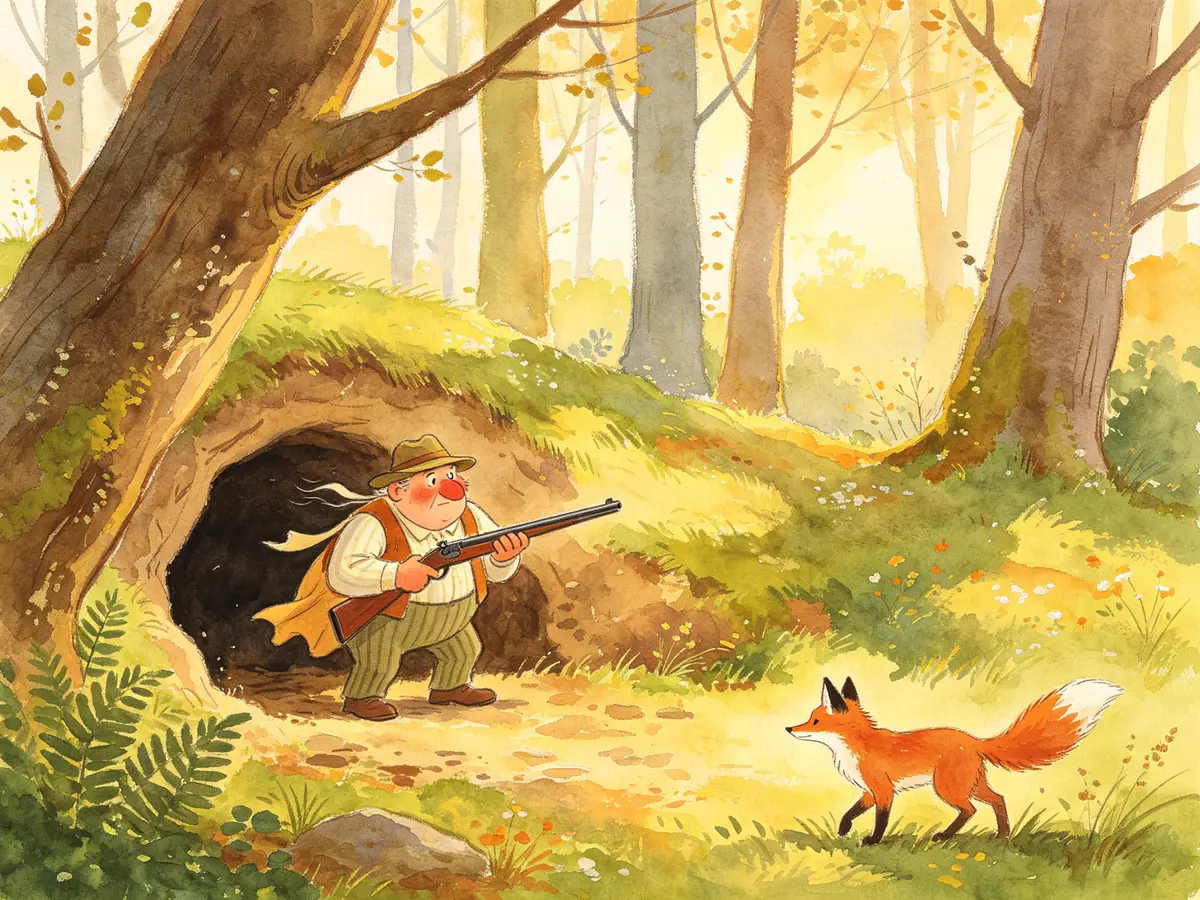
段落大意:这主意不错,另外两人不得不承认。比恩开始指挥:博吉斯留下来守着洞口,别让狐狸跑了,敢出来就开枪;他和邦斯去开机器。瘦高的比恩走了,矮小的邦斯小跑跟上,胖博吉斯端着枪守在洞口。
博吉斯端枪守在洞口
P3 · 部署 —— 三人各就各位The Plan — Three Men, Three Jobs
修辞手法 · 对比Rhetoric · Contrast
The tall thin Bean walked away. The small fat Bunce ran trotting after him. The fat Boggis stayed by the hole with his gun.
Tall-thin, small-fat, fat-with-a-gun: three short clauses freeze three very different bodies — contrast makes each farmer unforgettable.瘦高的、矮胖的、端着枪的:三个短语定格三副完全不同的身材——对比让每个农场主都过目不忘。
表达方式 · 动作描写Expression · Action
Boggis stayed behind to guard the hole ... ready to shoot if the fox came out.
One role each: guard, driver, gunner. Simple verbs (stay, run, guard) draw the battle line in a single picture.一人一岗:守洞的、开车的、举枪的。简单的动词(留下、小跑、守卫)一笔画出战线。

Soon, two enormous caterpillar tractors with mechanical shovels on their front ends came clanking into the wood. Bean was driving one. Bunce the other. The machines were both black. They were murderous, brutal-looking monsters. ‘Here we go, then!’ shouted Bean. ‘Death to the fox!’ shouted Bunce. The machines went to work, biting huge mouthfuls of soil out of the hill. The big tree under which Mr Fox had dug his hole in the first place was toppled like a matchstick. On all sides, rocks were sent flying and trees were falling and the noise was deafening.
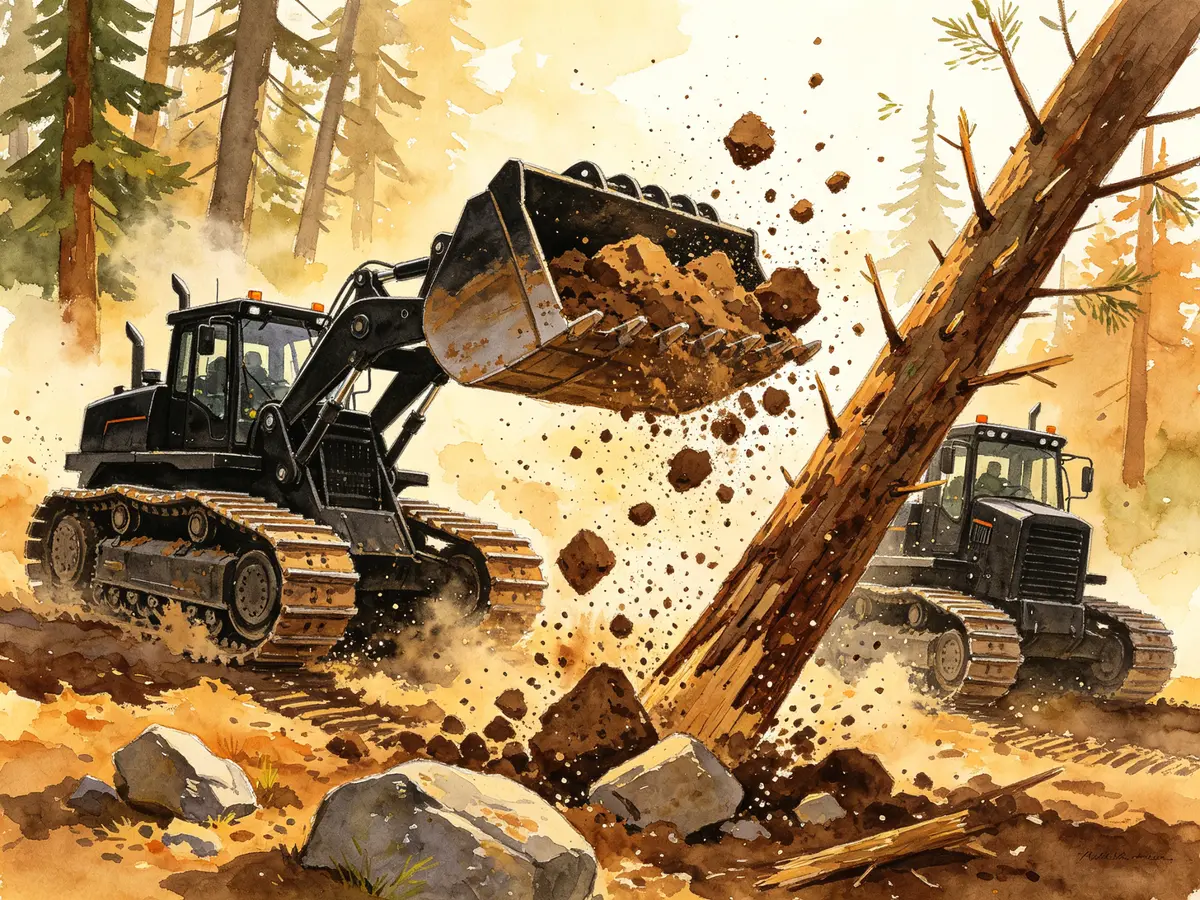
段落大意:很快,两辆挂着机械铲的黑色履带式大拖拉机叮叮当当地开进树林。比恩开一辆,邦斯开一辆。机器像杀气腾腾的怪物。“开工!”“狐狸去死!”机器大口大口咬起泥土,那棵大树像火柴棍一样被推倒,岩石飞溅、树木倒下、噪声震耳欲聋。
两辆机械铲拖拉机开进树林
P4 · 怪物进场 —— 杀气腾腾的拖拉机The Monsters — Tractors Invade
修辞手法 · 比喻与拟人Rhetoric · Simile & Personification
The machines were like murderous monsters ... the big tree fell over like a matchstick.
Machines become monsters, the tree becomes a matchstick — two similes shrink everything in nature next to man’s iron machines.机器成了怪物,大树成了火柴棍——两个比喻把自然万物压到钢铁机器脚下。
修辞手法 · 拟声Rhetoric · Onomatopoeia
Clankety-clank, the two huge black tractors with the mechanical shovels came clanking into the wood.
Clankety-clank is a whole parade of iron: the word itself walks into the wood before the machines do. Sound arrives first.Clankety-clank 是一整支钢铁队伍的脚步声:声音先于机器走进树林。

Down in the tunnel the foxes crouched, listening to the terrible clanging and banging overhead. ‘What’s happening, Dad?’ cried the Small Foxes. ‘What are they doing?’ Mr Fox didn’t know what was happening or what they were doing. ‘It’s an earthquake!’ cried Mrs Fox. ‘Look!’ said one of the Small Foxes. ‘Our tunnel’s got shorter! I can see daylight!’ They all looked round, and yes, the mouth of the tunnel was only a few feet away from them now, and in the circle of daylight beyond they could see the two huge black tractors almost on top of them. ‘Tractors!’ shouted Mr Fox. ‘And mechanical shovels! Dig for your lives! Dig, dig, dig!’
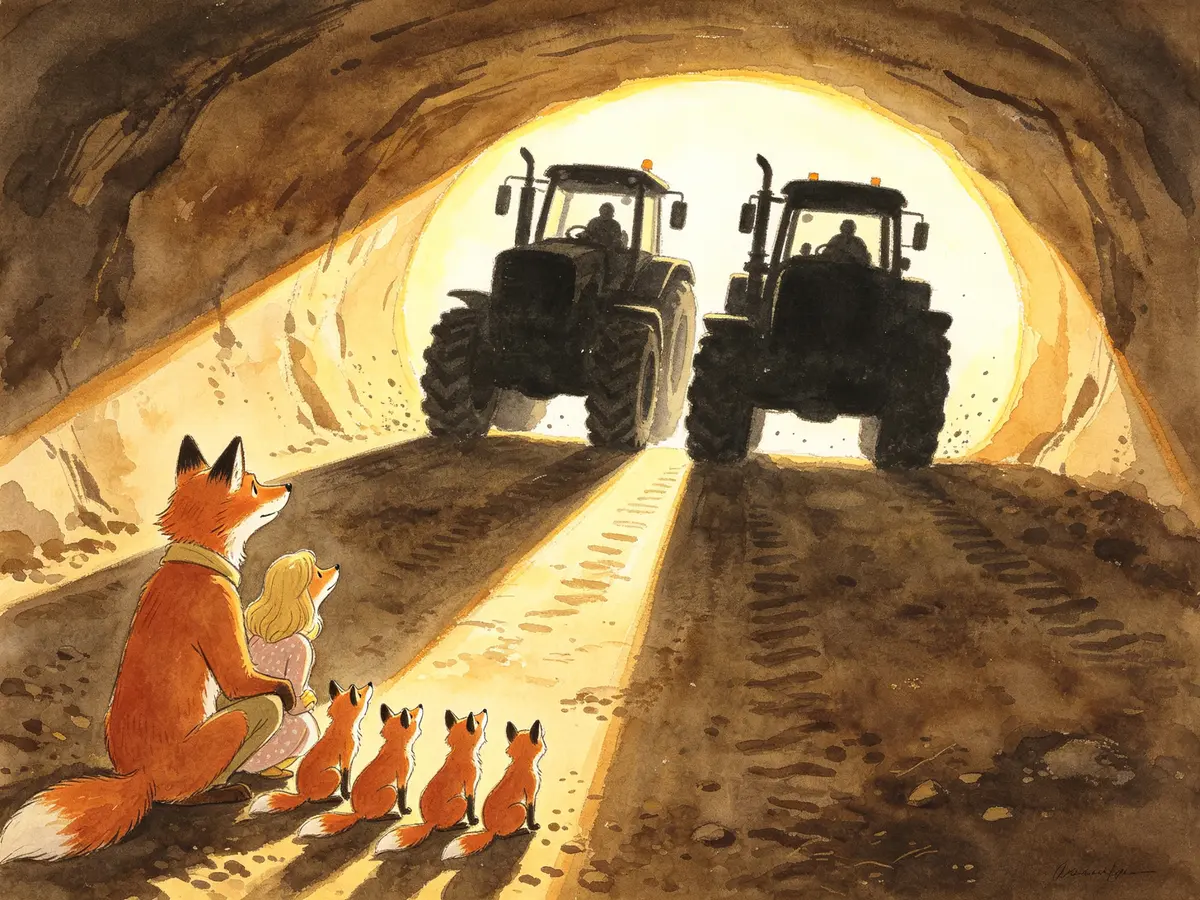
段落大意:地道里,狐狸一家蹲着听头顶可怕的哐当声。小狐狸问:“怎么了爸爸?他们在干什么?”狐狸太太喊:“地震了!”一只小狐狸叫道:“我们的隧道变短了!我看见天光了!”——拖拉机几乎压到了他们头顶!狐狸先生大喊:“拖拉机!还有机械铲!拼命挖!挖挖挖!”
隧道变短,狐狸一家看见天光
P5 · 压到头顶 —— 挖挖挖!Overhead — Dig, Dig, Dig!
表达方式 · 语言描写Expression · Dialogue
“Our tunnel is getting shorter! I can see daylight!” ... “Dig! Dig! Dig!” shouted Mr Fox.
Panic and order in two voices: a child’s scream of daylight, then the father’s three-beat command. Dialogue swings the scene from fear to action.两种声音分列恐慌与号令:孩子尖叫「看见天光」,爸爸三拍命令「挖挖挖」。对话把场面从恐惧扳回行动。
修辞手法 · 反复Rhetoric · Repetition
“Dig! Dig! Dig!”
One word, three times, no decoration — the repeated verb becomes a drumbeat that carries the family into the ground.一个词连喊三遍,不加修饰——重复的动词变成战鼓,把一家人带向地下。
03 · CHARACTER CARDS

人物档案Who Is on Stage Tonight

这一章:一边是开来了机器的农场主,一边是躲在地道里的狐狸一家。机器越挖越近——谁先撑不住?

STAR OF THE STORY

Mr Fox

狐狸先生 · 冷静的指挥官
SHOUT 命令“Dig for your lives! Dig, dig, dig!” 危急时刻一声令下
PLAN 计划go deeper, as deep as we can 机器挖得凶——我们就挖得更深
SPIRIT 精神危险越大越冷静:别人喊地震,他喊出路
MUM

Mrs Fox

狐狸太太 · 守护的妈妈
CRY 哭喊“It’s an earthquake!” 头顶巨响时的第一反应
HOLD 拥抱the mother held her children close 害怕时先抱紧孩子
FAITH 信任她慌了,但她相信爸爸一定有办法
THE DRIVERS

Boggis · Bunce · Bean

三位农场主 · 机器驾驶员
WEAPON 武器caterpillar tractors 两辆履带式机械铲拖拉机
PLAN 计划Boggis guards, two go for machines 一个守洞口,两个开机器
STYLE 风格又脏又懒的 Bean:耳洞塞满耳屎,听不见别人说话

描写分析 · Descriptions That Move the Story

这一章写三位农场主的疲惫与恼火。记叙文里,外貌的小细节(脏耳朵、脖子上的疖子)常常比大段形容更让人记住。

人物描写 · CHARACTER外貌 · 语言 · 动作 · 心理 · 神态
外貌描写 · APPEARANCE

As a result, his earholes were clogged with all kinds of muck and wax and bits of chewing-gum and dead flies and stuff like that.

A disgustingly specific list — muck, wax, chewing-gum, dead flies — makes Bean unforgettable. Tiny ugly details build a vivid, funny villain.

又脏又具体的清单——污垢、耳垢、口香糖、死苍蝇——让比恩令人难忘。细小的丑细节,造出一个鲜活又好笑的反派。

语言描写 · SPEECH

"I'm going to get that fox! I'm not giving in till I've strung him up over my front porch, dead as a dumpling!"

Bean's threat is violent and strangely funny — "dead as a dumpling". The comparison makes the speech memorable and darkly comic.

比恩的威胁又狠又好笑——「死得像块面团子」。这个比喻让台词好记,还带着黑色幽默。

动作描写 · ACTION

Bean rubbed the back of his neck with a dirty finger. He had a boil coming there and it itched.

A tiny itch distracts the clever villain mid-plan. Small human details make even bad guys feel real and a little ridiculous.

计划讲到一半,比恩却去挠脖子上的疖子。这种小人味的小细节,让坏人也变得真实、有点滑稽。

心理描写 · PSYCHOLOGY

They were all very tired and cross.

One short line sums up three men's inner state: tired and cross. Simple, honest, and we feel the whole long night in five words.

短短一句写尽三个人的内心:又累又火。简单诚实,五个词就让读者感受到那漫长的一夜。

环境描写 · ENVIRONMENT场景 · 景物 · 氛围
环境描写 · ENVIRONMENT

On all sides, rocks were sent flying and trees were falling and the noise was deafening.

Verbs of destruction fly at us: rocks sent flying, trees falling, noise deafening. The setting itself is being destroyed — we feel the chaos through sight and sound at once.

毁灭性的动词扑面而来:石头乱飞、树木倒下、噪声震耳。环境本身正在被摧毁——视觉和听觉同时感受到混乱。

文章结构 · Story Structure 冲突升级 · Escalation

这一章按「武器升级」推进:人挖不动 → 出主意用机器 → 分派任务 → 机器进场 → 压到头顶。农场主的武器一级比一级大,危机一级比一级紧。

Para 1 · 开场 · 挖不动

The hole they dug was so deep it could have held a house, and still they had not reached the end of the fox’s tunnel.

农场主挖了一夜,坑深得像房子,还是追不上狐狸。

How it expands · 怎么展开:围绕 so deep ... still not 展开——先用夸张写力气(能装房子的坑),再用 still 写结果(没追上)。力气与结果的落差,逼出新武器。

推进 · Steps ×3新主意 → 部署 → 进场
Step 2 · 新主意

“We’ll dig the fox out with machines! ... those mechanical shovels will have him out in five minutes!”

比恩想出用机器:机械铲五分钟就能挖出狐狸。

How it expands · 怎么展开:围绕关键词 machines / five minutes 展开——先写荒唐细节(耳垢、疖子)让比恩可笑,再让可笑的人说出可怕的主意。转折藏在滑稽里。

Step 3 · 部署

Boggis stayed behind to guard the hole ... The tall thin Bean walked away. The small fat Bunce ran trotting after him.

博吉斯守洞口,比恩和邦斯去开机器。

How it expands · 怎么展开:用「体型对比」展开部署——瘦高、矮胖、端枪,三个人三句就画完。简短的分工描写,为下一幕的机器大战铺好舞台。

Step 4 · 进场

The machines were like murderous monsters ... the big tree fell over like a matchstick. “Go get ’em!”

两辆拖拉机像怪物开进树林,大树像火柴棍倒下。

How it expands · 怎么展开:用「比喻链」展开:怪物(机器)、火柴棍(树)、叮叮当当(声音)——声音、形象、动作三层渲染,把机器的可怕写满整段。

Step 5 · 收束 · 压到头顶

“Our tunnel is getting shorter! I can see daylight!” ... “Dig! Dig! Dig!” shouted Mr Fox.

拖拉机几乎压到头顶,狐狸先生下令:拼命挖!

How it expands · 怎么展开:收在最高危的一刻:孩子尖叫(看见天光)→ 爸爸号令(挖挖挖)。悬念不落地,直接甩给下一章。

按结构复述 · Retell by Structure(冲突升级)

这是「冲突升级」结构,复述时沿着武器越来越大这条线:挖 → 机器 → 部署 → 进场 → 压顶。

First · 挖不动The farmers dug a hole deep enough for a house, but still could not reach the foxes.农场主挖的坑能装下房子,还是追不上狐狸。
Then · 新主意Bean had an idea: dig them out with mechanical shovels in five minutes.比恩想出新主意:用机械铲五分钟挖出狐狸。
Next · 部署Boggis guarded the hole with his gun; Bean and Bunce went to fetch the machines.博吉斯端枪守洞,比恩和邦斯去开机器。
Then · 进场Two huge tractors clanked into the wood like murderous monsters and pushed over the trees.两辆大拖拉机叮叮当当开进树林,像怪物一样推倒树木。
Finally · 压顶“I can see daylight!” cried a cub. “Dig! Dig! Dig!” shouted Mr Fox.「我看见天光了!」狐狸先生大喊:「挖挖挖!」

小提示:与「思维导图」搭配用——把导图的枝条按 挖不动 → 机器 → 部署 → 进场 → 压顶 排好,先看导图复述一遍,再合上导图凭记忆复述一遍。

挖掘竞赛 · Tractors vs Foxes

Tractors ↓从地面往下挖 · 越来越近
Foxes ↓从洞里往下挖 · 越来越深

示意图:一台往深挖,一家也往深挖——机器更凶,可狐狸更懂得「往哪挖」。

04 · STORY MAP & RETELL

思维导图 · 复述文章Story Map & Retelling

把第五章的信息装进这张「思维导图」,再沿着复述支架讲一遍——你也能当小老师!

The Terrible Tractors
地点人物情节关键结果

复述支架 · Retell with the scaffold

把句子补充完整,就完成了第五章的复述。

1
The three farmers dug a hole so deep you could have put a ________ into it.
2
Bean said, “We’ll have him out in five minutes with ________ ________.”
3
Boggis stayed by the hole with his ________ pointing at the fox-hole.
4
Two enormous ________ tractors came clanking into the wood.
5
The big tree was toppled like a ________.
6
Mr Fox shouted, “Dig for your ________! Dig, dig, dig!”

复述加分:用 First / Then / Next / Also / Finally 把六句话串起来;讲到机器的声音(clanking / banging / deafening)时,声音要越来越大、越来越快;讲到最后一句 “Dig for your lives!” 时,要急促有力。

05 · PICTURE RETELL

看图复述Retell with Pictures

5 张图卡按情节顺序排好。看着图片,用英文把第五章讲出来——点击图片可以放大,每张图点开都有一句「提示句」帮你起头。

1清晨的森林里,三个农场主站在挖得很深的巨坑里拿着铁锹,浑身是汗、又累又气
挖了一夜
Say: “The three farmers dug all night. They had dug a hole so deep you could have put a house into it. But they were very tired and cross.”
三个农场主挖了一整夜。坑深得能装下一座房子,可他们又累又气。
2深坑里,又高又瘦的比恩搓着后颈想主意,矮小的邦斯仰头看着他
比恩的主意
Say: “Bean rubbed the back of his neck. ‘What we need is machines, mechanical shovels! We’ll have him out in five minutes!’”
比恩挠着脖子:“我们需要机器——机械铲!五分钟就能把他挖出来!”
3森林里的狐狸洞口前,胖博吉斯端着枪独自留守,警惕地张望
守洞口
Say: “Boggis stayed where he was, with his gun pointing at the fox-hole. ‘If he tries to get out, shoot him quick!’”
博吉斯守在原地,枪口对着狐狸洞:“他敢出来,就立刻开枪!”
4两辆黑色履带拖拉机挂着机械铲疯狂挖掘,大树像火柴棍一样倒下,泥土岩石飞溅
可怕的拖拉机
Say: “Two enormous black tractors came clanking. They bit huge mouthfuls of soil. The big tree was toppled like a matchstick and the noise was deafening.”
两辆巨大的黑色拖拉机叮当驶来,大口咬起泥土。大树像火柴棍一样倒下,噪声震耳欲聋。
5地道里狐狸一家蹲着,隧道口露出日光,两辆拖拉机的巨大阴影正逼近洞口
看见天光
Say: “‘Look! Our tunnel’s got shorter! I can see daylight!’ cried a Small Fox. ‘Tractors! Dig for your lives! Dig, dig, dig!’ shouted Mr Fox.”
“看!我们的隧道变短了!我看见天光了!”狐狸先生大喊:“拖拉机!拼命挖!挖挖挖!”

提示:图卡可左右滑动查看全部 5 张;点「看看提示句」展开英文句子;点图片放大全屏。

1 · First 挖了一夜→ 2 · Then 比恩的主意→ 3 · Next 守洞口→ 4 · Also 可怕的拖拉机→ 5 · Finally 看见天光

小挑战:先看着图讲一遍,再合上图卡,只凭记忆讲一遍——能做到,第五章就真正属于你了!

06 · WRITER’S CRAFT

写作亮点分析Why This Writing Works

这一章,Dahl 把「危险」放大了三倍:铁锹变成机械铲,机械铲变成拖拉机,刮擦声变成震耳欲聋的轰鸣。秘密武器是这六招:

Hyperbole · 夸张
把洞写到能装下一座房子
“They had dug a hole so deep you could have put a house into it.”

洞当然装不下一座房子——可这一夸张,读者立刻明白:这坑深得离谱。把事实放大到不可能,印象反而更深。

小任务:用 “so ... that you could ...” 写一个夸张句(如:书包重得能压垮一头大象)。
中文写作对照 · 夸张 hyperbole

故意把话说大、说到不可能——中文叫「夸张」,与英文 hyperbole 完全对应:“深得能装下一座房子”就是「夸张」。

Simile · 明喻
大树像火柴棍
“The big tree under which Mr Fox had dug his hole in the first place was toppled like a matchstick.”

一棵大树被推倒,本来很难写清它有多大——用 “like a matchstick” 一比,读者立刻看见画面:大树在机器面前,轻得像根火柴棍。机器有多可怕,不用多说。

小任务:用 “like ...” 写一个明喻(如:The puppy is soft like cotton.)。
中文写作对照 · 比喻 simile

用「像、好像」把 A 比作 B——中文叫「明喻」,与英文 simile 完全对应:“像火柴棍一样倒下”就是「明喻」。

Sound of Machines · 机器声浪
声音越大,危险越近
“came clanking into the wood” → “listening to the terrible clanging and banging overhead” → “the noise was deafening”

第四章的声音是小声的刮擦(scrape),这一章直接升级成 clanking(叮当)、clanging(哐当)、banging(砰砰),最后 deafening(震耳欲聋)。声音三级跳,危险也跟着三级跳。

小任务:用三个越来越响的词写「雷雨来了」。
中文写作对照 · 摹声 onomatopoeia

叮当、哐当、轰隆——用声音词写场面叫「摹声」;声音由小到大,就是「由远及近 / 蓄势」,把紧张感一层层垫高。

Short Commands · 短促命令
危险越大,句子越短
“‘Look!’ said one of the Small Foxes. ‘Our tunnel’s got shorter!’ ... ‘Tractors!’ shouted Mr Fox. ‘And mechanical shovels! Dig for your lives! Dig, dig, dig!’”

最危急的时刻,句子全变成了一个词、两个词:Look! Tractors! Dig! 短句读起来像心跳,越来越快;Dig, dig, dig 三个重复,一字一锤,命令感拉满。

小任务:用三个短句写「火灾警报响了」——每句不超过 3 个词。
中文写作对照 · 短句 + 反复 short sentences

危急时刻用短句,中文叫「短句抒情」;“挖挖挖”连着重复,就是「反复」——越短越急促,越重复越有力。

Character Contrast · 体型对比
三种体型,三个性格
“the fat Boggis” / “the little pot-bellied dwarf” Bunce / “the long, thin Bean” — “Boggis and Bunce both stared at Bean.”

胖、矮、高瘦——三个人站在一起,画面立刻生动。Dahl 不用介绍性格,体型就是性格:胖的怕累、矮的嘴碎、高瘦的拿主意。

小任务:用体型+动作写两个性格不同的人(如:the tall, quiet boy / the small, noisy girl)。
中文写作对照 · 肖像对比 contrast

用外形差异写人物——中文叫「肖像描写」;胖瘦高矮摆在一起,就是「对比」,几笔就让人物过目不忘。

Golden Line · 金句摘抄
全章最危急的命令
“Tractors! And mechanical shovels! Dig for your lives! Dig, dig, dig!”

狐狸先生没有说“我们完蛋了”,而是立刻下令“拼命挖”。for your lives 三个词点明:这不是演习,是生死关头。全章最危险的一刻,命令就是主题——把这句话抄进你的「好句本」吧。

挑战:用 “___ for your lives!” 或 “Run! Run, run, run!” 写一句危急时刻的话。
中文写作对照 · 反复 + 以声收束 repetition

“挖挖挖”连声反复,像冲锋号——中文叫「反复」,也叫「以声收束」:故事停在最响的一个字上,悬念却留给了下一章。

句子银行 · Sentence Bank(仿写句型)

so ... that you could have + 过去分词(夸张句型)
They had dug a hole so deep you could have put a house into it.
仿写:The box was so heavy you could have ___ (need) a crane. 用 could have 造一个夸张句。
like a ...(明喻)
The big tree was toppled like a matchstick.
仿写:The baby slept like a ___ (log). 他的手臂瘦得像竹竿:His arm is as thin as a ___ (stick).
过去进行时 was / were + doing(背景动作)
As the sun rose, they were still digging. Rocks were sent flying and trees were falling.
仿写:While I ___ (read), my brother ___ (watch) TV. 天黑了,风在刮:The wind ___ (blow).
祈使句(命令与警告)
“Dig for your lives! Dig, dig, dig!” “Look!” “Listen!”
仿写:___ (安静)! ___ (听) to the teacher. 上课铃响了:___ (come) in!

中西对照小发现:英文 hyperbole 就是中文「夸张」,simile 就是「明喻 / 比喻」,onomatopoeia 就是「摹声」,short sentences 就是「短句抒情」,contrast 就是「对比」。给小朋友讲的时候,中英文术语可以互相借用,哪边熟讲哪边。

07 · THINK DEEPER

思考题Questions to Think About

三个难度层级:先找细节,再推原因,最后谈看法。点「提示」给一点帮助,点「答案」对照想法。

L1 · 细节 Detail

1. What were the three farmers doing as the sun rose? 日出时,三个农场主在做什么?

第一句 — “As the sun rose the next morning, Boggis and Bunce and Bean were ...”
They were still digging. They had dug a hole so deep you could have put a house into it, but they had not yet reached the end of the foxes’ tunnel.他们还在挖。他们挖的洞深得能装下一栋房子,可还没挖到狐狸隧道的尽头。

2. Why couldn’t Bean hear Bunce? 比恩为什么听不见邦斯说话?

找 “his earholes were clogged with ...”
Because his earholes were clogged with muck, wax, bits of chewing-gum, dead flies and stuff like that. He never took a bath or even washed, and that made him deaf.因为他的耳洞里塞满了泥巴、耳垢、口香糖渣、死苍蝇之类的东西。他从不洗澡,连脸都不洗,所以耳朵快聋了。

3. What happened to the big tree under which Mr Fox had dug his hole? 狐狸先生挖洞的那棵大树怎么了?

找 “toppled like ...”
The tractors toppled it like a matchstick.拖拉机像折断一根火柴棍一样,把它推倒了。

L2 · 推断 Inference

4. Why did Bean say “We’ll have him out in five minutes with mechanical shovels”? 比恩为什么说五分钟就能把狐狸挖出来?

机器和人的手,哪个快?
He believed machines are much faster and stronger than men’s shovels — what three men couldn’t do in a night, a machine could do in minutes.他相信机器比人的铁锹更快、更猛——三个人一晚上做不到的事,机器几分钟就能干完。

5. Why did the tunnel “get shorter” in the Small Fox’s eyes? 小狐狸为什么说隧道变短了?

隧道没有动,是什么越来越近了?
The tractors were digging away the whole hill, so the mouth of the tunnel came closer and closer to the family — the tunnel didn’t move, it was being exposed.拖拉机在挖掉整座山,所以洞口离狐狸一家越来越近——隧道没有动,是它被暴露出来了。

6. How did the noise of the machines affect the foxes? 机器的噪声对狐狸一家有什么影响?

Mrs Fox 喊了什么?Small Fox 看见了什么?Mr Fox 又做了什么?
They were terrified — Mrs Fox cried “It’s an earthquake!”, the Small Foxes saw daylight and the tractors almost on top of them. But Mr Fox stayed calm and gave the order: “Dig for your lives!”他们吓坏了——狐狸太太喊“地震了!”,小狐狸看到了天光,拖拉机几乎压到头顶。但狐狸先生保持冷静,下了命令:“拼命挖!”

L3 · 评价与主题 Opinion & Theme

7. Were the farmers smart or foolish this time? Why? 这次农场主是聪明还是愚蠢?为什么?

想一想:机器有没有起作用?可他们忘了什么?
开放题。可以说又聪明又愚蠢:用机器确实管用(洞口真的暴露了),但他们忘了狐狸是挖洞高手——机器往下挖,狐狸也能往下挖,而且狐狸更了解地下。

8. Why did Mr Fox shout “Dig for your lives!” instead of just “Dig!”? 狐狸先生为什么喊“拼命挖”而不是只喊“挖”?

for your lives 是什么意思?跟上一章的 Dig for dear life 比一比。
开放题。for your lives 点明这是生死关头——机器比铁锹可怕得多,命令也必须更急切。加上三个连着的 Dig, dig, dig,让全家立刻明白:没有时间犹豫,挖就是活路。

9. The next chapter is called “The Race”. What race do you think it is? 下一章叫《竞赛》,你觉得是什么竞赛?

这一章最后,狐狸和机器都在往下挖——在比什么?
开放题。很可能是一场挖洞竞赛:狐狸一家往下挖,拖拉机也在往下挖,看谁先到「安全深度」。也可能狐狸们又渴又饿——竞赛也可能是「谁先找到吃的」。(读了才知道!)

中心思想 · What is this chapter really about?

Chapter 5 is the war that grows bigger: shovels give way to mechanical monsters, and the forest itself is torn up. Yet the harder the farmers press, the closer the family digs together — iron against instinct, anger against love.

第五章是一场不断扩大的战争:铁锹退场,机械怪物登场,整片树林被掀翻。可农场主逼得越紧,狐狸一家就贴得越近——钢铁对本能,怒火对爱。

courage 勇气calm 冷静family 家庭danger 危险
08 · WORD LAB

词汇 · 在上下文里猜词Guess from Context

每张词卡正面是原文句子——先根据上下文猜意思,再点击翻面验证。学完 12 个核心词,别忘了下面的「拓展好词」。

crossadj. 形容词

“They were all very tired and cross.”
猜一猜:高兴的 / 生气的 / 害怕的?

点击翻面看看 ▸
cross/krɒs/adj. 生气的;恼怒的(英式口语)Mum was cross with me for being late.近义:angry 生气的 · 反义:happy
rottenadj. 形容词

“Whose rotten idea was this?”
猜一猜:绝妙的 / 糟糕的 / 复杂的?

点击翻面看看 ▸
rotten/ˈrɒtn/adj. 糟糕的;极坏的(也指腐烂的)What a rotten day I’ve had!近义:terrible, awful 糟糕的 · 反义:brilliant
swign. 名词

“Bean took another swig of cider”
猜一猜:一小口 / 一大口 / 一整瓶?

点击翻面看看 ▸
swig/swɪɡ/n./v. 大口喝(酒或饮料)He took a swig of water from his bottle.搭配:take a swig of ... 大口喝一口 · 近义:gulp
deafadj. 形容词

“This made him deaf.”
猜一猜:聪明的 / 聋的 / 生气的?

点击翻面看看 ▸
deaf/def/adj. 聋的;听不见的Grandpa is a little deaf, so speak loudly.搭配:deaf to ... 对……充耳不闻 · 反义:hearing
cloggedadj. 形容词

“his earholes were clogged with muck and wax”
猜一猜:干净的 / 堵塞的 / 张开的?

点击翻面看看 ▸
clogged/klɒɡd/adj. 堵塞的(clog 的过去分词,堵住)The sink is clogged with hair.近义:blocked, stuffed 堵住的 · 反义:clear
mechanicaladj. 形容词

“What we need is machines ... mechanical shovels.”
猜一猜:手工的 / 机械的 / 电动的?

点击翻面看看 ▸
mechanical/məˈkænɪkl/adj. 机械的;用机器的The mechanical digger can move a ton of soil.构词:mechanic(机械)+ -al(形容词后缀)· 反义:manual
enormousadj. 形容词

“two enormous caterpillar tractors”
猜一猜:迷你的 / 巨大的 / 普通的?

点击翻面看看 ▸
enormous/ɪˈnɔːməs/adj. 巨大的;庞大的The elephant is an enormous animal.近义:huge, giant 巨大的 · 反义:tiny
caterpillarn. 名词

“enormous caterpillar tractors”
猜一猜:毛毛虫(履带车)/ 普通轮子 / 火箭?

点击翻面看看 ▸
caterpillar/ˈkætəpɪlə/n. 毛毛虫;履带式拖拉机(履带像毛毛虫爬行)A caterpillar tractor can climb over rocks.联想:caterpillar tractor = 履带车 · 本义:毛毛虫
clankingv-ing 现在分词

“came clanking into the wood”
猜一猜:安静地 / 叮当作响地 / 呼啸而过地?

点击翻面看看 ▸
clanking/ˈklæŋkɪŋ/v-ing 叮叮当当响着(clank 的现在分词,拟声词)The old tank came clanking down the road.拟声词家族:clank 叮当 · clang 哐当 · bang 砰砰
murderousadj. 形容词

“They were murderous, brutal-looking monsters.”
猜一猜:可爱的 / 杀气腾腾的 / 破旧的?

点击翻面看看 ▸
murderous/ˈmɜːdərəs/adj. 杀气腾腾的;凶残的He gave me a murderous look.构词:murder(谋杀)+ -ous(形容词后缀)· 近义:brutal
toppledv. 动词

“was toppled like a matchstick”
猜一猜:稳稳立着 / 倒下、被推倒 / 飘起来?

点击翻面看看 ▸
toppled/ˈtɒpld/v. 倒下;被推倒(topple 的过去分词)The strong wind toppled the old wall.近义:knocked over, fell 推倒 · 反义:stood
deafeningadj. 形容词

“the noise was deafening”
猜一猜:安静无声的 / 震耳欲聋的 / 悦耳动听的?

点击翻面看看 ▸
deafening/ˈdefnɪŋ/adj. 震耳欲聋的(deafen 的现在分词,把耳朵震聋)The cheering was deafening.构词:deaf(聋)+ -en(使)+ -ing · 近义:thunderous

拓展好词 · More Words from This Chapter

WordMeaning 释义From the text 原文
crouchedv. 蹲伏;蜷缩(crouch 的过去式)“the foxes crouched, listening”
daylightn. 日光;天亮“I can see daylight!”
trottedv. 小跑(trot 的过去式)“The tiny Bunce trotted after him.”
matchstickn. 火柴棍“toppled like a matchstick”
strungv. 吊起;悬挂(string 的过去分词)“strung him up over my front porch”
brutal-lookingadj. 长相凶残的“murderous, brutal-looking monsters”
09 · GRAMMAR FOCUS

语法 · 从原文句子学语法Grammar from the Story

本章的 4 个语法点都藏在课文句子里:每个点按「规则 → 原文例句 → 即时练习」三步走,最后做 5 道综合小测检验。先找进行时标志词,再判断句型和语态。

过去进行时 · was / were + doing

Past Continuous

规则:was / were + 动词-ing 表示过去某时正在进行的动作,常作故事里的「背景动作」:另一件事发生时,这件事还在进行。单数主语用 was,复数主语用 were。

P1As the sun rose, Boggis and Bunce and Bean were still digging. P4Rocks were sent flying and trees were falling and the noise was deafening.

日出(一个动作)发生时,挖洞(另一个动作)还在进行——进行时像一张「背景照片」,定格住那一刻的画面。

即时练习

1While I ___ (read), my brother ___ (watch) TV.

2At eight o’clock last night, we ___ (have) dinner.

3用过去进行时翻译:天亮时,农场主们还在挖。

参考答案与解析

1. was reading / was watching——while 引导背景动作,两个动作同时进行。
2. were having——昨晚八点那一刻「正在吃晚饭」。
3. The farmers were still digging when the sun rose.——背景动作用进行时,插入事件用一般过去时。

祈使句 · 动词开头表命令

Imperatives

规则:直接用动词原形开头的句子是祈使句,用来下命令、提警告或给建议,句末常用感叹号。表示「不要做」用 Don’t + 动词原形。短促的祈使句,正是危急时刻最有力的写法。

P5“Listen!” “Look!” “Dig for your lives! Dig, dig, dig!” P3“Stay here and see the fox doesn’t escape.”

狐狸先生喊的三个词——Listen! Look! Dig!——全是祈使句。命令越短,读起来越急,教室里的学生一听就知道:情况紧急。

即时练习

1把 “You must be quiet.” 改成祈使句:___ !

2___ (come) here, please. / ___ (not run) in the hallway!

3用祈使句给弟弟写两条命令(如:先做作业 / 不要玩手机)。

参考答案与解析

1. Be quiet!——省去主语 you,直接用动词原形。
2. Come here, please. / Don’t run in the hallway!——否定祈使句用 Don’t + 动词原形。
3. 示例:Do your homework first! / Don’t play with your phone!——动词原形开头就是命令。

现在分词作伴随状语 · v-ing

v-ing as Adverbial

规则:在主句动作之后加一个 v-ing 短语,表示「一边……一边……」的伴随动作,让画面更生动:主语做 A 的同时,还做着 B。v-ing 短语和主句共用同一个主语。

P4two enormous caterpillar tractors came clanking into the wood. The machines went to work, biting huge mouthfuls of soil out of the hill. P5the foxes crouched, listening to the terrible clanging and banging overhead.

拖拉机是「一边开进来一边叮当作响」;狐狸是「一边蹲着一边听」——v-ing 把两个动作叠在一句里,画面立刻活了。

即时练习

1He walked in, ___ (smile).

2The dog ran after the cat, ___ (bark) loudly.

3翻译:狐狸们蹲着,听头顶可怕的哐当声。

参考答案与解析

1. smiling——走进来「一边微笑着」;smiling 与 walked 共用主语 he。
2. barking——边追边叫,barking 作伴随状语。
3. The foxes crouched, listening to the terrible banging overhead.——crouched 是主句,listening 表伴随。

一般过去时被动语态 · was / were + 过去分词

Passive Voice (Past)

规则:当动作的承受者是主语时,用被动语态:was / were + 过去分词。谁做的动作不重要或不用说出时(by 短语可省),就用被动。单数用 was,复数用 were。

P4The big tree ... was toppled like a matchstick. P4rocks were sent flying and trees were falling.

我们关心的是「大树倒了」「岩石飞了」这个结果,而不是「谁推的」——被动语态把镜头对准被破坏的一方,危险感更强。

即时练习

1The homework ___ (finish) by Tom yesterday.

2These books ___ (write) by Roald Dahl.

3翻译:大树被拖拉机推倒了。

参考答案与解析

1. was finished——作业是「被完成」的,过去时被动用 was + 过去分词。
2. were written——复数主语 books 用 were;by 引出动作执行者。
3. The big tree was toppled by the tractors.——toppled 是 topple 的过去分词,by 引出拖拉机。

语法四步策略:① 找进行时标志(was/were + doing → 背景动作);② 看句首动词(动词原形开头 → 祈使句,表命令);③ 找动作后的 v-ing(come clanking / crouched, listening → 伴随状语);④ 找 was/were + 过去分词(was toppled / were sent → 被动语态)。判断完再代入回读,通顺才算对。
10 · QUICK QUIZ

小测验Check What You’ve Got

5 道选择题 + 1 个配对游戏。先做选择题,再做配对,看看你能得几分!

1章首三个农场主在做什么?

2Bean 的新主意是什么?

3“We’ll have him out in five minutes” 里的 him 指谁?

4那棵大树最后怎么了?

5Mr Fox 看见拖拉机时喊了什么?

0 / 5
选择题得分
做完 5 道选择题,看看你的成绩!

配对游戏 · Match the Speaker to His Words

先点左边的角色,再点右边他说的话。

SPEAKER 说话人
WORDS 台词

还有 3 对要配对。

11 · STUDY GUIDE

学习指南Study Guide & Answer Key

这一页是你的自学地图:学习目标、学习步骤和全部答案都在这里,跟着走就能通关第五章。

学习目标 Learning Objectives
  • 阅读策略:用上下文猜生词(cross / swig / deafening 等);对比第四章与第五章的「声音升级」;识别夸张、明喻、短命令三种写法。
  • 语言知识:掌握 12 个核心词汇;认识过去进行时、祈使句、现在分词作伴随状语、一般过去时被动语态。
  • 写作技巧:学习夸张、明喻、机器声浪、短促命令、体型对比五种手法,并完成仿写。
  • 思维表达:借助思维导图完整复述第五章;能区分「细节—推断—评价」三类问题。
学习步骤 Suggested Steps
  • 第 1 步 · 热身(课前 10 分钟):读前热身 → 回顾第四章金句(“Your father is a fantastic fox.”)→ 预测活动;用朗读功能听读或播放第一段对话。
  • 第 2 步 · 精读(课中 25 分钟):精读原文(重点朗读第四、五段,听 clanking / banging / deafening 的机器声浪)→ 人物档案 → 思维导图梳理 → 写作亮点讲解。
  • 第 3 步 · 巩固(课后 15 分钟):复述支架练习 → 思考题分层挑战 → 小测验 → 仿写练习。
  • 小提示:如果觉得难,先完成 L1 细节题和配对游戏;想挑战自己,试试 L3 评价题和「夸张句」仿写。
参考答案 Answer Key
  • 预测题:B — 狐狸们继续拼命往下挖,再次逃脱(危险更大,勇气也更大)。
  • 复述支架:① house ② mechanical shovels ③ gun ④ caterpillar ⑤ matchstick ⑥ lives。
  • 思考题:见各题「答案」按钮;L3 开放题言之有理即可。
  • 选择题:1-A 2-B 3-A 4-B 5-A。
  • 配对:Bean→We’ll have him out in five minutes.;Boggis→I’ve had enough of digging.;Bunce→Got any more stupid ideas?
更多精读玩法 More Ideas
  • 机器声朗读:和同学分三组,一组读 clanking、一组读 clanging and banging、一组读 deafening,按顺序越读越响——听见机器逼近。
  • 夸张句接龙:每人用 “so ... that you could ...” 说一个夸张句,如 “The bag is so heavy that you could break your back”,看谁说得最夸张。
  • 复述接龙:和家人或同学一起,一个说一句,下一位接下一句,用 First / Then / Next / Finally 串完第五章。
  • 读书日志 Reading Log:每章记录 3 个新词、1 句金句、1 个问题。
  • 金句仿写集:把 “Dig for your lives!” 这类命令句摘进自己的金句本,慢慢攒成一堵「金句墙」,再配上动作演一遍。
  • 跨章对比:对比第四章「铁锹」和第五章「拖拉机」——声音、速度、可怕程度有什么变化?Dahl 为什么一章比一章更紧张?