CHAPTER 6 · 全书共 18 章

The Race 竞赛

第五章结尾,狐狸先生大喊“Dig for your lives!”——拖拉机几乎压到了狐狸一家头顶。这一章,机器和狐狸开始了一场拼命的竞赛:声音时远时近,山从完整变成火山口。谁先撑不住?
作者 Roald Dahl 体裁 章节书 · 小说 重点 双线赛跑 · 对话交替 · 比较级递进 适合 词汇量 3000+ 的阅读者 · Lexile 600L
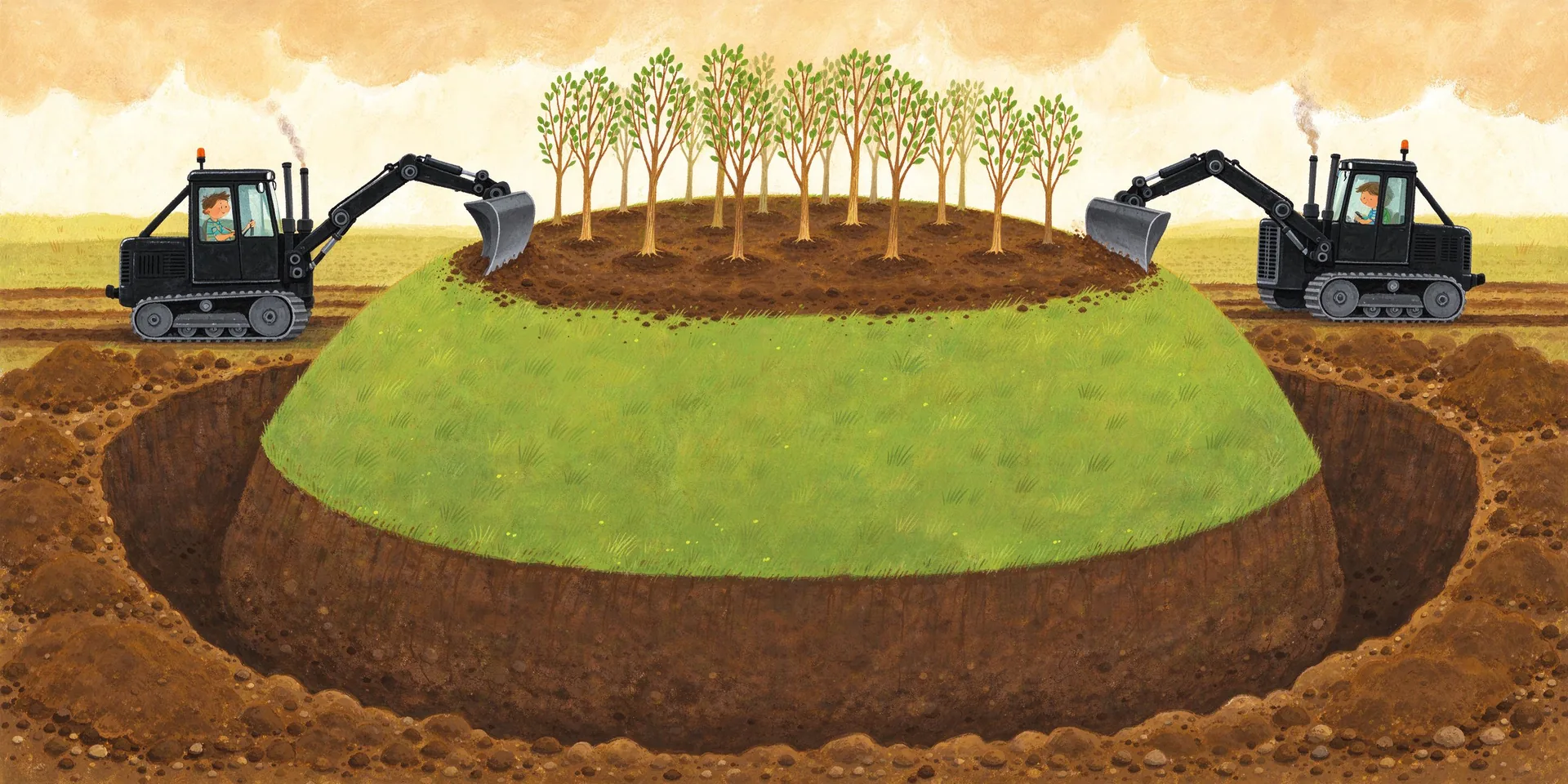
圆形山丘被挖成巨大的火山口,两辆黑色拖拉机在坑底疯狂挖掘
The Race —— 机器 vs 狐狸的拼命竞赛
6Chapter 6
01 · BEFORE YOU READ

读前热身Before You Read

The machines are digging harder and harder, and the foxes are digging deeper and deeper. This is a desperate race — the machines against the foxes. Now read “The Race” and listen to the sound see-saw.机器挖得越来越凶,狐狸挖得越来越深。这是一场拼命的竞赛——机器 vs 狐狸。现在来读《竞赛》,听一听声音的跷跷板。

About the Author · 关于作者

Roald Dahl loves to make danger bigger and bigger. In Chapter 4 the shovels made a soft scrape. Now the machines go clanking, clanging and banging, until the noise is deafening. He also uses hyperbole (夸张) — the hole is so deep you could put a house into it — and simile (明喻): the big tree falls like a matchstick.罗尔德·达尔喜欢让危险「越来越大」。第四章的铁锹只是轻轻的刮擦声,现在机器叮叮当当、哐哐作响,直到震耳欲聋。他还用「夸张」——洞深得能装下一座房子;用「明喻」——大树像火柴棍一样被推倒。

What Happened Before · 上一章回顾

The fox family dug for dear life, deeper and deeper, and escaped the shovels. Mrs Fox said the golden line: “Your father is a fantastic fox.” But at sunrise the next morning, Boggis, Bunce and Bean are still digging — and they are not giving up.狐狸一家拼命向下挖,越挖越深,躲过了铁锹。狐狸太太说出金句:“你们的爸爸是只了不起的狐狸。”可第二天日出时,博吉斯、邦斯和比恩还在挖——而且他们绝不放弃。

Reading Tip · 阅读小贴士:Watch three things: ① the hyperbole — “a hole so deep you could have put a house into it”; ② the simile — the tree is “toppled like a matchstick”; ③ the short commands — “Dig for your lives! Dig, dig, dig!” Bigger danger, shorter sentences!注意三样东西:①夸张——“洞深得能装下一座房子”;②明喻——大树“像火柴棍一样被推倒”;③短命令——“拼命挖!挖挖挖!”危险越大,句子越短!

Predict · 猜一猜

Chapter 6 is called “The Race”. Who is racing against whom? What do you think will happen?第六章叫《The Race 竞赛》。谁在和谁赛跑?你猜会发生什么?

Pick one to remember your prediction — come back after reading to check!
点一个选项记住你的预测,读完全章后回来揭晓答案。

The Answer Is A!It is a desperate digging race: the machines bite the hill from above, the foxes burrow deeper below. The hill becomes a volcano crater — but neither side will give up.这是一场拼命的挖洞竞赛:机器从上面啃山,狐狸在下面深挖。山丘挖成了火山口——可两边谁都不肯停。

Two more questions after reading · 还有两个小问题:

1. What does the hill look like by five o’clock?
到下午五点山丘变成什么样了?
2. Who comes to watch? What do they do?
谁跑来看热闹?他们做了什么?

02 · READ & EXPLORE

原文精读Read & Explore

跟着原文读一遍。橙色单词先别查——根据上下文猜一猜。点击任意单词弹出词典卡片(中英释义 · 发音 · 例句);点段落开头的 ▶ 听朗读(英式男声)。

Chapter 6 · The Race

Now there began a desperate race, the machines against the foxes. In the beginning, the hill looked like this: a round green hill with trees on top. After about an hour, as the machines bit away more and more soil from the hilltop, it looked different: the top was flat and bare.
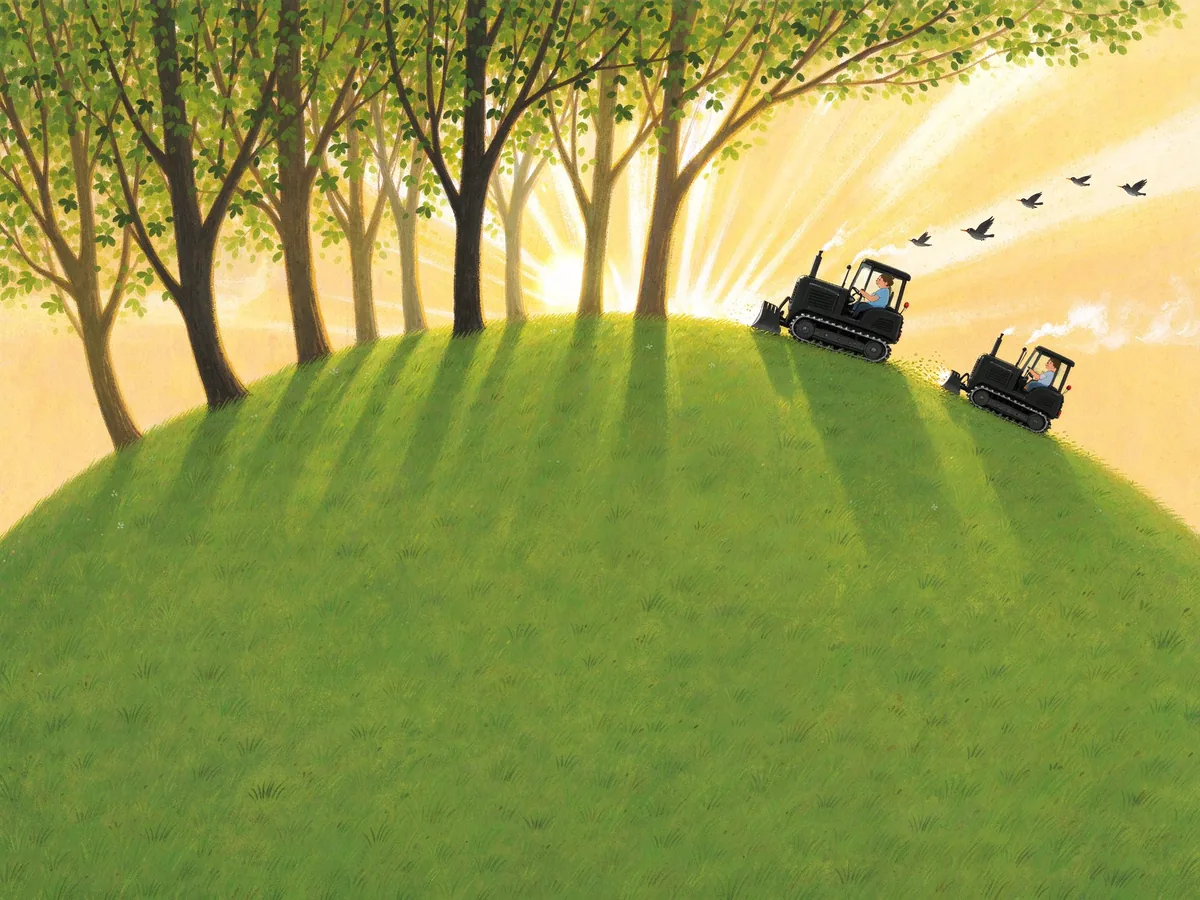
段落大意:一场拼命的竞赛开始了——机器 vs 狐狸。一开始,山丘还是圆绿色的,顶上长满树。一小时后,机器啃掉了越来越多山顶的土,山顶变平变秃了。
清晨的山丘还是圆绿的
P1 · 竞赛开始 —— 绿山变秃山The Race Begins — Green to Bald
修辞手法 · 对比Rhetoric · Contrast
At the beginning the hill was round and green with trees on top. An hour later ... the hilltop was flat and bald.
Green against bald: the same hill, two pictures an hour apart. One silent comparison tells how savage the digging has been.绿对秃:同一座山,一小时后两个模样。一个无声的对比,就说出了挖掘有多凶狠。
表达方式 · 环境描写Expression · Setting
the machines bit off more and more of the hilltop ... flat and bald
The hill is the battlefield, and its changing shape keeps score: every mouthful of earth moves the story forward without a single word of fighting.山丘就是战场,它不断变化的形状在记分:每咬掉一口土,故事就前进一格,不用写一个战斗场面。

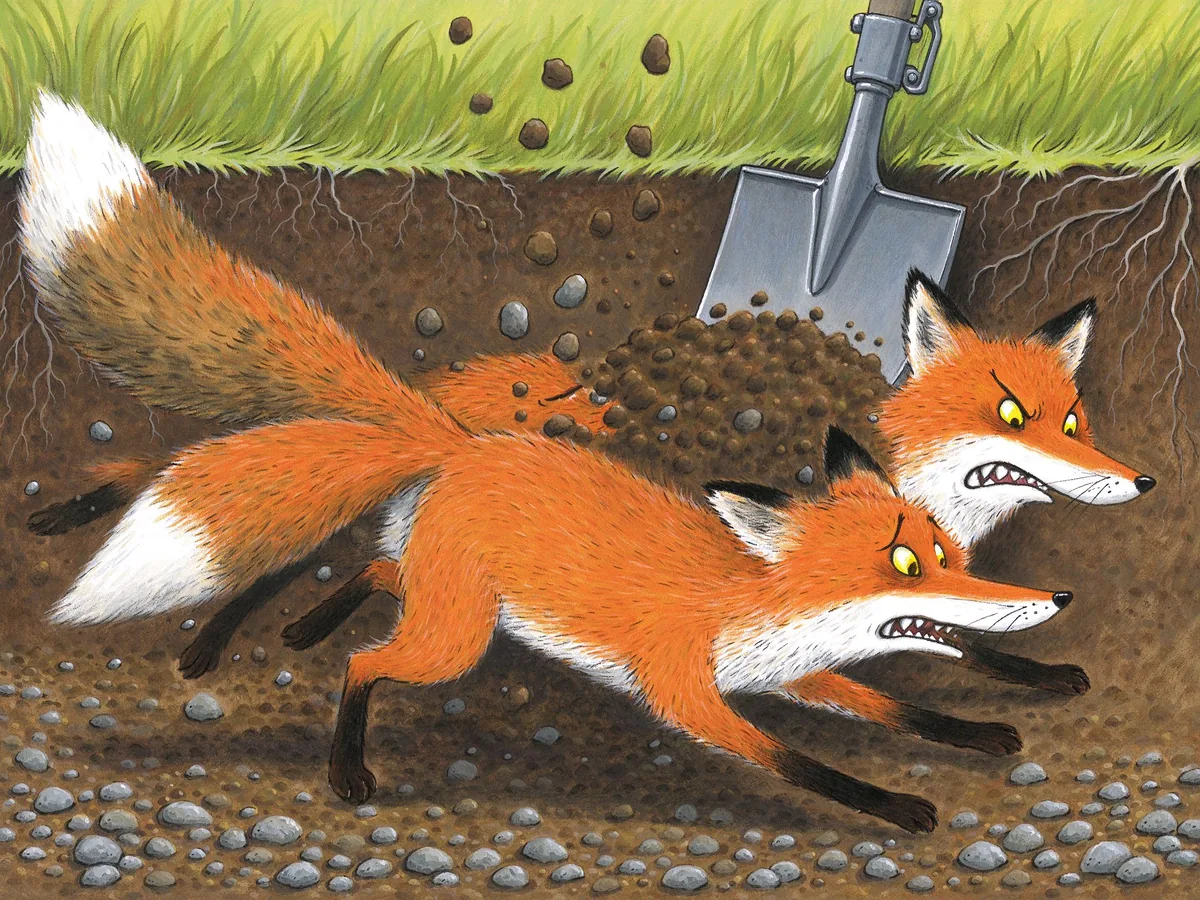
Sometimes the foxes would gain a little ground and the clanking noises would grow fainter and Mr Fox would say, “We’re going to make it! I’m sure we are!” But then a few moments later, the machines would come back at them and the crunch of the mighty shovels would get louder and louder. Once the foxes actually saw the sharp metal edge of one of the shovels as it scraped up the earth just behind them.
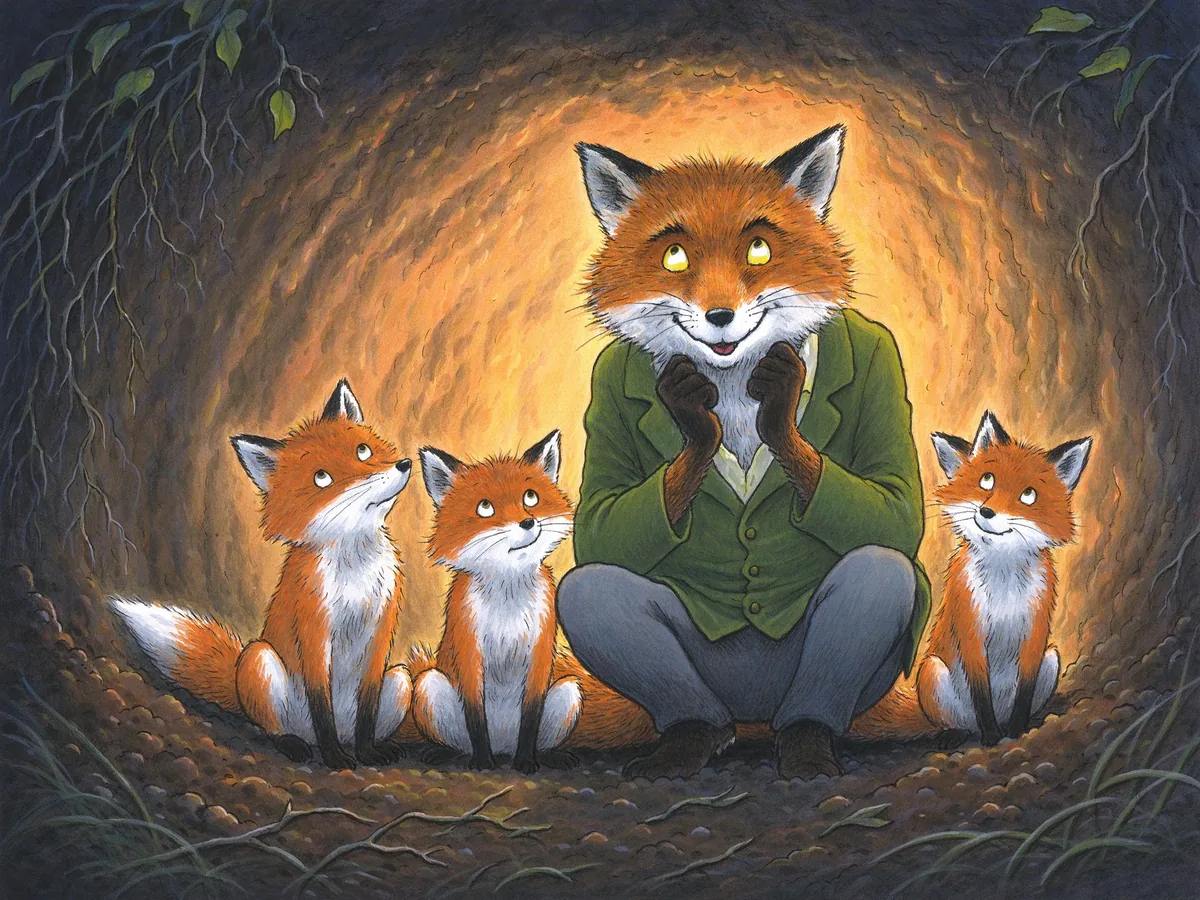
段落大意:狐狸偶尔占上风,机器声变远,狐狸先生说“我们要成功了!”可没过多久机器又追上来,嘎吱声越来越响。有一次狐狸甚至看见了身后铲刀的金属边!
机器声忽远忽近
P2 · 拉锯 —— 时近时远Back and Forth — Near and Far
表现手法 · 悬念Technique · Suspense
For a while the foxes were winning, and the machines sounded further away ... but before long the machines were back, crunching and grinding louder and louder.
The noise itself plays tug-of-war: fainter (hope), then louder (dread). Sound goes up and down, and so does the reader’s heart.声音自己在拉锯:远去(希望),又逼近(恐惧)。声音忽远忽近,读者的心也跟着上下。
表达方式 · 场景描写Expression · Scene
Once he actually saw the shiny edge of the mechanical shovel behind him!
A single glimpse of metal: no comment, no panic speech — just one flash that makes the whole tunnel feel half an inch away from death.只瞥见一眼金属边:不评论、不喊叫——就这么一闪,整条隧道都显得离死亡只有半寸。

“Keep going, my darlings!” panted Mr Fox. “Don’t give up!”
“Keep going!” the fat Boggis shouted to Bunce and Bean. “We’ll get him any moment now!”
“Have you caught sight of him yet?” Bean called back.
“Not yet,” shouted Boggis. “But I think you’re close!”
“I’ll pick him up with my bucket!” shouted Bunce. “I’ll chop him to pieces!”
段落大意:狐狸爸爸喘着气鼓励家人:“继续挖,亲爱的们!别放弃!”地面上,三个农场主互相喊话:博吉斯喊“快了!”邦斯喊“我要用桶把他舀上来!剁成碎片!”
狐狸看见身后的铲刀金属边
P3 · 两种喊话 —— 鼓励与狠话Two Voices — Courage and Rage
表达方式 · 语言描写Expression · Dialogue
“Keep digging, my dears! Don’t give up!” said Mr Fox. “I’ll scoop him up in a bucket and chop him to bits!” yelled Bunce.
Love versus violence in two shouts: the father cheers his family on; the farmer dreams of chopping. Dialogue draws the moral line without narrating it.爱与暴力在两句喊话里对撞:爸爸给家人打气,农场主想着剁成碎片。对话不用旁白就划出了道德线。
修辞手法 · 对比Rhetoric · Contrast
“Keep digging, my dears!” ... “chop him to bits!”
Side by side, the two sentences sound nothing alike: warm pronouns (my dears) against cold violence (chop, bits). The contrast does the judging for us.两句话并排,听感截然不同:温暖的称呼(亲爱的们)对冰冷的暴力(剁碎)。对比替读者做了评判。

But by lunchtime the machines were still at it. So were the poor foxes. The farmers didn’t stop for lunch; they were too keen to finish the job. And by five o’clock in the afternoon, this is what had happened to the hill: the hole the machines had dug was like the crater of a volcano.
段落大意:到了午餐时间,机器还在挖,可怜的狐狸也在挖。农场主太想干完这一票,连饭都不吃。到下午五点,山被挖成了什么样子?——像火山口一样!
午餐时间机器仍不停挖
P4 · 火山口 —— 一整天不罢手The Crater — No Lunch, No Stop
修辞手法 · 比喻Rhetoric · Simile
By five o’clock in the afternoon, the hill looked like a volcano crater!
A crater: one word makes a mountain into a wound in the earth. The simile shows how far obsession has gone.火山口:一个词把山丘变成大地上的伤口。比喻把偏执的程度写到底。
结构手法 · 时间推进Structure · Time Flow
By lunchtime the machines were still digging ... By five o’clock in the afternoon, ...
Lunchtime, five o’clock: two clocks ticking through the paragraph turn a whole day of grinding into a sentence — time itself becomes the enemy of both sides.午餐、五点:两个时间点把一整天的轰鸣压缩进几句话——时间本身成了双方的敌人。

It was such an extraordinary sight that crowds of people came rushing out from the surrounding villages. They stood on the edge of the crater and stared down at Boggis and Bunce and Bean. “Hey there, Boggis! What’s going on?” “We’re after a fox!” “You must be mad!” The people jeered and laughed. But this only made the three farmers more furious and more obstinate and more determined than ever not to give up until they had caught the fox.
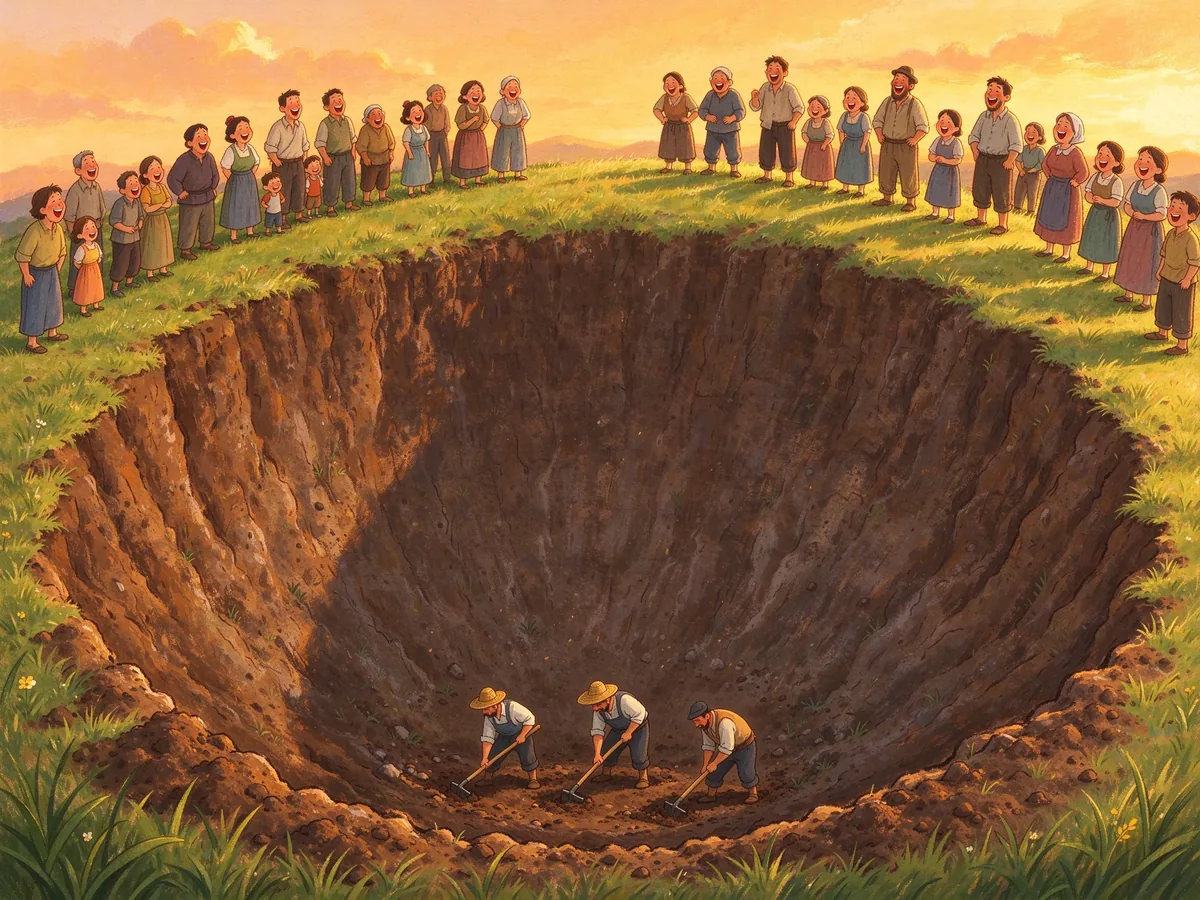
段落大意:这景象太壮观了,附近村子的人都跑来看。他们站在火山口边上往下看,嘲笑三个农场主“疯了!”可嘲笑非但没让他们停手,反而让他们更怒、更倔、更不肯罢休——抓不到狐狸绝不罢手。
山被挖成火山口,村民围观
P5 · 围观与倔强 —— 越笑越不肯停Onlookers — Laughter Makes Them Stubborn
表达方式 · 场面描写Expression · Crowd
People came running from the village ... They stood at the edge of the crater and laughed at the three farmers. “They’ve gone crazy!”
A crowd appears and turns the private battle into a public show — one line of laughter (crazy!) gives the scene scale and judgement from outside.村民的出现把私人战争变成公开表演——一句「疯了!」给场面补上规模,也补上外界的评判。
表现手法 · 衬托Technique · Foil
But the more they laughed, the angrier and more stubborn the farmers became.
Laughter should cool a hot head, but here it fuels it: the crowd’s mockery is used to make the farmers even more rigid — a reverse effect that hardens the conflict.笑声本该让人冷静,在这里却火上浇油:用村民的嘲笑把农场主衬托得更倔——反向效果让冲突更硬。
03 · CHARACTER CARDS

人物档案Who Is on Stage Tonight

这一章:一边是喘着气指挥全家往下挖的狐狸先生,一边是发了疯、不吃不喝也要抓到狐狸的三个农场主。还有一群跑来看热闹的村民。

STAR OF THE STORY

Mr Fox

狐狸先生 · 喘气的指挥官
ENCOURAGE 鼓励“Keep going, my darlings! Don’t give up!” 喘着气给全家打气
HOPE 希望“We’re going to make it!” 声音变远时,他说快成功了
SPIRIT 精神越挖越深,越危险越不放弃
THE DRIVERS

Boggis · Bunce · Bean

三位农场主 · 发疯的驾驶员
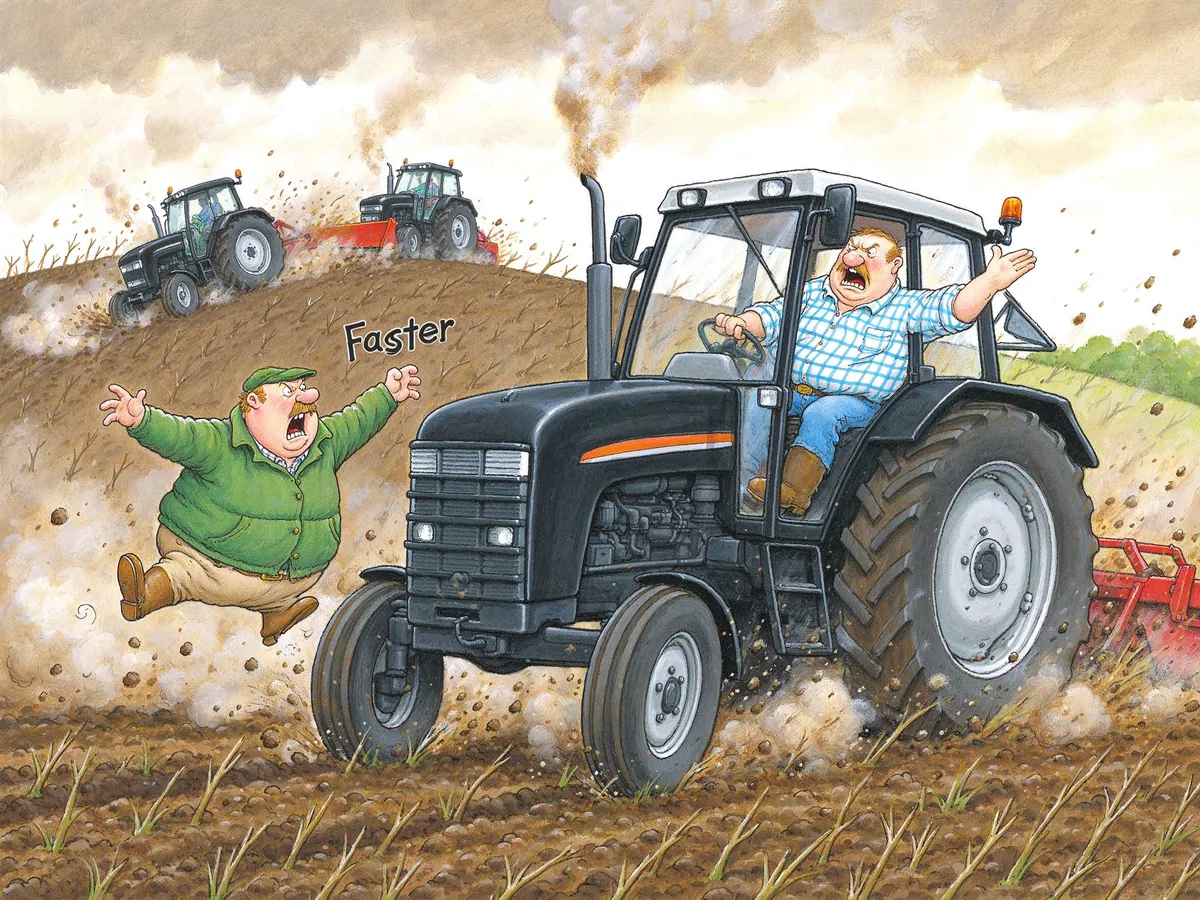
YELL 喊话“Faster! Faster!” / “I’ll chop him to pieces!” 三个人都在喊
STYLE 风格Bean 和 Bunce 开车像疯子,Boggis 跳着喊
MADNESS 疯狂不吃午饭,连村民嘲笑也不肯停
THE VILLAGERS

The Crowd

村民 · 看热闹的人
COME 赶来crowds of people came rushing out 从周围村子跑来看火山口
JEER 嘲笑“You must be mad!” 他们站在边上看热闹
EFFECT 效果嘲笑反而让农场主更不肯停手

描写分析 · Descriptions That Move the Story

这一章是机器对狐狸的赛跑。记叙文写「对抗」,可以一边写声音(由远而近),一边写人物的话和反应,让紧张一浪高过一浪。

人物描写 · CHARACTER外貌 · 语言 · 动作 · 心理 · 神态
外貌描写 · APPEARANCE

The machines were both black. They were murderous, brutal-looking monsters.

Dahl describes machines as if they were animals — black monsters. Even without a human face, the machines feel like characters: big, dark and evil.

达尔把机器写得像猛兽——黑色的怪物。虽然没有人的脸,机器却像角色一样:又大、又黑、又凶。

语言描写 · SPEECH

"Keep going, my darlings!" panted Mr Fox. "Don't give up!" ... "I'll chop him to pieces!" shouted Bunce.

Two voices fight across the hill: Mr Fox pants encouragement, Bunce screams violence. The dialogue itself becomes the race.

两种声音隔着山丘交战:狐狸先生喘着气打气,邦斯尖声威胁。对话本身就成了这场赛跑。

动作描写 · ACTION

Once the foxes actually saw the sharp metal edge of one of the shovels as it scraped up the earth just behind them.

"Scraped up the earth just behind them" — the danger is literally at their heels. One action sentence makes the chase feel skin-close.

铁铲「就在身后刮起泥土」——危险已经贴着脚跟。一句动作描写,让追逐变得近在咫尺。

心理描写 · PSYCHOLOGY

But this only made the three farmers more furious and more obstinate and more determined than ever.

Three "more"s climb like stairs: more furious, more obstinate, more determined. Inner anger grows with every jeer — a rising wave of stubbornness.

三个「更加」像台阶一样往上爬:更怒、更倔、更坚决。每一声嘲笑都让内心的火气升级,固执像浪一样越堆越高。

环境描写 · ENVIRONMENT场景 · 景物 · 氛围
环境描写 · ENVIRONMENT

In the beginning, the hill looked like this: a round green hill with trees on top. ... the hole the machines had dug was like the crater of a volcano.

Before and after in two pictures: a round green hill becomes a volcano crater. The landscape itself tells the story of the battle — no words about winning or losing are needed.

两张画做前后对比:圆润的绿山丘变成了火山口。地形本身就讲完了这场战斗——输赢根本不用多说。

文章结构 · Story Structure 时间顺序 · Time Order

这一章按「一整天的时间」推进:竞赛开始(清晨)→ 拉锯(时近时远)→ 双方喊话(正午)→ 火山口(傍晚五点)→ 围观与倔强(收束)。时间一分一秒都是较量。

Para 1 · 开场 · 竞赛开始

At the beginning the hill was round and green with trees on top. An hour later ... the hilltop was flat and bald.

清晨山丘还圆绿,一小时后就被机器啃平啃秃。

How it expands · 怎么展开:用「山丘前后对比」展开——围绕 round and green / flat and bald 两个画面,一个小时后中间发生了什么?留白里全是机器的轰鸣。

推进 · Steps ×3拉锯 → 喊话 → 火山口
Step 2 · 拉锯

For a while the foxes were winning, and the machines sounded further away ... but before long the machines were back, crunching and grinding louder and louder.

狐狸一度领先,机器又追上来,声音越来越近。

How it expands · 怎么展开:围绕 sounded 展开——用声音写战局:远去(希望)→ 回来(恐惧)。一个听力镜头,胜负全在耳朵里。

Step 3 · 喊话

“Keep digging, my dears! Don’t give up!” said Mr Fox. “I’ll scoop him up in a bucket and chop him to bits!” yelled Bunce.

狐狸爸爸为家人打气;农场主发誓要把狐狸剁成碎片。

How it expands · 怎么展开:双线对话展开:地下是爱(my dears),地上是恨(chop him to bits)。一边写,一边把两边的力量对比清楚。

Step 4 · 火山口

By lunchtime the machines were still digging ... By five o’clock in the afternoon, the hill looked like a volcano crater!

午饭不停工,到傍晚五点山变成火山口。

How it expands · 怎么展开:用「时间节点」展开:lunchtime → five o’clock,两个钟点把一整天压进两句话,再用比喻(火山口)把结果砸到读者眼前。

Step 5 · 收束 · 围观与倔强

People came running from the village ... “They’ve gone crazy!” But the more they laughed, the angrier and more stubborn the farmers became.

村民围观嘲笑,农场主反而更怒更倔。

How it expands · 怎么展开:收尾加进「第三方视角」:村民的笑声既是场面,也是反作用力——嘲笑把农场主的倔强又顶高了一截。冲突在笑声里继续升温。

按结构复述 · Retell by Structure(时间顺序)

这是时间顺序结构,复述时跟着一天走:清晨 → 拉锯 → 正午 → 傍晚 → 围观。

First · 清晨The race began: machines against foxes, and within an hour the green hilltop was bald.竞赛开始,一小时不到绿山头就被啃秃。
Then · 拉锯The foxes led for a while, then the machines came crunching back, closer and closer.狐狸一度领先,机器又嘎吱嘎吱追上来。
Next · 正午Mr Fox cheered his family on; Bunce screamed about chopping the fox to bits.狐狸爸爸给家人打气,邦斯嚷着要把狐狸剁碎。
Then · 傍晚Nobody stopped for lunch; by five o’clock the hill looked like a volcano crater.午饭也不停,傍晚五点山变成了火山口。
Finally · 围观Villagers came to laugh, but the laughter only made the farmers angrier and more stubborn.村民来围观嘲笑,反而让农场主更怒更倔。

小提示:与「思维导图」搭配用——把导图的枝条按 清晨 → 拉锯 → 正午 → 傍晚 → 围观 排好,先看导图复述一遍,再合上导图凭记忆复述一遍。

时间线 · From Morning to Evening

Morning 早晨山还是圆绿色的
Afternoon 下午5点山变成火山口

从早到晚,机器挖了整整一天——山越来越矮,坑越来越深,人越来越疯。

04 · STORY MAP & RETELL

思维导图 · 复述文章Story Map & Retelling

把第六章的信息装进这张「思维导图」,再沿着复述支架讲一遍——你也能当小老师!

The Desperate Race
地点人物情节关键结果

复述支架 · Retell with the scaffold

把句子补充完整,就完成了第六章的复述。

1
Now there began a desperate ________, the machines against the foxes.
2
Sometimes the foxes would gain a little ________ and the noises would grow fainter.
3
Once the foxes saw the sharp metal ________ of a shovel scraping up behind them.
4
“Keep going, my darlings! Don’t give up!” ________ Mr Fox.
5
The hole the machines had dug was like the ________ of a volcano.
6
The people jeered and laughed, but this made the farmers more ________ and more determined.

复述加分:用 First / Then / Next / Also / Finally 把六句话串起来;讲到声音时,要先变远(小声)再变近(大声);讲到 “louder and louder” 时声音要越来越大;最后一句“more obstinate”要咬着牙说。

05 · PICTURE RETELL

看图复述Retell with Pictures

5 张图卡按情节顺序排好。看着图片,用英文把第六章讲出来——点击图片可以放大,每张图点开都有一句「提示句」帮你起头。

1清晨,圆绿色的山丘顶上长满树,两辆黑色拖拉机刚开始啃山顶
竞赛开始
Say: “Now there began a desperate race, the machines against the foxes. In the beginning, the hill was a round green hill with trees on top.”
一场拼命的竞赛开始了——机器 vs 狐狸。一开始,山丘还是圆绿色的,顶上长满树。
2地下地道里,狐狸一家蹲着听,Mr Fox 抬头微笑,头顶声音变远
声音变远
Say: “Sometimes the foxes would gain a little ground and the noises grew fainter. Mr Fox said, 'We're going to make it! I'm sure we are!'”
有时候狐狸占了上风,声音变远了。狐狸先生说:“我们要成功了!”
3地下,狐狸们惊恐地回头,身后铲刀的金属尖刚刮过泥土,碎石落下
看见铲刀
Say: “But then the machines came back. The crunch got louder and louder. Once they actually saw the sharp metal edge of a shovel scraping up just behind them!”
可机器又追上来,嘎吱声越来越响。有一次狐狸竟然看见了身后铲刀的金属尖!
4中午,三辆拖拉机还在疯狂挖掘,Bunce 探出身子喊,Boggis 在旁边跳着喊 Faster
不吃午饭
Say: “By lunchtime the machines were still at it. So were the foxes! The farmers didn't stop for lunch. 'Faster! Faster!' shouted Boggis.”
到了午饭时间,机器还在挖,狐狸也在挖。农夫们饭都不吃——“快点!再快点!”
5下午5点,山丘被挖成巨大的火山口,一群村民站在边缘围观嘲笑
火山口
Say: “By five o'clock the hill looked like the crater of a volcano! Crowds of villagers came and laughed, 'You must be mad!' But this only made the farmers more determined.”
下午五点,山变成了火山口!村民跑来嘲笑“你们疯了!”可这反而让他们更不肯停手。

提示:图卡可左右滑动查看全部 5 张;点「看看提示句」展开英文句子;点图片放大全屏。

1 · First 竞赛开始→ 2 · Then 声音变远→ 3 · Next 看见铲刀→ 4 · Also 不吃午饭→ 5 · Finally 火山口

小挑战:先看着图讲一遍,再合上图卡,只凭记忆讲一遍——能做到,第六章就真正属于你了!

06 · WRITER’S CRAFT

写作亮点分析Why This Writing Works

这一章,Dahl 把「竞赛」写成了一场你追我赶的拉锯战:声音时远时近,对话你来我往,山从绿色变成火山口。秘密武器是这六招:

Parallel Racing · 双线赛跑
两条线同时跑
“In the beginning, the hill looked like this: [图1] → After about an hour ... it looked like this: [图2] → by lunchtime ... → By five o'clock ... like the crater of a volcano [图3].”

Dahl 没有只写一边——他让狐狸往下逃、机器往下挖,两条线同时跑。用 In the beginning / After an hour / by lunchtime / By five o'clock 四个时间词,把山的变化一步一步画出来。读者像在看一场延时摄影。

小任务:用 In the beginning / Then / After / Finally 写一段「花盆里的种子发芽了」。
中文写作对照 · 时序推进 chronological order

按时间顺序一步一步写——中文叫「时序叙述」或「递进式描写」;四个时间节点像四张快照,把变化拍给你看。

Sound Seesaw · 声音跷跷板
声音时远时近
“the clanking noises would grow fainter ... But then a few moments later, the machines would come back ... the crunch ... would get louder and louder.”

声音一远一近,像跷跷板:fainter(远了)→ louder and louder(又近了)。读者跟着狐狸一起经历「希望—失望—希望—失望」的过山车。这种「张弛交替」是紧张感的秘诀。

小任务:用「变小—变大—再变小」写一段等公交的心情。
中文写作对照 · 张弛交替 tension & release

紧张—放松—再紧张——中文叫「张弛法」;声音一远一近就是「一伏一起」,像荡秋千,越荡越高。

Dialogue Ping-Pong · 对话乒乓
两边喊话你来我往
“Keep going, my darlings!” panted Mr Fox. “Keep going!” the fat Boggis shouted ... “Have you caught sight of him yet?” Bean called back. “Not yet!” shouted Boggis. “I'll pick him up with my bucket!” shouted Bunce. “I'll chop him to pieces!”

狐狸在地下喊一句,农夫在地上喊一句;农夫你一句我一句,像打乒乓球。句子短、说话人多、台词一句接一句——读起来节奏飞快,像真的在听两边喊话。

小任务:写一段两个人隔着墙对话,每人说一句,你来我往。
中文写作对照 · 对话交锋 dialogue

短句对话交替推进——中文小说也常用这种「你一句我一句」的写法,叫「对话交锋」;说话动词(panted / shouted / called back)让每个人有自己的声音。

Comparatives · 越来越 + 比较级
越来越疯、越来越倔
“the noise was louder and louder” ... “more furious and more obstinate and more determined than ever”

比较级 + and + 比较级 =「越来越……」。louder and louder 是「越来越响」;more furious and more obstinate and more determined 连着三个 more,像三级跳——农场主的疯狂一层比一层高。

小任务:用「越来越……」写三句:雨越下越___;他跑得越___;妈妈的声音越___。
中文写作对照 · 层递/递进 gradation

一层比一层高——中文叫「层递」或「递进」;三个 more 连用就是「一浪高过一浪」,情绪推到顶。

So Inversion · So 倒装
狐狸也一样在挖
“The farmers didn't stop for lunch ... So were the poor foxes.”

So were the foxes = The foxes were still digging too. 把 So 放到句首、主谓倒装,一句话就把「两边都在拼命」对上了——比写一整句 The foxes were still digging too 简洁有力得多。

小任务:用 So 倒装回答:Tom likes apples. (Mary 也是) → So ___ Mary.
中文写作对照 · 倒装/呼应 inversion

为了强调把词序颠倒——中文叫「倒装」;“So were the foxes” 的「So 提前」就是为了强调「狐狸也一样」,半句就接住上一句。

Golden Line · 金句摘抄
嘲笑反而让他们更疯
“The people jeered and laughed. But this only made the three farmers more furious and more obstinate and more determined than ever not to give up until they had caught the fox.”

村民的嘲笑本来该让他们停手,可 Dahl 用一个 But 反转——嘲笑非但没用,反而像火上浇油。三个 more 叠在一起,把农场主的固执写到了顶点。这句话也告诉我们:真正的对手不是狐狸,是他们自己的倔脾气。抄进你的好句本吧。

挑战:用 “But this only made me more ___ and more ___” 写一句被嘲笑后更努力的话。
中文写作对照 · 反衬/反转 reversal

本来该往这边走,结果偏偏往反方向走——中文叫「反衬」或「反转」;嘲笑本应降温,结果火上浇油,人物的固执一下子立住了。

句子银行 · Sentence Bank(仿写句型)

more and more / -er and -er(越来越……)
The noise got louder and louder. / He became more and more angry.
仿写:The rain got ___ and ___ (heavy). 她越来越高兴:She became ___ and ___ (happy).
So + be动词/助动词 + 主语(……也一样)
The farmers didn't stop. So were the foxes. / I like cats. So does she.
仿写:Tom is tall. So ___ Sam. / They are running. So ___ we.
such + a/an + adj. + n. + that ...(如此……以至于)
It was such an extraordinary sight that crowds came to look.
仿写:It was ___ a hot day ___ we went swimming. 用 such...that 写一句:书包太重以至于……
直接引语 + 说话动词(panted / shouted / called / yelled)
"Keep going!" panted Mr Fox. / "Faster!" shouted Boggis. / "Have you caught him yet?" called Bean.
仿写:“Run!” she ___ (cry). 换 pant / yell / shout 各写一句。

中西对照小发现:英文 chronological order 就是中文「时序叙述」,tension & release 就是「张弛法」,comparatives 就是「层递/递进」,inversion 就是「倒装」,reversal 就是「反衬/反转」。给小朋友讲的时候,中英文术语可以互相借用,哪边熟讲哪边。

07 · THINK DEEPER

思考题Questions to Think About

三个难度层级:先找细节,再推原因,最后谈看法。点「提示」给一点帮助,点「答案」对照想法。

L1 · 细节 Detail

1. What kind of race began? 开始了一场什么样的竞赛?

第一句 — “Now there began a desperate race, the machines __ the foxes.”
A desperate race between the machines and the foxes.机器和狐狸之间一场拼命的竞赛。

2. When did the foxes think they might make it? 狐狸什么时候觉得要成功了?

找 “gain a little ground” 和 “grow fainter”
When they gained a little ground and the clanking noises grew fainter.当他们抢回一点地面、哐当的铁锹声越来越小时。

3. What did the foxes actually see once? 狐狸有一次真的看见了什么?

找 “the sharp metal edge of one of the shovels”
They saw the sharp metal edge of one of the shovels scraping up the earth just behind them.他们真的看见了一把铁锹锋利的金属边,正在他们身后刮着泥土。

L2 · 推断 Inference

4. Why did the farmers not stop for lunch? 农场主为什么不吃午饭?

找 “too keen to finish the job”
Because they were too keen to finish the job — they were so obsessed with catching the fox that they forgot to eat.因为他们太想快点干完了——满脑子都是抓狐狸,连吃饭都忘了。

5. What did the hill look like by 5 o'clock? 下午五点山丘变成什么样了?

找 “like the crater of a __”
It looked like the crater of a volcano — a huge round hole in the ground.像一个火山的喷发口——地上一个巨大的圆洞。

6. Why did villagers come from surrounding villages? 村民为什么从周围村子跑过来?

找 “such an extraordinary sight that...”
Because the hole in the hill was such an extraordinary sight — it was like a volcano crater, so crowds came to stare.因为山上那个大洞实在太稀奇了——就像火山口一样,人群都跑来看热闹。

L3 · 评价与主题 Opinion & Theme

7. Were the villagers kind or cruel? Why did they laugh? 村民是善良还是残忍?他们为什么笑?

想一想:村民知道狐狸的事吗?他们站在谁那边?
开放题。可以说残忍:他们不知道狐狸一家正在逃命,只是觉得三个大人挖个洞很可笑。但 Dahl 写他们“jeered and laughed”,更像是在衬托农场主的固执——连外人都看不下去了,他们却更疯。

8. Why did the farmers become more obstinate after being laughed at? 为什么被嘲笑后他们反而更倔了?

被嘲笑时,人通常会怎么想?“你们等着瞧!”
开放题。被嘲笑会激起人的好胜心——“你们说我疯了?我偏要干到底!”Dahl 用三个 more 叠在一起,把这种赌气式的固执写活了。这也让故事更紧张:没有外人能劝住他们。

9. The next chapter is called “Boggis's Chicken House Number One”. What do you think will happen? 下一章叫《博吉斯的一号鸡舍》,你觉得会发生什么?

狐狸又饿又渴——他会往哪个方向挖?
开放题。狐狸一家挖了一整天,又饿又渴,爸爸可能会决定往某个农场的方向挖——去找吃的!Boggis 的鸡舍,最可能是第一站。(读了才知道!)

中心思想 · What is this chapter really about?

Chapter 6 is a test of endurance: one day, one hill, two stubborn forces digging against each other. The foxes dig for their lives, the farmers dig for pride — and when the whole village laughs, the farmers only dig harder.

第六章是一场耐力的考验:一天、一座山、两股不肯松手的力气。狐狸为活命而挖,农场主为面子而挖——全村人笑话,他们反而挖得更狠。

persistence 坚持stubbornness 固执race 竞赛family 家庭
08 · WORD LAB

词汇 · 在上下文里猜词Guess from Context

每张词卡正面是原文句子——先根据上下文猜意思,再点击翻面验证。学完 12 个核心词,别忘了下面的「拓展好词」。

desperateadj. 形容词

“Now there began a desperate race.”
猜一猜:悠闲的 / 拼命的 / 有趣的?

点击翻面看看 ▸
desperate/ˈdespərət/adj. 拼命的;不顾一切的;绝望的The prisoners made a desperate plan to escape.近义:reckless, wild 拼命的 · 搭配:desperate for help
gain groundphr. 短语

“the foxes would gain ground and the noises would grow fainter.”
猜一猜:占上风 / 后退 / 摔倒?

点击翻面看看 ▸
gain ground/ɡeɪn ɡraʊnd/phr. 取得进展;占上风(原指推进阵地)Our team is gaining ground in the game.反义:lose ground 失势 · 近义:make progress
clankingadj. 拟声

“the clanking noises would grow fainter.”
猜一猜:叮当响的 / 轻柔的 / 美妙的?

点击翻面看看 ▸
clanking/ˈklæŋkɪŋ/adj. 叮当响的(金属碰撞声)I heard the clanking noise of the old machine.拟声家族:clank 叮当 · clang 哐当 · clatter 咔嗒
crunchn. 名词

“the crunch of the mighty shovels.”
猜一猜:嘎吱声 / 歌声 / 笑声?

点击翻面看看 ▸
crunch/krʌntʃ/n. 嘎吱声(压碎或咀嚼的声音)I heard the crunch of leaves under my feet.也作动词:crunch on an apple 咬苹果
scrapev. 动词

“one of the shovels as it scraped up the earth.”
猜一猜:轻轻放下 / 刮、铲起 / 埋起来?

点击翻面看看 ▸
scrape/skreɪp/v. 刮;擦;铲起(scrape 的过去式)He scraped the ice off the window.近义:scratch, rub · 搭配:scrape up 铲起
pantv. 动词

“‘Keep going, my darlings!’ panted Mr Fox.”
猜一猜:大声喊 / 喘气说 / 睡着说?

点击翻面看看 ▸
pant/pænt/v. 喘气;气喘吁吁地说(pant 的过去式)The dog panted after running.联想:跑步后 panted like a dog
keenadj. 形容词

“they were too keen to finish the job.”
猜一猜:不想做 / 热切地想 / 讨厌?

点击翻面看看 ▸
keen/kiːn/adj. 热切的;渴望的(keen to do 急于做)She is keen to start her new job.搭配:keen on / keen to · 近义:eager
prowlv. 动词

“You’ll never come prowling around my farm again!”
猜一猜:大摇大摆走 / 悄悄潜行 / 跳着走?

点击翻面看看 ▸
prowl/praʊl/v. 潜行;悄悄徘徊找猎物(prowl 的 v-ing)The tiger prowled through the jungle.近义:creep, sneak · 联想:cat prowls at night
maniacn. 名词

“driving their machines like maniacs.”
猜一猜:新手 / 疯子 / 老手?

点击翻面看看 ▸
maniac/ˈmeɪniæk/n. 疯子;狂人(maniacs 复数)He drove like a maniac on the highway.近义:crazy person · 搭配:like a maniac
cratern. 名词

“the hole ... was like the crater of a volcano.”
猜一猜:山顶 / 火山口 / 山脚?

点击翻面看看 ▸
crater/ˈkreɪtə/n. 火山口;弹坑(圆形深坑)The bomb left a huge crater in the field.搭配:volcano crater 火山口
jeerv. 动词

“The people jeered and laughed.”
猜一猜:鼓掌 / 嘲笑 / 欢呼?

点击翻面看看 ▸
jeer/dʒɪə/v. 嘲笑;嘲弄(jeer 的过去式)The crowd jeered at the losing team.近义:mock, laugh at · 反义:cheer
obstinateadj. 形容词

“more furious and more obstinate.”
猜一猜:听话的 / 顽固的 / 害怕的?

点击翻面看看 ▸
obstinate/ˈɒbstɪnət/adj. 顽固的;固执的The obstinate child refused to eat.近义:stubborn · 反义:flexible, flexible

拓展好词 · More Words from This Chapter

WordMeaning 释义From the text 原文
fainteradj. 更微弱的(faint 比较级)“noises would grow fainter”
mightyadj. 强大的;巨大的“the mighty shovels”
chopv. 砍;剁“I'll chop him to pieces!”
dervishn. 旋转舞僧(像发疯一样跳)“hopping about like a dervish”
extraordinaryadj. 非凡的;惊人的“such an extraordinary sight”
surroundingadj. 周围的“from the surrounding villages”
furiousadj. 狂怒的“more furious”
09 · GRAMMAR FOCUS

语法 · 从原文句子学语法Grammar from the Story

本章的 4 个语法点都藏在课文句子里:每个点按「规则 → 原文例句 → 即时练习」三步走,最后做综合小测检验。先找比较级和 so 倒装,再看 such...that 和直接引语。

比较级 + and + 比较级 · 越来越……

Comparatives and Comparatives

规则:「比较级 + and + 比较级」表示越来越……。短词加 -er + and + -er;长词用 more and more + 原级。表示程度在不断加深。

P2the crunch would get louder and louder. P5more furious and more obstinate and more determined than ever.

louder and louder = 越来越响;more and more angry = 越来越生气。三个 more 叠在一起,像三级跳,情绪推到顶。

即时练习

1The weather got ___ and ___ (hot).

2She became ___ and ___ (nervous) before the test.

3翻译:天越来越黑了。

参考答案与解析

1. hotter and hotter——hot 是短词,双写 t + er。
2. more and more nervous——nervous 是长词,用 more and more。
3. It got darker and darker.——dark 的比较级是 darker。

So 倒装 · ……也一样

So + Auxiliary + Subject

规则:前一句说「……做了某事」,后一句要说「……也一样」时,可以把 So 放在句首,然后主谓倒装:So + be / 助动词 / 情态动词 + 主语。简短有力,承接上文。

P4The machines were still at it. So were the poor foxes. (= The foxes were still digging too.)

So were the foxes = 狐狸们也一样在挖。不用写一整句 The foxes were still digging too,一个 So 半句就接住了。

即时练习

1">Tom is tall. So ___ Sam. (be 动词)

2I like apples. So ___ she. (do)

3用 So 倒装翻译:他们在挖,我们也在挖。

参考答案与解析

1. is——前句 is,后句 So is Sam。
2. does——前句 like(一般现在时第三人称),后句用 does。
3. They are digging. So are we.——are 倒装到 we 前面。

such ... that ... · 如此……以至于

Such ... That ...

规则:such + a/an + 形容词 + 单数名词 + that 从句,表示「如此……以至于……」。such 修饰名词;so 修饰形容词。区别:such a good boy = so good a boy。

P5It was such an extraordinary sight that crowds of people came rushing out to look.

这景象太壮观了(such a sight),以至于村民都跑来看(that they came)。that 引导结果状语从句。

即时练习

1It was ___ a hot day ___ we went swimming. (such / so / that)

2It was ___ an interesting book ___ I read it twice. (用 such...that)

3翻译:他跑得如此快,以至于没人能追上他。

参考答案与解析

1. such ... that——a hot day 是名词短语,用 such。
2. such ... that——an interesting book 是名词短语。
3. He ran so fast that nobody could catch him.——fast 是形容词/副词,用 so...that。

直接引语 + 说话动词 · 让每个人有自己的声音

Direct Speech + Reporting Verbs

规则:直接引语就是把角色说的话原样放进引号。后面用说话动词 + 人名,让读者知道是谁在说。常见:say / shout / call / yell / pant / whisper。动词的位置可以放前面、中间或后面。

P3“Keep going!” panted Mr Fox. “Have you caught sight of him?” Bean called back. “Faster!” shouted Boggis.

panted(喘着气说)= 狐狸累坏了;shouted(大喊)= 农夫疯了;called back(回话)= 两个人在对话。换个动词,语气完全不同。

即时练习

1“Help!” she ___ (cry).

2“Good morning,” he ___ (say) with a smile.

3写一句:爸爸生气地喊 “Stop!”(用 shout)

参考答案与解析

1. cried——哭着说。
2. said——微笑着说。
3. “Stop!” shouted Dad angrily.——shouted 体现生气。

语法四步策略:① 找 -er and -er / more and more(越来越……);② 找句首 So(So were / So did → 倒装,表“也一样”);③ 找 such a/an + adj. + n. + that(如此……以至于);④ 找引号外的说话动词(panted / shouted / called)。判断完再代入回读,通顺才算对。
10 · QUICK QUIZ

小测验Check What You’ve Got

5 道选择题 + 1 个配对游戏。先做选择题,再做配对,看看你能得几分!

1第六章开始的“竞赛”是什么 vs 什么?

2狐狸什么时候觉得自己快成功了?

3农夫午餐时间做了什么?

4到下午五点,山丘变成了什么?

5村民嘲笑后,农夫们怎么样了?

0 / 5
选择题得分
做完 5 道选择题,看看你的成绩!

配对游戏 · Match the Speaker to His Words

先点左边的角色,再点右边他说的话。

SPEAKER 说话人
WORDS 台词

还有 3 对要配对。

11 · STUDY GUIDE

学习指南Study Guide & Answer Key

这一页是你的自学地图:学习目标、学习步骤和全部答案都在这里,跟着走就能通关第六章。

学习目标 Learning Objectives
  • 阅读策略:用上下文猜生词(desperate / obstinate / crater 等);体会“声音时远时近”的紧张感;识别双线赛跑、对话乒乓两种写法。
  • 语言知识:掌握 12 个核心词汇;学习比较级+and+比较级、So 倒装、such...that、直接引语+说话动词。
  • 写作技巧:学习时序推进、声音张弛、对话交锋、比较级递进四种手法,并完成仿写。
  • 思维表达:借助思维导图完整复述第六章;能区分“细节—推断—评价”三类问题。
学习步骤 Suggested Steps
  • 第 1 步 · 热身(课前 10 分钟):读前热身 → 回顾第五章金句(“Dig for your lives!”)→ 预测“竞赛是什么”;用朗读功能听读第一段。
  • 第 2 步 · 精读(课中 25 分钟):精读原文(重点朗读第三段对话交替,模仿 panted / shouted / called back 的语气)→ 人物档案 → 思维导图梳理 → 写作亮点讲解。
  • 第 3 步 · 巩固(课后 15 分钟):复述支架练习 → 思考题分层挑战 → 小测验 → 仿写练习。
  • 小提示:如果觉得难,先完成 L1 细节题和配对游戏;想挑战自己,试试 L3 评价题和“比较级递进”仿写。
参考答案 Answer Key
  • 预测题:B — 狐狸往下挖,机器从上面挖,一场挖洞竞赛。
  • 复述支架:① race ② ground ③ edge ④ panted ⑤ crater ⑥ obstinate。
  • 思考题:见各题“答案”按钮;L3 开放题言之有理即可。
  • 选择题:1-A 2-B 3-B 4-B 5-B。
  • 配对:Mr Fox→Keep going, my darlings!;Boggis→Faster! Faster!;Bunce→I'll chop him to pieces!
更多精读玩法 More Ideas
  • 声音跷跷板朗读:和同学分两组——一组读 fainter(小声),一组读 louder and louder(大声),交替读两次,感受声音远近。
  • 对话配音:三人一组,分别扮 Mr Fox / Boggis / Bunce,配上语气(panted 喘气、shouted 大喊),把第三段演出来。
  • 复述接龙:和家人或同学一起,一个说一句,下一位接下一句,用 First / Then / Next / Finally 串完第六章。
  • 读书日志 Reading Log:每章记录 3 个新词、1 句金句、1 个问题。
  • 时间线画画:试一试画四张图:早晨的山 / 一小时后 / 午餐时 / 下午5点,把山的变化画出来。
  • 跨章对比:对比第五章“拖拉机刚开始”和第六章“挖了一整天”——声音、山的样子、人的状态有什么变化?