CHAPTER 9 · 全书共 18 章
Mr Fox Has a Plan 狐狸先生有办法
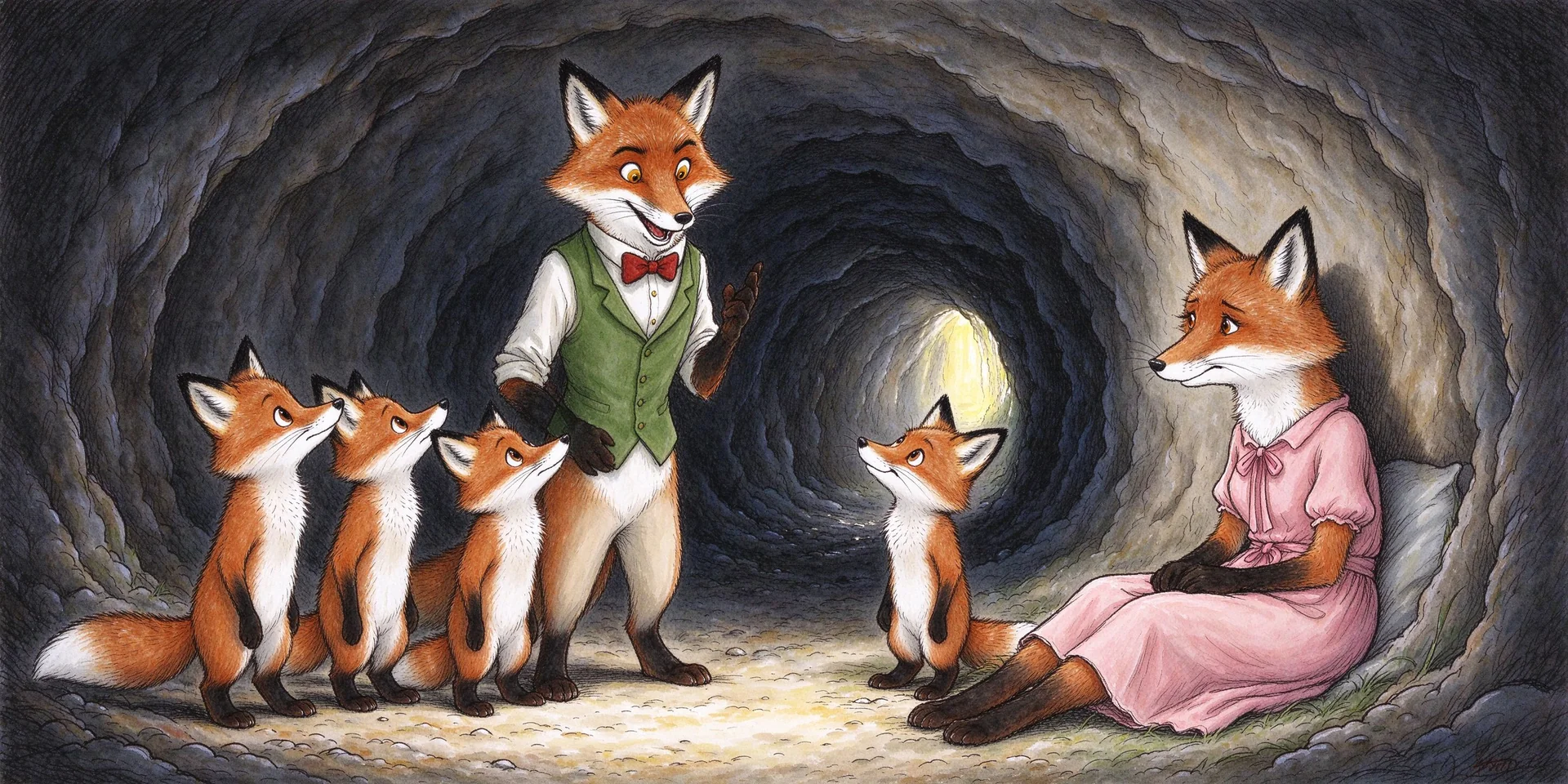
三天三夜,狐狸一家没吃没喝。小狐狸一个劲儿地要水、要往外冲;狐狸妈妈宁可全家饿死,也不让孩子去送命。狐狸爸爸闭着眼想了很久很久——终于,他站起来,眼里闪起一丝光。他,有办法了。
A Spark of Hope —— 希望的火花
9Chapter 9
三天三夜,狐狸一家没吃没喝。小狐狸一个劲儿地要水、要往外冲;狐狸妈妈宁可全家饿死,也不让孩子去送命。狐狸爸爸闭着眼想了很久很久——终于,他站起来,眼里闪起一丝光。他,有办法了。
The waiting-game goes on for three days and three nights. The foxes are starving. The cubs want to dash out; Mrs Fox refuses to let them die under the guns. Then Mr Fox, silent for a long time, gets slowly to his feet — with a little spark of excitement in his eyes. Now read “Mr Fox Has a Plan” and watch hope return to the dark tunnel.等待游戏整整持续了三天三夜。狐狸一家快饿死了。小狐狸想冲出去,狐狸妈妈宁死也不让孩子死在枪口下。沉默良久的狐狸爸爸慢慢站起身——眼里闪起一丝兴奋的光。现在来读《狐狸先生有办法》,看黑暗隧道里如何重新亮起希望。
Roald Dahl loves a good idea — and he loves to make us wait for it. In Chapter 9 the foxes are starving and desperate, and Dahl makes us feel every minute: “For three days and three nights this waiting-game went on.” Then he gives the hero his moment: Mr Fox has had a bit of an idea. Watch how Dahl turns despair into hope — first the cubs whine, then the father rises, and at last the whole family cries: “We can do it!”罗尔德·达尔爱写「办法」——也爱让读者等这个办法。第九章里狐狸一家又饿又绝望,达尔让我们一分钟一分钟地体会:“这场等待游戏整整持续了三天三夜。”然后他把高光时刻留给主角:狐狸爸爸“刚有了个主意”。看达尔如何把绝望变成希望——先是孩子叫苦,再是爸爸起身,最后全家高喊:“我们做得到!”
In Chapter 8, Bean ordered one hundred and eight men to surround the hill. The three farmers camped outside the hole, eating chicken, doughnuts and cider, and took turns to keep watch with tractor headlamps. Mr Fox crept up and sniffed: “They’re still there.” The fox family was trapped — and beginning to starve.第八章里,比恩命令一百零八个人包围整座山。三个农场主在洞口扎营,吃着鸡、甜甜圈和苹果酒,用拖拉机大灯轮流守夜。狐狸爸爸悄悄爬上去闻了闻:“他们还在。”狐狸一家被围住了——开始挨饿。
The foxes are trapped and starving. What do you think Mr Fox will do?第九章叫《狐狸先生有办法》。又饿又渴、外面全是枪,狐狸爸爸会想出什么办法?
Pick one to remember your prediction — come back after reading to check!
点一个选项记住你的预测,读完全章后回来揭晓答案。
Two more questions after reading · 还有两个小问题:
1. What did the Small Foxes cry to cheer up their father?
小狐狸们喊了什么给爸爸打气?
2. Where does Mr Fox plan to dig?
狐狸爸爸打算往哪里挖?
跟着原文读一遍。橙色单词先别查——根据上下文猜一猜。点击任意单词弹出词典卡片(中英释义 · 发音 · 例句);点段落开头的 ▶ 听朗读(英式男声)。
For three days and three nights this waiting-game went on. “How long can a fox go without food or water?” Boggis asked on the third day. “Not much longer now,” Bean told him. “He’ll make a run for it soon. He’ll have to.” Bean was right. Down in the tunnel the foxes were slowly but surely starving to death.
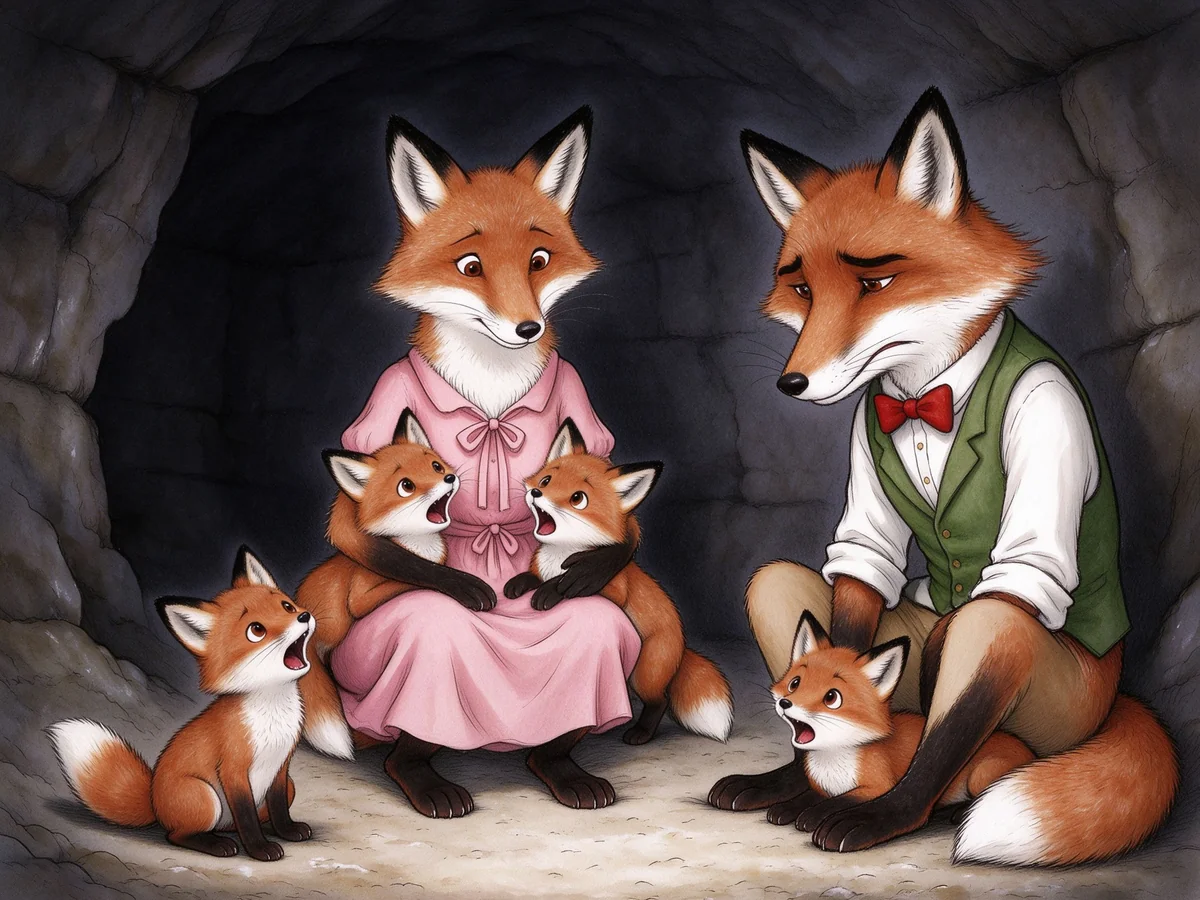
“If only we could have just a tiny sip of water,” said one of the Small Foxes. “Oh, Dad, can’t you do something?” “Couldn’t we make a dash for it, Dad? We’d have a little bit of a chance, wouldn’t we?” “No chance at all,” snapped Mrs Fox. “I refuse to let you go up there and face those guns. I’d sooner you stay down here and die in peace.”
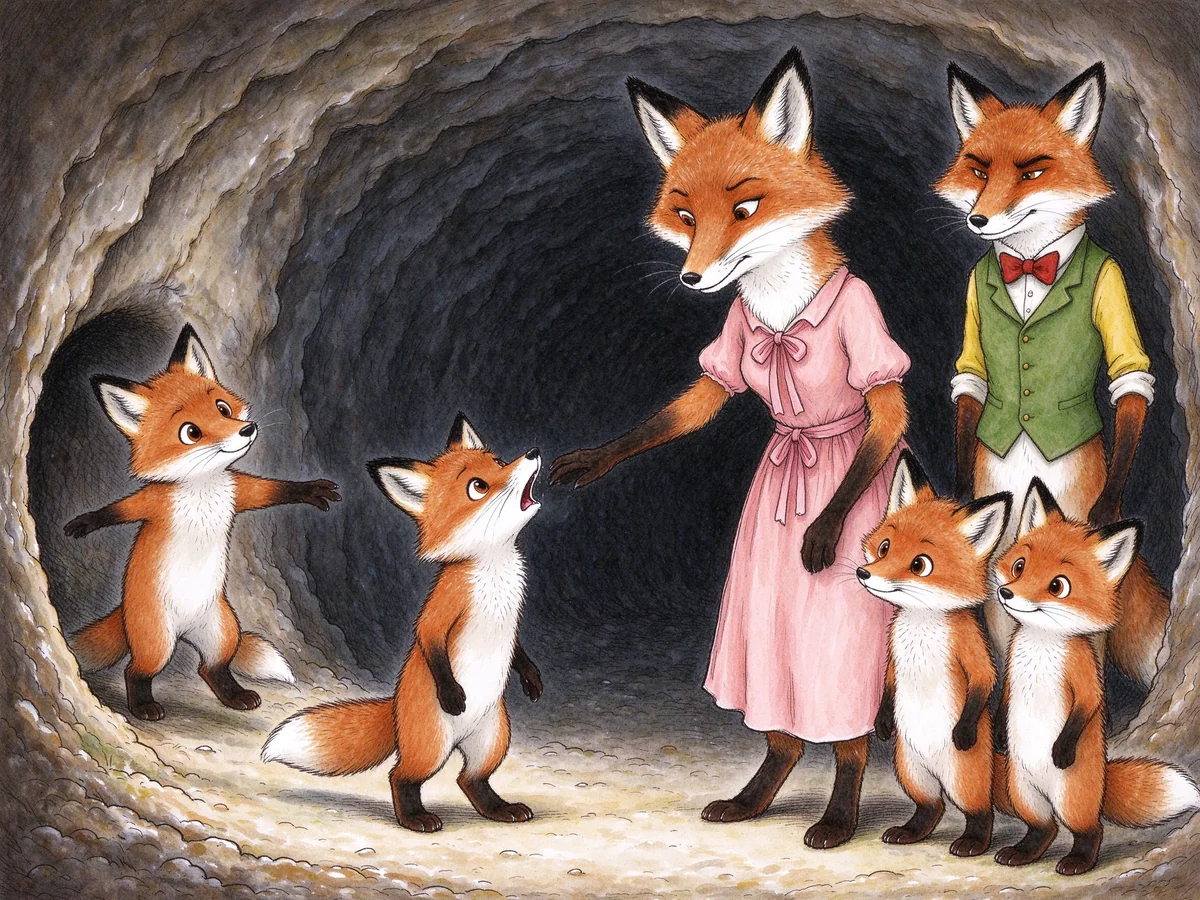
Mr Fox had not spoken for a long time. He had been sitting quite still, his eyes closed, not even hearing what the others were saying. Mrs Fox knew that he was trying desperately to think of a way out. And now, as she looked at him, she saw him stir himself and get slowly to his feet. He looked back at his wife. There was a little spark of excitement dancing in his eyes. “What is it, darling?” said Mrs Fox quickly. “I’ve just had a bit of an idea,” Mr Fox said carefully. “What?” they cried. “Oh, Dad, what is it?” “Come on!” said Mrs Fox. “Tell us quickly!”
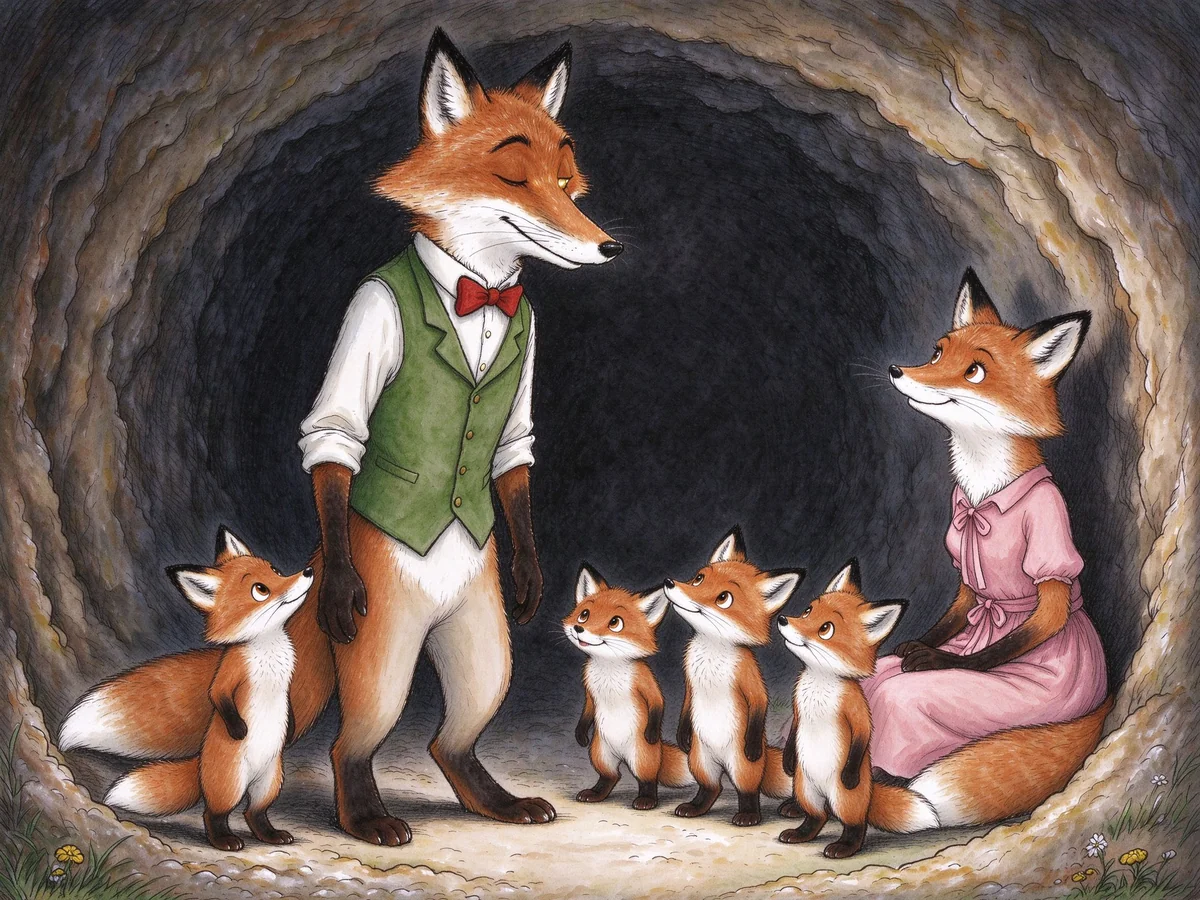
“Well . . .” said Mr Fox, then he stopped and sighed and sadly shook his head. He sat down again. “It’s no good,” he said. “It won’t work after all.” “Why not, Dad?” “Because it means more digging and we aren’t any of us strong enough for that after three days and nights without food.”
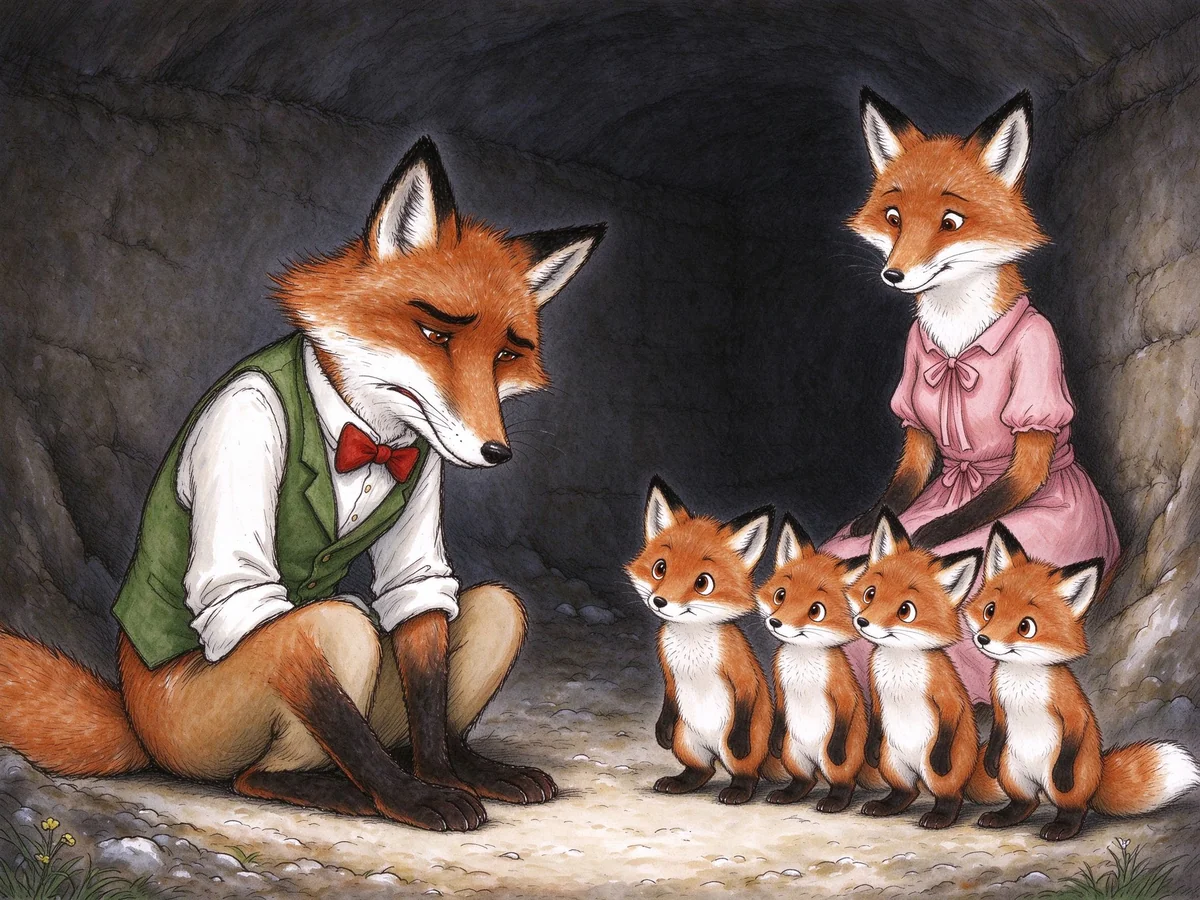
“Yes we are, Dad!” cried the Small Foxes, jumping up and running to their father. “We can do it! You see if we can’t! So can you!” Mr Fox looked at the four Small Foxes and he smiled. What fine children I have, he thought. They are starving to death and they haven’t had a drink for three days, but they are still undefeated. I must not let them down. “I . . . I suppose we could give it a try,” he said. “Let’s go, Dad! Tell us what you want us to do!” Slowly, Mrs Fox got to her feet. She was suffering more than any of them from the lack of food and water. She was very weak. “I am so sorry,” she said, but I don’t think I am going to be much help.” “You stay right where you are, my darling,” said Mr Fox. “We can handle this by ourselves.”
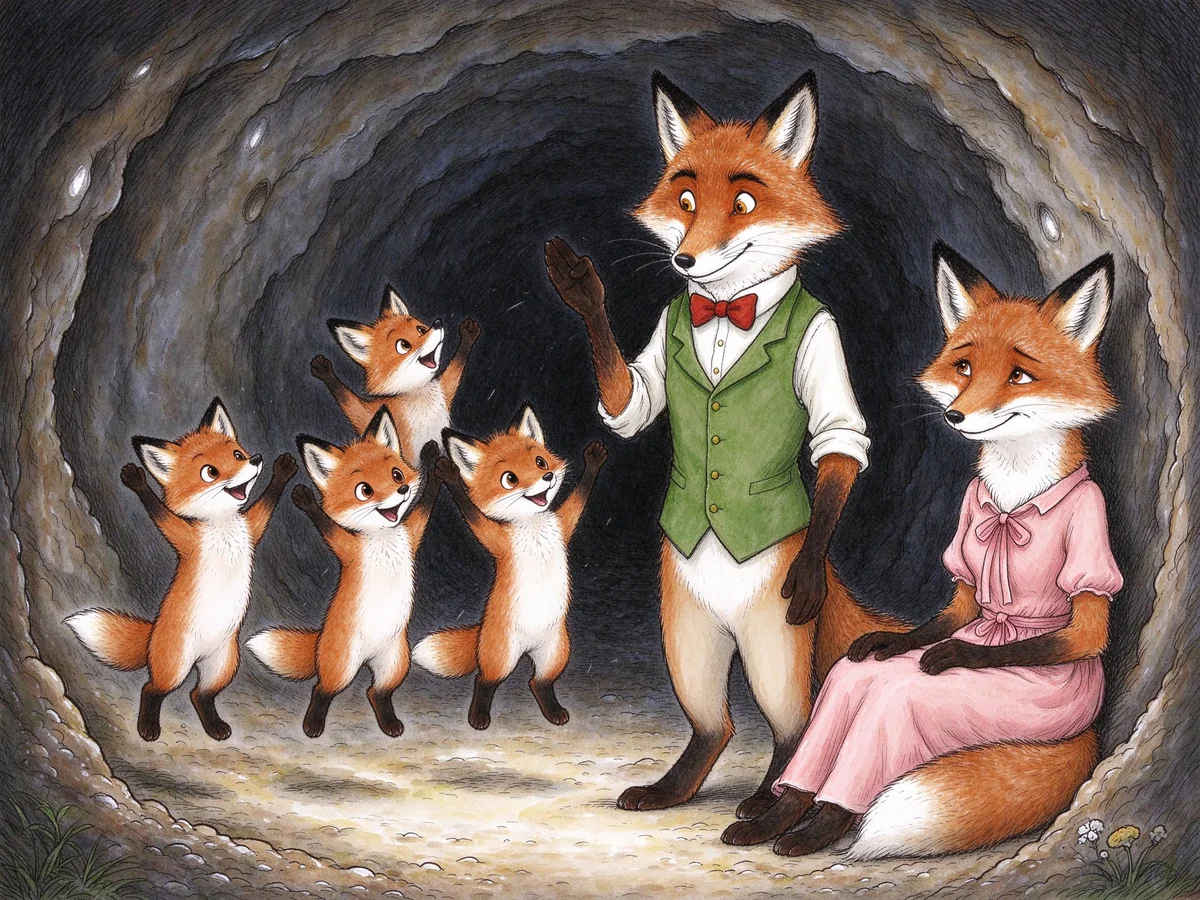
这一章:狐狸爸爸沉默、起身、又坐下,心里在盘算一个办法;狐狸妈妈虚弱却清醒,拼死拦着孩子;四只小狐狸饿着肚子,却跳起来喊“我们做得到!”——希望,是在黑暗里自己点亮的。
这一章写狐狸先生想出主意。记叙文写「转折」,常让主角先沉默、再行动,用动作和内心把希望一点点点亮。
She was suffering more than any of them from the lack of food and water. She was very weak.
Simple honest details — suffering, very weak — show Mrs Fox's state. Weakness makes her kindness at the end even more touching.
朴实的描写——最受苦、很虚弱——写出狐狸妈妈的状况。她的虚弱,让结尾的体贴更动人。
"Yes we are, Dad!" cried the Small Foxes, jumping up and running to their father. "We can do it!"
Words plus action together: they cry, jump and run as they speak. The small foxes' courage comes out in voice and body at once.
语言和动作一起上:边喊边跳、冲向爸爸。小狐狸们的勇气,同时从声音和身体里迸出来。
She saw him stir himself and get slowly to his feet. He looked back at his wife. There was a little spark of excitement dancing in his eyes.
Slow motion again: stir, get up, look back — then a spark in his eyes. Small movements build hope beat by beat before a single word is said.
又是慢镜头:动一动、起身、回头看——然后眼里闪过火花。一句话没说,希望已经随着小动作一点一点燃起来。
What fine children I have, he thought. They are starving to death ... but they are still undefeated. I must not let them down.
The clearest inner speech in the book: love, pride and duty in one short thought. Psychology here carries the heart of the whole story.
全书最清楚的一段内心独白:爱、骄傲和责任感浓缩在一念之间。这一念,就是整个故事的心脏。
"Well . . ." said Mr Fox, then he stopped and sighed and sadly shook his head. He sat down again.
Expression in three beats: stop, sigh, shake his head. Hope drains out of his face before a single word is said — the despair of the whole tunnel in one gesture.
神情分三步:停住、叹气、摇头。一个动作就让希望从脸上流走——整条地道的绝望,浓缩在一个姿势里。
For three days and three nights this waiting-game went on. ... Down in the tunnel the foxes were slowly but surely starving to death.
"Three days and three nights" makes time feel endless, and "down in the tunnel" paints the dark prison below ground. The setting itself — darkness, hunger, waiting — becomes the enemy the foxes must fight.
“三天三夜”让时间变得没有穷尽,“地道深处”画出地下黑暗的监狱。环境本身——黑暗、饥饿、等待——就是狐狸一家必须对抗的敌人。
这一章是「绝境中的心理转折」:三天三夜(饿死边缘)→ 绝望(安静地死)→ 火花(有个主意)→ 熄灭(没力气)→ 复燃(孩子们的勇气)。希望死去又活来,最后落在一个决定上:再挖一次。
The waiting game had gone on for three long days and three long nights. ... deep in the tunnel, the foxes were slowly starving to death.
等待游戏持续三天三夜,狐狸一家正在慢慢饿死。
How it expands · 怎么展开:围绕 three days and nights / starving 展开:先写时间(三的重复),再写结果(饿死)。外部等待与内部绝望同时到位,把局面压到最低点。
“I would rather you stayed down here and died quietly.”
狐狸妈妈厉声拒绝:宁可安静地死,也不去面对枪。
How it expands · 怎么展开:用「爱的狠话」展开:孩子要机会,妈妈给答案——没有机会。一句话让绝境具体化,也让妈妈的保护力立起来。
Slowly he stood up ... and in his eyes there was a little spark of excitement. “I’ve just had an idea.”
狐狸爸爸睁开眼,眼里闪着兴奋的火花:我刚有了个主意。
How it expands · 怎么展开:转折点用「眼神」写:不用大动作,一丝火花就够了。先静默铺垫(他知道她在想办法),再让火花点亮。
Mr Fox sighed, shook his head sadly, and sat down again. “No,” he said. “It won’t work.”
狐狸爸爸又坐下:不行,需要更多挖掘,可全家没力气了。
How it expands · 怎么展开:用「希望落地」展开:先动作泄气(叹气、摇头、坐下),再说现实(没力气)。让希望灭一次,后面的复燃才更有力。
“We’ve got the strength, Dad! ... You can do it too!” ... “Then we’ll try it!”
小狐狸们跳起来说有力气,狐狸爸爸决定:那我们就试试。
How it expands · 怎么展开:收束用「孩子的勇气」:先喊口号(我们有力气),再落心声(多了不起的孩子、不能让他们失望),最后一句「那我们就试试吧」把章末变成新起点。
这是「心理转折」结构,复述时沿着希望的变化走:三天三夜 → 绝望 → 火花 → 熄灭 → 复燃。
小提示:与「思维导图」搭配用——把导图的枝条按 三天三夜 → 绝望 → 火花 → 熄灭 → 复燃 排好,先看导图复述一遍,再合上导图凭记忆复述一遍。
示意图:绝望与希望之间,只隔着一个站起来的身影。
把第九章的信息装进这张「思维导图」,再沿着复述支架讲一遍——你也能当小老师!
把句子补充完整,就完成了第九章的复述。
复述加分:用 First / Then / Next / Also / Finally 把六句话串起来;讲到“three days and three nights”放慢,读出漫长;讲到妈妈那句“No chance at all”要短促有力;讲到爸爸眼里“a little spark of excitement”,声音突然亮起来——希望回来了!
5 张图卡按情节顺序排好。看着图片,用英文把第九章讲出来——点击图片可以放大,每张图点开都有一句「提示句」帮你起头。
提示:图卡可左右滑动查看全部 5 张;点「看看提示句」展开英文句子;点图片放大全屏。
1 · First 三天三夜→ 2 · Then 要水 · 想冲→ 3 · Next 爸爸有主意了→ 4 · Also 又摇头了→ 5 · Finally 全家振作小挑战:先看着图讲一遍,再合上图卡,只凭记忆讲一遍——能做到,第九章就真正属于你了!
这一章,Dahl 不写挖洞,写「一个主意是怎么来的」:三天三夜的等待、一句句恳求、一次起身、一次摇头、一声欢呼。秘密武器是这六招:
“three days and three nights” 这一组词在全章出现三次:开头定调、中间解释难题、结尾写孩子们仍然不放弃。Dahl 不换词,就靠重复——让读者一次次想起:他们真的等了很久很久了。重复,就是强调。
同一个词反复出现,加深印象——中文叫「反复」;“三天三夜”出现三次,就像“盼望着,盼望着,东风来了”,一遍比一遍沉。
Boggis 问一句,Bean 答一句;小狐狸问一句,爸爸答一句。每一组问答都像一小步台阶——读者跟着一步一步爬,直到最紧张的那一刻:爸爸站起来说“I’ve just had a bit of an idea”,又摇头坐下。问答把悬念推得又高又紧。
自问自答推进情节——中文叫「设问」;一问一答步步紧逼,就像“问君能有几多愁?恰似一江春水向东流”,先吊胃口,再给答案。
前一刻,妈妈说出全书最绝望的话:die in peace,宁可在洞里安静地死;后一刻,爸爸眼里跳起一丝火花。黑暗里一点光,比阳光还亮。Dahl 把「最绝望」和「最有希望」放在同一页,读者的心就跟着翻了个跟头。
黑暗衬出光——中文叫「反衬」;“山重水复疑无路,柳暗花明又一村”,绝望越重,希望的火花越亮。
三个动作连在一起,中间没有一句废话:停下、叹气、难过地摇头。Dahl 不说“他很失望”,只用三个动作演给你看——读者眼前仿佛看见了那个缓缓低下去的头。
三个并列动作一气呵成——中文叫「排比」;“停住、叹气、摇头”,就像“举头望明月,低头思故乡”,节奏一顺,感情就出来了。
Dahl 从不说“Mr Fox was excited”。他写:一丝兴奋的火花在眼睛里跳舞。dancing 一词让光动了起来——读者「看见」了那道光,就「懂得」了那份希望。Show, don’t tell:把心情演出来,而不是说出来。
不直说心情,只写表情动作——中文叫「神态白描」或「以形写神」;“眼含热泪”“眼睛一亮”,比“很兴奋”“很难过”有画面得多。
这句话没有对白——是狐狸爸爸心里的话。快饿死的是他们,说“We can do it!”的也是他们。undefeated 是全书最好的一词之一:没有输,没有被打败。爸爸想到的不是自己的累,而是不能让孩子们失望。抄进你的好句本吧。
直接说出心里话——中文叫「直抒胸臆」;“我真是有多了不起的孩子啊”一句感叹,把父爱和担当写透,正是“谁言寸草心,报得三春晖”的心意。
中西对照小发现:英文 time repetition 就是中文「反复」,question & answer rhythm 就是「设问」,despair vs hope 就是「对比/反衬」,triple action beat 就是「排比」,show, don’t tell 就是「神态白描/以形写神」,golden line 里的心里话就是「直抒胸臆」。给小朋友讲的时候,中英文术语可以互相借用,哪边熟讲哪边。
三个难度层级:先找细节,再推原因,最后谈看法。点「提示」给一点帮助,点「答案」对照想法。
1. How long did the waiting-game go on? 这场等待游戏持续了多久?
2. What did the Small Fox ask for? 小狐狸要什么?
3. What did Mrs Fox want the cubs to do instead of dashing out? 狐狸妈妈不让孩子冲出去,宁可他们怎样?
4. Why did Mr Fox shake his head after saying “I’ve just had a bit of an idea”? 爸爸说完“有个主意”,为什么又摇头?
5. Why did Mrs Fox refuse to let the cubs dash out? 狐狸妈妈为什么不许小狐狸冲出去?
6. Why did Mr Fox smile at the four Small Foxes? 狐狸爸爸为什么看着四只小狐狸微笑?
7. Do you think Mr Fox’s plan will work? Why or why not? 你觉得狐狸爸爸的办法会成功吗?为什么?
8. What does “undefeated” mean in this story? 这里的“不败”是什么意思?
9. If you were in the tunnel, what would you say to the family? 如果你在隧道里,会对狐狸一家说什么?
Chapter 9 brings the family to the very edge — three days of hunger, a mother who would rather die quietly than lose her children, and a father who finds an idea, loses it, then finds his courage again in his cubs. What makes Mr Fox fantastic is not one trick; it is that he will try again, hungry and tired, for his family.
第九章把一家逼到悬崖边:三天的饥饿、宁可安静死去也不让孩子冒险的妈妈、还有想到主意又放下、最后从孩子身上找回勇气的爸爸。狐狸爸爸的了不起,不在某一次计谋——而在又饿又累时,为了家人,他还愿意再挖一次。
每张词卡正面是原文句子——先根据上下文猜意思,再点击翻面验证。学完 12 个核心词,别忘了下面的「拓展好词」。
“the foxes were slowly but surely starving to death”
猜一猜:喝水 / 挨饿 / 睡觉?
“just a tiny sip of water”
猜一猜:一大口 / 一小口 / 一桶?
“Couldn’t we make a dash for it, Dad?”
猜一猜:慢慢走 / 猛冲 / 躲起来?
“I refuse to let you go up there”
猜一猜:答应 / 拒绝 / 假装?
“No chance at all,” snapped Mrs Fox.
猜一猜:轻声说 / 厉声说 / 笑着说?
“he was trying desperately to think of a way out”
猜一猜:慢慢地 / 拼命地 / 随便地?
“she saw him stir himself and get slowly to his feet”
猜一猜:睡熟 / 动弹 / 坐下?
“a little spark of excitement dancing in his eyes”
猜一猜:泪光 / 火花 / 灰尘?
“then he stopped and sighed and sadly shook his head”
猜一猜:大笑 / 叹气 / 咳嗽?
“they are still undefeated”
猜一猜:被打败 / 未被击败 / 饿昏了?
“I suppose we could give it a try”
猜一猜:保证 / 猜想 / 拒绝?
“We can handle this by ourselves.”
猜一猜:放弃 / 应付 / 扔掉?
| Word | Meaning 释义 | From the text 原文 |
|---|---|---|
| digging | n. 挖掘(dig 的动名词) | “it means more digging” |
| lack | n. 缺乏;没有 | “the lack of food and water” |
| weak | adj. 虚弱的 | “She was very weak.” |
| suffering | v. 受苦(suffer 的现在分词) | “She was suffering more than any of them” |
| darling | n. 亲爱的(称呼语) | “What is it, darling?” |
| peace | n. 平静;安宁 | “die in peace” |
| idea | n. 主意;想法 | “a bit of an idea” |
| excitement | n. 兴奋;激动 | “a spark of excitement” |
本章的 4 个语法点都藏在课文句子里:每个点按「规则 → 原文例句 → 即时练习」三步走,最后做综合小测检验。先找情态动词,再看过去完成进行时、would sooner 和 What 感叹句。
规则:情态动词(can, could, will, would, must, shall, should, may, might)后面接动词原形,表示能力、可能、意愿、必须。情态动词没有 to、不加 -s、不随人称变化。
P2Can’t you do something? P5We can handle this by ourselves. P1He’ll make a run for it soon.
can’t you do?—can’t(情态动词)+ do(原形);We can handle—can + handle。情态动词后面的动词永远用原形,没有第三人称单数。
1We ___ (can) do it!
2I must ___ (finish) my homework first.
3翻译:你能帮帮我吗?
1. can——情态动词 + 动词原形 do。
2. finish——must 后用动词原形 finish。
3. Can you help me?——can + 主语 + 动词原形构成疑问句。
规则:had been + 现在分词 表示过去某个时间点之前一直进行的动作。had done 是过去完成(已经做完),had been doing 是过去完成进行(一直在做)。
P3Mr Fox had not spoken for a long time. He had been sitting quite still, his eyes closed.
had not spoken:过去完成(一直没说话);had been sitting:过去完成进行(一直在坐着想)。两个时态连用,写出爸爸长时间的沉思。
1She ___ (wait) for an hour before he came.
2They had been ___ (dig) all night.
3翻译:他一直在想办法。
1. had been waiting——在他来之前,她一直等了一个小时。
2. digging——had been + digging。
3. He had been thinking of a way out.——过去完成进行时表示持续的思考。
规则:I’d sooner / I’d rather + 动词原形(或从句) 表示「我宁可……,也不愿……」,用来表达强烈的选择。比 I prefer 语气更重。
P2I’d sooner you stay down here and die in peace.
I’d sooner you stay down here:我宁可你们待在洞里。妈妈的意思其实是:与其让你们冲出去送死,我宁可全家饿死在洞里——最狠的话,藏着最深的爱。
1I’d sooner ___ (stay) at home than go out.
2I’d rather ___ (die) than surrender.
3翻译:我宁可饿死也不投降。
1. stay——would sooner + 动词原形。
2. die——would rather + 动词原形。
3. I’d sooner starve than surrender.——sooner/ rather + 原形 + than + 原形。
规则:What + (a/an) + 形容词 + 名词 + 主谓! 用来感叹;How + 形容词/副词 + 主谓! 也可以。句尾用感叹号,语气强烈。
P5What fine children I have, he thought. 练习What a good idea it is! How brave the cubs are!
What fine children I have!:我真是有多了不起的孩子啊!fine children 是名词词组,所以用 What;如果只有形容词,就用 How:How brave they are! 感叹句是心里话的扩音器。
1What a ___ (clever) fox he is!
2___ brave the cubs are!(用 How / What)
3翻译:多好的主意啊!
1. clever——What + a + 形容词 + 名词。
2. How——How + 形容词 brave + 主谓。
3. What a good idea!——What + a + 形容词 + 名词。
5 道选择题 + 1 个配对游戏。先做选择题,再做配对,看看你能得几分!
1How long did the waiting-game go on?
2What did one Small Fox ask for?
3What did Mrs Fox say about dashing out?
4What did Mr Fox see dancing in his eyes?
5Why did Mr Fox shake his head sadly?
先点左边的角色,再点右边他说的话。
还有 3 对要配对。
这一页是你的自学地图:学习目标、学习步骤和全部答案都在这里,跟着走就能通关第九章。