CHAPTER 11 · 全书共 18 章
A Surprise for Mrs Fox 给狐狸太太的惊喜
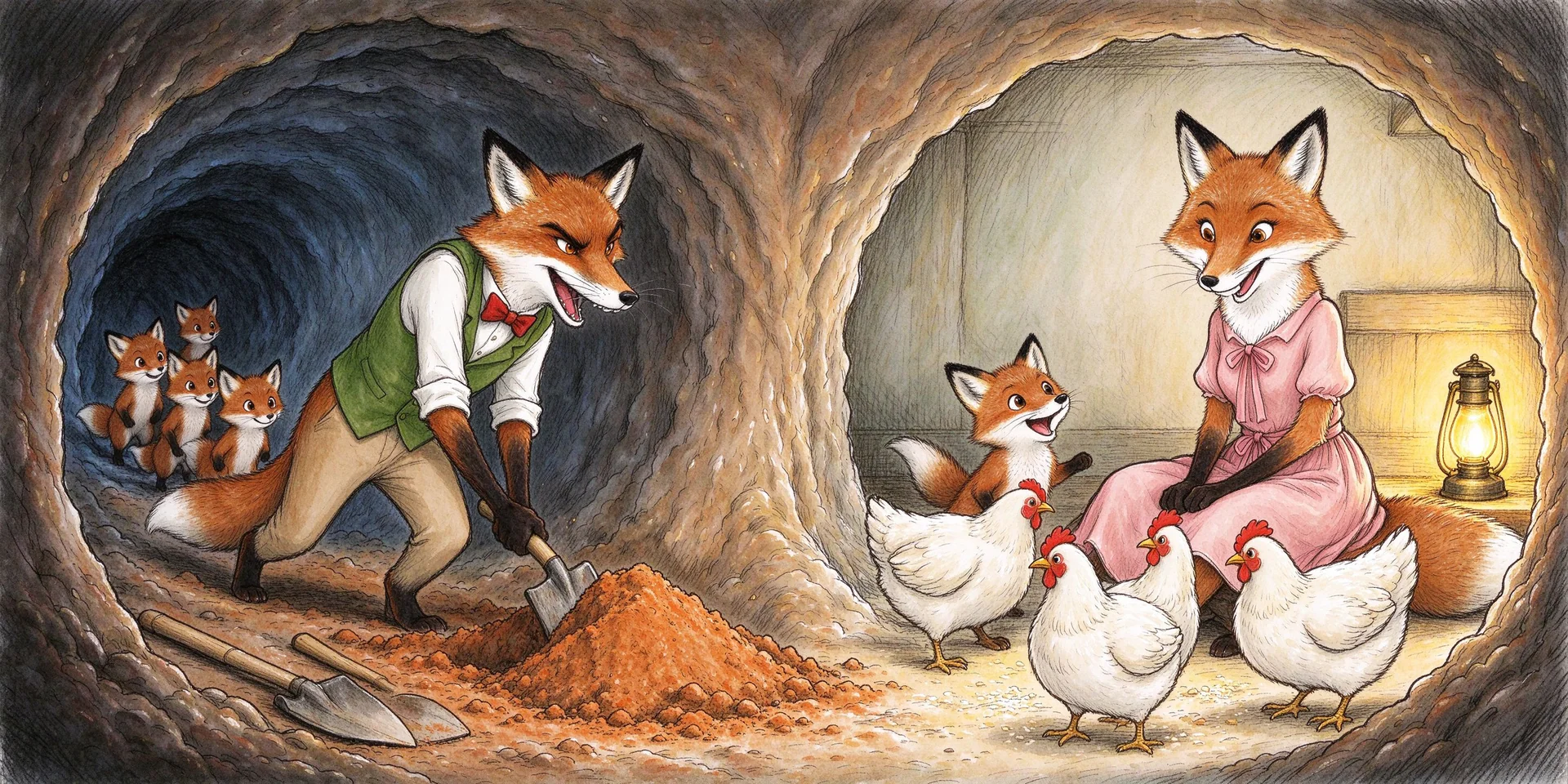
大儿子抱着三只肥母鸡,一路狂奔回家:“妈妈,快醒醒!看我带回了什么!”饿得虚弱的妈妈睁开一只眼,以为自己在做梦——不是梦,是博吉斯的1号鸡舍!妈妈一下子坐起来:“盛宴就要开席了!”而地道深处,狐狸爸爸正对孩子们说:“接下来这一段,易如反掌!”
A Surprise for Mrs Fox —— 给狐狸太太的惊喜
11Chapter 11
大儿子抱着三只肥母鸡,一路狂奔回家:“妈妈,快醒醒!看我带回了什么!”饿得虚弱的妈妈睁开一只眼,以为自己在做梦——不是梦,是博吉斯的1号鸡舍!妈妈一下子坐起来:“盛宴就要开席了!”而地道深处,狐狸爸爸正对孩子们说:“接下来这一段,易如反掌!”
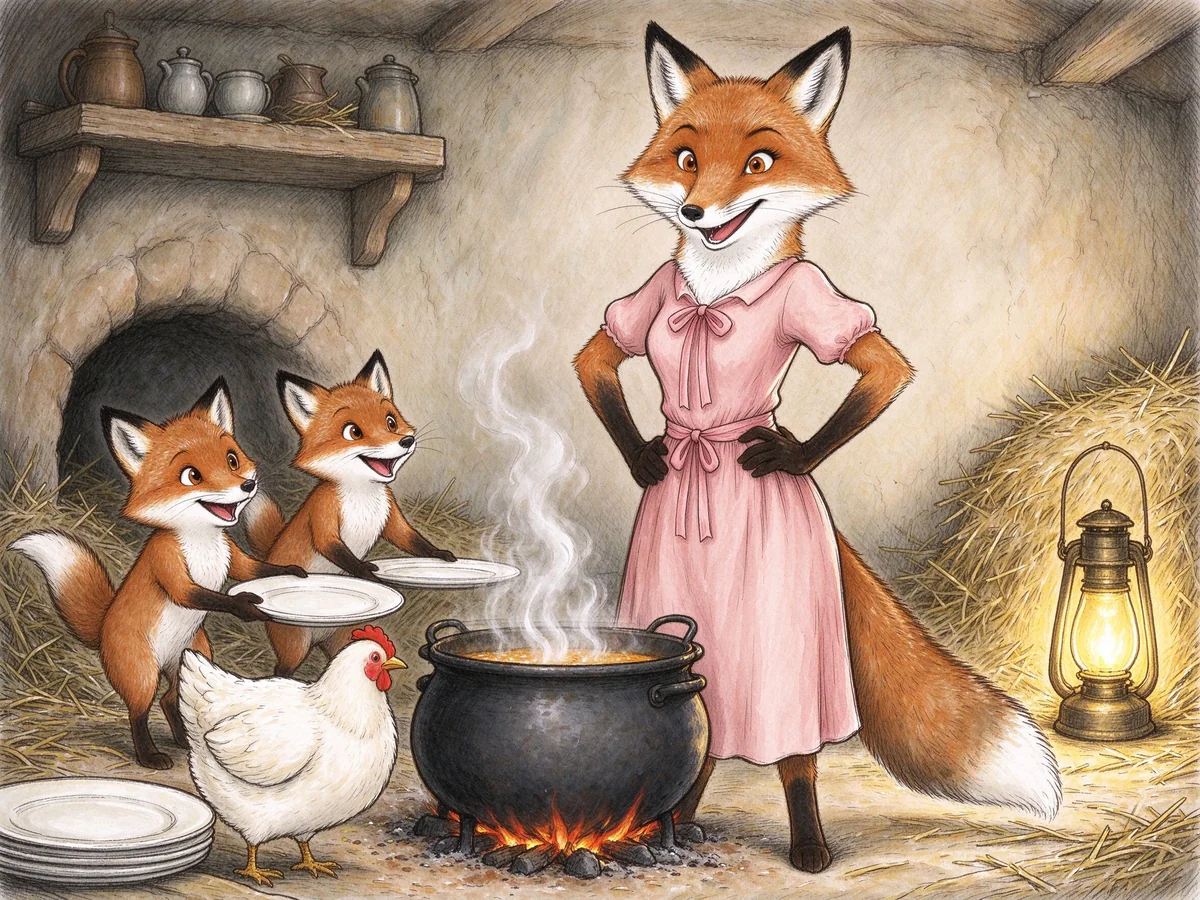
The biggest Small Fox runs home as fast as he can, carrying the three plump hens. “Just wait till Mummy sees these!” he thinks. He bursts in upon Mrs Fox, who is weaker than ever from lack of food: “Mummy! Look! Wake up and see what I’ve brought you!” She opens one eye and murmurs, “I’m dreaming.” — but no: they are real chickens, from Boggis’s Chicken House Number One! “A feast it shall be!” cries Mrs Fox. Now read “A Surprise for Mrs Fox” and watch a starving mother rise up for a feast.最大的小狐狸抱着三只肥母鸡拼命往家跑:“就等妈妈看到这些了!”他冲进家门,妈妈饿得比任何时候都虚弱:“妈妈!快看!醒醒,看看我给你带了什么!”妈妈睁开一只眼,喃喃地说:“我在做梦吧。”——不是梦:是真的鸡,来自博吉斯的1号鸡舍!“盛宴就要开席了!”妈妈喊道。现在来读《给狐狸太太的惊喜》,看一位饿到极点的妈妈,怎样为一顿盛宴重新站起来。
Roald Dahl loves a good surprise — and Chapter 11 is a surprise delivered in two rooms at once. In one tunnel, a cub runs home bursting with joy: “Just wait till Mummy sees these!” In the other, Mrs Fox opens one eye and murmurs: “I’m dreaming.” Dahl shows us the gift before the giver — the hens arrive home first, while the fantastic Mr Fox is still far away, already planning “the next bit.” Watch how joy jumps from child to mother, and then back down the tunnel.罗尔德·达尔爱写「惊喜」——而第十一章,是一份同时在两个地方送达的惊喜。一条地道里,小儿子抱着鸡狂喜地往家跑:“就等妈妈看到这些了!”另一条地道里,妈妈睁开一只眼喃喃自语:“我在做梦吧。”达尔先让我们看见礼物,再让我们看见送礼人——鸡先到家,而了不起的狐狸爸爸还在地道深处,已经盘算起“下一段”。看快乐怎样从孩子跳到妈妈,又跳回地道里。
In Chapter 10, Mr Fox aimed the family at a “very special direction” and dug on and on through the dark. Their heads hit wooden planks; he pushed up the floorboards — and there was Boggis’s Chicken House Number One, teeming with chickens by the thousand! “I’ve done it!” he yelled. After a drink of water he chose three plump hens, hid the tunnel again, and gave the biggest Small Fox his job: “Run back with these to your mother. Tell her to prepare a feast.”第十章里,狐狸爸爸带着全家朝“一个很特别的方向”一直挖。头顶碰到木板,他推开地板——眼前正是博吉斯的1号鸡舍,成千上万只鸡!“我成功了!”他大喊。喝完水,他挑了三只肥母鸡,把地道重新藏好,然后交给大儿子一个任务:“把这些带回去给你妈妈,告诉她准备一场盛宴。”
The biggest Small Fox is running home with three plump hens, but Mrs Fox is too weak to believe it. What do you think will happen when she truly understands?第十一章叫《给狐狸太太的惊喜》。大儿子正抱着三只肥母鸡往家跑,可妈妈虚弱得不敢相信。你觉得她真正明白过来之后,会发生什么?
Pick one to remember your prediction — come back after reading to check!
点一个选项记住你的预测,读完全章后回来揭晓答案。
Two more questions after reading · 还有两个小问题:
1. What did the biggest Small Fox carry home?
最大的小狐狸带什么回家?
2. What did Mrs Fox shout to her son at the end of the chapter?
章末,狐狸妈妈对儿子喊了什么?
跟着原文读一遍。橙色单词先别查——根据上下文猜一猜。点击任意单词弹出词典卡片(中英释义 · 发音 · 例句);点段落开头的 ▶ 听朗读(英式男声)。
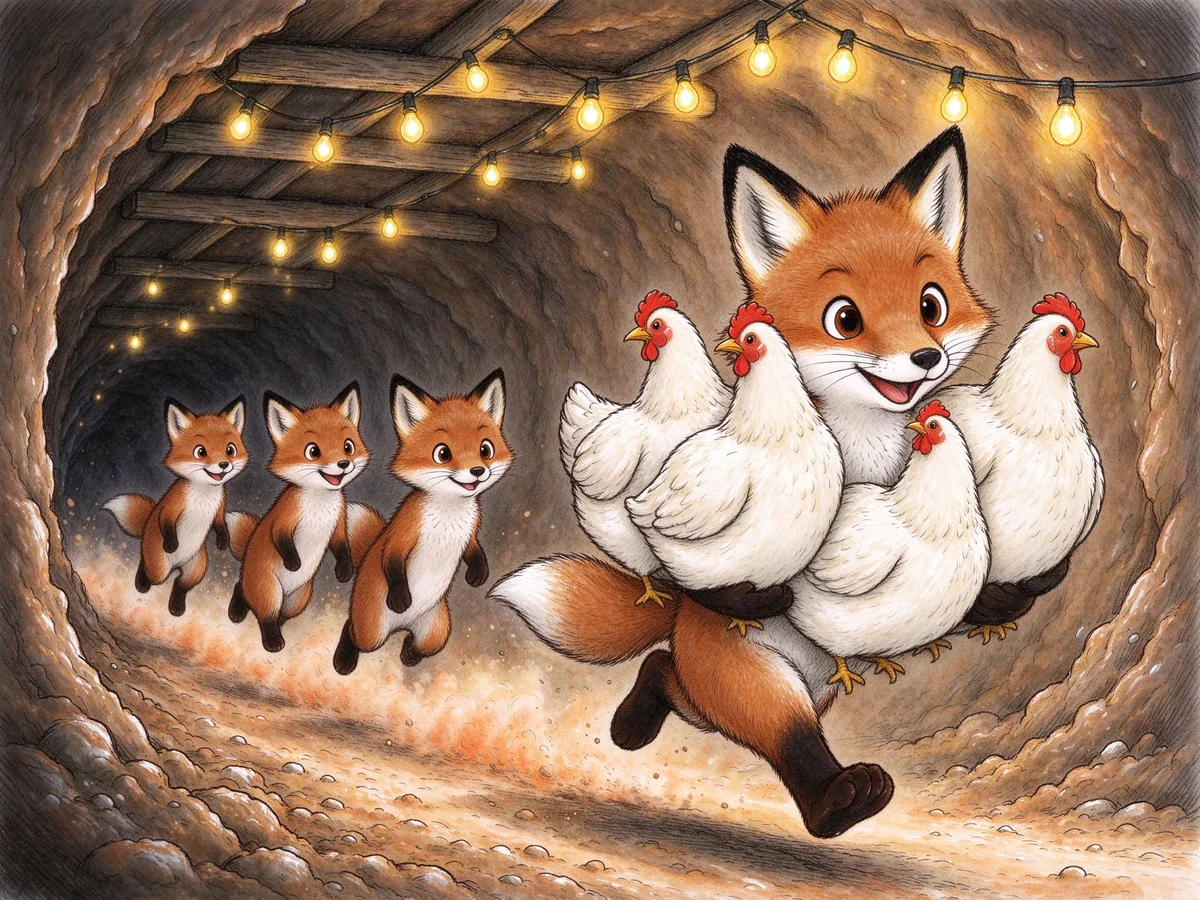
The Small Fox ran back along the tunnel as fast as he could, carrying the three plump hens. He was exploding with joy. “Just wait!” he kept thinking, “just wait till Mummy sees these!” He had a long way to run but he never stopped once on the way and he came bursting in upon Mrs Fox. “Mummy!” he cried, out of breath. “Look, Mummy, look! Wake up and see what I’ve brought you!”
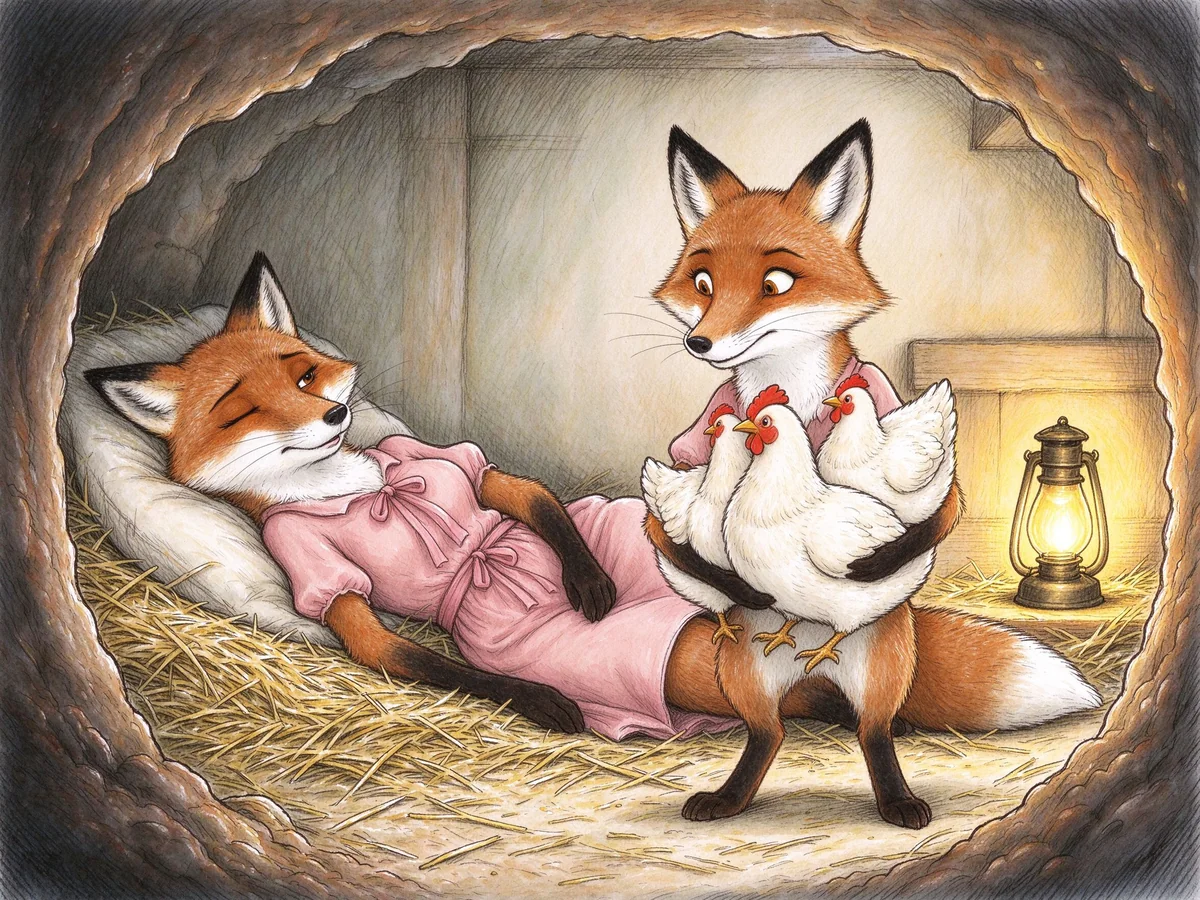
Mrs Fox, who was weaker than ever now from lack of food, opened one eye and looked at the hens. “I’m dreaming,” she murmured and closed the eye again. “You’re not dreaming, Mummy! They’re real chickens! We’re saved! We’re not going to starve!”
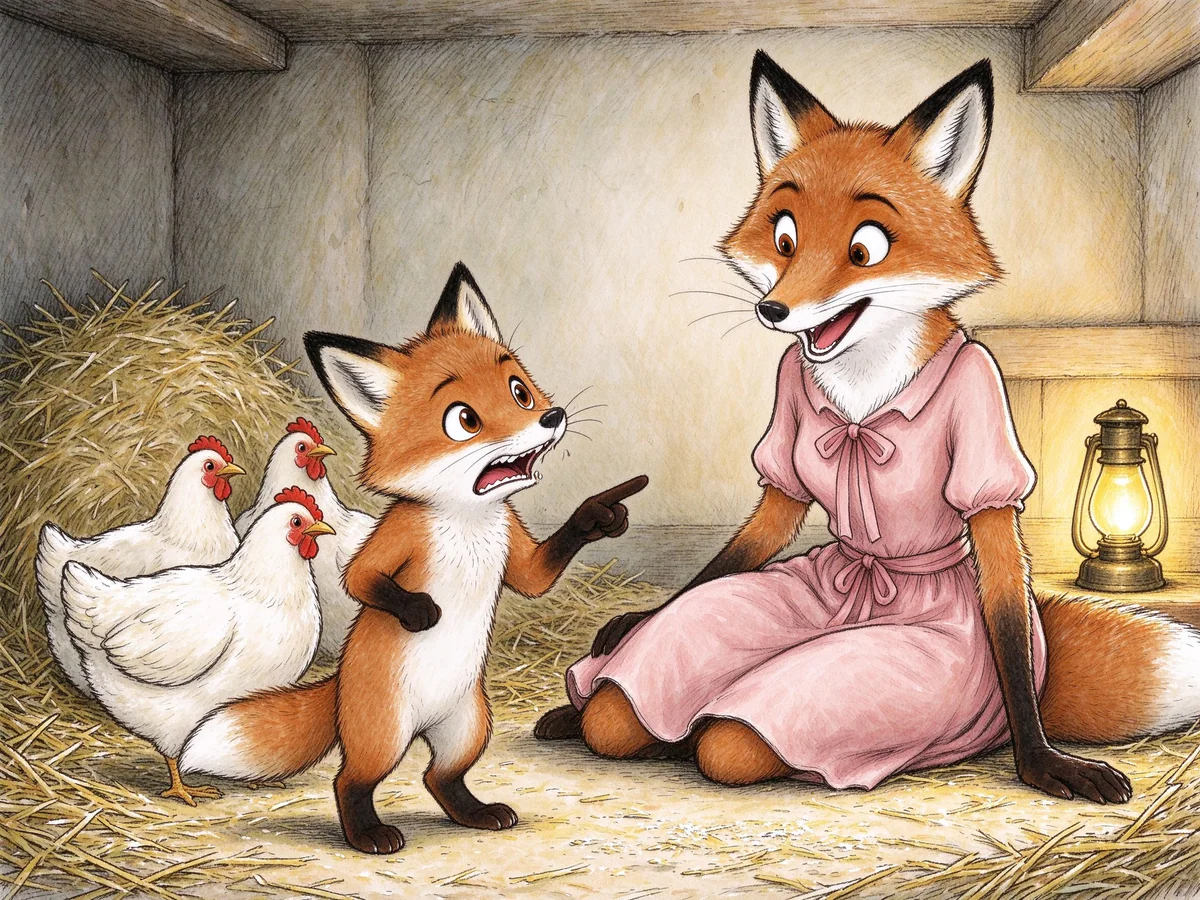
Mrs Fox opened both eyes and sat up quickly. “But, my dear child!” she cried. “Where on earth . . .?” “Boggis’s Chicken House Number One!” spluttered the Small Fox. “We tunnelled right up under the floor and you’ve never seen so many big fat hens in all your life! And Dad said to prepare a feast! They’ll be back soon!”
The sight of food seemed to give new strength to Mrs Fox. “A feast it shall be!” she said, standing up. “Oh, what a fantastic fox your father is! Hurry up, child, and start plucking those chickens!”
Far away down in the tunnel, the fantastic Mr Fox was saying, “Now for the next bit, my darlings! This one’ll be as easy as pie! All we have to do is dig another little tunnel from here to there!” “To where, Dad?” “Don’t ask so many questions. Start digging!”

这一章:最大的小狐狸抱鸡狂奔回家;饿得虚弱的妈妈睁开一只眼,以为自己在做梦;等到真相说破,妈妈猛地坐起——盛宴就要开席;而地道深处,狐狸爸爸已经开始盘算下一段目标。
描写分析仅限本章内容。这一章写「惊喜到家」:记叙文写「转机」,常用神态(睁一只眼)写虚弱、用动作(坐起来)写希望、用语言(盛宴开席)写力量——一处描写一个转折。
Mrs Fox, who was weaker than ever now from lack of food, opened one eye and looked at the hens.
Weaker than ever: hunger writes itself on her body before she says a word. The description of her weakness makes the surprise bigger — the weaker she is, the greater the gift.
Weaker than ever:还没开口,饥饿已经写在她身上。把虚弱写足,惊喜才更大——她越弱,礼物越重。
“I’m dreaming,” she murmured and closed the eye again. … “A feast it shall be!” she said, standing up.
Two speeches, one turn: first a murmur of disbelief, then a queen’s command. Dialogue shows the whole change of heart — from giving up to giving orders.
两句话,一个转身:先是喃喃的“我不信”,再是女王般的命令。对话写出了整颗心的变化——从放弃,到发号施令。
Mrs Fox opened both eyes and sat up quickly.
Both eyes, not one; sat up quickly, not slowly. Three small actions answer the question of the chapter: she is back. The body moves before the words do.
两只眼,不是一只;猛地坐起,不是慢慢起身。三个小动作回答了全章的问题:她回来了。身体先于语言行动。
“Just wait!” he kept thinking, “just wait till Mummy sees these!”
The cub’s inner voice is one repeated wish: Mummy sees these. Dahl lets us hear the thought itself — anticipation so big it talks out loud, and pulls the reader down the tunnel with him.
小狐狸的心里话,是一句反复的愿望:妈妈看到这些。达尔让我们亲耳听见这个念头——期待大到说出了声,也把读者一起拽进地道。
He was exploding with joy.
Exploding: one verb paints the whole face and body. The cub’s happiness is so full it cannot be held in — the reader sees the smile before it is described.
Exploding:一个动词画出了整张脸、整个身体。孩子的快乐满得装不下——读者在描述出现之前,就看见了那个笑容。
Far away down in the tunnel, the fantastic Mr Fox was saying, “Now for the next bit, my darlings!”
Far away down in the tunnel: one phrase cuts the scene in two — the feast at home and the father below. The far-away setting tells us the hero is already moving, even as his family celebrates.
Far away down in the tunnel:一个短语把场景切成两半——家里的盛宴,地道里的爸爸。这个“远处”告诉我们:家人庆祝之时,英雄已经上路。
这一章是「一个惊喜如何传到家里」的因果链条:送鸡狂奔 → 妈妈以为是梦 → 真相说破 → 盛宴开席 → 爸爸继续挖。快乐一环传给一环,从地道传到餐桌,再传回地道。
He had a long way to run but he never stopped once on the way and he came bursting in upon Mrs Fox.
大儿子抱着鸡一口气跑回家,一次也没停,冲进家门。
How it expands · 怎么展开:围绕 bursting in 展开:先给结果(鸡到家了),再给过程(跑、不停、冲)。快乐抢先到,解释随后到。
“I’m dreaming,” she murmured and closed the eye again.
妈妈睁开一只眼看了看鸡:我在做梦。又闭上了眼。
How it expands · 怎么展开:用「否定」展开:希望太小,幸福太大,第一反应是不信。睁一只眼、闭一只眼——一个小动作,把饥饿的绝望写透。
“Boggis’s Chicken House Number One!” spluttered the Small Fox. “We tunnelled right up under the floor!”
小狐狸结结巴巴说出真相:博吉斯的1号鸡舍!我们一直挖到地板底下!
How it expands · 怎么展开:秘密用「结巴」展开:地点、隧道、母鸡、爸爸的话一口气涌出。激动的语言本身,就是好消息的证据。
“A feast it shall be!” she said, standing up. “Hurry up, child, and start plucking those chickens!”
妈妈站起身:盛宴就要开席!快,孩子,开始拔那些鸡的毛吧!
How it expands · 怎么展开:转折用「站起来」展开:食物的景象给了新力量——从躺着到站着,从喃喃到命令,三句话完成重生。
“To where, Dad?” “Don’t ask so many questions. Start digging!”
全章停在:到哪儿,爸爸?别问那么多问题,开始挖!
How it expands · 怎么展开:收束用「未答之问」展开:镜头从家里的盛宴切回地道的爸爸,一个没人回答的问题,把读者直接送进第十二章。
这是「惊喜传递」结构,复述时沿着快乐传递的脚步走:带鸡狂奔 → 妈妈拒信 → 真相说破 → 盛宴开席 → 新悬念。
小提示:与「思维导图」搭配用——把导图的枝条按 带鸡狂奔 → 妈妈拒信 → 真相说破 → 盛宴开席 → 新悬念 排好,先看导图复述一遍,再合上导图凭记忆复述一遍。
示意图:镜头在「家的惊喜」和「地道的计划」之间切换——一个家正在吃饭,一位英雄正在开路。
把第十章的信息装进这张「思维导图」,再沿着复述支架讲一遍——你也能当小老师!
把句子补充完整,就完成了第十一章的复述。
复述加分:用 First / Then / Next / Also / Finally 把六句话串起来;讲到“I’m dreaming”放慢放轻,读出妈妈的不敢信;讲到“A feast it shall be!”突然提气,声音里带着力量——惊喜到家了!
5 张图卡按情节顺序排好。看着图片,用英文把第十一章讲出来——点击图片可以放大,每张图点开都有一句「提示句」帮你起头。
提示:图卡可左右滑动查看全部 5 张;点「看看提示句」展开英文句子;点图片放大全屏。
1 · First 送鸡狂奔→ 2 · Then 妈妈的梦→ 3 · Next 秘密揭开→ 4 · Also 盛宴开席→ 5 · Finally 下一段目标小挑战:先看着图讲一遍,再合上图卡,只凭记忆讲一遍——能做到,第十一章就真正属于你了!
这一章,Dahl 不写「惊喜本身」,写「惊喜是怎么传到家的」:一句憋不住的心里话、一只睁不开的眼、一句结结巴巴的真相、一声站起来的命令、一段易如反掌的下一程。秘密武器是这六招:
惊喜分两路同时送:一路是儿子抱着鸡冲回家(妈妈会说什么?),一路是爸爸还在地道盘算(下一个目标是什么?)。Dahl 让镜头在「家里的期待」和「地道的计划」之间来回切——一个悬念还没落地,另一个又悬起来。
两处悬念同时推进,读者两头揪心——中文叫「双线并进」;就像“这边眼看要开饭,那边礼物还在路上”,一左一右,把期待拉满。
不写“她饿极了”,只写“睁开一只眼”。三个小细节——weaker than ever、lack of food、opened one eye——饥饿一下子有了画面:连两只眼睛的力气都没有了。神态描写,一景顶万句。
不直接说结论,只写一个精准的细节,让读者自己体会——中文叫「白描」;“她只睁开一只眼”,七分虚弱,全在这一眼里。
Dreaming 先说一次,再说一次——第二遍前面多了一个 not。同一个词在两句之间翻面,全章最重要的转折就完成了:从“我不信”到“是真的”。接着 real 和 saved 两个短词连砸,把希望一句话钉牢。
同一个词正说反说,一翻面就是转折——中文叫「反复」加「抑扬」;“是梦?不是梦!”,四个字,从谷底翻上山顶。
After a chapter of digging in the dark, the hero promises: the next bit is as easy as pie. 用「像馅饼一样容易」这个固定习语,把最重的活儿说得最轻——语气越轻,越显得他有底气,读者也忍不住想笑。
用一个大家熟悉的比喻把难度说轻——中文叫「熟语/比喻」;“易如反掌”、“小菜一碟”,越熟越省力,越省力越显得轻松。
前两段,妈妈虚弱到睁不开眼;这一段,食物的景象给她新力量,她站起来,用一个正式的 shall 发号施令。先压低(弱),再抬高(强)——没有前面的“抑”,就没有这一刻的“扬”。
先压低再抬高的写法——中文叫「欲扬先抑」或「抑扬顿挫」;“方才还是病恹恹的,一听有好吃的,人一下子亮了”,跌得越低,弹得越高。
全章最亮的一句,从妈妈嘴里说出来:fantastic——正是书名《Fantastic Mr Fox》里那个词。家人给英雄颁奖,用词和封面一模一样:了不起的狐狸先生,从家人的话语里诞生。抄进你的好句本吧。
把赞叹直接喊出来——中文叫「直抒胸臆」;“你们的爸爸,真是了不起!”,一句话,就是全家的颁奖词。
中西对照小发现:英文 suspense handoff 就是中文「悬念+双线」,one eye open 就是「白描/细节」,the flipped word 就是「反复+抑扬」,as easy as pie 就是「熟语/比喻」,weak to strong 就是「欲扬先抑」,golden line 里的赞叹就是「直抒胸臆」。给小朋友讲的时候,中英文术语可以互相借用,哪边熟讲哪边。
三个难度层级:先找细节,再推原因,最后谈看法。点「提示」给一点帮助,点「答案」对照想法——每道题都有英文参考答案和中文释义。
1. What did the biggest Small Fox carry home? 最大的小狐狸带什么回家?
2. How did Mrs Fox open her eyes? 狐狸妈妈是怎么睁开眼的?
3. What did Mrs Fox order her son to do? 妈妈命令儿子做什么?
4. Why did Mrs Fox think she was dreaming? 妈妈为什么以为自己是在做梦?
5. Why did the Small Fox splutter the secret? 小狐狸为什么结结巴巴地说出秘密?
6. Why didn’t Mr Fox come home with the hens? 爸爸为什么没有跟鸡一起回家?
7. If you were the biggest Small Fox, what would you say to your mother? 如果你是那个送鸡回家的大儿子,会对妈妈说什么?
8. Does one feast make the family safe? What still worries you? 一顿盛宴能让全家安全吗?还有什么让你担心?
9. What does “as easy as pie” mean? Can you make your own sentence? 这个习语是什么意思?你能自己造一句吗?
Chapter 11 is about a surprise that brings a mother back to life. Hunger has squeezed Mrs Fox’s hope into one murmured word: “I’m dreaming.” Then three plump hens arrive, the dream turns out to be real, and food gives her new strength: “A feast it shall be!” The chapter is not really about chickens: it is about how love is action — a father digs, a son runs, a mother rises, and a family eats together.
第十一章写的是一个把妈妈唤醒的惊喜。饥饿把妈妈的希望压成一句喃喃:“我在做梦吧。”然后,三只肥母鸡到了,梦变成真的,食物给了她新的力量:“盛宴就要开席了!”这一章写的其实不是鸡:是爱就是行动——爸爸挖,儿子跑,妈妈站起来,全家一起吃饭。
每张词卡正面是原文句子——先根据上下文猜意思,再点击翻面验证。学完 12 个核心词,别忘了下面的「拓展好词」。
The Small Fox ran back along the tunnel, carrying the three plump hens.
猜一猜:瘦弱的 / 肥嘟嘟的 / 漂亮的?
he came bursting in upon Mrs Fox.
猜一猜:慢慢走进 / 猛地冲进 / 站在门口?
“I’m dreaming,” she murmured and closed the eye again.
猜一猜:大声喊 / 低声咕哝 / 哈哈大笑?
“Boggis’s Chicken House Number One!” spluttered the Small Fox.
猜一猜:平静地说 / 结结巴巴地说 / 悄悄地说?
“Dad said to prepare a feast!”
猜一猜:一碗粥 / 一顿盛宴 / 一块面包?
“Start plucking those chickens!”
猜一猜:喂食 / 拔毛 / 追赶?
“Oh, what a fantastic fox your father is!”
猜一猜:可怕的 / 了不起的 / 狡猾的?
The sight of food seemed to give new strength to Mrs Fox.
猜一猜:胃口 / 力量 / 勇气?
weaker than ever now from lack of food.
猜一猜:味道 / 缺乏 / 多余?
“Mummy!” he cried, out of breath.
猜一猜:力气 / 呼吸 / 嗓子?
“Tell her to prepare a feast.”
猜一猜:准备 / 端上 / 偷走?
“We’re not going to starve!”
猜一猜:挨饿 / 逃跑 / 撒谎?
| Word | Meaning 释义 | From the text 原文 |
|---|---|---|
| tunnel | n. 隧道;地道 | “ran back along the tunnel” |
| weak | adj. 虚弱的 | “weaker than ever now” |
| dream | v./n. 做梦;梦 | “I’m dreaming,” she murmured |
| real | adj. 真实的 | “They’re real chickens!” |
| saved | adj. 得救的 | “We’re saved!” |
| hen | n. 母鸡 | “the three plump hens” |
| darling | n. 亲爱的(爱称) | “my darlings” |
| digging | v. 挖;掘(dig 的动名词) | “Start digging!” |
本章的 4 个语法点都藏在课文句子里:每个点按「规则 → 原文例句 → 即时练习」三步走,最后做综合小测检验。先看现在进行时、系动词 + 形容词,再学 seem to do 和祈使句 + start doing。
规则:be 动词(am / is / are)+ 现在分词(doing) 表示「正在做某事」或「现阶段的状态」。本章里有两处妙用:I’m dreaming(我正做梦呢)和 We’re not going to starve(我们不会挨饿)——be going to 结构用进行时的样子,表「将要做」。
P2“I’m dreaming,” she murmured. P2We’re not going to starve!
I’m dreaming = 我正在做梦(be + doing);We’re not going to starve = 我们不会挨饿(be going to + 动词原形,表将来)。注意 going 后接 to starve,starve 用原形。
1. is plucking(Look! 表示正在进行:看!她正在拔鸡毛。)
2. prepare(be going to + 动词原形:我们要准备一场盛宴。)
规则:be / seem / look / feel + 形容词 用来描述主语的状态或样子。本章用它写妈妈的处境:was weaker(更虚弱)、are real(是真的)、is fantastic(了不起)——一个 be 动词,配一个形容词,画面就立住了。
P2Mrs Fox was weaker than ever. P2They’re real chickens! P4what a fantastic fox your father is!
was weaker:更虚弱(be + 形容词比较级);are real:是真的;is fantastic:是了不起的。be 动词 + 形容词 = 谁/什么 + 处于什么状态。
1. quiet(and 连接两个形容词:地道又暗又静。)
2. plump(look + 形容词:这些鸡看起来肥嘟嘟的。)
规则:seem to + 动词原形 表示「看起来、似乎……」——语气留有余地,不把话说死。本章用它写转机:食物的景象似乎给了妈妈新的力量(其实不是食物,是希望)。
P4The sight of food seemed to give new strength to Mrs Fox.
seemed to give:似乎给了。seem 后接 to + 动词原形:看似……、好像……。用 seem 写变化,既可信,又留一丝神秘。
1. to be(seem to be + 形容词:她似乎很开心。)
2. to wake(seem to do:好消息似乎让她醒了过来。)
规则:祈使句用动词原形开头,直接给对方下命令(肯定句不加主语,否定句用 Don’t + 原形);start / begin + doing 表示「开始做某事」。本章:“Hurry up, child, and start plucking those chickens!” — 命令 + 行动,一气呵成。
P4“Hurry up, child, and start plucking those chickens!” P5“Don’t ask so many questions. Start digging!”
Hurry up(快点!)+ start plucking(开始拔毛):祈使句直接用动词原形开头;Don’t ask(别问):否定命令用 Don’t + 原形;Start digging:start + doing,开始挖。
1. Hurry(祈使句用动词原形:快点,孩子!)
2. cooking(start + doing:我们开始做晚饭吧。)
语法小贴士:四个点合起来看:现在进行时管「正在/将要」,系动词 + 形容词管「是什么状态」,seem to do 管「看起来怎样」,祈使句 + start doing 管「命令与行动」。读这一章时留意:妈妈的转变就是靠这四类句子完成的——先是 be weak(状态),再是 be going to(将来),然后是 seem to(看似),最后是命令(行动)。
5 道选择题 + 1 个配对游戏。先做选择题,再做配对,看看你能得几分!
1What did the biggest Small Fox carry home?
2What did Mrs Fox say when she saw the hens?
3What was the secret place the foxes found?
4What did Mrs Fox tell her son to start doing?
5Where was Mr Fox at the end of the chapter?
先点左边的角色,再点右边他说的话。
还有 3 对要配对。
这一页是你的自学地图:学习目标、学习步骤和全部答案都在这里,跟着走就能通关第十一章。