GRADE 8 · 2026-2027 学年 9 月学情自测卷 · 深圳专用(沪教牛津版 Unit 1~2)

IELTS 4.0 9 月学情自测卷 · 全题型精读

完形填空 · 阅读理解 A/B/C · 阅读还原 · 信息匹配 · 语法填空 · 答案速查 · 导出词汇 —— 点击上方导航直达对应模块

7 个部分 · 45 题参考答案 + 逐题解析词性套色精读 作文金句仿写点击查词典逐句朗读词汇记忆本导出
1

完形填空 · 聂耳 / 恐龙 / 达·芬奇

Cloze Test · 10 空(1-10)· 答案填入 + 逐题解析 + 文章精读 + 作文金句
单独打开 ↗
图例 LEGEND 填入的正确答案 上文线索(蓝波浪线) 下文线索(绿波浪线) 蓝波浪线 = 该空答案的依据在上文;绿波浪线 = 依据在下文

一、完整文章(答案已填入)

PASSAGE · 浅黄 = 填入的正确答案,波浪线 = 上下文线索(文中答案均为参考答案)

短文一 聂耳 Nie Er

P2 Nie Er was a famous Chinese musician. He was born in 1912 in Yunnan. From an early age, he showed great musical1 talent. He loved music and learned to play many instruments. In the 1930s, China was in a difficult time. People were living in great suffering2. Nie Er wanted to write songs to encourage3 the people. He wrote many famous songs, including the national anthem of China. Nie Er’s music was full of hope and courage. He was called “the People’s Musician” because his songs encouraged4 people to fight for a better life.

线索 补充线索位置(对应正文中的波浪线):He loved music and learned to play many instruments. = 第 1 空的下文线索;In the 1930s, China was in a difficult time. = 第 2 空的上文线索;His songs encouraged people to fight for a better life. = 第 3 空的下文线索(原词复现);He wanted to write songs to encourage the people. = 第 4 空的上文线索。

短文二 恐龙 Dinosaurs

P4 Dinosaurs are a type of prehistoric animal. They first appeared around 245 million years ago. They ruled5 the Earth for more than 180 million years. Some dinosaurs were plant-eaters, while others were meat-eaters. They came in different sizes6 — some were small, and some were huge. About 66 million years ago, dinosaurs suddenly died7 out. Scientists believe that a big disaster might have caused this. Today, we can learn about dinosaurs from their fossils8.

线索 for more than 180 million years = 第 5 空的下文线索;some were small, and some were huge = 第 6 空的下文线索;Scientists believe that a big disaster might have caused this. = 第 7 空的下文线索;第 8 空没有强线索,靠科普常识(fossils)判断。

短文三 达·芬奇 Leonardo da Vinci

P6 Leonardo da Vinci was a true genius. He was not only a painter but also an inventor and scientist9. His paintings, like Mona Lisa, are famous all over the world. His notebooks include many interesting drawings of machines that were not built until hundreds of years later. He changed10 the way people think about art and science.

线索 the way people think about art and science = 第 9 空的下文线索(science 与 scientist 同根照应);a true genius 与 His notebooks include many interesting drawings = 第 10 空的上文线索(思想远超时代)。

二、逐题解析

WHY · 为什么选它,另外三项为什么不行(参考答案,依据原文推导)
1

From an early age, he showed great musical talent.

他从小就展现出极高的音乐天赋。

形容词辨析 · 主题照应
考点形容词词义辨析 + 全文主题照应(音乐)。
解析本段开头就说 Nie Er was a famous Chinese musician(聂耳是著名的音乐家),下文线索 He loved music and learned to play many instruments(他爱音乐、学了许多乐器)也正是音乐。由此可知他从小展现的是音乐天赋,故填 musical。musical talent 意为“音乐天赋”,是固定搭配。
答案A. musical
Amusical音乐的 ✓✓ 与 musician、loved music、play many instruments 三处线索一致,musical talent 即“音乐天赋”。
Bpainting绘画✗ 全文没有一句提到他画画,与音乐家的身份不符。
Cwriting写作✗ 他“写歌”靠的是作曲才华,且写作与下文 play many instruments 无关。
Dacting表演✗ 文中从未提到他演戏,属于无中生有。
2

People were living in great suffering.

人们生活十分痛苦。

名词辨析 · 上下文因果
考点名词词义辨析,看上文原因句与固定搭配 live in …。
解析上文线索是 In the 1930s, China was in a difficult time(20 世纪 30 年代,中国处于艰难时期)。国家处于艰难时期,人民的生活自然是痛苦的,所以填 suffering;live in great suffering 意为“生活在极大的苦难中”,是常见搭配。再看下文“聂耳想写歌去 encourage the people”,也说明当时人们正需要被鼓舞。
答案B. suffering
Ahappiness幸福,快乐✗ 与上文 a difficult time 直接矛盾,艰难时期不会是“幸福”。
Bsuffering痛苦,苦难 ✓✓ 与 a difficult time 因果照应,live in great suffering 搭配自然。
Cpeace和平,平静✗ “和平”与 difficult time 矛盾,且下文说人民需要被鼓舞,说明并不安宁。
Ddanger危险✗ danger 只指“危险”,不能概括“艰难时期里人们生活的苦”;live in danger 是“生活在危险中”,与下文“鼓舞人民”的语境不如 suffering 贴切。
3

Nie Er wanted to write songs to encourage the people.

聂耳想写歌来鼓舞人民。

动词辨析 · 原词复现
考点动词词义辨析 + 原词复现(下文同一动词重现)。
解析下文线索句是 His songs encouraged people to fight for a better life,第 4 空正是 encouraged,同一动词在本段原词复现,可见此处要填的就是 encourage。搭配 encourage sb. to do sth.(鼓励某人做某事)也正好与下文的 to fight 吻合。
答案A. encourage
Aencourage鼓励,鼓舞 ✓✓ 与下文 encouraged people to fight for a better life 原词复现,语义、搭配都通。
Bstop阻止,停止✗ 音乐家写歌是为了鼓舞,不是“阻止”人民,与全文主题相反。
Churt伤害✗ “伤害人民”与“人民音乐家”的正面形象完全冲突。
Dsurprise使惊讶✗ 写歌的目的不是让人吃惊,下文也没有“惊讶”的信息。
4

He was called “the People’s Musician” because his songs encouraged people to fight for a better life.

他被称为“人民音乐家”,因为他的歌曲鼓舞人们为更好的生活而奋斗。

动词辨析 · 时态与搭配
考点动词词义辨析 + 一般过去时 + encourage sb. to do sth. 搭配。
解析上文线索 Nie Er wanted to write songs to encourage the people(上文第 3 空处)说明他的歌就是用来鼓舞人民的。主语 his songs 是复数,全篇叙事都用过去时(was born / showed / loved),所以用过去式 encouraged,后接 people to fight 正好是 encourage sb. to do sth. 结构。
答案B. encouraged
Astopped阻止,停止✗ stop sb. to do sth. 不是“阻止某人做某事”(应为 stop sb. from doing),且语义与上下文相反。
Bencouraged鼓励,鼓舞 ✓✓ 主语 songs 复数 + 过去时叙事 + encourage sb. to do sth. 三处都吻合,与第 3 空呼应。
Cmade使,让✗ make sb. do sth. 后面不接 to,写成 made people to fight 是语法错误。
Dkept保持,使……持续✗ keep sb. doing sth. 才正确,kept people to fight 搭配错误,也不能表达“鼓舞”。
5

They ruled the Earth for more than 180 million years.

它们统治地球一亿八千多万年。

动词辨析 · 搭配
考点动词词义辨析 + 搭配 rule the Earth。
解析下文线索是 for more than 180 million years(长达一亿八千多万年)。恐龙在地球上称霸这么久,最贴切的动词是 rule(统治);rule the Earth 意为“统治地球”,是描述恐龙时代最常用的表达。
答案A. ruled
Aruled统治,支配 ✓✓ rule the Earth 搭配地道,正好配合“180 million years”这一漫长的统治时间。
Bleft离开✗ leave the Earth 意为“离开地球”,与“一亿八千多万年”的长期存在相矛盾。
Cbuilt建造✗ 恐龙不会“建造地球”,且与下文“尺寸大小不同、最终灭绝”的科普叙述无关。
Dchanged改变✗ change the Earth 强调的是“改变”,不能表达“长期称霸”这一含义。
6

They came in different sizes — some were small, and some were huge.

它们的体型大小各不相同——有的很小,有的巨大。

名词辨析 · 同位解释(破折号)
考点名词词义辨析,依据破折号后的解释成分。
解析下文线索紧跟在破折号后面:some were small, and some were huge(有的很小,有的巨大)。破折号后的内容是对前面的同位解释,small 与 huge 说的是恐龙的体型大小,所以填 sizes;come in different sizes 意为“有大有小,尺寸各异”。
答案B. sizes
Acolours颜色✗ 破折号后讲的是 small / huge,与颜色无关,文中也没有任何颜色的信息。
Bsizes大小,尺寸 ✓✓ small 与 huge 正是 size 的两端,come in different sizes 是固定表达。
Cshapes形状✗ 形状常和 round、long 这类词搭配,而 small / huge 描述的是大小。
Dkinds种类✗ 语法上 came in different kinds 可通,但上文已用 plant-eaters / meat-eaters 讲过种类,此处破折号明确指向“大小”,故不选。
7

About 66 million years ago, dinosaurs suddenly died out.

大约 6600 万年前,恐龙突然灭绝。

动词短语 · die out
考点动词短语辨析,重点是固定短语 die out(灭绝)。
解析下文线索是 Scientists believe that a big disaster might have caused this(科学家认为一场大灾难可能造成了这件事)——一场灾难导致的正是恐龙的灭绝,所以填 died,构成 die out。反过来,如果只是 went out / came out / took out,都解释不了“大灾难”这件事。
答案B. died
Awent去;go out 熄灭、外出✗ went out 指“(火、灯)熄灭”或“外出”,恐龙的消失不能用它表达。
Bdied死;die out 灭绝 ✓✓ die out 是固定短语“灭绝”,与下文 a big disaster might have caused this 完全呼应。
Ccame来;come out 出现✗ came out 意为“出现、出版”,与“6 600 万年前消失”正好相反。
Dtook拿;take out 取出✗ took out 意为“取出”,与恐龙的命运毫无关系。
8

Today, we can learn about dinosaurs from their fossils.

今天,我们可以通过恐龙的化石了解它们。

名词辨析 · 科普常识
考点名词词义辨析,依据科普常识与搭配 learn about … from …。
解析本题没有特别强的上下文线索,靠的是科普常识:恐龙早已灭绝,人们研究恐龙靠的是留在地层里的化石 fossils。fossil 是古生物学最核心的词,learn about dinosaurs from their fossils 意为“从恐龙的化石了解恐龙”。
答案C. fossils
Abooks书✗ 书是人类后来写的,不是恐龙留下的直接证据,与 from their 的“它们的”不搭配。
Bstories故事✗ 故事是想象的产物,不能作为科学研究恐龙的证据来源。
Cfossils化石 ✓✓ 化石是恐龙遗体在地层中保留下来形成的,正是科学家了解恐龙的依据。
Dpictures图画,照片✗ 恐龙时代的照片并不存在,图画多为后人想象,不能作研究依据。
9

He was not only a painter but also an inventor and scientist.

他不仅是画家,还是发明家和科学家。

名词辨析 · 下文照应
考点名词词义辨析,依据下文并列成分与 not only … but also … 结构。
解析本句用 not only a painter but also an inventor and _ 列举身份,空格处应与 painter、inventor 属于同一语义场。下文线索 the way people think about art and science(人们看待艺术与科学的方式)直接出现了 science,可见达·芬奇同时是科学家,故填 scientist。
答案A. scientist
Ascientist科学家 ✓✓ 与下文 art and science 中的 science 同根照应,也符合达·芬奇的真实身份。
Bdoctor医生✗ 全文没有行医的信息,与 art and science 也接不上。
Cteacher教师✗ 文中没有提他教学,教师与“发明家”并列也不合逻辑。
Dfarmer农民✗ 农民与画家、发明家的身份毫无关联,属于语义场不符。
10

He changed the way people think about art and science.

他改变了人们看待艺术与科学的方式。

动词辨析 · 固定表达
考点动词词义辨析 + 固定表达 change the way sb. think(s) about sth.。
解析上文线索是 Leonardo da Vinci was a true genius 以及 His notebooks include many interesting drawings of machines that were not built until hundreds of years later:他的笔记本里画出的机器几百年后才被造出来,说明他的思想远远走在前头,因此他改变了人们看待艺术与科学的方式,故填 changed。change the way people think about sth. 是本篇结论句的固定表达。
答案B. changed
Astopped停止✗ stop the way 不成立,且与结尾赞扬他影响力的语气相反。
Bchanged改变 ✓✓ change the way people think about art and science 是地道的固定表达,也照应上文“思想超前几百年”的线索。
Ckept保持✗ keep the way 搭配不通,且“保持”无法体现他对后世的巨大影响。
Dfollowed跟随✗ follow the way 是“沿着……方式”,主语成了跟随者,与“天才”的引领形象矛盾。

三、文章精读

INTENSIVE READING · 逐句拆解 + 词性套色 + 从句划线

精读说明:按《词性标注配色规则》套色——绿=谓语动词,绿底=不定式,墨绿+灰底=动名词,玫红=形容词/形容词性物主代词,玫红+粉底=分词,蓝=副词,紫=介词,橙=连词,橙底=that 类引导词,蓝底=wh- 类引导词,红=疑问词,深灰=冠词/代词/名词;句子下的橙色下划线=that 类从句,蓝色下划线=wh- 类从句。每句末尾的小喇叭可单独朗读该句,点击生词可查词典。

配色速查 谓语动词 不定式 动名词 形容词/物主代词 分词 副词 介词 连词 that 类引导词 wh- 类引导词 疑问词 冠词/代词/名词
短文一 · 聂耳 Nie Er

S1Nie Er was a famous Chinese musician.聂耳是一位著名的中国音乐家。

S2He was born in 1912 in Yunnan.他 1912 年出生于云南。

S3From an early age, he showed great musical talent.他从小就展现出极高的音乐天赋。

S4He loved music and learned to play many instruments.他热爱音乐,还学会演奏许多乐器。

S5In the 1930s, China was in a difficult time.20 世纪 30 年代,中国正处于艰难时期。

S6People were living in great suffering.人们生活在极大的苦难之中。

S7Nie Er wanted to write songs to encourage the people.聂耳想创作歌曲来鼓舞人民。

S8He wrote many famous songs, including the national anthem of China.他创作了许多著名的歌曲,其中包括中国国歌。

S9Nie Er’s music was full of hope and courage.聂耳的音乐充满了希望和勇气。

S10He was called “the People’s Musician” because his songs encouraged people to fight for a better life.他被称为“人民音乐家”,因为他的歌曲鼓舞人们为更好的生活而奋斗。

短文二 · 恐龙 Dinosaurs

S1Dinosaurs are a type of prehistoric animal.恐龙是一类史前动物。

S2They first appeared around 245 million years ago.它们最早出现在大约 2.45 亿年前。

S3They ruled the Earth for more than 180 million years.它们统治地球长达一亿八千多万年。

S4Some dinosaurs were plant-eaters, while others were meat-eaters.有些恐龙是食草动物,而另一些是食肉动物。

S5They came in different sizes — some were small, and some were huge.它们的体型大小各不相同——有的很小,有的巨大。

S6About 66 million years ago, dinosaurs suddenly died out.大约 6600 万年前,恐龙突然灭绝了。

S7Scientists believe that a big disaster might have caused this.科学家认为,一场巨大的灾难可能造成了这一切。

S8Today, we can learn about dinosaurs from their fossils.如今,我们可以通过恐龙的化石了解它们。

短文三 · 达·芬奇 Leonardo da Vinci

S1Leonardo da Vinci was a true genius.列奥纳多·达·芬奇是一位真正的天才。

S2He was not only a painter but also an inventor and scientist.他不仅是画家,还是发明家和科学家。

S3His paintings, like Mona Lisa, are famous all over the world.他的画作,如《蒙娜丽莎》,闻名全世界。

S4His notebooks include many interesting drawings of machines that were not built until hundreds of years later.他的笔记本里有许多有趣的机器图纸,这些机器直到数百年后才被造出来。

S5He changed the way people think about art and science.他改变了人们看待艺术与科学的方式。

四、作文金句仿写

WRITING BOOST · 黑色为框架,灰色底纹为可替换词

把文中的好句子拆成“句型框架”,换上你自己的词,就能写出漂亮的作文句子。

金句 1 From an early age, he showed great musical talent.

From an early age / When he was young / Since childhood, he / she / I showed / have shown great musical / artistic / language talent.

仿写:From an early age, she showed great artistic talent. 她从小就展现出极高的艺术天赋。

适用:写人物介绍的开头,用 show great … talent 说明“从小就有的天赋”。

金句 2 Nie Er’s music was full of hope and courage.

Nie Er’s music / His paintings / Her words was / were full of hope and courage / life and warmth / power.

仿写:His paintings were full of life and warmth. 他的画作充满了生机与温暖。

适用:评价某件作品或某个人,be full of 表示“充满……”。

金句 3 He was called “the People’s Musician” because his songs encouraged people to fight for a better life.

He / She / Yuan Longping was called / is called “the People’s Musician / the Father of Hybrid Rice / a hero of our city” because his songs / his work / her stories encouraged people to fight for a better life / work hard / help each other.

仿写:Yuan Longping is called “the Father of Hybrid Rice” because his work encouraged people to work hard for a better life. 袁隆平被称为“杂交水稻之父”,因为他的工作鼓舞人们为更好的生活而努力。

适用:写“致敬人物”的作文,be called … because … 说明称号的由来。

金句 4 His notebooks include many interesting drawings of machines that were not built until hundreds of years later.

His notebooks / The book / Her diary include many interesting drawings of machines / some wonderful pictures of animals / a lot of ideas about the future that were not built / were not used / came true until hundreds of years later / many years later / the 20th century.

仿写:The book includes some wonderful pictures of animals that were not noticed until many years later. 这本书里有一些精彩的动物图画,直到许多年后才被人们注意到。

适用:写“超越时代的天才 / 作品”,用 that 引导的定语从句补充说明“后来才……”。

金句 5 He changed the way people think about art and science.

He / She / The Internet changed / has changed the way people think about art and science / learn English / live and work.

仿写:The Internet has changed the way people learn English. 互联网改变了人们学习英语的方式。

适用:结尾评价影响与意义,change the way people do sth. 表示“改变人们……的方式”。

2

阅读理解 A · Beethoven 贝多芬

Reading A · 11-15 · 同色定位 + 波浪线依据 + 题目精析 + 文章精读
单独打开 ↗
图例 LEGEND sw-q1 · 第 11 题:began to lose his hearing / hearing is the most important sense sw-q2 · 第 12 题:By his 40s / almost completely deaf sw-q3 · 第 13 题:vibrations(划线词) sw-q4 · 第 14 题:the first performance / turned him around / clapping sw-q5 · 第 15 题:a man of strong will(标题概括) 题干定位词与原文同色高亮;波浪线 = 答案依据句;浅黄加粗 = Q 与原文的同义转换;红色删除线 = 错误选项的关键词。

一、文章

PASSAGE · 点击任意单词可查词典

P1 Ludwig van Beethoven was one of the greatest composers in history. His music has touched millions of people around the world. But few know the pain and struggle behind his most famous work, Ode to Joy (from his Ninth Symphony).

P2 At the age of 26, Beethoven began to lose his hearing. This was a terrible disaster for a musician—hearing is the most important sense for creating music. As years passed, his hearing got worse and worse. By his 40s, he was almost completely deaf. He could not hear his own music or the applause of the audience. At times, he felt so hopeless that he even thought about giving up on music.

P3 But Beethoven was a man of strong will. He refused to let his disability defeat him. He bit a wooden stick attached to his piano and felt the vibrations to “hear” the sound. He wrote music with all his heart, pouring his feelings of anger, hope and courage into every note.

P4 In 1824, when Beethoven was 54, he finished his Ninth Symphony. The last part, Ode to Joy, is a powerful song about peace and happiness. At the first performance, Beethoven stood on the stage to conduct. He could not hear the loud applause, but when a singer gently turned him around, he saw the audience standing and clapping wildly. Tears rolled down his face.

P5 Beethoven’s Ninth Symphony is more than just music. It is a cry against fate, a celebration of human spirit. It tells us that no matter how hard life is, we can still fight and create beauty.

二、题目精析

QUESTIONS · 定位词 → 原文依据 → 同义转换 → 选项对错原因
11

Why was losing hearing a terrible disaster for Beethoven?

为什么失去听力对贝多芬来说是一场可怕的灾难?

细节理解 · 原因
定位原文 P2 第二句:This was a terrible disaster for a musician—hearing is the most important sense for creating music.(这对一位音乐家来说是一场可怕的灾难——听觉是创作音乐最重要的感官。)
同义转换题干 losing hearing(失去听力)↔ 原文 began to lose his hearing;选项 hearing is the most important for a composer to create music ↔ 原文 hearing is the most important sense for creating music:a composer 就是原文的 a musician(音乐家=作曲家),sense(感官)在选项里省略,意思不变。
解析原因题要抓住破折号后的解释句。破折号“—”之后的内容就是对“terrible disaster(可怕的灾难)”的解释:hearing is the most important sense for creating music(听觉是创作音乐最重要的感官)。失去听觉,音乐家就失去了最重要的创作工具,所以才是“灾难”。
答案B
ABecause he couldn’t talk with other musicians.因为他无法与其他音乐家交谈。✗ 【无中生有】原文从头到尾没有提到“无法与别的音乐家交谈”,把“听不见”偷换成“不能交流”。
BBecause hearing is the most important for a composer to create music.因为听觉对作曲家创作音乐来说是最重要的。✓ 与原文 hearing is the most important sense for creating music 完全对应,是破折号后的直接解释。
CBecause he couldn’t stand on the stage to conduct.因为他不能站在舞台上指挥。✗ 【与原文相反】P4 明确写着 Beethoven stood on the stage to conduct(他站在舞台上指挥),他确实登台指挥了。
DBecause he had to give up his favorite piano.因为他不得不放弃他最喜爱的钢琴。✗ 【偷换概念】原文只说 At times… he even thought about giving up on music(有时他甚至想过放弃音乐),不是“放弃钢琴”,也不是“不得不”。
12

When did Beethoven become almost completely deaf?

贝多芬什么时候几乎完全失聪?

细节理解 · 时间
定位原文 P2 第四句:By his 40s, he was almost completely deaf.(到四十多岁时,他几乎完全失聪了。)
同义转换题干 When(什么时候)↔ 原文时间状语 By his 40s;选项 In his 40s = By his 40s(在他四十多岁时)。almost completely 与选项问的 almost completely deaf 完全一致。
解析时间题要把 P2 的三个年龄线分清:26 岁开始丧失听力(began to lose his hearing)→ 40 多岁几乎完全失聪(almost completely deaf)→ 54 岁完成第九交响曲(P4)。题干问的是“几乎完全失聪”,只对应 40 多岁。
答案C
AAt the age of 26.在 26 岁时。✗ 【张冠李戴】26 岁是他 began to lose his hearing(开始失去听力)的年龄,不是“几乎完全失聪”的时间。
BIn his 30s.在他三十多岁时。✗ 【无中生有】原文只提到 As years passed, his hearing got worse and worse,没有出现 30s(三十多岁)这个时间。
CIn his 40s.在他四十多岁时。✓ By his 40s, he was almost completely deaf,与题干 almost completely deaf 逐一对应。
DAt the age of 54.在 54 岁时。✗ 【张冠李戴】54 岁是 P4 中他 finished his Ninth Symphony(完成《第九交响曲》)的时间。
13

What does the underlined word “vibrations” in Paragraph 3 mean in Chinese?

第三段中划线单词 vibrations 的中文意思是什么?

词义猜测 · 语境推断
定位原文 P3 第三句:He bit a wooden stick attached to his piano and felt the vibrations to “hear” the sound.(他咬住一根固定在钢琴上的木棒,感受振动来“听”声音。)
同义转换vibration → shaking(振动、颤动):木棒连着钢琴,琴键被敲击时木棒会震动,贝多芬靠牙齿感受这种“震动”来“听”声音。vibrate(动词)= shake(摇动、震动)。
解析词义猜测题看搭配与语境:felt(感受)的宾语是 the vibrations,后接 to “hear” the sound(为了“听”到声音)——说明它是他“听”声音的媒介,即物理学上的“振动”。A melody、B music、D sound 都是“听到的内容”,而 vibrations 是传声的“振动”,方向不同。
答案C
Amelody旋律。✗ 【偷换概念】melody 指“旋律”,是音乐的内容,不是木棒传来的物理振动。
Bmusic音乐。✗ 【以偏概全】music 范围太大,且 felt the music 与 to “hear” the sound 重复矛盾,无法解释“用木棒听声音”这一动作。
Cshaking振动;颤动。✓ 木棒连着钢琴,琴键振动通过木棒传到牙齿,所以他 felt the vibrations 就是“感受振动”,与 shaking 意思最接近。
Dsound声音。✗ 【望文生义】句末已有 the sound(声音),若 vibrations 也译成“声音”,就变成 felt the sound to “hear” the sound,逻辑重复;vibrations 是产生声音的振动本身。
14

What can we know about the first performance of the Ninth Symphony?

关于《第九交响曲》的首场演出,我们能了解到什么?

细节理解 · 细节辨识
定位原文 P4:He could not hear the loud applause, but when a singer gently turned him around, he saw the audience standing and clapping wildly.(他听不见响亮的掌声,但当一位歌手轻轻把他转过身时,他看到观众站着疯狂鼓掌。)
同义转换原文 a singer gently turned him around ↔ 选项 after being turned around(被转过身之后,被动语态=别人把他转过身);原文 he saw the audience standing and clapping wildly ↔ 选项 saw the audience’s applause(看到观众的鼓掌)。
解析细节题要逐一核对:①他确实站在舞台上指挥(Beethoven stood on the stage to conduct),所以 A 错;②文章只说他听不见掌声,没写他紧张或表现不好,B 错;③他流泪是因为看到观众起立鼓掌而感动,不是为耳聋悲伤,D 错。只有 C 的“被转过身之后才看见观众鼓掌”与原文两步动作顺序一致。
答案C
ABeethoven didn’t conduct the music on the stage.贝多芬没有在舞台上指挥这首乐曲。✗ 【与原文相反】原文写明 Beethoven stood on the stage to conduct,他亲自登台指挥了首演。
BBeethoven felt so nervous that he didn’t perform well.贝多芬非常紧张,所以表现不好。✗ 【无中生有】全文没有任何关于“紧张”“表现不好”的描写,属于凭空添加心理活动。
CBeethoven saw the audience’s applause after being turned around.被转过身之后,贝多芬看到了观众的鼓掌。✓ 原文顺序:a singer gently turned him around → he saw the audience standing and clapping wildly,与选项完全吻合。
DBeethoven cried because he felt sad about his deafness.贝多芬哭是因为他为自己的耳聋感到悲伤。✗ 【曲解因果】Tears rolled down his face 是因为他“看到”全场起立鼓掌深受感动,与前文“听不见掌声”形成对比,不是为耳聋而悲伤。
15

What is the best title for the passage?

这篇文章最好的标题是什么?

主旨大意 · 标题概括
定位主旨依据句 P3 首句:But Beethoven was a man of strong will. He refused to let his disability defeat him. 结尾 P5:It tells us that no matter how hard life is, we can still fight and create beauty.
同义转换原文 a man of strong will(意志坚强的人)+ refused to let his disability defeat him(拒绝让残疾打败自己)+ 完全失聪仍完成第九交响曲 ↔ 选项 A Musician with Strong Will(一位意志坚强的音乐家)。
解析标题要能“盖住全文”:P1 总起(最伟大的作曲家之一)→ P2 失聪之痛 → P3 坚强意志与木棒听声 → P4 首演落泪 → P5 生命呐喊。贯穿全文的关键词是 strong will(坚强意志)。A 只写《欢乐颂》一首曲,D 只写 1824 年的一场演出,C 把人物传记读成“写作指南”,都不能概括全篇。
答案B
AThe History of Ode to Joy.《欢乐颂》的历史。✗ 【以偏概全】Ode to Joy 只是第九交响曲的最后一部分,用一个乐章代替全文,范围太窄。
BBeethoven: A Musician with Strong Will.贝多芬:一位意志坚强的音乐家。✓ 全文写他失聪后仍坚持创作、拒绝被残疾打败,并完成第九交响曲,strong will 正是贯穿各段的主线。
CHow to Write Great Music.如何写出伟大的音乐。✗ 【偏离主题】文章是人物故事,不是写作方法指南,标题与文体完全不符。
DA Famous Performance in 1824.1824 年的一场著名演出。✗ 【以偏概全】1824 年的首演只对应 P4 一段,漏掉了失聪、坚强意志、木棒听声等重要内容。

三、文章精读

INTENSIVE READING · 词性套色 + 从句划线

精读说明:按《词性标注配色规则》套色——绿=谓语动词,绿底=不定式,墨绿+灰底=动名词,玫红=形容词/形容词性物主代词,玫红+粉底=分词,蓝=副词,紫=介词,橙=连词,橙底=that 类引导词,蓝底=wh- 类引导词,红=疑问词,深灰=冠词/代词/名词;句子下的橙色下划线=that 类从句,蓝色下划线=wh- 类从句。每句末尾的小喇叭可单独朗读该句,点击生词可查词典。

配色速查 谓语动词 不定式 动名词 形容词/物主代词 分词 副词 介词 连词 that 类引导词 wh- 类引导词 疑问词 冠词/代词/名词
P1 · 伟大作曲家

S1Ludwig van Beethoven was one of the greatest composers in history.路德维希·凡·贝多芬是历史上最伟大的作曲家之一。

S2His music has touched millions of people around the world.他的音乐感动了全世界数百万人。

S3But few know the pain and struggle behind his most famous work, Ode to Joy (from his Ninth Symphony).但很少有人知道他那部最著名的作品《欢乐颂》(出自他的《第九交响曲》)背后隐藏的痛苦与挣扎。

P2 · 失聪之痛

S1At the age of 26, Beethoven began to lose his hearing.26 岁时,贝多芬开始失去听力。

S2This was a terrible disaster for a musician—hearing is the most important sense for creating music.这对一位音乐家来说是一场可怕的灾难——听觉是创作音乐最重要的感官。

S3As years passed, his hearing got worse and worse.随着岁月流逝,他的听力变得越来越差。

S4By his 40s, he was almost completely deaf.到四十多岁时,他几乎完全失聪了。

S5He could not hear his own music or the applause of the audience.他听不见自己的音乐,也听不见观众的掌声。

S6At times, he felt so hopeless that he even thought about giving up on music.有时他感到如此绝望,甚至想过放弃音乐。

P3 · 坚强意志

S1But Beethoven was a man of strong will.但贝多芬是一个意志坚强的人。

S2He refused to let his disability defeat him.他拒绝让自己的残疾打败自己。

S3He bit a wooden stick attached to his piano and felt the vibrations to “hear” the sound.他咬住一根固定在钢琴上的木棒,感受振动来“听”声音。

S4He wrote music with all his heart, pouring his feelings of anger, hope and courage into every note.他全心全意地创作音乐,把愤怒、希望与勇气倾注进每一个音符。

P4 · 首次演出

S1In 1824, when Beethoven was 54, he finished his Ninth Symphony.1824 年,贝多芬 54 岁时完成了他的《第九交响曲》。

S2The last part, Ode to Joy, is a powerful song about peace and happiness.最后一部分《欢乐颂》是一首关于和平与幸福的强有力的歌曲。

S3At the first performance, Beethoven stood on the stage to conduct.在首场演出上,贝多芬站在舞台上指挥。

S4He could not hear the loud applause, but when a singer gently turned him around, he saw the audience standing and clapping wildly.他听不见响亮的掌声,但当一位歌手轻轻把他转过身时,他看到观众站着疯狂鼓掌。

S5Tears rolled down his face.泪水从他的脸上滚落下来。

P5 · 生命呐喊

S1Beethoven’s Ninth Symphony is more than just music.贝多芬的《第九交响曲》不仅仅是一首乐曲。

S2It is a cry against fate, a celebration of human spirit.它是对命运的呐喊,是对人类精神的赞颂。

S3It tells us that no matter how hard life is, we can still fight and create beauty.它告诉我们,无论生活多么艰难,我们仍然可以奋斗并创造美。

四、作文金句仿写

WRITING BOOST · 黑色为框架,灰色底纹为可替换词

把文中的好句子拆成“句型框架”,换上你自己的词,就能写出漂亮的句子。写“人物品质+影响”类作文时,这三句可以直接套用。

金句 1 His music has touched millions of people around the world.

His music / Her paintings / His novels have touched millions of people around the world / have touched thousands of readers in China.

仿写:Her paintings have touched thousands of readers in China. 她的画作感动了中国成千上万的读者。

适用:介绍人物作品的影响力(开头句)。touch 在这里是“感动、打动”,不是“触摸”;millions of / thousands of 后接可数名词复数。

金句 2 But Beethoven was a man of strong will. He refused to let his disability defeat him.

Beethoven / Zhang Haidi / Helen Keller was a man / woman of strong will. He / She refused to let his disability / her illness / his failure defeat him / her.

仿写:Zhang Haidi was a woman of strong will. She refused to let her illness defeat her. 张海迪是一位意志坚强的女性,她拒绝让自己的疾病打败自己。

适用:写人物坚强品质。a man / a woman of strong will 是高频短语;refuse to do sth. 后接动词原形,let sb./sth. do sth. 用省略 to 的动词原形。

金句 3 It tells us that no matter how hard life is, we can still fight and create beauty.

It tells us that no matter how hard life is / difficult the task is / busy we are, we can still fight and create beauty / keep learning and make progress.

仿写:It tells us that no matter how difficult the task is, we can still keep learning and make progress. 它告诉我们,无论任务多么艰难,我们仍然可以继续学习并取得进步。

适用:结尾升华主题。no matter how + 形容词/副词 + 主语 + 系动词,主句用 we can still… 呼应,注意 that 引导的宾语从句要用陈述语序。

3

阅读理解 B · Encyclopaedias 百科全书

Reading B · 16-20 · 细节理解 + 推理判断 + 篇章结构 + 文章精读
单独打开 ↗
图例 LEGEND Q16 最早的百科全书 Q17 20 世纪 80 年代最大的百科全书 Q18 启蒙思想质疑王权 Q19 人们一直在寻找并分享知识 Q20 文章出处(科普说明文) 题干定位词与原文同色高亮;波浪线 = 答案依据句;黄底 = 题干与原文的同义转换处

一、文章

PASSAGE · 点击任意单词可查词典

① Throughout history, people have always looked for knowledge. This led to the creation of many important encyclopaedias.

Ancient Rome

百科全书书影 ② The earliest encyclopaedia on record is Natural History by Pliny. He wrote about his knowledge of ancient Rome. Although many of his writings were true, some were hard to believe, like the Sciapodae people with one foot as big as an umbrella! However, Pliny never finished improving his work because he went to Pompeii in 79 AD to visit Mount Vesuvius and died in the eruption (火山爆发).

Ancient China

③ From the 10th to the 17th centuries, the Chinese government asked many clever people to make encyclopaedias. In the 11th century, they wrote Four Great Books of Song to collect all the information about the new Song dynasty. In 1408, China completed Yongle Encyclopaedia. It was the largest encyclopaedia until Wikipedia came along about six hundred years later.

Enlightenment Ideas (启蒙思想)

④ When printing became common, encyclopaedias grew popular and important. During the Enlightenment, a famous encyclopaedia called Encyclopédie came out in France in 1751. Editor Diderot wanted it to “change the way people think” and help the rising middle class teach themselves. Also, the ideas in the book encouraged people to question the king’s rule. This helped lay the cultural foundation (基础) for the French Revolution (法国大革命).

The Internet Age

⑤ As the world went online, knowledge grew, too. Internet encyclopaedias started in the early 1990s. By 2001, Wikipedia came out. In 2004, it became the biggest encyclopaedia with 300,000 articles. By 2022, it had 6.5 million articles with pictures, videos, and more, making a lot of information easy to find online.

原卷说明:本文共 5 段,段首编号 ①②③④⑤,中间有四个小标题 Ancient Rome、Ancient China、Enlightenment Ideas (启蒙思想)、The Internet Age,第 ② 段前有百科全书书影插图。第 17 题是“据文作答”题:文中说《永乐大典》“was the largest encyclopaedia until Wikipedia came along about six hundred years later”,1408 年再加约六百年正是 2000 年前后,所以 20 世纪 80 年代初它仍然是世界上最大的百科全书。

二、题目精析

QUESTIONS · 定位词 → 原文依据 → 选项对错原因
16

What was the earliest encyclopaedia on record?

有记载以来最早的百科全书是哪一部?

细节理解 · 定位首句
定位② 段首句 “The earliest encyclopaedia on record is Natural History by Pliny.”
同义转换题干 What was the earliest encyclopaedia on record? ↔ 原文 The earliest encyclopaedia on record is Natural History by Pliny.(疑问句变成陈述句,关键词几乎逐词对应);原文的 Natural History 就是“最早的百科全书”。
解析② 段第一句直接给出答案:有记载以来最早的百科全书是普林尼(Pliny)的《自然史》(Natural History)。其余三项都出现在别的段落:B《宋四大书》是 11 世纪宋朝编写的;C《百科全书》(Encyclopédie)是 1751 年在法国出版的;D《永乐大典》是 1408 年中国完成的——它们都比《自然史》晚得多,不可能是“最早的”。
答案A(Natural History)
A.Natural History.《自然史》。✓ 对应 ② 段首句 The earliest encyclopaedia on record is Natural History by Pliny.,是“有记载以来最早”的。
B.Four Great Books of Song.《宋四大书》。✗ 张冠李戴——这是 11 世纪宋朝为收集宋朝资料而编写的(③ 段),时间比《自然史》晚一千多年。
C.Encyclopédie.《百科全书》。✗ 张冠李戴——这是 1751 年在法国出版的启蒙时期百科全书(④ 段),不是最早的。
D.Yongle Encyclopaedia.《永乐大典》。✗ 张冠李戴——这是 1408 年中国完成的(③ 段),文中说它长期是“最大的”,但从未说它是“最早的”。
17

What was the largest encyclopaedia worldwide in the early 1980s?

20 世纪 80 年代初,世界上最大的百科全书是哪一部?

细节理解 · 推理(据文作答)
定位③ 段 “In 1408, China completed Yongle Encyclopaedia. It was the largest encyclopaedia until Wikipedia came along about six hundred years later.”
同义转换题干 the largest encyclopaedia worldwide in the early 1980s ↔ 原文 It was the largest encyclopaedia until Wikipedia came along about six hundred years later:1408 年 + 约 600 年 ≈ 2000 年前后;既然维基百科出现之前它一直是最大的,那么 20 世纪 80 年代初它仍然是最大的。
解析这是一道“据文作答”题,必须**用文章提供的时间线推理,不能拿现实常识代替原文**。文中给的时间坐标只有一个:1408 年完成《永乐大典》,直到约六百年后维基百科出现(2001 年),它才不再是最大的;因此 1980 年代初世界上最大的百科全书就是《永乐大典》,选 D。A 项维基百科 2001 年才出现,20 世纪 80 年代根本不存在;B 项《宋四大书》只是 11 世纪收集宋朝资料的书籍,文中也没说它最大;C 项 Encyclopaedia Britannica(《大英百科全书》)在文中根本没有提到,属于“无中生有”——虽然它在现实中很有名,但本文没有依据,所以不能选。
答案D(Yongle Encyclopaedia)
A.Wikipedia.维基百科。✗ 时间错误——⑤ 段说 By 2001, Wikipedia came out,2001 年才问世,20 世纪 80 年代初还没有它。
B.Four Great Books of Song.《宋四大书》。✗ 张冠李戴——③ 段只说它是 11 世纪为收集宋朝资料而编写,文中没有说它是“最大”的。
C.Encyclopaedia Britannica.《大英百科全书》。✗ 无中生有——这部百科全书在文中根本没有提到,属于用现实常识编造选项,不能选。
D.Yongle Encyclopaedia.《永乐大典》。✓ 原文 It was the largest encyclopaedia until Wikipedia came along about six hundred years later.:1408 年 + 约 600 年 ≈ 2000 年,所以 20 世纪 80 年代初它仍是世界上最大的百科全书。
18

What can we infer from the fourth paragraph?

从第四段我们可以推断出什么?

推理判断 · 段落推断
定位④ 段 “the ideas in the book encouraged people to question the king’s rule. This helped lay the cultural foundation for the French Revolution.”
同义转换选项 C 的 challenged the traditions of its time(挑战了它所处时代的传统)↔ 原文 encouraged people to question the king’s rule(鼓励人们质疑国王的统治)+ lay the cultural foundation for the French Revolution(为法国大革命奠定文化基础):质疑王权、引发革命,正是“挑战当时的传统与权威”。
解析④ 段的核心内容有两句:书中的思想鼓励人们质疑国王的统治,并为法国大革命奠定了文化基础。把这两句合并理解,就是《百科全书》挑战了当时的传统,故选 C。A 项凭空贬低法国人,原文毫无依据(无中生有);B 项与原文相反,came out in France 说明它是法国的百科全书;D 项也与原文相反,④ 段首句说印刷普及后 encyclopaedias grew popular and important,印刷恰恰帮助了人们学习。
答案C(Encyclopédie challenged the traditions of its time)
A.French people were stupid at that time.当时法国人很愚蠢。✗ 无中生有——原文只说《百科全书》帮助中产阶级自学,从未评价法国人“愚蠢”,而且这种说法带有贬义。
B.Encyclopédie was an English encyclopaedia.《百科全书》是一部英国的百科全书。✗ 与原文相反——④ 段明确说 it came out in France in 1751,它是在法国问世的法国百科全书。
C.Encyclopédie challenged the traditions of its time.《百科全书》挑战了它所处时代的传统。✓ 对应 ④ 段 encouraged people to question the king’s rule 与 This helped lay the cultural foundation for the French Revolution.,正是“挑战传统”。
D.The development of printing did not help people learn.印刷术的发展没有帮助人们学习。✗ 与原文相反——④ 段首句 When printing became common, encyclopaedias grew popular and important. 说明印刷让百科全书更普及,正好帮助了人们学习。
19

What can we learn from the history of encyclopaedias?

从百科全书的历史中我们能了解到什么?

推理判断 · 主旨升华
定位① 段 “Throughout history, people have always looked for knowledge. This led to the creation of many important encyclopaedias.” + 全文时间线:古罗马(②)→ 古代中国(③)→ 启蒙思想(④)→ 互联网时代(⑤)。
同义转换选项 A 的 have never stopped looking for and sharing knowledge ↔ 原文 have always looked for knowledge(always ≈ never stopped)+ the creation of many important encyclopaedias(编写百科全书就是为了把知识整理、传播、分享给更多人)。
解析① 段开篇点题:纵观历史,人们一直在寻找知识,于是才有了各种重要的百科全书;下文用四段分别说明知识如何被记录和传播。可见“人们从未停止寻找和分享知识”是全文最准确的概括,选 A。B 项绝对化——原文只说政府 asked many clever people to make encyclopaedias(请聪明人来编写),并没有说“只有”聪明博学的人才能编;C 项无中生有——文中从未说“欧洲是世界教育中心”,③ 段反而说明古代中国的百科全书长期是最大的;D 项与原文相反——各时代的百科全书本身就是知识交流的成果,并非等到互联网时代才有交流。
答案A(People have never stopped looking for and sharing knowledge.)
A.People have never stopped looking for and sharing knowledge.人们从未停止寻找和分享知识。✓ 对应 ① 段 Throughout history, people have always looked for knowledge. 以及全文“各时代都在整理、传播知识”的主线。
B.Only intelligent and knowledgeable people can make encyclopaedias.只有聪明博学的人才能编写百科全书。✗ 绝对化——③ 段只说政府 asked many clever people to make encyclopaedias,请聪明人来编写,并没有限定“只有他们才能编”。
C.Europe was the world’s education centre over the past two thousand years.过去两千年里欧洲一直是世界教育中心。✗ 无中生有——文中没有“欧洲是世界教育中心”的说法;③ 段还说《永乐大典》长期是世界上最大的百科全书。
D.Europeans and Chinese could not exchange information until the Internet age.直到互联网时代,欧洲人和中国人才能够交流信息。✗ 与原文相反——②③④ 段说明知识一直在被整理与传播(《宋四大书》收集资料、启蒙思想影响大众),知识的交流从未等到互联网时代。
20

Where can you most probably find this article?

你最可能在什么地方读到这篇文章?

推理判断 · 文章出处
定位全文文体与结构:As the world went online, knowledge grew, too. 等句子语言浅显、按时间顺序说明,并用四个小标题 Ancient Rome、Ancient China、Enlightenment Ideas (启蒙思想)、The Internet Age 分成四块,是典型的科普说明文。
同义转换题干 Where can you most probably find this article?(文章出处)↔ 靠文体特征判断:科普说明文 + 四个小标题 + 清晰的时间线 + 客观陈述 + 中文注释(如 火山爆发、启蒙思想)↔ a learning website(学习网站上的知识性文章)。
解析本文是介绍百科全书发展史的科普说明文:有四个小标题、按时间顺序(1408 → 1751 → 1990s → 2001 → 2022)客观说明,语言浅显并附中文注释,最适合出现在学习网站,故选 D。A 故事书要有故事情节和人物,本文没有;B 艺术杂志要谈艺术,本文与艺术无关;C 报纸以时效性新闻为主,而本文是跨越两千多年的知识性通史。
答案D(From a learning website)
A.From a story book.从故事书里。✗ 张冠李戴——本文没有故事情节和人物对话,是客观说明的科普文,不是故事。
B.From an art magazine.从艺术杂志里。✗ 无中生有——全文讲百科全书的演变,与艺术、绘画、音乐等没有任何关系。
C.From a newspaper.从报纸里。✗ 以偏概全——报纸主要刊登时效性新闻,而本文是跨越两千多年的知识性通史,没有新闻事件。
D.From a learning website.从学习网站上。✓ 科普说明文 + 四个小标题 + 时间线 + 浅显语言并附中文注释,正符合学习网站上知识类文章的写法。

三、文章精读

INTENSIVE READING · 词性套色 + 从句划线

精读说明:按《词性标注配色规则》套色——绿=谓语动词,绿底=不定式,墨绿+灰底=动名词,玫红=形容词/形容词性物主代词,玫红+粉底=分词,蓝=副词,紫=介词,橙=连词,橙底=that 类引导词,蓝底=wh- 类引导词,红=疑问词,深灰=冠词/代词/名词;句子下的橙色下划线=that 类从句,蓝色下划线=wh- 类从句。每句句首保留原文段落编号 ①②③④⑤,每句末尾的小喇叭可单独朗读该句,点击生词可查词典。

配色速查 谓语动词 不定式 动名词 形容词/物主代词 分词 副词 介词 连词 that 类引导词 wh- 类引导词 疑问词 冠词/代词/名词
① 纵观历史 · 知识的追寻

①S1Throughout history, people have always looked for knowledge.纵观历史,人们一直在寻找知识。

①S2This led to the creation of many important encyclopaedias.这促成了许多重要百科全书的诞生。

② Ancient Rome · 古罗马

②S1The earliest encyclopaedia on record is Natural History by Pliny.有记载以来最早的百科全书是普林尼的《自然史》。

②S2He wrote about his knowledge of ancient Rome.他写下了自己对古罗马的了解。

②S3Although many of his writings were true, some were hard to believe, like the Sciapodae people with one foot as big as an umbrella!尽管他的许多记载是真实的,但有些却令人难以置信,比如只有一只脚、脚大如伞的“影足人”!

②S4However, Pliny never finished improving his work because he went to Pompeii in 79 AD to visit Mount Vesuvius and died in the eruption (火山爆发).然而,普林尼始终没能完成对这部作品的改进,因为他在公元 79 年前往庞贝城参观维苏威火山,并死于那次火山爆发。

③ Ancient China · 古代中国

③S1From the 10th to the 17th centuries, the Chinese government asked many clever people to make encyclopaedias.从 10 世纪到 17 世纪,中国政府请了许多聪明人来编写百科全书。

③S2In the 11th century, they wrote Four Great Books of Song to collect all the information about the new Song dynasty.11 世纪,他们编写了《宋四大书》,以收集关于新建立的宋朝的所有资料。

③S3In 1408, China completed Yongle Encyclopaedia.1408 年,中国完成了《永乐大典》。

③S4It was the largest encyclopaedia until Wikipedia came along about six hundred years later.直到大约六百年后维基百科出现之前,它一直是最大的百科全书。

④ Enlightenment Ideas (启蒙思想) · 启蒙思想

④S1When printing became common, encyclopaedias grew popular and important.当印刷变得普及时,百科全书变得流行而重要。

④S2During the Enlightenment, a famous encyclopaedia called Encyclopédie came out in France in 1751.启蒙运动期间,一部名为《百科全书》(Encyclopédie)的著名百科全书于 1751 年在法国问世。

④S3Editor Diderot wanted it to “change the way people think” and help the rising middle class teach themselves.主编狄德罗希望它“改变人们的思维方式”,并帮助正在崛起的中产阶级自学。

④S4Also, the ideas in the book encouraged people to question the king’s rule.此外,书中的思想鼓励人们质疑国王的统治。

④S5This helped lay the cultural foundation (基础) for the French Revolution (法国大革命).这为法国大革命奠定了文化基础。

⑤ The Internet Age · 互联网时代

⑤S1As the world went online, knowledge grew, too.随着世界走向网络化,知识也在增长。

⑤S2Internet encyclopaedias started in the early 1990s.网络百科全书始于 20 世纪 90 年代初。

⑤S3By 2001, Wikipedia came out.到 2001 年,维基百科问世。

⑤S4In 2004, it became the biggest encyclopaedia with 300,000 articles.2004 年,它成为最大的百科全书,拥有 30 万篇条目。

⑤S5By 2022, it had 6.5 million articles with pictures, videos, and more, making a lot of information easy to find online.到 2022 年,它拥有 650 万篇条目,配有图片、视频等,使大量信息可以在网上轻松找到。

四、作文金句仿写

WRITING BOOST · 黑色为框架,灰色底纹为可替换词

把文中的好句子拆成“句型框架”,换上你自己的词,就能写出漂亮的句子。

金句 1 Throughout history, people have always looked for knowledge.

Throughout history, people / humans / Chinese people have always looked for knowledge / worked hard / helped each other.

仿写:Throughout history, Chinese people have always worked hard. 纵观历史,中国人民一直勤劳奋斗。

适用:作文开头,表达“自古以来人们一直……”(现在完成时 have always done)。

金句 2 This led to the creation of many important encyclopaedias.

This led to the creation of many important encyclopaedias / a new way of learning / a great invention.

仿写:This led to the creation of a new way of learning. 这促成了新的学习方式的诞生。

适用:说明“某事促成了某物的产生”(lead to the creation of ...,lead to 中的 to 是介词)。

金句 3 When printing became common, encyclopaedias grew popular and important.

When printing / the Internet / online shopping became common, encyclopaedias / e-books / mobile phones grew popular and important.

仿写:When the Internet became common, e-books grew popular and important. 当互联网变得普及时,电子书变得流行而重要。

适用:用 When 引导的时间状语从句写“当……变得普遍时,……也随之兴起”(grow + 形容词)。

4

阅读理解 C · 重阳节 The Double Ninth Festival

Reading C · 21-25 · 段意概括 + 词义猜测 + 结构图题 + 文章精读
单独打开 ↗
图例 LEGEND 21 题定位(蓝) 22 题定位(绿) 23 题定位(橙) 24 题定位(紫) 25 题结构提示句(青) 同义替换处 题干词与原文依据同色高亮;波浪线 = 该题答案依据句;黄色高亮 = 同义替换处;红色删除线 = 干扰项张冠李戴时抓取的原文词。25 题为结构图题,青色标出“总—分—总”的结构提示句。点击生词可查词典。

一、文章

PASSAGE · The Double Ninth Festival(21-25)

P1 The Double Ninth Festival falls on the ninth day of the ninth lunar month. It’s also called the Chongyang Festival. In Chinese culture, nine is regarded as the number of yang. The 9th day of the 9th lunar month is the day that has two yang numbers, and chong in Chinese means double, which is how the name Chongyang was created.

重阳节登高赏菊插画

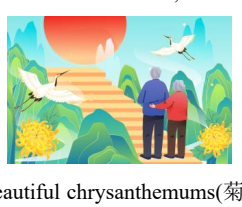
P2 Climbing mountains and admiring beautiful chrysanthemums(菊花) are interesting activities to celebrate the Chongyang Festival. It is said that by climbing a high mountain, diseases could be prevented. As chrysanthemums blossom during the festival, chrysanthemum shows are held in big parks that draw visitors.

P3 During the festival, eating Chongyang cake and drinking chrysanthemum wine are traditional customs. Chongyang cake is a kind of cake having two layers with nuts(坚果) between them. Since cake in Chinese is pronounced gao meaning high, people consider climbing a high mountain to be the same as eating cake. Also personal progress is thought to be made in the following days after eating the cake, for “high” means that one makes improvements moving to a higher level.

菊花酒插画

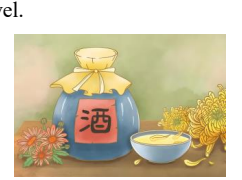
P4 Drinking chrysanthemum wine is an important part of the festival. Chrysanthemums are regarded as a kind of flower that can drive the evil(邪恶) away. People often think that by drinking chrysanthemum wine, all kinds of diseases and disasters can be cured and prevented.

P5 As nine is pronounced jiu meaning “long” in Chinese, so people endow(赋予) the word jiu with the meaning of longevity(长寿). In the year of 1989, the Double Ninth Festival was named as Seniors’ Day—a day to let the elderly enjoy themselves.

二、题目精析

QUESTIONS 21-25 · 定位 + 同义转换 + 选项病因
21
What is the first paragraph mainly about?
第 1 段主要讲什么?
段落主旨 · 首段概括
定位题干关键词 the first paragraph mainly about(第 1 段主要讲什么,段落主旨题)。依据在 P1:nine is regarded as the number of yang(九被视为阳数)→ The 9th day of the 9th lunar month is the day that has two yang numbers(九月初九是两个阳数相重之日)→ chong in Chinese means double(chong 意为“双”)→ 末句 “which is how the name Chongyang was created”(重阳这个名字就是这样来的)收束全段。
同义转换How the name Chongyang appeared(重阳这个名字是怎么出现的)≈ 原文 which is how the name Chongyang was created;appear(出现)↔ be created(被创造、产生)。
解析段落主旨题的答案看“首句+末句的落点”。本段是一条完整的因果链:九=阳数 → 九月初九=两阳相重 → chong=double → 得名 Chongyang,落脚点始终是名字的由来。A 项“九这个词是什么意思”以偏概全,它只是解释名称链条上的一环;B 项“在中国哪个数字幸运”无中生有,原文只说 nine 是 yang number,从未提 lucky;C 项“为什么会有重阳节”偷换概念,原文解释的是“名字”的由来,不是“节日为什么存在”。
答案D.How the name Chongyang appeared.
A.What the word nine means.“九”这个词是什么意思✗ 以偏概全——“九是阳数”只是名称由来链条中的一环,不能概括全段主旨。
B.Which number is lucky in China.在中国哪个数字是幸运的✗ 无中生有——原文只说 nine is regarded as the number of yang(九被视为阳数),从没说哪个数字“幸运”。
C.Why there is the Chongyang Festival.为什么会有重阳节✗ 偷换概念——本段解释的是“Chongyang 这个名字”的由来,而不是“重阳节为什么存在”,话题被换掉了。
D.How the name Chongyang appeared.重阳这个名字是怎么出现的 ✓✓ 正确——整段围绕 name 的由来展开(九=阳数 → 两阳相重 → chong=double → 得名),与原文“which is how the name Chongyang was created”完全对应。
22
What does the underlined word “blossom” mean in Paragraph 2?
第 2 段中画线单词 “blossom” 是什么意思?
词义猜测 · 语境推断
定位画线词 blossom 在 P2 最后一句:“As chrysanthemums blossom during the festival, chrysanthemum shows are held in big parks that draw visitors.”(由于菊花在节日期间 blossom,各大公园举办吸引游客的菊花展。)
同义转换blossom(动词,开花)↔ Produce flowers(开花、长出花)。语境依据:chrysanthemum shows are held(举办菊花展)— 有花可赏,说明菊花正在“开花”。
解析词义猜测三步走:① 定词性——blossom 前有主语 chrysanthemums、后面没有宾语,是动词;② 看主语——chrysanthemums(菊花,植物);③ 看语境——during the festival(重阳在深秋)+ 公园办菊花展吸引游客。植物 + 秋天 + 花展 ⇒ “开花”,故选 C。A 项 water flowers(浇水)、D 项 pick up flowers(摘花)在文中找不到任何依据;B 项 enjoy flowers(赏花)对应的其实是原文另一处的 admiring(Climbing mountains and admiring beautiful chrysanthemums),拿另一个词的意思来冒充 blossom,属张冠李戴。
答案C.Produce flowers.
A.Water flowers.给花浇水✗ 无中生有——原文没有浇水、浇灌之类的动作,water 与语境无关。
B.Enjoy flowers.赏花✗ 张冠李戴——“赏花”对应的是原文另一处的 admiring(赏菊),不是被提问的 blossom。
C.Produce flowers.开花 ✓✓ 正确——blossom 在此作动词,指“开花、开花期”;正因为菊花在节日期间开花,公园才办得起菊花展。
D.Pick up flowers.摘花✗ 无中生有——文中既没有 pick,也没有任何“采摘”的信息,属凭空编造。
23
Why do people eat Chongyang cake?
人们为什么要吃重阳糕?
细节理解 · 因果
定位题干关键词 Why … eat Chongyang cake(问原因)。依据在 P3:“Since cake in Chinese is pronounced gao meaning high, people consider climbing a high mountain to be the same as eating cake.”(因为“糕”在中文里读作 gāo、意为“高”,所以人们把登高和吃糕看作同一回事。)
同义转换Because it is pronounced gao in Chinese ≈ 原文 Since cake in Chinese is pronounced gao meaning high;Since(因为)= because,正是原因状语从句的信号词,答案就在它引导的从句里。
解析问原因要先找 because / since / for 等信号词。原文逻辑是:糕(gāo)与“高”同音 → 吃糕=登高(the same as eating cake)→ 寓意步步高升(personal progress … improvements moving to a higher level)。B 项“里面有坚果”只是 P3 对重阳糕外形的描述,张冠李戴——是外观细节,不是吃糕的原因;A 项 delicious(好吃)、C 项 good for health(对健康有益)无中生有,原文都没这样评价过重阳糕。
答案D.Because it is pronounced gao in Chinese.
A.Because it is delicious.因为它好吃✗ 无中生有——原文从未说重阳糕 delicious(好吃)。
B.Because it has nuts in it.因为它里面有坚果✗ 张冠李戴——nuts 只是描述重阳糕“两层夹坚果”的外形细节,不是人们吃它的原因。
C.Because it is good for health.因为它有益健康✗ 无中生有——原文把“防病”给了登高和菊花酒,从未说重阳糕有利健康。
D.Because it is pronounced gao in Chinese.因为它在中文里读作 gao ✓✓ 正确——糕(gāo)与“高”同音,吃糕=登高,寓意步步高升,与原文 Since cake … is pronounced gao meaning high 完全对应。
24
What can we learn from the last paragraph?
从最后一段我们可以了解到什么?
推理判断 · 段落推断
定位末段 P5 第二句:“In the year of 1989, the Double Ninth Festival was named as Seniors’ Day—a day to let the elderly enjoy themselves.”(1989 年,重阳节被定名为“敬老节”——一个让老年人尽情享受生活的日子。)
同义转换The elderly in China are fully respected(中国的老年人受到充分尊重)≈ was named as Seniors’ Day—a day to let the elderly enjoy themselves(国家专门为老人设节、让他们尽情享受)。“专为老人设节”→ 全社会敬老、尊老。
解析推理判断题要“有原文依据再往前走一步”。原文两层信息:① nine=jiu=“long”→ longevity(长寿);② 1989 年命名为 Seniors’ Day(敬老节)。由“国家专门设一个节日让老年人享受”可以合理推出“老年人受到尊重与关爱”,故选 B。A 项“中国老人很多”无中生有,文中没有人口数量信息;C 项“有许多敬老节日”绝对化,原文只提到 Seniors’ Day 一个节日;D 项“中国旅游业会火”无中生有,与末段内容毫无关系。
答案B.The elderly in China are fully respected.
A.There are many old people in China.中国有很多老年人✗ 无中生有——末段没有提到老年人口的数量或比例。
B.The elderly in China are fully respected.中国的老年人受到充分尊重 ✓✓ 正确——为老人专设 Seniors’ Day(敬老节),正是社会尊重、关爱老年人的体现,是末段的合理推断。
C.There are many festivals for the elderly.有许多为老年人设立的节日✗ 绝对化——原文只写了 Seniors’ Day 一个节日,many 是被夸大的说法。
D.China’s travel industry will be hot.中国的旅游业会火热✗ 无中生有——末段完全没有涉及旅游、出行等话题,属凭空联想。
25
Which of the following can show the structure of the passage?
下面哪一项能表示这篇文章的结构?(①=第 1 段 ②=第 2 段,……)
篇章结构 · 总—分—总
选项结构图(箭头 → 表示层次顺承,括号( )表示同一层并列)
A.① →(②③④⑤ 并列)① 之后 ②③④⑤ 全部并列✗ 分割不当——把总结段 ⑤ 也当成并列的习俗之一,忽视了 ⑤ 的收束与升华作用。
B.① → ② →(③④⑤ 并列)② 单列,其后 ③④⑤ 并列✗ 分割不当——② 与 ③④⑤ 本是同一层级的并列习俗,把 ② 单独提出来没有依据。
C.① →(②③④ 并列)→ ⑤① 总起 →(②③④ 并列)→ ⑤ 总结 ✓✓ 正确——总—分—总:① 总起(重阳节的名称由来)→ ②③④ 三项习俗并列(登高赏菊/吃重阳糕/饮菊花酒)→ ⑤ 总结(九=久=长寿,1989 年定为敬老节)。
D.① → ② →(③④ 并列)→ ⑤② 单列,③④ 并列,再到 ⑤✗ 分割不当——③④ 与 ② 同属并列习俗,把 ② 单列、把 ③④ 合成一组都找不到依据。
定位结构图题要看全文各段的分工:P1 交代名称由来(nine is regarded as the number of yang / chong means double / how the name Chongyang was created);P2 登高赏菊;P3 吃重阳糕;P4 饮菊花酒;P5 九=jiu=“long”→ longevity,1989 年定为 Seniors’ Day(敬老节)。
同义转换选项 C 的结构图 ① →(②③④ 并列)→ ⑤ 就是文章的“总—分—总”:②③④ 是三项并列习俗(每段都以习俗作主语开头,句式平行、篇幅相当);⑤ 用 In the year of 1989 收尾,是总结与升华,不与习俗并列。
解析① 是总起——解释“重阳”这个名字怎么来的;②③④ 是并列的三项习俗——登高赏菊、吃重阳糕、饮菊花酒,地位平等、可以互换位置;⑤ 是总结——由“九=久”引出长寿,再落到 1989 年的敬老节。A 把 ⑤ 也算作并列习俗,忽视了收束作用;B 把 ② 单列、③④⑤ 并列,分割不当;D 把 ③④ 并成一组、② 单列,同样分割不当。只有 C 与“总—分—总”的脉络严丝合缝。
答案C.① →(②③④ 并列)→ ⑤

三、文章精读

INTENSIVE READING · 词性套色 + 从句划线 + 逐句翻译

精读说明:按《词性标注配色规则》套色——绿=谓语动词,绿底=不定式,墨绿+灰底=动名词,玫红=形容词/形容词性物主代词,玫红+粉底=分词,蓝=副词,紫=介词,橙=连词,橙底=that 类引导词,蓝底=wh- 类引导词,红=疑问词,深灰=冠词/代词/名词;句子下的橙色下划线=that 类从句,蓝色下划线=wh- 类从句。每句末尾的小喇叭可单独朗读该句,点击生词可查词典。

配色速查 谓语动词 不定式 动名词 形容词/物主代词 分词 副词 介词 连词 that 类引导词 wh- 类引导词 疑问词 冠词/代词/名词
P1 · 名称由来

S1The Double Ninth Festival falls on the ninth day of the ninth lunar month.重阳节在农历九月初九。

S2It’s also called the Chongyang Festival.它也被称为重阳节(Chongyang Festival)。

S3In Chinese culture, nine is regarded as the number of yang.在中国文化里,九被视为“阳”之数。

S4The 9th day of the 9th lunar month is the day that has two yang numbers, and chong in Chinese means double, which is how the name Chongyang was created.农历九月初九是“两阳相重”的日子,而中文里 chong 意为“双”,重阳这个名字就是这样来的。

P2 · 登高赏菊

S1Climbing mountains and admiring beautiful chrysanthemums(菊花) are interesting activities to celebrate the Chongyang Festival.登高和欣赏美丽的菊花是庆祝重阳节有趣的活动。

S2It is said that by climbing a high mountain, diseases could be prevented.据说,登高山可以预防疾病。

S3As chrysanthemums blossom during the festival, chrysanthemum shows are held in big parks that draw visitors.由于菊花在重阳节期间开放,各大公园都会举办吸引游客的菊花展。

P3 · 重阳糕俗

S1During the festival, eating Chongyang cake and drinking chrysanthemum wine are traditional customs.节日期间,吃重阳糕和喝菊花酒是传统习俗。

S2Chongyang cake is a kind of cake having two layers with nuts(坚果) between them.重阳糕是一种中间夹着坚果、有两层的糕点。

S3Since cake in Chinese is pronounced gao meaning high, people consider climbing a high mountain to be the same as eating cake.因为“糕”在中文里读作 gāo、意为“高”,所以人们把登高和吃糕看作同一回事。

S4Also personal progress is thought to be made in the following days after eating the cake, for “high” means that one makes improvements moving to a higher level.而且,人们认为吃了重阳糕之后、接下来的日子里会取得进步,因为“高”意味着一个人不断改进、迈向更高的层次。

P4 · 菊花酒俗

S1Drinking chrysanthemum wine is an important part of the festival.喝菊花酒是这个节日重要的一部分。

S2Chrysanthemums are regarded as a kind of flower that can drive the evil(邪恶) away.菊花被认为是一种能驱邪的花。

S3People often think that by drinking chrysanthemum wine, all kinds of diseases and disasters can be cured and prevented.人们常认为,喝菊花酒可以治愈并预防各种疾病和灾难。

P5 · 敬老总结

S1As nine is pronounced jiu meaning “long” in Chinese, so people endow(赋予) the word jiu with the meaning of longevity(长寿).因为“九”在中文里读作 jiǔ、与“久”谐音,所以人们赋予“九”长寿的含义。

S2In the year of 1989, the Double Ninth Festival was named as Seniors’ Day—a day to let the elderly enjoy themselves.1989 年,重阳节被定名为“敬老节”——一个让老年人尽情享受生活的日子。

四、作文金句仿写

WRITING · 3 个可套用句型
金句 1 The Double Ninth Festival falls on the ninth day of the ninth lunar month.
The Double Ninth Festival / The Mid-Autumn Festival / The Dragon Boat Festival falls on the ninth day of the ninth lunar month / the 15th day of the 8th lunar month / the 5th day of the 5th lunar month.
仿写:The Mid-Autumn Festival falls on the 15th day of the 8th lunar month. 中秋节在农历八月十五。
适用:介绍传统节日的日期(fall on + 农历日期);农历月份要用序数词 + lunar month,序数词前加 the。
金句 2 It is said that by climbing a high mountain, diseases could be prevented.
It is said that by climbing a high mountain / doing exercise every day / reading more books, diseases could be prevented / we can keep healthy / we can learn a lot.
仿写:It is said that by doing exercise every day, we can keep healthy. 据说每天锻炼可以保持健康。
适用:介绍习俗、说法、传闻(It is said that + 主语从句,that 不能省略);by doing 表示“通过做某事”,diseases could be prevented 是被动语态。
金句 3 In the year of 1989, the Double Ninth Festival was named as Seniors’ Day—a day to let the elderly enjoy themselves.
In the year of 1989 / 1995, the Double Ninth Festival / World Book Day was named as Seniors’ Day / a reading festival—a day to let the elderly / young people enjoy themselves / enjoy reading.
仿写:In the year of 1995, World Book Day was named as a reading festival—a day to let young people enjoy reading. 1995 年,世界读书日被定名为一个阅读的节日——一个让年轻人享受阅读的日子。
适用:介绍节日的由来与意义(be named as + 破折号后的同位语 a day to let sb. do sth.);let sb. do sth. 中用动词原形,the elderly 表示“老年人”。

写作提示:这三个句型都来自本篇阅读原文,考场作文里直接替换 灰色方框 内的内容即可——介绍节日日期用金句 1,介绍习俗或说法用金句 2,写节日的由来与意义用金句 3。

5

六选五 · Gift-giving traditions 送礼习俗

Six of Five · 26-30 · 四步策略 + 同色关联 + 多余项辨析
单独打开 ↗

解题策略

FOUR-STEP STRATEGY
1

先做 30 空(代词指代最好找)

30 空后面紧跟 That color(那种颜色)——代词必须回指前文出现过的颜色词。六个选项里只有 D 项出现颜色 yellow flowers(黄色的花),一撞即合。再看本空位于小标题 Russia 之后,D 项的 here 正好指俄罗斯,答案稳稳落袋。

2

再做 28、29 空(正反照应 / 概括具体)

28 空靠正反照应:前句说 using only one hand(只用一只手)很粗鲁,B 项 You must always use both hands(你必须始终用双手)从正面给出做法,一手 ↔ 双手;29 空靠概括—具体:前句说金额 ends with “1”,A 项先用 Odd numbers are very lucky(奇数很吉利)作概括,后句再用 The number 1 举例落实。

3

然后做 27 空(原因衔接)

前句 It is not good to surprise the receivers.(给收礼人惊喜并不好)给出观点,F 项用 As 引出理由:they will be uncomfortable if they cannot return something to the gift giver at once(若不能立刻回礼会不自在)。先讲为什么、再讲怎么做,观点 + 理由,衔接最顺。

4

最后做 26 空(总起段的举例补充)并用排除法锁定多余项

26 空在总起段,前两句刚说“送礼是我们的传统、送礼说明对方在你心里很特别”,E 项用 many special days, like birthdays, Mother’s Day, etc. 举例补充,后句 In fact, gift-giving is so necessary to our world… 顺势展开,举例 → 总起,自然连贯。五个空全部落实后,剩下没人认领的 C 项就是多余项。多余项特征:C 项的 This country 找不到可指代的国家,内容也只是“这个国家有不同的送礼传统”这种空泛过渡句;而原文每个小标题后都直接进入具体做法,根本不需要它。

文章 + 选项区

PASSAGE + OPTIONS · 左文右选,同色关联
文章(答案已填入)点击任意单词可查词典
P1 Giving gifts is a tradition as old as mankind (人类) itself. It has always been a part of our society. When you give a gift to someone, it tells them that they are special in some way to you. 26E In fact, gift-giving is so necessary to our world that many countries developed interesting traditions. Here are some of the most interesting ones.
P2 Japan
When giving a gift in Japan, you should be careful. It is not good to surprise the receivers. 27F The gift is only given in private, and it is not common to open it immediately.
P3 South Korea
In South Korea, it’s very rude (粗鲁的) to give or receive a gift using only one hand, especially if it is the left hand. 28B Korean New Year’s greeting cards or gifts are never mainly red, as it is used for announcing funerals (宣告葬礼). Also, don’t give gifts that come in a set of four as they stand for death there.
P4 India
When giving a gift in India, you should always use your right hand. Using the left hand is considered unclean. If giving money in India, try to give a sum (金额) that ends with “1”. 29A The number 1 is especially lucky as it means a new beginning.
P5 Russia
30D That color is the symbol of ending a relationship or betrayal (背叛).
P6 Do you know more traditions about gift-giving around the world?
选项区 · 一句一行与原文同色关联
AOdd numbers (奇数) are very lucky.奇数很吉利。
BYou must always use both hands.你必须始终用双手。
CThis country has a different tradition of giving gifts.多余项这个国家有不同的送礼传统。
DYou should never give someone yellow flowers here.在这里你绝不该送别人黄色的花。
EWe give and receive gifts on many special days, like birthdays, Mother’s Day, etc.我们在许多特别的日子里互赠礼物,比如生日、母亲节等。
FAs they will be uncomfortable if they cannot return something to the gift giver at once.因为如果他们不能立刻回赠送礼者什么东西,会感到不自在。
图例 LEGEND 26 空关联(Giving gifts / give a gift → give and receive gifts on many special days) 27 空关联(surprise the receivers → As they will be uncomfortable) 28 空关联(using only one hand ↔ use both hands) 29 空关联(ends with “1” / The number 1 → Odd numbers are very lucky) 30 空关联(That color → never give someone yellow flowers) 灰色虚线框 = 多余项

逐空解析

ANALYSIS · 每空:关联依据 + 判断理由
26答案 E
关联前两句 Giving gifts is a tradition as old as mankind (人类) itself.(送礼是一种和人类一样古老的习俗)与 When you give a gift to someone, it tells them that they are special in some way to you.(当你送别人礼物时,就是在告诉他们,他们在你心里很特别)都在讲“送礼”本身;E 项 We give and receive gifts on many special days, like birthdays, Mother’s Day, etc. 正是对“送礼很普遍”的举例补充:give and receive gifts 与首句 Giving gifts 同词呼应。
判断本空后面紧跟 In fact, gift-giving is so necessary to our world that many countries developed interesting traditions.(事实上,送礼对这个世界如此必要,以至于许多国家发展出了有趣的习俗),需要前一句先把话题由“送礼是传统”推到“送礼很常见”,才能用 In fact 顺势归纳。E 项用生日、母亲节等具体场合举例,句末 etc. 是举例收尾的典型标志,举例 → 总起,衔接自然 → 选 E。
27答案 F
关联前句 It is not good to surprise the receivers.(给收礼人惊喜并不好)只给出了观点;F 项句首用 As 引出原因——they will be uncomfortable if they cannot return something to the gift giver at once.(如果他们不能立刻回赠送礼者什么东西,会感到不自在),正好解释“为什么不好”。
判断本空后一句 The gift is only given in private, and it is not common to open it immediately.(礼物一般私下送出,通常不会当场打开)继续讲日本送礼的做法。先给理由、再给做法,逻辑链完整;而且 It is not good to… 之后只能用 As 引导的原因句承接,其余选项都无法解释这个观点 → 选 F。
28答案 B
关联前句 In South Korea, it’s very rude (粗鲁的) to give or receive a gift using only one hand, especially if it is the left hand.(在韩国,用一只手递或接礼物非常粗鲁,尤其是左手)说的是不能怎么做;B 项 You must always use both hands.(你必须始终用双手)说的是应该怎么做,only one hand ↔ both hands 构成正反照应。
判断前句用 rude 表否定,B 项用 must always 表必须,一否一正,意思严丝合缝;本空之后 Korean New Year’s greeting cards or gifts are never mainly red…(韩国的新年贺卡或礼物从不以红色为主)继续列举具体禁忌,说明这一带都是“韩国的做法”,B 项与后文的颜色禁忌并列而非冲突 → 选 B。
29答案 A
关联前句 If giving money in India, try to give a sum (金额) that ends with “1”.(在印度送钱,尽量给以“1”结尾的金额)提出具体做法;A 项 Odd numbers (奇数) are very lucky.(奇数很吉利)说明原因——以“1”结尾的数都是奇数;后句 The number 1 is especially lucky as it means a new beginning. 再举数字 1 为例。
判断本空处是“概括—具体”结构:A 项先说“奇数吉利”这个大原则,后句再具体到数字 1,两句的 lucky 同词复现,指代与逻辑都接得上。若换成别的选项,后句的 The number 1 便失去铺垫 → 选 A。
30答案 D
关联后句 That color is the symbol of ending a relationship or betrayal (背叛).(那种颜色象征着关系结束或背叛)——That color 是代词指代,要求前文先出现颜色词;六个选项里只有 D 项 You should never give someone yellow flowers here. 提到颜色 yellow(黄色)。
判断本空位于小标题 Russia 之后,D 项的 here 正好指俄罗斯,与后句“象征关系结束或背叛”的负面含义一致;never 也提示这是当地的一项禁忌。指代衔接唯一且明确 → 选 D。
多余项C
关联C 项 This country has a different tradition of giving gifts.(这个国家有不同的送礼传统)以 This country(这个国家)开头,是典型的指代衔接句,必须紧跟在某个具体国家之后才成立。但 26 空在总起段,前文还没出现任何国家;27/28/29/30 空的前后句已分别处在 Japan / South Korea / India / Russia 的语境里,直接接具体做法即可,插入 C 既无处指代,又与下文语义重复。
判断再看内容:全篇结构就是“先总起,再逐国介绍”,每个小标题后第一句就进入做法,不需要“这个国家有不同的送礼传统”这种空泛过渡句。C 项与五个空的关联词(special days / As 原因 / both hands / odd numbers / yellow)都无照应,无论填哪一空都会破坏衔接 → C 为多余项。
6

信息匹配 · 百科全书里的六条信息

Info Match · 31-35 · 左右双栏 + 关键词同色 + 多余项辨析
单独打开 ↗

解题策略

MATCHING STRATEGY · 圈词 → 扫读 → 比对
1

先读左栏,圈出专有名词与核心名词

先看每一位读者“喜欢什么、想了解什么”,把核心名词或专有名词圈出来:tigers、Antarctica、the mother river of China、giraffes、the Elizabeth Tower。这五个词决定了他们各自想看哪一条百科信息,是后面比对的唯一依据。 小技巧:左栏常用 be interested in / like to research / make a study of / want to know / hopes to learn something about 引出兴趣点,紧跟其后的名词就是关键词。

2

再扫右栏,找原词或同义表达重合的那一条

用左栏圈出的词在右栏 A—F 快速扫读,谁的关键词重合,谁就是答案。右栏常用同义或上下义表达复现同一个意思,例如 learn something about tigers ↔ The Siberian tiger / Endangered Animals,make a study of Antarctica ↔ Antarctica is the only continent,how giraffes sleep and drink ↔ sleep standing up / need to drink water every few days。 扫读时只看名词和专有名词(动物名、大洲名、河流名、建筑名),不要逐词翻译整段,速度会快很多。

3

细心比对,排除干扰项

六条信息只配五位读者,必然剩下一条多余项。有的选项话题相近,容易混选:B(金星 planet)与 C(南极洲 continent)同属天文地理,都以 the Earth / the Sun 这类词出现;只有需求关键词完全对应的才是答案,剩下的 B 不必硬塞。 判断标准永远是“需求关键词”与“信息核心词”是否照应:Antarctica 配 C,Venus 无人问,所以 B 多余。

配对区(答案已填入)

LEFT: 读者需求 · RIGHT: 百科信息 · 同色 = 关键词对应

题目要求:第三节 信息匹配(本题共 5 小题,每小题 1.5 分,共 7.5 分)下面的材料 A~F 分别是六个摘自百科全书的信息。请根据五位读者的需求选择合适的信息。
导语:左栏是五位读者各自的兴趣与需求,右栏是六条百科信息,其中只有五条能与读者一一配对,剩下的一条为多余项。

左栏 · 五位读者的需求5 题
31 Aaron becomes interested in animals and he wants to learn something about tigers.
中文:Aaron 对动物产生兴趣,想了解一些关于老虎的知识。 E
32 Sam likes to research something about the seven continents. This week he wants to make a study of Antarctica.
中文:Sam 喜欢研究七大洲,这周他想研究南极洲。 C
33 Lisa is from America. She is studying Chinese geography. She’d like to learn more about the mother river of China.
中文:Lisa 来自美国,正在学习中国地理,她想更多了解中国的母亲河。 F
34 Alan loves cute animals like dogs and giraffes. He wants to know how giraffes sleep and drink with long necks.
中文:Alan 喜欢狗和长颈鹿这样可爱的动物,他想知道长颈鹿长长的脖子如何睡觉和喝水。 A
35 Susan is a Chinese girl living in London. She is interested in the Elizabeth Tower and hopes to learn something about it.
中文:Susan 是一位住在伦敦的中国女孩,她对伊丽莎白塔很感兴趣,希望了解它。 D
右栏 · 百科全书里的六条信息6 项 · 1 项多余
A Giraffes usually sleep standing up and they sleep for half an hour every day. They get most of their water from the plants that they eat and they only need to drink water every few days.
中文:长颈鹿通常站着睡觉,每天睡半小时。它们所需的大部分水分来自所吃的植物,每隔几天才需要喝水。
B Venus (金星) is the second closest planet to the Sun. It’s also the second brightest in the night sky after the Moon.
中文:金星是距太阳第二近的行星,也是夜空中仅次于月亮的第二亮星。 多余项
C Antarctica (南极洲) is the only continent on the Earth with no rivers. The lowest temperature there is -94.7°C. It is the world’s coldest land.
中文:南极洲是地球上唯一没有河流的大洲,那里的最低气温是 -94.7°C,是世界上最冷的地方。
D The Elizabeth Tower is a famous clock tower in London. It is a traditional landmark of London. It has helped keep London on time for 166 years!
中文:伊丽莎白塔是伦敦著名的钟楼,是伦敦的传统地标,已为伦敦准确报时 166 年!
E The Siberian tiger mainly comes from China and Russia. It is one of the “World’s Top Ten Endangered Animals” because of its small number.
中文:东北虎主要来自中国和俄罗斯。由于数量稀少,它是“世界十大濒危动物”之一。
F The Yellow River is the mother river of China. It’s the second longest river in China after the Yangtze River. It starts from the Bayan Har Mountains and runs into the Bohai Sea.
中文:黄河是中国的母亲河,是中国仅次于长江的第二长河,发源于巴颜喀拉山,流入渤海。
31↔E Siberian tiger / Endangered Animals 32↔C Antarctica / continent 33↔F the Yellow River / the mother river of China 34↔A giraffes / sleep and drink 35↔D the Elizabeth Tower / landmark 灰色虚线框 = 多余项

逐题关键词对照

KEY WORDS · 31-35 · 多余项 B
31 答案 E
关键词照应左栏 interested in animals / tigers ↔ 右栏 The Siberian tiger / World’s Top Ten Endangered Animals。核心词 tiger 原词复现(tigers ↔ the Siberian tiger),而且老虎本身就属于 animals,语义场完全一致。
判断根据 “Aaron becomes interested in animals and he wants to learn something about tigers.” 可知 Aaron 想了解的是老虎。E 项 “The Siberian tiger mainly comes from China and Russia. It is one of the “World’s Top Ten Endangered Animals” because of its small number.” 讲的正是老虎的产地与生存状况,与 learn something about tigers 直接对应;A—F 中只有 E 出现 tiger。故选 E。
32 答案 C
关键词照应左栏 the seven continents / Antarctica ↔ 右栏 Antarctica / the only continent on the Earth。专有名词 Antarctica 原词照应,复数 continents 与单数 continent 同源复现。
判断根据 “Sam likes to research something about the seven continents. This week he wants to make a study of Antarctica.” 可知 Sam 本周要研究南极洲,make a study of 就是“研究”。C 项第一句 “Antarctica is the only continent on the Earth with no rivers.” 直接回应“七大洲”这一话题,并补充 “The lowest temperature there is -94.7°C. It is the world’s coldest land.” 等资料,正是他需要的。故选 C。
33 答案 F
关键词照应左栏 studying Chinese geography / the mother river of China ↔ 右栏 The Yellow River / the mother river of China。the mother river of China 是原词复现,Yellow River 正是中国地理中的母亲河。
判断根据 “Lisa is from America. She is studying Chinese geography. She’d like to learn more about the mother river of China.” 可知 Lisa 想进一步了解中国的母亲河。F 项 “The Yellow River is the mother river of China. It’s the second longest river in China after the Yangtze River. It starts from the Bayan Har Mountains and runs into the Bohai Sea.” 给出了名称、长度排名、发源地和入海口,信息最完整。故选 F。
34 答案 A
关键词照应左栏 cute animals like dogs and giraffes / how giraffes sleep and drink ↔ 右栏 Giraffes usually sleep standing up / only need to drink water every few days。需求问的是 sleep 与 drink 两个动作,A 项逐项回答。
判断根据 “Alan loves cute animals like dogs and giraffes. He wants to know how giraffes sleep and drink with long necks.” 可知 Alan 想知道长颈鹿怎样睡觉、怎样喝水。A 项 “Giraffes usually sleep standing up and they sleep for half an hour every day.” 回答了“怎么睡”, “They get most of their water from the plants that they eat and they only need to drink water every few days.” 回答了“怎么喝”,两个疑问点都有答案。故选 A。
35 答案 D
关键词照应左栏 living in London / the Elizabeth Tower ↔ 右栏 The Elizabeth Tower / a famous clock tower in London / a traditional landmark of London。专有名词 Elizabeth Tower 原词复现,London 前后呼应。
判断根据 “Susan is a Chinese girl living in London. She is interested in the Elizabeth Tower and hopes to learn something about it.” 可知 Susan 想了解伊丽莎白塔。D 项介绍它是伦敦著名的钟楼(a famous clock tower in London)、伦敦的传统地标(a traditional landmark of London),还“已为伦敦准确报时 166 年”(It has helped keep London on time for 166 years!),正好回答 learn something about it。故选 D。
多余项 B 为什么多余
关键词照应B 项的核心词是 Venus / the second closest planet to the Sun / the second brightest in the night sky;而左栏五位读者的关键词依次是 tigers→E、Antarctica→C、the mother river of China→F、giraffes→A、the Elizabeth Tower→D。关键词扫描无交集:Venus、planet、the Sun、night sky 都不出现在左栏需求中。
判断六条信息只对应五位读者,必然有一条没有配对位置,B 项在左栏找不到任何提出“行星 / 夜空 / 太阳”需求的读者,因此是多余项。干扰点提示:B(金星,讲 planet 与 night sky)与 C(南极洲,讲 continent 与 the coldest land)都涉及“地球/天文地理”,很容易混选,必须以需求关键词为准——第 32 题的需求词是 Antarctica 与 continents,与 Venus 无关;C 项虽然出现 on the Earth,也不能因此被当成 B 的替身。
7

语法填空 · 天工开物 Tiangong Kaiwu

Grammar Fill · 36-45 · 答案填入 + 逐空解析 + 文章精读 + 语法精讲
单独打开 ↗
图例 LEGEND 填入的参考答案 括号里的提示词(原词)或纯空号 黄色高亮 = 要填进空格的答案;蓝色虚线框 = 题干给出的提示词(必须变形后填入),只显示空号的 40、42、43、45 是「无提示词」的纯空格

一、文章(答案已填入)

PASSAGE · 黄色 = 答案 · 蓝框 = 提示词 · 点击生词可查词典

语法填空要点:① 有提示词的,先判断要填的词性——名词看单复数、动词看时态/语态/非谓语、形容词看比较级・最高级或变副词;② 没有提示词的纯空格,多半要填介词、冠词、连词、引导词等虚词,靠固定搭配和上下文逻辑判断;③ 填完把答案放回原文读一遍,语法和语义都通顺才算对。本文 36 考最高级,37 考名词变形容词,38 考被动语态,39 考序数词,40 考介词 as,41 考形容词变副词,42 考转折副词,43 考定冠词,44 考 including,45 考 so … that … 结构。

P1 Many of you should hear of the book Tiangong Kaiwu. It is one of the greatest 36 (great) encyclopedias written in the 17th century. But how much do you know about its intelligent 37 (intelligence) writer, Song Yingxing?

P2 Song was a great scientist. He was born 38 (bear) in 1587 and had a happy childhood. He and his brother Song Yingsheng went to school together. Song won the third 39 (three) place in the provincial Imperial Exam (省级科举考试). Later, they took the national Imperial Exam, but they both failed.

P3 Song worked as 40 a teacher for many years. Meanwhile, he took part in the national Imperial Exam for another four times. Unluckily 41 (lucky), he never got success. However 42, he learned about the technologies that were used in different fields on his repeated trips to take the exams. His wide knowledge made him finish writing Tiangong Kaiwu in the 43 1630s.

P4 The book covers more than 130 technologies, including 44 (include) many pictures to help with the understanding of the text. The book became popular soon after it came out.

P5 In Song’s final years, he wrote many articles and poems against (反对) the new king. The king was so angry that 45 he burned all of Song’s works. But Tiangong Kaiwu had already spread to many other countries.

二、逐空解析

ANALYSIS · 每空:考点 → 解析
36形容词最高级greatest
考点one of the + 形容词最高级 + 复数名词=“最……的之一”。
解析空前是 one of the,空后是复数名词 encyclopedias,中间只能放形容词最高级。great 是单音节形容词,最高级直接加 -est → greatest,而且最高级前必须有 the(题干已给出)。句意:《天工开物》是 17 世纪写成的最伟大的百科全书之一。补充:one of… 作主语时中心词是 One,谓语用单数,所以前一句是 It is one of…(不是 are)。
37词性转换 · 名词 → 形容词intelligent
考点作定语修饰名词要用形容词,名词不能直接修饰名词(抽象名词)。
解析空后是名词 writer,空处要修饰它、作定语,因此把名词 intelligence(智力、智慧)变成形容词 intelligent(聪慧的)。句意:但你对它那位聪慧的作者宋应星了解多少呢?易错:不要填 intelligently(副词只能修饰动词、形容词或整句,不能修饰名词),也不要填 intelligence(名词不能作定语)。
38一般过去时的被动语态 · be bornwas born
考点be born=出生(出生是“被生下来”,本身含被动含义);主语第三人称单数+过去时间 → was born。
解析主语 He 是第三人称单数;时间状语 in 1587 表示过去,所以 be 动词用 was;bear(生育)的过去分词是 born。句意:他出生于 1587 年,童年幸福。注意:① 不能写 born 单独作谓语(born 是过去分词,不能单独作谓语);② 不能说 is born,因为人已经出生,用过去时;③ 同句后面的 had a happy childhood 也是一般过去时,时态前后一致。
39基数词 → 序数词third
考点表示“第几名、第几个”要用序数词;序数词前常加 the。
解析空前有 the,空后是名词 place,这里说的是“第三名”,所以用序数词 third(three → third,属于不规则变化)。句意:宋应星在省级科举考试中获得了第三名。易错:不要填 three(基数词只表示数量“三个”,不能说 the three place),也不要填 thirdly(副词“第三点”,用于列举)。
40介词 · 固定搭配 work asas
考点work as + 职业=从事……工作、作为……工作;as 是介词,后接名词。
解析本空没有提示词,属于纯空格,先想虚词。空前是谓语 worked,空后是 a teacher(名词),表示“身份、作为”,所以填介词 as。句意:宋应星作为老师工作了很多年。易错:like 表示“像……一样”,句意不通;for 表示“为了”,也不能表示身份;同理还有 be famous as(作为……而出名)、be known as(被称为)。
41词性转换 · 形容词 → 副词(评论性状语)Unluckily
考点空处作整个句子的状语,句首且有逗号 → 用副词,首字母大写。
解析lucky(形容词,幸运的)→ luckily(副词,幸运的是)→ Unluckily(副词,不幸的是)。前文说他四次赴考都没考中,这里用否定意义的副词作评论性状语最贴切。句意:不幸的是,他一直没有成功。易错:① 不能填 Unlucky(形容词不能作状语);② 句首必须大写首字母 U;③ 后面有逗号,逗号不能漏(副词作评论性状语时通常用逗号与主句隔开)。
42转折副词 · HoweverHowever
考点句首 + 逗号,表示句间转折,用连接副词 However(首字母大写)。
解析上一句说“他一直没考中(never got success)”,本句说“他却了解到了不同领域使用的技术”,前后是转折关系。空位于句首、后面有逗号,所以用连接副词 However。句意:然而,他在多次赴考途中了解到了不同领域使用的技术。易错:不能填 But,因为 but 是并列连词,必须直接连接两个分句,不能像这样“句首 + 逗号”单独出现在句号之后(详见第三节);也不能填 Luckily,前一句刚用了 Unluckily,且此处强调转折而非幸运。
43定冠词 · in the + 年代the
考点in the + 年代复数=在……世纪……年代,必须有定冠词 the。
解析本空没有提示词,靠固定表达判断:in the 1630s=在 17 世纪 30 年代,其中 1630s 读作 sixteen thirties,前面必须加 the。句意:他渊博的知识使他在 17 世纪 30 年代写完了《天工开物》。同类表达:in the 1990s(在 20 世纪 90 年代)、in the 1980s。注意与 in 1990(在 1990 年,具体某一年,不加 the)区分。
44非谓语 · including 表“包括”including
考点including 常转化为介词,表示“包括……在内”,后接名词或代词。
解析空前的句子已经完整(The book covers more than 130 technologies),空后是名词短语 many pictures,需要一个能接名词、起补充说明作用的词,所以用 include 的现在分词 including。句意:这本书涵盖 130 多项技术,包括许多帮助理解文本的图片。易错:① 不能填 included,included 一般放在名词后面(many pictures included=许多图片被包括在内);② 不能填 include,它是谓语动词,本句已有谓语 covers,一个简单句不能有两个谓语。
45连词 · so … that … 结果状语从句that
考点so + 形容词/副词 + that 从句=如此……以至于……。
解析空前是 The king was so angry,空后是一个完整的句子 he burned all of Song’s works,中间需要一个连词把“结果”引出来,所以填 that。句意:国王如此生气,以至于烧掉了宋应星的所有著作。易错:① 不能填 so(so 已经在空前的 was so angry 里出现);② 不能填 because(前后不是原因关系,而是“太……以致于……”的结果关系);③ 辨析 so … that 与 such … that:so 后接形容词或副词,such 后接名词短语(such a good book that…)。

三、语法辨析 · however 与 but(为什么 42 空用 However)

WHY 42 = HOWEVER · 连接副词 vs 并列连词
原句第 42 空所在句However
定位Unluckily, he never got success. However, he learned about the technologies that were used in different fields on his repeated trips to take the exams.
解析第一句以句号结束,第二句另起一句,空的后面紧接着一个逗号,然后才是主语 he。也就是说:空处既不是“连接两个分句”,也没有分句在它前面——它只是第二句句首的一个状语,所以只能用副词 However,不能用连词 but。若要用 but,原句必须改写成:He never got success, but he learned about the technologies…(逗号 + but + 分句)。
however连接副词 adv.
词性副词(conjunctive adverb),起“连接”作用,但本身不是连词。
用法① 不能直接连接两个分句,前后要用句号或分号隔开:A. However, B./A; however, B.;② 后面通常加逗号;③ 位置灵活,可放句首(However, …)、句中(…, however, …)、句尾(…, however.)。本文 42 空属于“A. However, B.”这一种。
例句He never got success. However, he learned a lot. 他从未成功。然而,他学到了很多。/ He never got success; however, he learned a lot. 他从未成功;不过他学到了很多。
but并列连词 conj.
词性并列连词(coordinating conjunction),与 and / or / so / for 同类。
用法① 直接连接两个并列成分或两个分句,位置固定在两者中间;② 前面通常有逗号(A, but B.),but 后面不加逗号;③ 它不能单独出现在句首引导一个独立句子(口语中偶见,书面语不规范),也不能在句中、句尾自由移动。
本文例子Later, they took the national Imperial Exam, but they both failed. 后来他们参加了全国科举考试,但两人都落榜了。(这里空前是逗号、两个分句直接相连,所以只能用 but)
对比一张表看懂 42 空
对比项HoweverBut
词性连接副词 adv.并列连词 conj.
能否连接两个分句不能直接连,必须断开:A. However, B.能,直接连:A, but B.
标点后面常有逗号;前面用句号或分号前面常有逗号,后面不加逗号
位置句首 / 句中 / 句尾都可以只能放两个分句中间
本文 42 空✓ 空前是句号、空后是逗号 → 填 However✗ 若用 but,须改成 … got success, but he learned …
口诀看标点选词:“句首 + 逗号”选 However;“逗号 + 直接接分句”选 but。42 空属于前者,所以填 However。
41 vs 42Unluckily 与 However 有什么区别
相同点两空形式上是“一家人”:都是副词放在句首、后面都加逗号,都是“评论性状语”,所以都填副词、都要大写首字母。
不同点 · 语义① Unluckily 表达说话人的态度(评价这件事“不走运、可惜”),意思是“不幸的是”,它管的是它自己那一句:Unluckily, he never got success.=可惜的是,他从未成功。② However 表达两句之间的逻辑关系(转折),意思是“然而”,它管的是前一句和后一句:前面说他没考中,后面说他学到了技术,形成对比。简单说:Unluckily 是“态度词”,However 是“逻辑词”。
不同点 · 能否替换把 41 空换成 However 或把 42 空换成 Unluckily,语法上都还是副词(形式没错),但语义都不通:41 处“他从未成功”是对他命运的感叹,不是转折;42 处前一句的 Unluckily 已经表过态度,本空要的是“没考中”对“学到技术”的转折,所以两空不能互换。这也提醒我们:纯空格除了看词性,还要看上下文逻辑。
同类词Luckily(幸运的是)、Unfortunately(不幸的是)、Besides(此外)、Therefore(因此)、Meanwhile(与此同时/本文已用)、Firstly / Finally(列举)都是这种“句首 + 逗号”的副词状语。

四、文章精读

INTENSIVE READING · 词性套色 + 从句划线

精读说明:按《词性标注配色规则》套色——绿=谓语动词,绿底=不定式,墨绿+灰底=动名词,玫红=形容词/形容词性物主代词,玫红+粉底=分词,蓝=副词,紫=介词,橙=连词,橙底=that 类引导词,蓝底=wh- 类引导词,红=疑问词,深灰=冠词/代词/名词;句子下的橙色下划线=that 类从句,蓝色下划线=wh- 类从句。每句末尾的小喇叭可单独朗读该句,点击生词可查词典。

配色速查 谓语动词 不定式 动名词 形容词/物主代词 分词 副词 介词 连词 that 类引导词 wh- 类引导词 疑问词 冠词/代词/名词
P1 · 名著与作者

S1Many of you should hear of the book Tiangong Kaiwu.你们中很多人应该听说过《天工开物》这本书。

S2It is one of the greatest encyclopedias written in the 17th century.它是 17 世纪写成的、最伟大的百科全书之一。

S3But how much do you know about its intelligent writer, Song Yingxing?但你对它那位聪慧的作者宋应星了解多少呢?

P2 · 求学科举路

S1Song was a great scientist.宋应星是一位伟大的科学家。

S2He was born in 1587 and had a happy childhood.他出生于 1587 年,童年幸福。

S3He and his brother Song Yingsheng went to school together.他和弟弟宋应昇一起上学。

S4Song won the third place in the provincial Imperial Exam (省级科举考试).宋应星在省级科举考试中考取了第三名。

S5Later, they took the national Imperial Exam, but they both failed.后来,他们参加了全国性的科举考试,但两人都落榜了。

P3 · 失意中的收获

S1Song worked as a teacher for many years.宋应星当了多年老师。

S2Meanwhile, he took part in the national Imperial Exam for another four times.与此同时,他又参加了四次全国性的科举考试。

S3Unluckily, he never got success.不幸的是,他一直没有成功。

S4However, he learned about the technologies that were used in different fields on his repeated trips to take the exams.然而,他在多次赴考途中了解到了不同领域所使用的技术。

S5His wide knowledge made him finish writing Tiangong Kaiwu in the 1630s.他渊博的知识使他在 17 世纪 30 年代写完了《天工开物》。

P4 · 内容与流传

S1The book covers more than 130 technologies, including many pictures to help with the understanding of the text.这本书涵盖了 130 多项技术,其中包括许多帮助理解文本的图片。

S2The book became popular soon after it came out.这本书问世后不久就流行起来了。

P5 · 晚年的遭遇

S1In Song’s final years, he wrote many articles and poems against (反对) the new king.在宋应星的晚年,他写了许多反对新国王的文章和诗歌。

S2The king was so angry that he burned all of Song’s works.国王如此生气,以至于烧掉了宋应星的所有著作。

S3But Tiangong Kaiwu had already spread to many other countries.但是《天工开物》已经传播到了许多其他国家。

五、作文金句仿写

WRITING · 用本文句型写出自己的句子
金句 1It is one of the greatest encyclopedias written in the 17th century.
框架:It is one of the greatest / most famous / oldest encyclopedias / books / inventions written / made / built in the 17th century / Tang Dynasty.
仿写:It is one of the most famous inventions made in ancient China.
它是古代中国最著名的发明之一。
适用:介绍传统文化、名胜古迹、发明创造——“最……的之一”+过去分词作定语,一句话就能写出高级感。注意 one of the 后必须接最高级和复数名词。
金句 2Song worked as a teacher for many years.
框架:Song / My uncle / She worked as a teacher / as a doctor / as a volunteer for many years / three years.
仿写:My uncle worked as a volunteer in Shenzhen for three years.
我叔叔在深圳当了三年志愿者。
适用:介绍人物经历(工作、身份)。记住 work as + 职业=作为……工作,for + 时间段表示持续多久。
金句 3However, he learned about the technologies that were used in different fields.
框架:However, he / she learned about the technologies / the skills / the culture that were / was used in different fields / daily life / the countryside.
仿写:However, she learned about the skills that were used in daily life.
然而,她了解到了日常生活中使用的技能。
适用:写“看似失败,其实有收获”的转折段。However 放句首加逗号,后面用 that 引导的定语从句(that were used…)增加细节,得分点很稳。
金句 4His wide knowledge made him finish writing Tiangong Kaiwu in the 1630s.
框架:His / Her wide knowledge / hard work / rich experience made him / her / me finish writing / reading / doing Tiangong Kaiwu / the project / the task in the 1630s / the 1990s.
仿写:Her hard work made her finish reading the book in the 1990s.
她的努力使她在这个世纪 90 年代读完了这本书。
适用:写“某人的品质/经历促成了一件大事”。两个得分点:make sb. do sth.(省略 to 的不定式)和 finish doing sth.(finish 后接动名词);in the + 年代必须加 the。

仿写建议:先把框架里的灰色 slot 换成自己的内容,再读一遍检查——① 最高级前有没有 the、one of 后名词有没有用复数;② 介词搭配对不对(work as / help with / learn about);③ make / finish 后的动词形式对不对(make sb. do;finish doing)。

六、语法精讲精练

GRAMMAR · 本文 6 个必考语法点 + 综合小测 8 题

1. one of the + 最高级 + 复数名词

ONE OF THE + SUPERLATIVE
表示“最……的之一”,结构是 one of the + 形容词最高级 + 复数名词:① 最高级前必须加 the;② 后面的名词必须用复数;③ 这个短语作主语时,中心词是 One,所以谓语动词要用单数——It is one of the greatest encyclopedias…。形容词最高级的构成:单音节词加 -est(great → greatest),多音节词加 most(famous → most famous)。
①It is one of the greatest encyclopedias written in the 17th century.
它是 17 世纪写成的、最伟大的百科全书之一。(最高级 greatest + 复数名词 encyclopedias)
②He is one of the tallest students in our class.
他是我们班最高的学生之一。
③Beijing is one of the largest cities in China.
北京是中国最大的城市之一。

即时练习

①He is one of the ____ (tall) students in our class.
②Beijing is one of the ____ (large) cities in China.
③One of my ____ (friend) ____ (come) from Shenzhen.
查看答案与解析

① tallest:one of the 与复数名词 students 之间要用形容词最高级;tall 是单音节词,直接加 -est。
② largest:large 以不发音的 e 结尾,加 -st 即可,得 largest;后面 cities 是复数。
③ friends;comes:one of my + 复数名词,所以 friend → friends;这个短语作主语时中心词是 One,谓语用第三人称单数 comes。

2. 词性转换:名词、形容词、副词、序数词各就各位

WORD FORMATION
词性填空先看空处“干什么活”:① 作定语修饰名词 → 用形容词(its intelligent writer);② 作状语修饰动词或整个句子 → 用副词(Unluckily, he never got success.);③ 作主语或宾语 → 用名词;④ 表示“第几” → 用序数词(the third place)。常见转换:intelligence → intelligent;luck → lucky → luckily / unluckily;success → successful → successfully;three → third。
①But how much do you know about its intelligent writer, Song Yingxing?
但你对它那位聪慧的作者宋应星了解多少呢?(形容词作定语修饰 writer)
②Unluckily, he never got success.
不幸的是,他一直没有成功。(副词作评论性状语,修饰整句)
③Song won the third place in the provincial Imperial Exam.
宋应星在省级科举考试中考取了第三名。(序数词表示“第几”)

即时练习

①He is a ____ (success) writer.
②____ (lucky), she passed the exam.
③It’s my ____ (two) time to visit Beijing.
查看答案与解析

① successful:空后是名词 writer,需要形容词作定语,success → successful。
② Luckily:空处作整句的状语,修饰后面整个句子,用副词且句首首字母大写,lucky → luckily → Luckily。
③ second:表示“第几次”用序数词,two → second(不规则变化)。

3. be born 与一般过去时的被动语态

BE BORN · PASSIVE VOICE
be born 表示“出生”,本身含被动含义(人是“被生下来”的),所以不能用主动形式 born;一般过去时的被动语态结构为 was / were + 过去分词:主语单数用 was,复数用 were。判断被动语态三步走:① 主语是动作的承受者还是执行者;② 时间状语定时态;③ 主语单复数定 was / were。本文的被动结构还有 were used(被使用)。
①He was born in 1587 and had a happy childhood.
他出生于 1587 年,童年幸福。(in 1587 是过去时间,主语 He 是单数)
②… the technologies that were used in different fields …
……不同领域所使用的技术……(that 指 technologies,是复数,用 were used)
③The bridge was built in 1998.
这座桥建于 1998 年。(桥是被建造的,用 was + 过去分词)

即时练习

①My sister ____ (bear) in 2015.
②The bridge ____ (build) in 1998.
③These books ____ (write) by him.
查看答案与解析

① was born:be born 表示出生,in 2015 是过去时间,主语 My sister 是单数,用 was born。
② was built:桥是“被建造”的,用被动语态;in 1998 表示过去,主语单数 → was + built。
③ were written:书是“被写”的;主语 These books 是复数,用 were + write 的过去分词 written。

4. 副词作评论性状语 & however 与 but 的区别

CONJUNCTIVE ADVERBS
Unluckily / Luckily / However / Besides / Therefore 等副词常放在句首,后面加逗号,用来表达说话人的态度或句子之间的逻辑关系,称为评论性状语/连接副词。However 表转折,是副词:它不能连接两个分句,前后必须用句号或分号断开(A. However, B.);but 是并列连词:它直接连接两个分句,位置固定在中间,后面不加逗号(A, but B.)。选词口诀:“句首 + 逗号”用 However,“逗号 + 直接接分句”用 but。
①Unluckily, he never got success.
不幸的是,他一直没有成功。(副词表达态度,句首 + 逗号)
②He never got success. However, he learned about the technologies…
他一直没有成功。然而,他了解到了那些技术……(however 前面是句号,本身不是连词)
③Later, they took the national Imperial Exam, but they both failed.
后来他们参加了全国性的科举考试,但两人都落榜了。(but 直接连接两个分句,后面不加逗号)

即时练习

①____ (luck), he didn’t hurt himself.
②He was tired. ____ , he kept working.
③He was tired, ____ he kept working.
查看答案与解析

① Luckily:空处作整句状语,用副词且句首大写;luck → lucky → luckily → Luckily。
② However:前面是句号,空后是逗号,属于“A. However, B.”结构,用连接副词 However 表转折。
③ but:空前是逗号、空后直接跟分句 he kept working,属于“A, but B.”结构,用并列连词 but;此处不能用 However。

5. 冠词与固定表达(in the 1630s / work as / so … that …)

ARTICLES & FIXED PATTERNS
① in the + 年代复数=在……世纪……年代:in the 1630s、in the 1990s;但具体某一年不加 the(in 1990)。② work as + 职业=作为……工作(as 是介词,后接名词):work as a teacher。③ so + 形容词/副词 + that 从句=如此……以至于……:The king was so angry that he burned all of Song’s works.;若后面是名词短语则用 such … that …(such a good book that…)。
①His wide knowledge made him finish writing Tiangong Kaiwu in the 1630s.
他渊博的知识使他在 17 世纪 30 年代写完了《天工开物》。(in the + 年代必须有 the)
②Song worked as a teacher for many years.
宋应星当了多年老师。(work as + 职业)
③The king was so angry that he burned all of Song’s works.
国王如此生气,以至于烧掉了宋应星的所有著作。(so … that … 结果状语从句)

即时练习

①He worked ____ a doctor for ten years.
②She was born in ____ 1990s.
③The box was ____ heavy ____ I couldn’t carry it.
查看答案与解析

① as:work as + 职业,表示“作为……工作”,as 是介词。
② the:in the + 年代复数,1990s 前必须加定冠词 the,表示“20 世纪 90 年代”。
③ so; that:heavy 是形容词,用 so + adj. + that 从句表示“如此……以至于……”;注意 such 后接名词短语。

6. including 与 -ing 形式(动名词)

INCLUDING & -ING FORMS
including 常作介词,表示“包括……在内”,后面接名词或代词:130 technologies, including many pictures;而 included 一般放在名词后面:many pictures included。另外,介词后和部分动词后(finish / enjoy / mind / practise / keep)必须用 doing(动名词):made him finish writing Tiangong Kaiwu。记住:一个简单句只能有一个谓语,句子已有谓语 covers 时,include 要变成非谓语 including。
①The book covers more than 130 technologies, including many pictures to help with the understanding of the text.
这本书涵盖了 130 多项技术,其中包括许多帮助理解文本的图片。
②His wide knowledge made him finish writing Tiangong Kaiwu in the 1630s.
他渊博的知识使他在 17 世纪 30 年代写完了《天工开物》。(finish doing sth.)
③Ten students, including me, went there./Ten students went there, me included.
包括我在内的十名学生去了那里。/十名学生去了那里,包括我。

即时练习

①Ten students, ____ (include) me, went there.
②He finished ____ (read) the book.
③Thank you for ____ (help) me.
查看答案与解析

① including:空后是代词 me,用 including 表示“包括……在内”,相当于介词。
② reading:finish 后接动名词,finish doing sth.=做完某事,所以用 reading。
③ helping:for 是介词,介词后要用动名词,所以 help → helping。

综合小测(8 题)

1She is one of the ____ girls in our class. A. tall B. tallest C. taller
2He is a ____ (success) actor. A. success B. successful C. successfully
3My brother ____ in 2010. A. born B. was born C. is born
4He got the ____ place in the race. A. two B. second C. twice
5He worked ____ a teacher in a village. A. as B. like C. for
6____ , he missed the last bus. A. Lucky B. Unluckily C. Unlucky
7He was tired. ____ , he finished the work. A. But B. However C. Although
8The hall was ____ big ____ it could hold 1,000 people. A. so; that B. too; to C. such; that
查看 8 题答案与解析

1. B one of the + 形容词最高级 + 复数名词,所以用 tallest。A 项 tall 是原级,C 项 taller 是比较级,都不能用在 one of the 之后。
2. B 空后是名词 actor,需要形容词作定语,success → successful。A 项是名词,C 项是副词(只能修饰动词或整句)。
3. B in 2010 是过去时间,be born 表示“出生”,主语 My brother 是单数 → was born。A 项 born 不能单独作谓语,C 项 is born 时态错误。
4. B 表示“第几名”用序数词,two → second。A 项 two 是基数词,C 项 twice 表示“两次”,都不合句意。
5. A work as + 职业=作为……工作。B 项 like 意为“像……一样”,C 项 for 表示目的,都不能表示身份。
6. B 空处作整句状语,句首且后有逗号,要用副词并大写首字母 → Unluckily。A、C 都是形容词,不能作状语。
7. B 前后是两句,空后紧跟逗号,属于“A. However, B.”结构,用连接副词 However。A 项 But 是连词,不能这样单独放句首加逗号;C 项 Although 引导让步状语从句,不能单独接逗号。
8. A big 是形容词,用 so + adj. + that 从句表示“如此……以至于……”;B 项 too … to … 后接动词原形,句中 it could hold 是完整句子;C 项 such 后应接名词短语(such a big hall that…)。

一句话总结:语法填空分两步——有提示词的先定词性:名词管单复数、动词管时态语态、形容词管比较等级或变副词(本文 36 greatest / 37 intelligent / 38 was born / 39 third / 41 Unluckily / 44 including);无提示词的先想虚词:介词、冠词、连词、引导词(本文 40 as / 42 However / 43 the / 45 that)。填完把答案放回原文,语法和语义都通顺才算对。
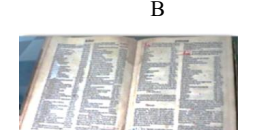
✓

答案速查 · 全卷 45 题

Answer Key · 本卷 PDF 未附官方答案,以下为按原文与选项推导的参考答案(每题均附依据)

一、选择题(1-35 题)

MULTIPLE CHOICE
题号12345678910
完形填空ABABABBCAB
题号11121314151617181920
阅读 A / BBCCCBADCAD
题号21222324252627282930
阅读 C / 六选五DCDBCEFBAD
题号3132333435多余项
信息匹配ECFAD六选五多余项 C;信息匹配多余项 B

二、语法填空(36-45 题)

GRAMMAR FILL
题号3637383940
答案greatestintelligentwas bornthirdas
题号4142434445
答案UnluckilyHowevertheincludingthat
提示:36 空 one of the + 最高级 + 复数名词;37 空作定语修饰 writer → 形容词 intelligent;38 空 be born 的过去时 was born;39 空“第几名”用序数词 third;40 空 work as + 职业;41 空句首作状语 → 副词 Unluckily;42 空句首 + 逗号表转折 → However;43 空 in the 1630s;44 空 including 表“包括”;45 空 so … that … 结果状语从句。

三、书面表达(15 分)范文

WRITING · Ways to learn English

题目:班上开展“课外英语学习方法”调查(听英文歌 48%、看英文电影 25%、读英文书 19%、与外国朋友交流 8%),用英语介绍调查结果并谈谈你对这些学习方法的看法(≥100 词,开头已给出)。

Recently, our class did a survey on the ways to learn English, and here are the results.
Nearly half of the students (48%) learn English by listening to English songs. A quarter of them (25%) prefer to watch English movies, and 19% choose to read English books. Only 8% communicate with foreign friends.
In my opinion, all these ways are helpful. Listening to English songs is a relaxing way to improve our listening and pronunciation. Watching English movies helps us learn authentic expressions, and reading English books can enlarge our vocabulary. As for communicating with foreign friends, it is the most direct way to practise speaking, though few students can do it.
I think we should try different ways to learn English. If we keep practising every day, we will make great progress.

亮点句式:① Recently, our class did a survey on the ways to learn English, and here are the results.(do a survey on 引出话题 + here are the results);② Nearly half of the students (48%) learn English by listening to English songs.(by doing 表方式 + 分数/百分比表达);③ A quarter of them (25%) prefer to watch English movies.(prefer to do sth.);④ As for communicating with foreign friends, it is the most direct way to practise speaking, though few students can do it.(as for 引出对比 + though 让步状语从句);⑤ If we keep practising every day, we will make great progress.(if 条件句 + keep doing + make progress)。
8

导出词汇 · 艾宾浩斯词汇记忆本

Vocabulary Memory Book · 本套 329 个词汇 + 116 个词组 · A4 竖版 · 英文/中文/默写①/默写②
下载 PDF ⬇ 网页版(可 Ctrl+P 打印)↗

艾宾浩斯记忆本 · 词汇打卡表

EBBINGHAUS MEMORY BOOK · 打印后手写默写

记忆本由本套 7 个部分的高频词汇与常用词组自动汇总而成:先看中文在「默写 ①」写英文,再盖住中文在「默写 ②」写中文,并按第 1/2/4/7/15 天打卡复习。点右上角可下载 PDF,或打开网页版自行打印。

听写第 1 / 10 句
准备听写…
中译英第 1 / 10 句
看中文,把它翻译成英文: